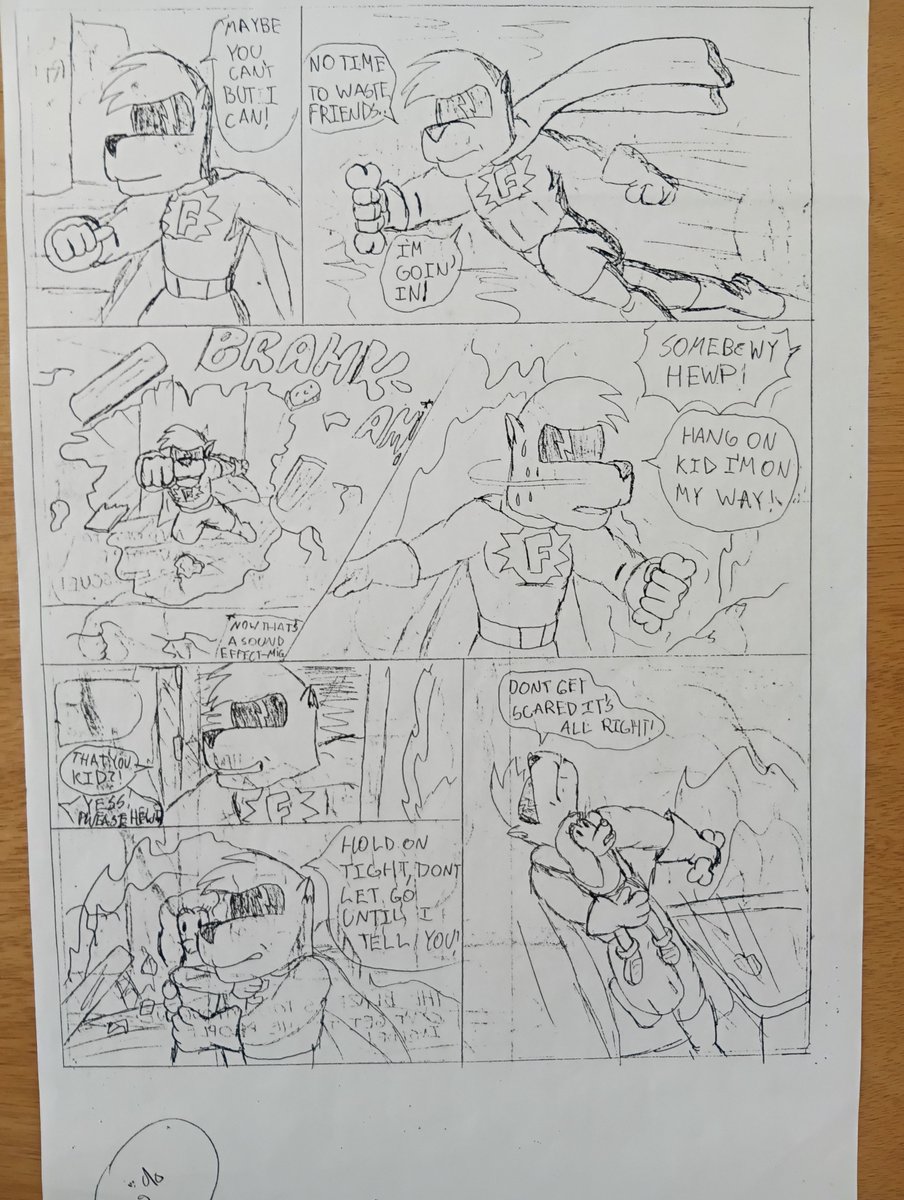
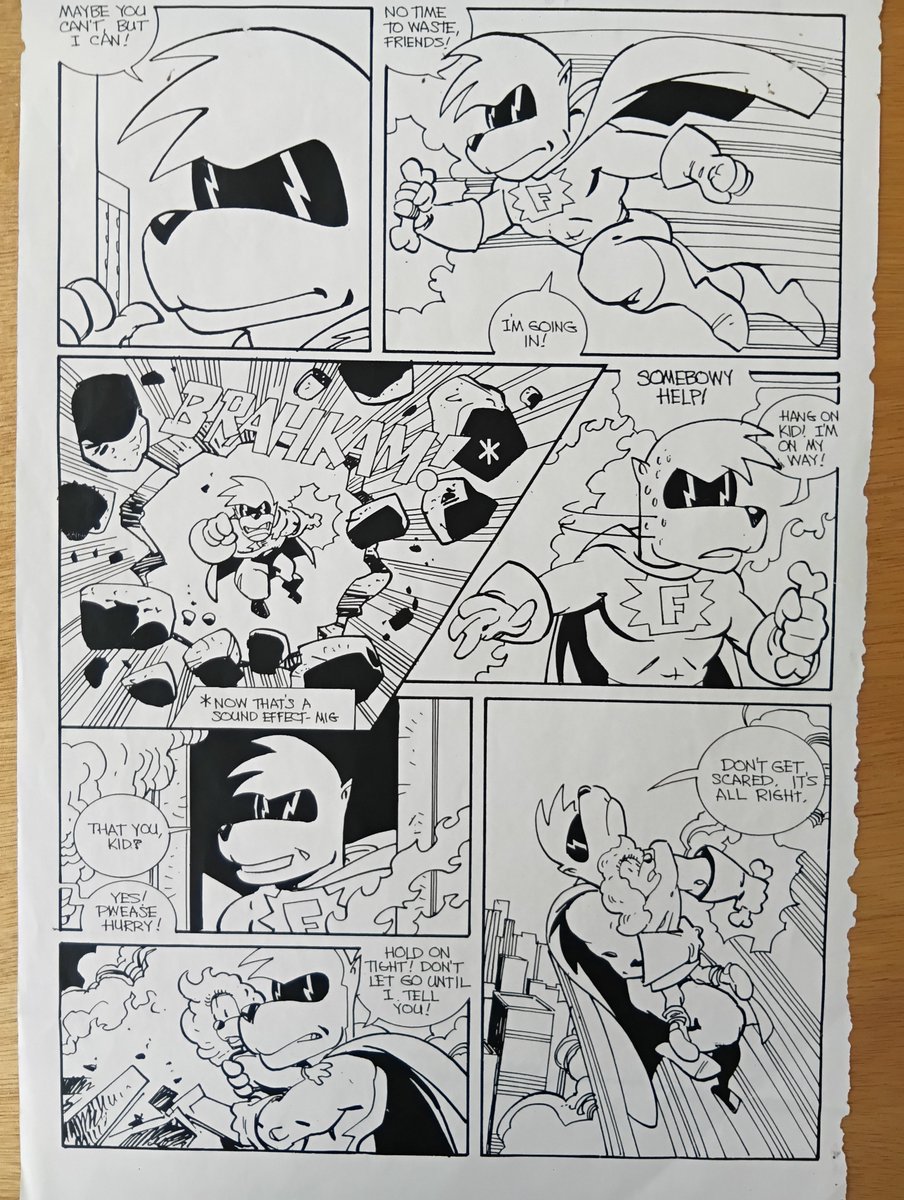
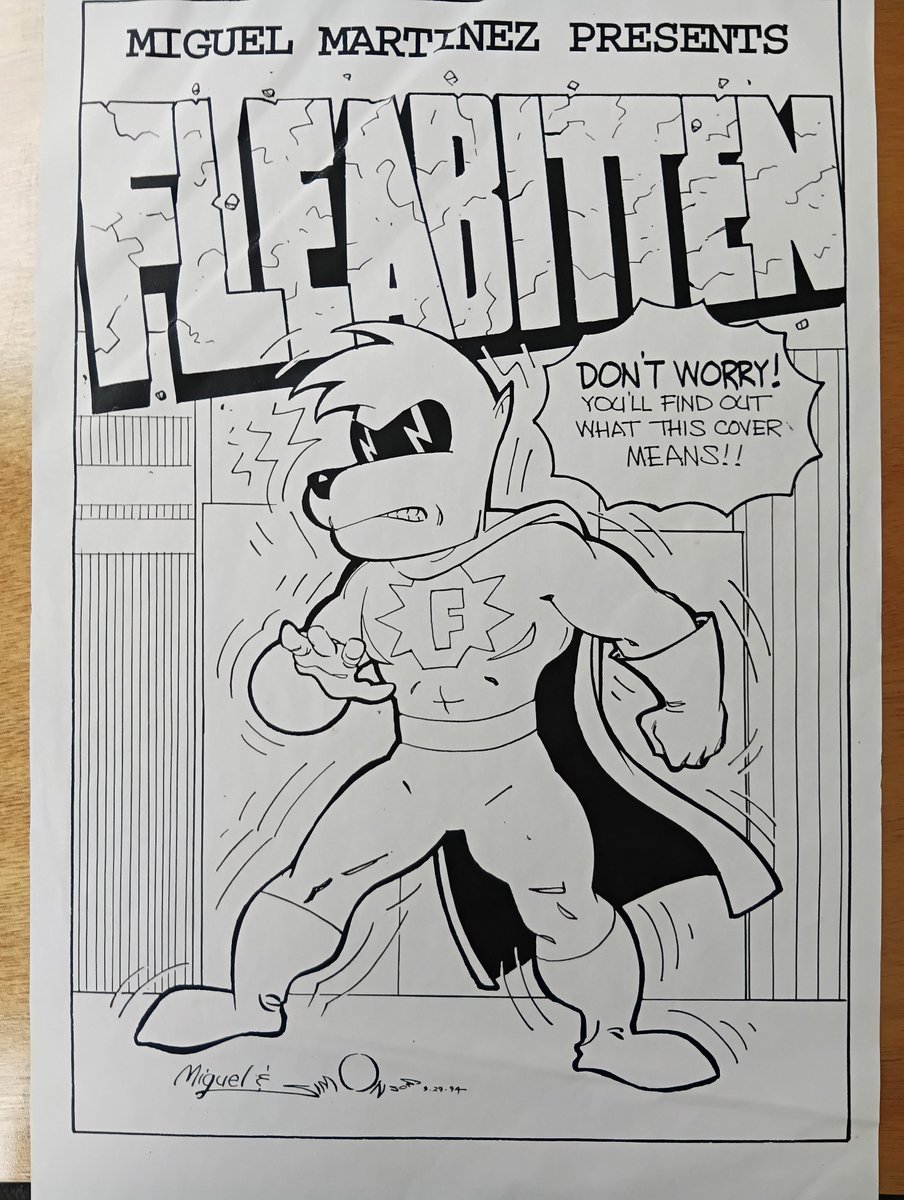
Cats&Dogs killing each other...in space!! A hero dog battles the evil feline forces & the canine underworld. Drawn by Mig Martinez & Written by @GAFINDUSTRIES
Dr. Adélaïde Hautval (1906–1988) was a French Protestant psychiatrist and physician who was imprisoned in Auschwitz-Birkenau for defying the Nazis, where she protected Jewish prisoners and refused to participate in cruel medical experiments...
Working as a doctor in the camp infirmary, she treated Jewish prisoners who contracted typhus and secretly hid them to prevent the SS from discovering the outbreak and sending them to the gas chambers.
"I will not do it. Send me to the gas chamber if you want."
Adélaïde Hautval stood quietly in the freezing chill of Auschwitz in 1943, watching a group of terrified women step into the medical barracks.
Beside her, a Nazi officer delivered a cold command, ordering her to assist in gruesome sterilization experiments.
The room went dead silent as she looked at the victims, looked the officer in the eye, and delivered those famous words without a trace of hesitation.
Instead of executing her on the spot, the officer backed down. In a place where a single wrong glance could end a life, Adélaïde turned her medical training into a weapon of pure resistance.
Her journey to Auschwitz started a year earlier in occupied France. She saw German soldiers harassing an elderly Jewish woman, forcing her to wear the yellow star. Adélaïde immediately stepped in and told the soldiers, "Leave her alone." That single act of compassion got her arrested instantly.
The guards pinned a yellow patch to her coat with the words "Friend of Jews" written on it. She wore it proudly, refusing to take it off.
She was shipped from prison to prison before ending up in the concentration camps. Because she was a doctor, the SS assigned her to the camp infirmary. But they expected her to collaborate in their cruelty.
Over and over, officers ordered her to participate in human experiments. Over and over, she gave them the same simple answer: "No."
Remarkably, they never killed her. The camp system desperately needed skilled doctors to keep basic operations running, and Adélaïde realized this gave her a thin shield of power. She used every ounce of that leverage to save as many lives as possible.
She began treating sick prisoners in secret, sneaking medication out of supply closets and hiding ill women during deadly selections. When Nazi doctors came looking for human test subjects, she deliberately falsified medical records. She told the officers, "
She is far too sick. You won't get any useful scientific data from her." The women were not sick at all; Adélaïde was simply keeping them alive.
For two long years, she sabotaged Nazi experiments and protected hundreds of women from the gas chambers. She survived until the end of the war, walking out of the Ravensbrück concentration camp in May 1945.
After returning home to France, she tried to build a quiet life, but justice called again. She testified against Nazi doctors at international war crimes trials. When defense attorneys accused her of making up stories, she remained calm and replied, "I was there. I saw it. I refused to participate. These are the facts." Her testimony proved crucial in convicting several medical war criminals.
In 1965, Israel honored her as Righteous Among the Nations. Yet Adélaïde always shunned fame, insisting,
"I only did my duty as a doctor and as a human being." She went on to practice psychiatry, spending the rest of her life caring for survivors carrying the deep mental scars of the Holocaust.
When she passed away in 1988 at the age of 81, thousands of people gathered to pay their respects. The crowd was filled with former prisoners, along with their children and grandchildren who only existed because of her brave refusal. One woman stood among the crowd and shared a memory that captured her legacy perfectly, saying,
"Dr. Hautval saved my mother at Auschwitz. She hid her during a selection. I exist today because she said no."
#archaeohistories
@WalterSimonson Back in 1994, Nickelodeon did a show that connected pro artists with kids. They liked my little comic book and got you to redraw my comic. When I saw you drawing my character it changed my life! I never got to thank you. THANK YOU!
"If I told you there was one free thing you could do every Sunday that would make your kids happier, healthier, smarter, and closer to you, you'd think I was selling something."
Take your kids to church regularly. I don't care if you believe. The data is so lopsided that skipping it is the parenting equivalent of refusing vegetables because you don't like the taste.
Grades. Religious teens get As at almost twice the rate of nonreligious teens. In a class of 100, that's 24 A-students instead of 14. Church gives a kid the same academic boost as being born rich instead of poor.
College. Working-class religious kids earn bachelor's degrees at double the rate of their nonreligious peers. Middle-class kids do it at 1.5x the rate. For families without a trust fund, this is one of the most powerful forms of upward mobility social scientists have measured.
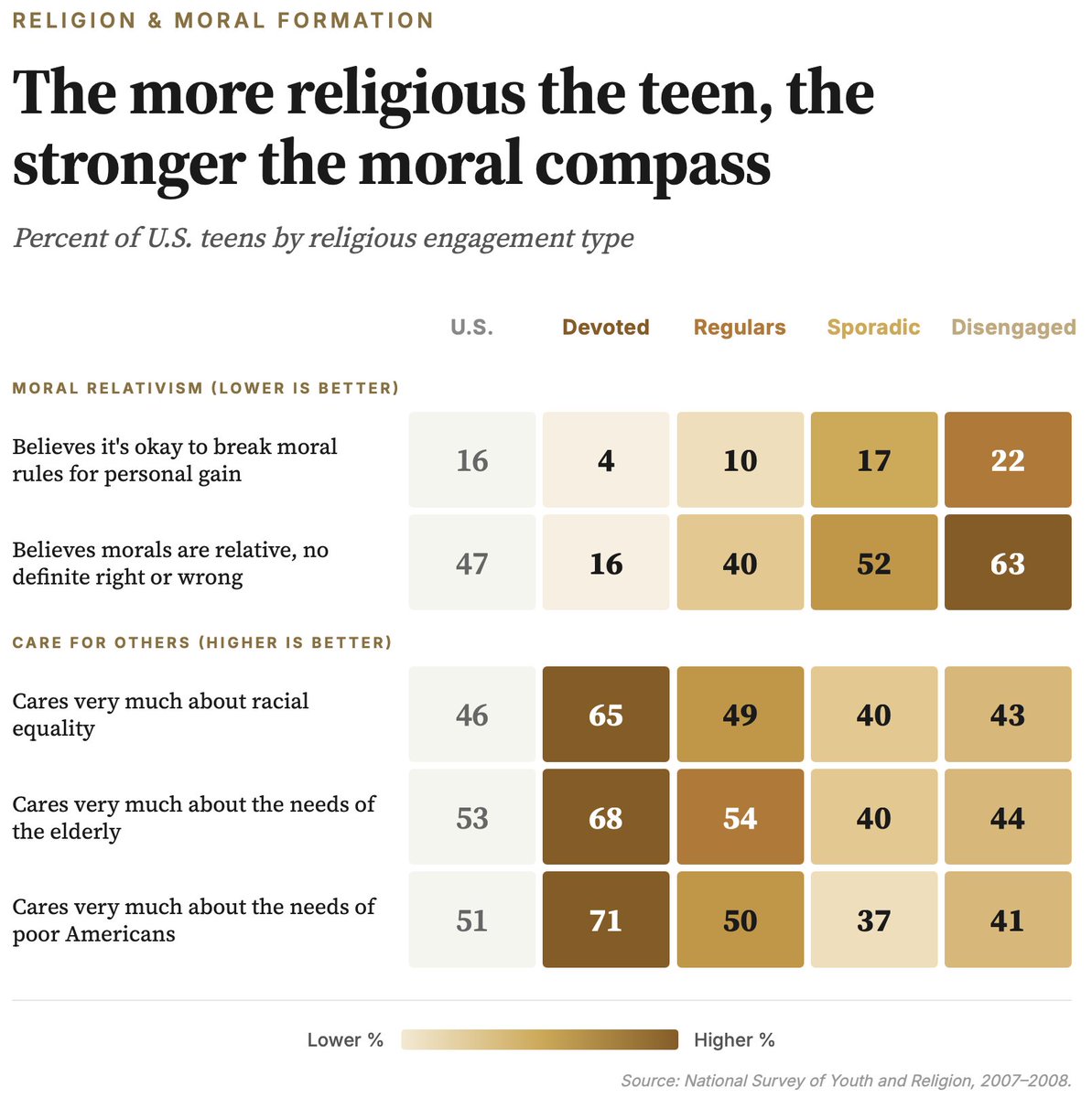
Character. Religious teens are far less likely to lie, cheat, or do things they hope their parents never find out about. They're more likely to care about racial equality, the elderly, and the poor. They reject the idea that morality is whatever works for you in the moment. That kind of kid doesn't happen by accident. It's built.
Closeness. 60% of parents of religious teens say they feel "extremely close" to their kid, compared to 50% of nonreligious parents. The kids report the same thing back. They get along better with their parents, talk about hard stuff, and actually want to spend time with their family.
Despair. Religious teens are dramatically less likely to be depressed, anxious, lonely, or feel that life is meaningless. 90% of devoted religious teens never binge drink, compared to 41% of the disengaged. Economists named the modern epidemic "deaths of despair." Regular church attendance is one of the strongest known buffers against it. Parents are spending fortunes trying to solve teen mental health. The most evidence-backed intervention is free.
Purpose. Religious young adults report higher purpose, gratitude, life satisfaction, and resilience. These are the exact traits every parent says they want their kid to have.
Here's why it works. Affluent families already surround their kids with networks of stable, accomplished adults through neighborhoods, schools, and parents' colleagues. Working and middle-class families usually don't. A congregation is often the last institution in American life that puts your kid in weekly contact with dozens of stable, employed, sober adults who know their name. It used to be called "a village." Now it barely exists outside of churches.
"But I don't believe." Your kid doesn't need your theology. They need you to show up.
"But church is boring." So is sitting through a kindergarten music recital. Parenting is the deliberate choice to be bored on purpose for someone you love.
There's a church within 15 minutes of nearly every American home. You don't need money, connections, or credentials to walk in. Nothing else in this country will surround your kid with engaged adults, teach them moral seriousness, and give them a stable weekly rhythm at zero cost.
You already drive them to practices that produce far less. The free thing on Sunday produces more, on more dimensions, than almost anything else you do as a parent.
You don't have to believe anything. You just have to take them.
The pseudepigraphal literature, including 1st Enoch (typically what we refer to as “the Book of Enoch” — there are 3 but the 1st on is the famous one), operated within a fundamentally different literary framework than modern historical narrative. 1st Enoch is a pseudepigraphal, apocalyptic collection of narratives and visions ascribed to Enoch. This was a genre that deliberately attributed writings to ancient figures to claim authority rather than to deceive readers about authorship.
Understanding the genre’s intention requires recognizing its theological purpose. As a collection, 1 Enoch offers a glimpse of what was likely a common worldview during the later 2nd Temple period (1st Enoch almost certainly doesn’t predate this time), which identified the world as an evil and unjust place in which the Jewish people awaited the redemption of God in their eschatological world.
The primary message was the soon-coming divine retribution of enemies and the judgment and eradication of evil that permeated the cosmos, with the author’s truth and authority relying on his heavenly journeys during which God gave him divine revelation of the coming redemption of the righteous.
Rather than presenting factual history, pseudepigraphal works employed symbolic and visionary language to convey theological truths about divine judgment and redemption. Topics like angels, demons, the spiritual realm, and the coming Messiah are all being fleshed out by this type of work.
1st Enoch offers an embellished textual tradition of Gen.6, and the pseudepigraphal accounts parallel the Septuagintal tradition, reflecting the interpretative biases of the period. This interpretative expansion, albeit not literal reporting, was the genre’s defining characteristic.
The New Testament’s engagement with 1 Enoch further illustrates this point: Jude draws from the pseudepigraphal book of 1 Enoch, with Jude 14-16 detailing a “prophecy” made by Enoch regarding judgment on sinners and the ungodly, drawing on 1 Enoch 9:1, Jude cites Enoch not as historical documentation but as authoritative theological witness to eschatological judgment. The pseudepigraphal genre was never intended as literal history; it was visionary theology dressed in ancient authority.
The question remains, if we take Enoch seriously as actual history then why not the myriads of other pieces of ancient Jewish a Pseudopigrapha, a vast literary catalogue: the Apocalypse of Abraham, Apocalypse of Adam, Apocalypse of Daniel, Apocalypse of Elijah, Apocalypse of Zephaniah, and multiple versions of Baruch (2, 3, and 4 Baruch) and Ezra texts (including the Greek Apocalypse of Ezra, Questions of Ezra, Revelation of Ezra, and Vision of Ezra)? The Testaments of the Twelve Patriarchs represent a major collection, along with individual testaments attributed to Moses, Job, Solomon, Adam, and the Three Patriarchs (Abraham, Isaac, and Jacob), why not toss them in as well? All the same genre and vein that Enoch finds itself in.
The collection extends to works attributed to David (More Psalms of David), Jeremiah, Isaiah (including the Vision of Isaiah), Habakkuk, Zephaniah, Zechariah, and multiple works attributed to Solomon, including the Psalms of Solomon and Testament of Solomon. The Sibylline Oracles, Eldad and Modad, and the Book of Jubilees also claim ancient authorship. Some of these documents in their earliest iterations are as early as the 3rd century BC (through others the 4th or 5th centuries AD).
Sure, read 1st Enoch. But don’t confuse it for something it isn’t.
Volume 1 of This Book Might Explode! is available NOW! Go to https://t.co/dDO8gyneWc to get your copy! Inside vol 1, you'll find family friendly stories, comics, and other fun stuff by...
Jack Handey
@DougTenNapel@cedrichohnstadt
Michael Foster
@IMAO_@rich_werner
Bill Breneisen
@brian_shearer
Otto Tang
@AXECOP
@ericbranscum
And even more great creators on the way in Volume 2!
I was not raised Christian. In fact, I was raised to reject Christianity. My dad did everything he could to debunk it, to discredit it, to make sure we understood it as a lie. And I believed him.
I became a full-blown atheist feminist. I went to college. I chased the career. I lived the lifestyle that feminism promises will make you fulfilled: independence, casual dating, travel, education, success. And by every external measure, I had it. I won the game. But I was absolutely miserable.
Night after night, I would lie awake in bed until 4, 5, 6 in the morning, unable to sleep. I had everything I was told would give me peace. But all I had was anxiety. Panic. Emptiness. I had no purpose beyond the next “experience.” I had goals, and I met them, but they were hollow. They led nowhere.
Even as a child, I never had peace. I would lie in bed terrified by the thought that one day I would just… stop existing. Nothingness. That was the end. And that thought haunted me from my earliest memories. I’d lie awake with the heavy weight of oblivion pressing on my chest, with no comfort, no answer, no hope.
I never wanted to be a Christian. I hated Christianity. I hated traditional values. I believed everything progressivism taught, homosexuality, transgenderism, relativism, I thought it was all good. I mocked the things I now believe.
But then I met a Christian at work. He was kind. I respected him, so I listened. And he told me about Jesus.
Not just clichés or vague spirituality, he told me who Christ was. He answered questions I had buried for years, questions no one had ever answered without condescension or confusion. For the first time, someone made the Gospel make sense.
And when he told me why Christ died, when I heard the truth of the Gospel, I went home that night and believed.
And for the first time in my life, I slept. I mean really slept. No panic, no fear, no gnawing dread of the void. I had peace.
I never expected to be here. I never expected to be the one advocating for traditionalism, for faith, for truth. But God saves sinners. And I am living proof.
He found me in my rebellion, in my despair, in my hatred, and He opened my eyes.
Jesus Christ is real. And He is peace.
It wasn’t following the world that set me free. It was the cross.
‘THE DAY THE EARTH BLEW UP: A LOONEY TUNES MOVIE’ is still playing in wide release (2700+ theaters) this weekend and will continue to do so in the coming weeks, according to Ketchup Entertainment.
Read our review: https://t.co/lByPSTjrFO
“Because I wouldn’t have been sitting here crying right like I am if it wasn’t for the Lord.”
Via Paul Washer, HeartCry Missionary Society
@HeartCryMission
@orthodoxluigi @TPageCW This is a reference to Deuteronomy 32:6. The Father bought "Israel" out of Egypt and these people later denied Him. So this is speaking of Jewish non-believers.