This is also why, while loving all men and doing good to the world, we can not relax our standards for admittance and good standing in God's church. We can not compromise for inclusivity's sake and in so doing surrendering the building of Zion to the appeasement of the world.
There is some meaning behind the constant criticism of Jesus' true church, and it is why Jesus said that those who followed Him would be treated like He was treated.
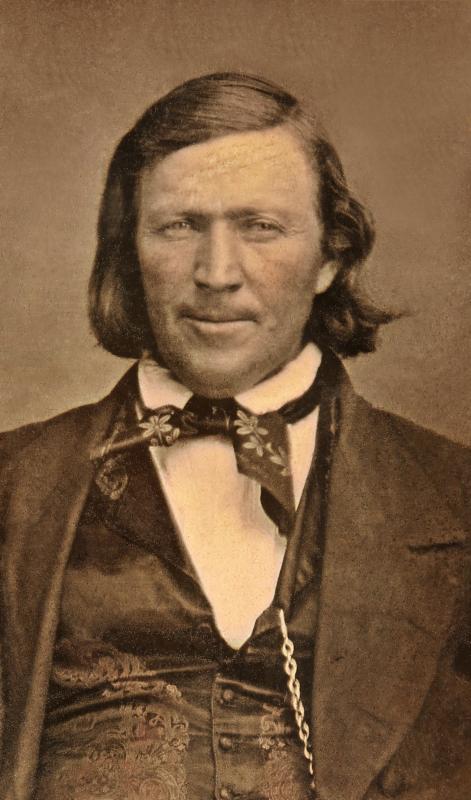
Brigham Young put it this way - "They would come now by thousands and thousands, if the Latter-day Saints were only popular...I am satisfied that it will not do for the Lord to make this people popular.
Why?
Because all hell would want to be in the church.
The people must be kept where the finger of scorn can be pointed at them.
Although it is admitted that we are honest, industrious, truthful, virtuous, self-denying, and, as a community, possess every moral excellence, yet we must be looked upon as ignorant and unworthy, and as the offscouring [1 Cor. 4:13] of society, and be hated by the world.
What is the reason of this?
Christ and Baal cannot become friends."
Nobody ever talks about this, but the reason you have to go to college is A, because Griggs v. Duke Power Company made it illegal for presumptive employers to IQ test, and B, inner city High-Schools basically aren't allowed to fail a student as long as they physically show up.
So you end up in this trap where a High-School diploma that you worked very hard for means nothing, because a kid who did coloring books and addition and subtraction got a paper saying he has the same qualification. Ok, then just give me an intelligence test, oh wait you cant, thats also illegal because it causes "disparate impact". So now the only proxy for basically literacy and ~105~ IQ is a 4 year meaningless degree that costs 10s of thousands of dollars.
But wait, now they hand those out to anyone, (1/4 of 4yr grads have an IQ of or below 95), so now you need a Master's, or specialty training, or a million other bullshit things. So you get them, but wait, a diploma mill in Hyderabad cranked out 100M guys who also have a Master's on paper, and will work for 1/3 the price, so now you dont have a job. Ok, ill work construction, but wait, you dont live in a State with strong Unions, so any non-specialized construction work is done by slaves from Guatemala, so you decide to stay home and take Percocet instead.
Awesome system we've built.
So, basically, 500 million Europeans expect 300 million Americans to protect them from 120 million Russians who can’t even defeat 40 million Ukrainians while those 500 million Europeans don’t even realize they are being conquered by 2 billion Muslims who claim they are being persecuted by 8 million Israelis. Is that about right?
1
@Victoriawrites2 The patriarchal blessing does not change your future, but rather equips you to face it with faith and hope. It gives you direction on how to live fully, embracing the blessings and opportunities your Father in Heaven has in store for you
My favorite General Authority is Elder Jorg Klebingat. His 2014 conference talk remains my all-time favorite because of how bold and practical it is.
Four years later, he spoke out our stake conference. I took extensive notes. Pure gold. I found those notes digging around some of my old files today. Here's what he said in those two sessions. I think you'll enjoy it-- there are some real eyebrow-raising gems in there, right out of the gate, and it's very relevant to Pres. @OaksDallinH's most recent messages.
---- ADULT SESSION ----
Read Moses 7. God created worlds without number, yet our planet is more wicked than any other planet in the universe. Satan was cast down here. This earth is his headquarters.
So don't be surprised by opposition. Consider Acts 28: "Everywhere [the Gospel] is spoken against." Like the Pharisees who accused Jesus of casting out devils by the prince of devils, modern Pharisees accuse us.
There is no way to follow Christ if we don't suffer, to a degree, what Christ went through. If your discipleship is serious, Christ will ask you to do that which is harder for you. One cost of discipleship we may have to pay will be to choose Heavenly Father at the expense of relationships with others.
Zion never negotiates. Zion flees Babylon. The fate of Babylon is not to be converted; it is to be destroyed. Apostates will always be forgotten in the end.
Practical things to remember in your discipleship and dealing with faith crises:
1. Prevent!
Prepare for faith issues in advance instead of requiring desperate recue downstream. Be aware of the resources when questions arise: the temple, prayer, etc., but also the Gospel Topics essays.
Educate yourselves about the issues. "If you know, then you're safe." It's the ignorant who don't pray and study daily that fall.
Keep a spiritual journal of what you do learn.
Don't expect lessons on the hard stuff at Church. Remember, "in this Church we always publicly teach milk." The meat is for you to do on your own time.
Spiritual gut-check. 2 Corinthians 13: "Examine yourselves." Let's not fake it in this Church. What would be necessary to sweep you out of your orbit? An offense? A doctrinal blind spot? Identify your weakness, the fix it.
2. Handling questions
Know the difference between a faithful question and doubt: there is no expiration date on faithful questions. No ultimatum to God: "Answer me by ___ or I'm out." The Lord expects us to run on fumes for a little bit.
Put concerns in perspective. One twisted rivet on the Eiffel Tower isn't going to bring it down-- don't let one issue you see bring down your testimony, either.
We don't build our testimonies on Church history; we build on the rock. Stay on the covenant path to solve issues with the Church. You may not have all the answer, but newsflash: "there are fewer answers outside the path."
Questions asked with meekness don't turn to doubt.; doubt is intellectual pride.
We might leave and deny our previous testimony, but each experience we've had in the Gospel will be recorded in heaven. And one day, like Korihor, we will acknowledge that we always knew.
3. A climate for questions
As leaders, teachers, and members, create a better climate welcoming of honest and faithful questions.
Concerns are neither a badge of honor nor a sign of sin. Don't assume unworthiness. Don't shame honest seekers with concerns, nor treat it as cool. Just address it and help resolve it. Turn doubt into inquiry.
Shelve the ones you don't get quite settled. Don't stigmatize those who have concerns. And forbear going outside revealed doctrine: if the Lord has not said much, you shouldn't either.
4. Avoid fireworks
Don't dramatize the testimony process. Don't normalize "light switch" testimony-building events.
Faith is a daily decision. Deciding to follow the Savior is acting on testimony. You will gain a testimony as you serve, without having to frantically chase it. It will come unexpectedly.
5. Prophetic fallibility
We are all imperfect. Prophets, too.
Prophets have the right to time off, and to have their own opinions, too.
Don't apply an unrealistically high bar to the Brethren.
Focus on official doctrine. Don't get hung up on every word every leader ever spoke. Don't freak out about what some leader is reported to have said 150 years ago in a meeting with 12 people in it, held outside under a tree.
Resolve issues with the starting premise of "it's true" instead of "it's false."
6. Know your enemy
Become familiar with the tactics of anti-Mormons: "Oh, you didn't know that? What else is the Church hiding from you?"
The Church is not hiding anything. But it's not going to spoon-feed you, either. Do your research.
7. Ministering to those who go astray
Love those who wander without compromising or watering down the Gospel.
If it really comes down to "tolerance" versus the Gospel, the Gospel must win.
Bigotry is intolerance of a person, not intolerance of a lifestyle or a philosophy. Tolerance is love for those who stray without agreeing with their choices.
Don't let go of the iron rod to help others who have wandered. But love them!
8. The gift of faith and action
There is an earnest need on our part to pray for the gift of faith.
Be active in your discipleship and your wording: Don't just read the scriptures, search them. Don't just say prayers, really pray! Don't just go to Church, go worship at Church!
Q&A:
Q: "How to handle guilt and fear of transgression?"
A: I am afraid of sin. And that's good. Sin is the one thing that can distance me from God, and it's the one thing I can control. So of course I should be afraid of it.
But if you are living a clean life, know that impure thoughts are not there by invitation. That is not your fault. Your job is just to flick them away like an annoying fly.
Q: "How can I help my family?"
Too many brethren give prayers instead of blessings. Be a little bit more bold under the influence of the Spirit. [Note: Pres. Nelson also talked about this around this time].
You need confidence in yourself. You can't merely trust that God's got this-- you need to know your own standing before God.
The biggest indicator of children's activity is that the children know that their parents KNOW.
---- GENERAL SESSION ----
God differentiates between sin and weakness, between rebellion and mistakes.
The law of mercy is ours to claim for sins that aren't premeditated. So use it! What angers God (Alma 33): "They will not [or choose not to] understand" the Atonement. It's refusing to take advantage of the Atonement of Christ.
Once we've truly repented, we can know that any feelings of anxiety or worthlessness can be attributed to Satan.
Our relationship with Him as "the Lord" and "God" will eventually evaporate as we feel Him again as our Father.
As parents, is there any mountain we would not climb, any sea we wouldn't swim, any desert we wouldn't cross for our children? How could we expect less of God? To shortchange Him like that is sin. It's denying the Atonement. It's rejecting the eons of living under His love and learning His nature.
The prodigal hadn't repented yet, but the Father ran to him. Love is shown even before repentance. The first step was to accept him again as his father.
Being forgiven is an active process. We need to actively "receive" forgiveness like we are commanded to "receive the" Holy Ghost.
The up and down "yo-yo" [or bag of rocks] of the Atonement is completely false. We aren't supposed to let sins pile up and periodically unload them by taking the Sacrament.
We can retain a remission of our sins every moment of every day. Quick and immediate forgiveness anytime-- not just when we take the Sacrament! We can retain forgiveness, joy, and happiness. We can be always clean.
Membership in the Church is not synonymous with a relationship with the Savior.
It is easier to give up stuff than to give up self. [see King Lamoni's dad]
If you feel the Lord isn't answering, your first question should be "Am I actually studying the scriptures?" Don't just read the scriptures, search the scriptures! And make time to ponder. If you only have 10 minutes to study, spend 5 minutes reading, and 5 minutes pondering.
----------
Like I said, tons of good stuff in here.
Atheists love pointing to horrors like the Holocaust as proof God cannot exist. But before we ask why God didn't stop the Holocaust, let’s ask a smaller question: why didn't God stop Cain from killing Abel?
If you want to put God on trial for human evil, start where evil actually erupts in Scripture.
Before looking into Cain, the upstream question is simple: why would a good God even create beings who, left to themselves, are capable of monstrous cruelty?
To create a creature capable of genuine moral beauty, that creature must possess the terrifying headroom to fall. You cannot create a being capable of authentic love and righteousness without giving that being the real power to refuse those things.
A programmed machine is not loving anyone, it is merely executing code. The exact capacity that allows a man to lay down his life for a friend is the exact same capacity that allows him to pick up a stone and murder his brother. Evil is not a tangible substance God manufactured. It is the deliberate turning away of a creature's will from the source of life.
So how does God actually deal with that first evil?
He does not remain silent. Before a drop of blood is spilled, God confronts Cain directly: “sin is crouching at your door, and you must rule over it.”
This is how God confronts human evil: He hardwires moral knowledge into conscience. Deliberate evil requires actively suppressing an internal alarm we already know is ringing.
An atheist will still ask: why didn't God physically step in and stop the murder?
What are you actually asking God to do? Paralyze Cain’s arm mid-swing? Turn the stone into air? Mechanically delete his ability to carry out the act?
The moment God overrides physical consequences whenever our intentions turn dark, moral reality collapses into a cartoon. Human choices are stripped of all weight.
More importantly, where should God draw that line? Murder? Theft? Slander? The quiet malice in our own minds? If God eliminated evil by force, He couldn't stop at Cain; He would have to eliminate all of us. People don't want God to abolish evil; they only want Him to abolish the evil of other people.
Then look at Abel.
Abel walked faithfully with God, yet he ended up dead in the dirt. To secular eyes, this looks like an embarrassing defeat. Did Almighty God fail to protect the man He endorsed?
Only if you assume reality ends at the cemetery.
Cain had the power to destroy Abel’s physical body, but he had zero power to destroy Abel. God did not lose His friend.
Physical death is not terminal oblivion; it is the relocation of an eternal soul from one room of God's reality into another.
Yet God never dismisses the murder. He tells Cain that Abel’s blood cries out to Him from the ground. Injustice is real, and the blood of the innocent demands an answer.
Instead of answering with a lecture from the clouds, God stepped straight into the dirt of history Himself when humanity followed Cain. In Christ, God took on human flesh and became the target of that exact same human malice. He was falsely accused, betrayed, and executed on a Roman cross.
God did not shield Himself from the violence of the world. He absorbed the absolute worst of it into His own body, and then broke the power of death by walking out of the grave on the third day.
The Christian answer is not that God should turn us into robots to prevent every Cain. It is the assurance that while Cain is allowed to swing his stone on earth, he never gets the final verdict.
Abel’s blood cried out from the soil for vindication, but Christ’s blood answers for eternity. God does not prevent evil by destroying our agency; He enters our suffering, shoulders our guilt, and redeems everything our violence tried to destroy.
@the_jake_bastow The market is not a losing game where you may get a lucky win. Instead, it's a mechanism of investing resources so they may bring fruit, like in the parable of the talents. Sometimes investments don't pay off, but on average, on the market, everyone comes out enriched
It's weird to see married men downplay pornography use or engage in whataboutism:
"Can you really go after men for pornography when their wives don't want sex as often?"
That's gross in several ways:
1. Marriage is a covenant, not a contract.
You promised her complete fidelity in thought and action, period. There's no escape clause that says you can cheat on her if she doesn't meet your "expectations."
2. You didn't just make covenants with your wife-- you made covenants with God.
And at baptism and in the Temple you promised you would be strictly celibate in thought and in action outside of marriage. Pornography isn't just destroying your promise to your imperfect wife, it's destroying your promise to your perfect God.
3. "My sexual needs" is a stupid term.
Sorry, didn't we all learn the difference between needs and wants when we were, like, three? Intimacy is a wonderful and important blessing for married couples. But it isn't a right, and it isn't a need.
4. Acknowledge your agency.
Women feel close, then desire intimacy; men feel close through intimacy. Informed and healthy couples acknowledge this and learn to communicate and compromise.
But let's say your wife is ignorant of this or withholds intimacy. This doesn't excuse you. Your libido doesn't make you do anything. The whole purpose of mortality is for the natural man to yield to God. We are agents to act, and blaming your "uncontrollable need" is an excuse that turns you from a divine human being with the power to act into a mere object to be acted upon.
5. You set up a dumb standard
In law this is called an argument that "proves too much."
If men who are "sexually frustrated" by their wives are justified-- in whole or in part-- in consuming pornography, how can we have any requirements for our young men, our missionaries, our single adults, the husbands whose wives are physically incapacitated, and the widower? They have no "outlet" at all-- what would your standard mean for them?
The law of chastity is not contingent on your marital status or marital happiness.
6. A hero in my eyes
"But isn't that asking me to hold myself to a higher standard than I hold my wife?"
Yes. I've seen wonderful examples of men who've chosen this higher path in my life. I'll share one.
A man I know well faced a severe trial when his wife had a psychological breakdown around their relationship and demanded they separate. The only thing that kept her from filing for official divorce was that he was willing to keep her on his health insurance and continue paying all her bills.
They lived apart in that horribly unfair arrangement for years-- her living in the house on his dime while he lived in a trailer on the other side of town, only coming to his own house with her permission to fix things and clean up after her.
Many asked why he put up with that arrangement. He would simply reply, "Because I love her. I know she's in pain. This is not her 'final form.' Life would be easier to cut loose. But I made a covenant to her and to God. And I will honor it for the rest of my life, and I pray we come out the other side and enjoy exaltation together."
She did "come to herself" after a few years, and they got together again. But that man was prepared and willing to stay in it for the long haul.
That's the kind of dedication Christ showed for us, and it's the dedication He asks us to show to our spouses: the kind of faithfulness that is unfailingly loyal even when we think it's undeserved or unrequited. He asks us to be the man that demands everything of himself, but is infinitely patient with others in the covenant.
Because he's 100% committed and he's in it for the long haul.
Q: "Why are local leaders so much more lax on pornography use today than they were 20-30 years ago? It used to be a major, disqualifying transgression and now it's like 'Meh, you're a guy, just try to do it less, okay?'"
This is purely my speculation, but I'll give my two cents.
First point: The ideal hasn't changed.
While I do sense there has been a major cultural/tonal change, the doctrine of the Gospel has not changed. Jesus's standard of lust is still in force, and all Church leaders would echo Elder Richard G. Scott's condemnation and warning of pornography:
"The onslaught of pornography in all of its vicious, corroding, destructive forms... is one of the most DAMNING influences on earth... This potent tool of Lucifer degrades the mind and the heart and the soul of any who use it. All who are caught in its seductive, tantalizing web and remain so will become addicted to its immoral, destructive influence... How can a man, particularly a priesthood bearer, not think of the emotional and spiritual damage caused to women, especially his wife, by such abhorrent activity?" (Oct 2009)
Pornography is damning. Peroid.
Second point: Divine accommodation.
Pornography is really, REALLY prevalent. Look at the statistics. It's depressing. The majority of active Latter-day Saint men, the the vast majority of men under 40 seek out pornography at least monthly. Go ask a singles Ward Bishop how many men he'd have available to pass a sacrament if he excluded everyone who sought out pornography in the last month, and he'll tell you it's practically zero.
But should prevalence influence our response? Even if 99.9% of the Church is doing something evil, that doesn't make it right... right?
Right. But it does influence how the Lord and His leaders respond to things. This is called divine accommodation. Some examples:
God warned Israel not to have a king. But they were going to have a king one way or another. So He instructed Samuel to anoint a king.
God abhors slavery. But that was commonplace ancient near Eastern culture. So He gave rules on treatment of slaves.
God abhors divorce. But the Israelites were too weak to accept that. So He gave instructions on the hows and whys of divorce.
In our day, God commanded the practice of the United Order. But the Saints didn't fully commit themselves, and it was withdrawn.
He commanded the establishment of the city of Zion. But the Missouri Saints were persecuted from without and not fully committed within. So God has put the city of Zion on hold for almost 200 years now.
Perhaps the change in tone and emphasis reflects such an accommodation? The Lord warned us through His mouthpieces in the most straightforward language they could through muster to stay away from the vicious trap of pornography. But collectively we did not heed them.
His warning still stands, but the damage is done. We collectively "bring upon [ourselves] the calamities foretold by ancient and modern prophets."
Perhaps further strong warnings will not change hearts, just increase accountability.
Third point: We may be overcorrecting.
The stark language of earlier talks (like Elder Scott's talk above) was very effective for kids like me to develop the appropriate "river of fire" mentality with regard to chastity and media. I read the Miracle of Forgiveness and it made me mortally afraid to go anywhere near that stuff.
And honestly, thank God for that!
But warning of the viciousness of Satan isn't enough for most youth and young adults-- they needed practical guidance on repentance and overcoming addiction, and they rarely received that from heavy warning-only talks. So the pendulum shifted to grace and mercy, healing, forgiveness, and love.
The problem is we focus so heavily on that nowadays, that I wonder if we're doing enough to warn of the dangers to the new generation. Maybe Church leaders hoped such "hard" conversations would come from parents and local leaders. After all, correction is best administered one on one, right?
But I think that largely isn't happening.
So 20 years ago, the average Latter-day Saint teenager had probably never read the Book of Mormon cover to cover, but he could certainly tell you the Lord hates pornography. Today, the average teen still hasn't read the Book of Mormon, but also might see pornography in the same category as energy drinks:
"Yeah someone told me some prophets used to talk about it. It's probably not good for you. But everyone does it and no one seems to care, so it can't be that bad."
I think there's a strong tendency today among local leadership to treat everyone as a scrupulous perfectionist with religious anxiety:
"You're enough. God loves you as you are. Don't run faster than you have strength. Love yourself the way God loves you."
And why not? No parent is going to complain to you about being too soft-spoken. And that approach may be exactly the one actually perfectionist youth in your ward needs. Those hard conversations are really the primary responsibility of parents, anyway. And skipping those subjects won't cause life destroying problems until well after you're released, anyway.
Skipping the hard conversations as a local leader is a win win win win... unless, of course, you're worried about their salvation or something.
I think we need to build a clear fence around the pasture so the ninety and nine don't wander, then go after the one.
I'd like to see more frank talk about pornography and other "hard" issues. That's why I miss priesthood session-- that's when the Church leaders would lovingly but firmly get down to brass tacks with us and warn us of the spiritual dangers they saw on the horizon or at our doors. Like Pres. @HollandJeffreyR famously did in 2011:
"This is a life-and-death contest we are in, young men, so I am going to get in your face a little, nose to nose, with just enough fire in my voice to singe your eyebrows a little—the way coaches do when the game is close and victory means everything. And with the game on the line, what this coach is telling you is that to play in this match, some of you have to be more morally clean than you now are. In this battle between good and evil, you cannot play for the adversary whenever temptation comes along and then expect to suit up for the Savior at temple and mission time as if nothing has happened. That, my young friends, you cannot do. God will not be mocked."
Seriously, when's the last time we heard a talk so simultaneously inspiring and correcting like that? I miss it, and I think the young adults and youth of the Church would greatly benefit from some loving straight-talk like that.
@DaleGRenlund Real men are accountable for their actions, acknowledge their mistakes, apologize and try to set things right.
1000% agree. Can we also teach this about the women of the church? We sorely fail the sister when they are not taught accountability, humility and repentance.
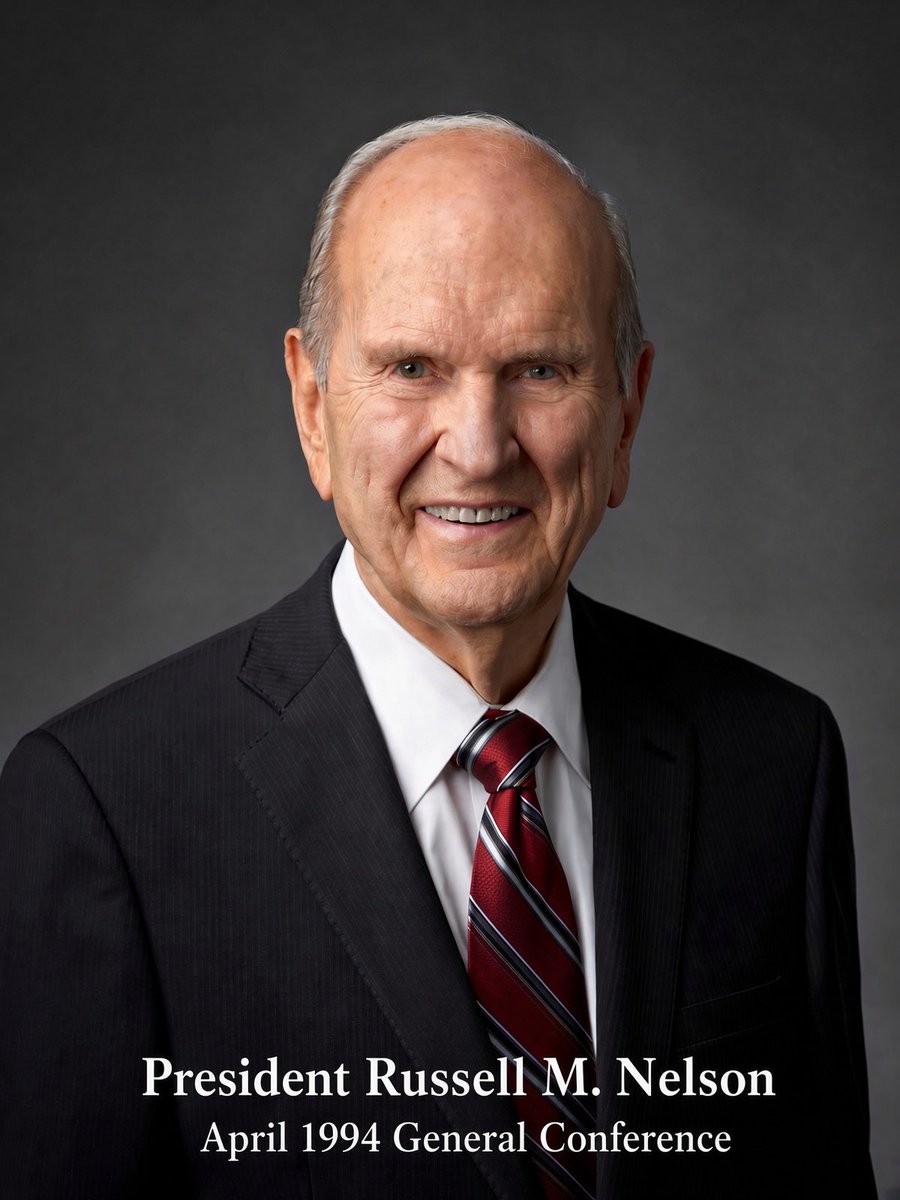
“An erroneous assumption could be made that if a little of something is good, a lot must be better. Not so. Overdoses of needed medication can be toxic. Boundless mercy could oppose justice. So tolerance, without limit, could lead to spineless permissiveness.”