One of my favorite lessons I’ve learnt from working with smart people:
Action produces information. If you’re unsure of what to do, just do anything, even if it’s the wrong thing. This will give you information about what you should actually be doing.
Sounds simple on the surface - the hard part is making it part of your every day working process.
Notion docs are beautiful, and this presents a problem for managers: It's easy to be fooled by good design.
Why? Because good design obscures poor logic.
As a manager, I'm amazed at how often a direct report sends me a Notion doc and my immediate visceral reaction is "ooh this looks great."
Upon engaging with the content, I realize the mileage varies. Sometimes the content is excellent, other times it's lacking in insight.
But in all cases, my initial response was more optimistic than it would have been because the doc itself was visually-appealing.
---
Good design and good content isn't mutually exclusive. The problem is good design can trick you into thinking the content is good, when normally you would be more skeptical.
In the past, Google Docs were less forgiving because you only had cold, hard text. You had to make a compelling business case and argument. You had to use sentences and transitions, which showed your logic and rationale. There was nowhere to hide.
With Notion, the default is all content is easier and more pleasant to read: well-designed headers, color blocks, call-outs, toggles, etc.
But this doesn't replace high-quality insight and logic. A shiny doc that's well-organized but offers little substance is still useless.
---
This doesn't only apply to Notion. This applies to any asset with a visual component.
For example, slide decks. Let's say you're assessing a marketing candidate's take-home project. The slide deck might be beautiful but
(a) the candidate might have had help creating the deck
(b) you're not hiring them to make decks
(c) you want to see their strategic thinking, not deck building skills
If you're not careful, the great design becomes a distraction.
This means you need to actively ignore how beautiful the document is.
To be clear, the problem isn't Notion. I love Notion. The problem is Notion is so good at using design to elevate our ideas, that we may subconsciously fool ourselves into thinking our ideas are better than they are. There's a halo effect: "It looks good, so the ideas within must be pretty good."
Remember to use the appropriate level of skepticism when you evaluate well-designed documents.
And if given the choice between the two, I’d rather see a simple text-only strategy doc that's dense with insight, rather than something well-designed with mediocre content.
To reduce your stress, try not to have strong opinions about everything.
Smart people are selectively ignorant about most things, and focused on some things.
#1 The swirl of passion from anger and indignation is a driving force. The outburst of emotions on display is a cognitive cue signifying to Chinese people that their grievance is widely shared. Such cognitive liberation implies the possibility of civil disobedience and change.
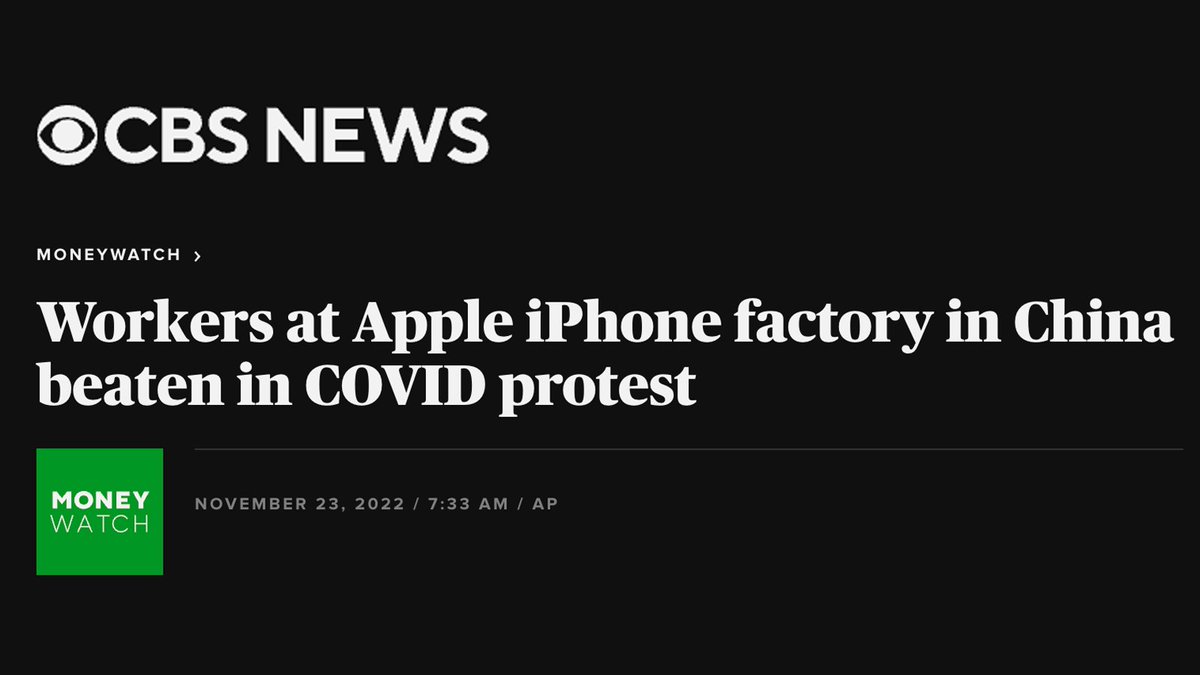
Apple is threatening to remove Twitter from the App Store because @elonmusk is allowing free speech.
Yet, they are entirely silent about their own employees being beaten at their iPhone factory in China.
CZ on SBF:“No one can protect [from] a bad player, to be very frank, if a guy is very good at lying, and very good at just pretending to be what he’s not.” Not been paying attention? Protection comes thru decentralisation. That’s the point of web3 and trustless tech. @cz_binance
Co-founder of @Polkadot, @RPHmeier, on Ethereum's transition to Proof-of-Stake, how Polkadot's Proof of Stake mechanism compares, and how the merge benefits bridging with Ethereum