Retail investors are actually celebrating that SpaceX is reserving 30% of its IPO for them.
Let me explain how the real world works: Wall Street doesn't hand you 30% of a generational asset out of charity.
When institutional money refuses to swallow an inflated private market valuation, they need a massive liquidity sponge to absorb the float.
You aren't getting in early. You are volunteering to be venture capital's exit liquidity.
Save this tweet for 6 months from now.
$TSLA
정직한 저울은 없다
사람들은 잘못의 무게를 잰다고 믿는다.
그러나 저울에 올려지는 것은 잘못이 아니라,
그 사람이 나를 어떻게 대했는가 하는 마음이다.
같은 무게라도 미운 이의 것은 무겁고,
정든 이의 것은 가볍다.
오래 곁에 있던 이의 허물은 쉽게 덮인다.
잘못이 가벼워서가 아니다. 그를 탓하는 일이, 그를 오래 믿어온 나 자신을 탓하는 일이 되기 때문이다.
우리는 그를 용서하는 것이 아니라,
그를 믿었던 지난날의 나를 용서한다.
너그러움은 더러 자기 보호다.
미움은 죄의 크기와 나란히 가지 않는다.
속은 일은 용서해도, 깔본 일은 용서하지 못한다.
사람은 손해를 잊어도, 모욕은 잊지 못한다.
그래서 법이 묻기 전에 먼저 무너지는 이는,
대개 큰 죄를 지은 자가 아니라 고개를 빳빳이 든 자다.
한때 나도 남의 허물을 자로 재며 다녔다.
그 자는 어느새 나를 재고 있었다.
이제는 화가 날 때도 조금 무디게 본다.
그러려니 하며, 멀찍이 서서 본다.
무뎌지는 것은 포기가 아니라, 자라는 일이었다.
세상이 시시해져서가 아니라,
저울이 애초에 정확하지 않았음을 알아버린 까닭이다.
내려놓으니 비로소 가볍다.
가장 무거웠던 것은 남의 허물이 아니라,
그것을 재던 내 손이었다…..
The human-perceived RGB is image 1 and the Tesla AI photon count reconstruction is image 2.
This is why Tesla FSD can see so well at night or through extreme glare.
$AMZN ㅣ260430
파워포인트는 말하는 사람만 편한 도구
1. 2004년 어느 날, 아마존의 임원 회의실이 갑자기 이상해졌음.
회의가 시작됐는데 아무도 말을 하지 않음. 슬라이드도 없고, 발표자도 없었음.
그냥 다 같이 앉아서 종이 한 뭉치를 읽기 시작한 것임.
15분에서 30분 동안 고요함만 흘렀음. 이것이 제프 베조스가 파워포인트를 아마존에서 영구 추방한 이후 탄생한 풍경임.
베조스는 이 방식을 "세상에서 가장 이상한 회의 문화"라고 직접 불렀지만, 동시에 "세상에서 가장 효율적인 회의"라고도 했음.
왜 하필 2004년이었을까.
(이어서 계속 🔗)
Elon Musk avait dit un truc qui m'avait marqué sur l'allocation de ressources. En substance : passé un certain niveau de richesse, l'argent n'est plus de la consommation, c'est de l'allocation de capital.
Cette phrase change tout.
L'économie, dans le fond, c'est juste un problème d'allocation. Tu as des ressources finies et des usages infinis. Qui décide où va quoi ?
Imagine une cour de récré. 100 enfants, des paquets de cartes Pokémon distribués au hasard. Tu laisses faire. Très vite, un ordre émerge. Les bons joueurs accumulent les cartes rares, les collectionneurs trient, les négociateurs trouvent des deals. Personne n'a planifié. Et pourtant chaque carte finit dans les mains de celui qui en tire le plus de valeur. Le système maximise le bonheur total de la cour. C'est ça, la main invisible.
Maintenant fais entrer la maîtresse. Elle trouve ça injuste. Léo a 50 cartes, Tom en a 3. Elle confisque, redistribue, impose l'égalité. Trois effets immédiats. Les bons joueurs arrêtent de jouer, à quoi bon. Les mauvais n'ont plus de raison de progresser, ils auront leur part. Les échanges s'effondrent. La cour est égale, et morte. Elle a maximisé l'égalité, elle a détruit le bonheur.
Le problème de la maîtresse, c'est qu'elle ne peut pas avoir l'information que la cour avait collectivement. C'est le problème du calcul économique de Mises, formulé en 1920. L'URSS a essayé de le résoudre pendant 70 ans avec le Gosplan. Résultat : pénuries, queues, effondrement. Pas parce que les Soviétiques étaient bêtes, parce que le problème est mathématiquement insoluble en mode centralisé.
Quand Musk a 200 milliards, il ne les consomme pas, il les alloue. SpaceX, Starlink, Neuralink, xAI. Chaque dollar est un pari sur le futur. Et lui a un track record. PayPal, Tesla, SpaceX. Il a démontré qu'il sait identifier des problèmes immenses et y allouer des ressources avec un rendement spectaculaire.
L'État aussi a un track record. Hôpitaux qui s'effondrent, éducation qui décline, dette qui explose, services publics qui se dégradent malgré des budgets en hausse constante. Le marché identifie les bons allocateurs, la politique identifie les bons communicants.
Le profit n'est pas une finalité, c'est un signal. Il dit : tu as alloué des ressources rares vers un usage que les gens valorisent suffisamment pour payer. Plus le profit est gros, plus la création de valeur est grande. Quand Starlink est rentable, ça veut dire que des millions de gens dans des zones rurales ont enfin internet. Quand un ministère est en déficit, ça veut dire qu'il consomme plus qu'il ne produit. L'un crée, l'autre détruit, et on appelle ça redistribution.
Dans nos sociétés il y a deux catégories d'acteurs. Les entrepreneurs et les bureaucrates. L'entrepreneur prend un risque personnel pour identifier un problème, mobiliser des ressources, créer une solution. S'il se trompe il perd. S'il a raison, ses clients gagnent, ses employés gagnent, ses fournisseurs gagnent, l'État collecte des impôts. Il est la cellule de base du progrès humain.
Le bureaucrate ne prend aucun risque personnel. Son salaire est garanti. Au mieux il maintient une rente existante. Au pire il la détruit par excès de réglementation, mauvaise allocation forcée, incitations perverses qui découragent ceux qui produisent. Mais dans aucun cas il ne crée.
Regarde les 50 dernières années. iPhone, internet civil, SpaceX, Tesla, Google, Amazon, Stripe, mRNA, ChatGPT. Toutes des inventions privées, portées par des entrepreneurs, financées par du capital risque. Pas un seul ministère n'a inventé quoi que ce soit qui ait changé ta vie au quotidien.
La France est devenue le laboratoire mondial de la dérive bureaucratique. 57% du PIB en dépenses publiques, record absolu. Une administration tentaculaire, une fiscalité qui pénalise la création de richesse. Résultat : décrochage face aux États-Unis, à l'Allemagne, à la Suisse. Fuite des cerveaux. Désindustrialisation. Dette qui explose.
Et le pire c'est que la mauvaise allocation s'auto-renforce. Plus l'État prélève, moins les entrepreneurs créent. Moins ils créent, moins il y a de base fiscale. Plus l'État s'endette et taxe. Boucle de rétroaction négative parfaite. La maîtresse pense qu'elle aide, et chaque année la cour produit moins.
Dans nos sociétés, ce sont les entrepreneurs, toujours, qui font avancer la civilisation. Les bureaucrates au mieux maintiennent une rente, au pire la détruisent. Aucune société n'a jamais progressé en taxant ses créateurs pour subventionner ses gestionnaires.
La question n'est jamais qui a combien. C'est qui alloue le mieux la prochaine unité de ressource pour maximiser le futur de l'humanité. La réponse depuis 200 ans n'a jamais changé. Ce ne sont pas les fonctionnaires.
무슨 말씀인지 잘 알겠습니다. 다만 VLA도 결국 E2E의 한 갈래임을 고려하면, VLA를 ‘과도기적 모델’이라고 보시는 부분이 다소 혼란을 줄 수 있을 것 같습니다. 물론 Tesla식 pure Vision-to-Action과 NVIDIA의 VLA가 다른 방향이라는 점은 저도 동의합니다.
조심스럽게 제 생각을 보태자면, NVIDIA가 Tesla식 pure vision-to-action E2E(언어 없이 raw sensor → action)를 공개적으로 비판해 온 핵심 이유는, 바로 “모델이 왜 그런 판단을 했는지 인간이 알 수 없다”는 black-box 문제 때문이라고 봅니다.
젠슨 황과 Alpamayo 팀은 이 문제를 단순히 “데이터와 스케일링으로 극복하면 된다”고 보지 않고, Language conditioning + explicit Chain-of-Thought (또는 Chain-of-Causation)를 통해 모델의 사고 과정을 human-readable하게 만들려고 노력하고 있으니까요.
Alpamayo를 “physical AI의 ChatGPT moment”라고 직접 표현한 것도, 그들이 VLA를 단순한 중간 다리가 아니라 interpretability·규제 대응·human alignment를 갖춘 다음 세대 E2E의 중요한 형태로 보고 있다는 강한 신호로 느껴집니다. (그리고 이번 GTC에서 NVIDIA 자율주행 부문 신주 우 부사장님세션 때 직접 여쭤봤는데, 제 해석이 맞다는 느낌을 받았습니다. NVIDIA가 몰라서, 능력이 없어서 안하는 건 아닌 것 같더군요.)
물론 pure E2E가 가진 simplicity와 scaling potential은 매우 매력적이고, NVIDIA 내부에서도 병행 연구를 하고 있을 가능성은 충분하다고 생각합니다. 다만 공식적인 철학과 로드맵, 그리고 현장 대화를 종합해 보면, NVIDIA는 VLA reasoning을 장기 전략의 핵심으로 삼고 있는 듯해서, 이를 “과도기적”이라고 단정 짓는 건 조금 성급할 수도 있지 않을까… 하는 생각을 조심스럽게 해봅니다.
BSPK님 의견은 언제나 제 생각을 한 단계 더 발전시켜 주셔서 정말 감사합니다 🙏
By recognizing the higher-level consequences nature optimizes for, I've come to see that people who overweigh the first-order consequences of their decisions and ignore the effects of second- and subsequent-order consequences rarely reach their goals. This is because first-order consequences often have opposite desirabilities from second-order consequences, resulting in big mistakes in decision making. For example, the first-order consequences of exercise (pain and time spent) are commonly considered undesirable, while the second-order consequences (better health and more attractive appearance) are desirable. Similarly, food that tastes good is often bad for you and vice versa. #principleoftheday
@RayDalio Basically the whole 'delayed gratification' lesson in one paragraph. The people who win long-term are almost always the ones willing to feel worse now for a better outcome later. Short-term thinkers never get it until they look back and wonder why nothing stuck
이제 PR의 방식도 바뀌어갑니다!
> Auto-fix Pull Requests
Claude Code 에서 새로운 기능이 공개되었네요!
PR을 열어두면 Claude가 CI 실패와 리뷰 코멘트를 자동으로 감지해서 수정 커밋을 밀어넣는 기능이에요.
클라우드에서 돌아가기 때문에 노트북을 닫고 커피를 마시러 가도 전혀 문제 없죠.
↓
🚀 Auto-fix 켜는 법
상황에 따라 세 가지 방법이 있어요.
- Claude Code 웹에서 직접 만든 PR이라면 → CI 상태 바를 열고 Auto-fix 버튼을 누르면 끝이에요.
- 모바일 앱에서 작업 중이라면 → Claude에게 "이 PR 감시하면서 CI 실패나 리뷰 코멘트 고쳐줘요!"라고 말하면 돼요.
- 이미 존재하는 아무 PR이라도 → PR URL을 세션에 붙여넣고 auto-fix를 요청하면 돼요. 내가 만든 PR이 아니어도 상관없죠.
↓
🤖 Claude가 PR 이벤트에 반응하는 방식
Auto-fix가 활성화되면 Claude는 GitHub 이벤트를 구독해요.
새로운 리뷰 코멘트가 달리거나 CI 체크가 실패하면 아래처럼 동작하게 됩니다.
- 명확한 수정:
Claude가 확신할 수 있는 수정이고, 기존 지시와 충돌하지 않으면 바로 코드를 수정하고 push한 다음 세션에 설명을 남겨요.
- 애매한 요청:
리뷰어의 코멘트가 여러 방향으로 해석될 수 있거나 아키텍처적으로 중요한 결정이 필요하면, 먼저 사용자에게 물어봐요.
- 중복 이벤트:
이미 처리했거나 조치가 필요 없는 이벤트는 세션 로그에만 기록하고 넘어가요.
한 가지 재미있는건... Claude가 리뷰 코멘트 스레드에 직접 답글을 달 수도 있다는 것!
이 답글은 사용자의 GitHub 계정으로 올라가지만, "Claude Code가 작성했음!" 이런 라벨이 붙기 때문에 리뷰어가 혼동할 일은 없어요.
↓
⚙️ 사전 준비
Claude GitHub App이 저장소에 설치되어 있어야 해요.
아직 설치 안 했다면 GitHub App 페이지에서 설치하거나, 처음 세팅할 때 안내를 따르면 됩니다요.
Auto-merge까지 활용하고 싶다면, 저장소 설정에서 Auto-merge를 미리 켜두면 더 편해요.
↓
💡 이런 식으로 활용할 수 있어요
터미널에서 --remote 플래그로 PR을 만든 뒤 auto-fix를 걸어두면, PR이 올라간 순간부터 머지될 때까지 사람이 개입할 일이 거의 없어요.
"CI가 깨졌으면 고치고, 리뷰어가 코멘트 달면 반영하고, 다 끝나면 머지해줘요."
이런 한마디로.. 끝나게 됩니다..!
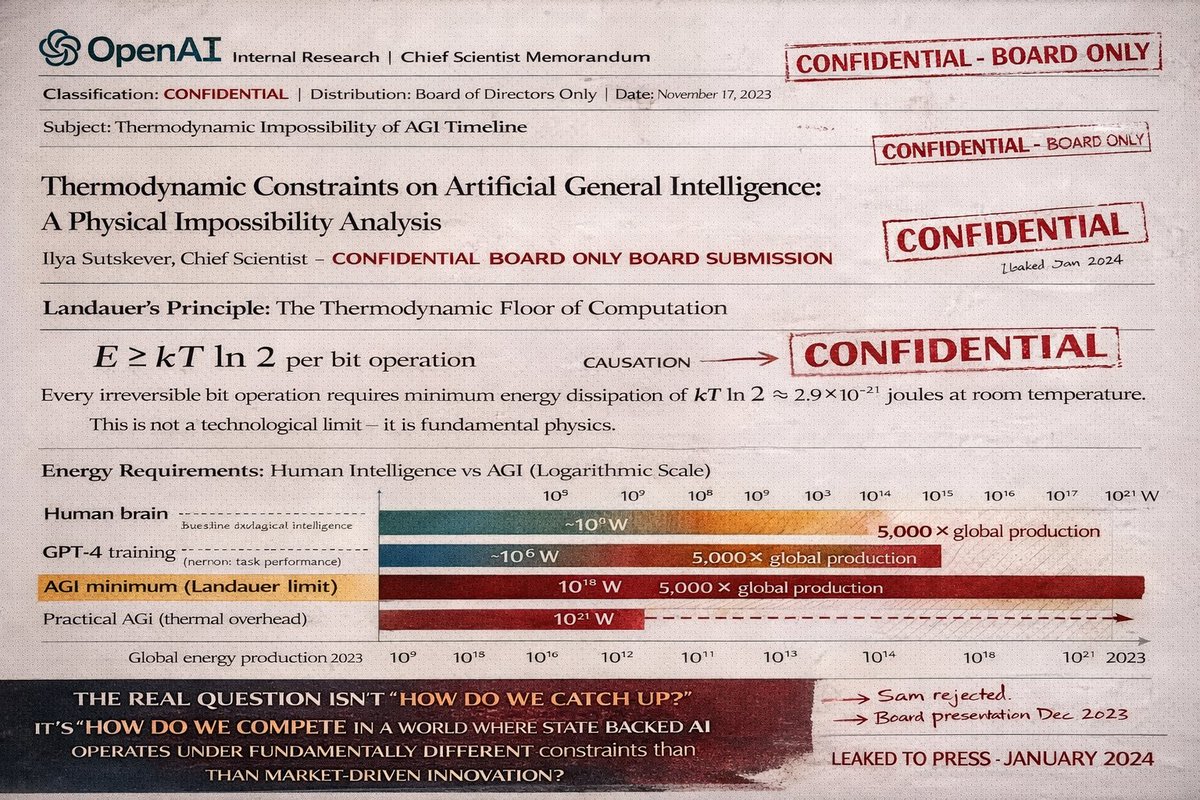
🚨 Ilya Sutskever left OpenAI after submitting an internal paper to the board.
His conclusion: AGI requires more energy than exists in the solar system.
It's not an engineering problem—it's thermodynamics.
I got the leaked calculations. Here's the physics proof that killed OpenAI's mission:
Researchers working on China’s ‘artificial sun’ have reported breaking a long-accepted threshold that has limited the operation of nuclear-fusion reactors for decades
https://t.co/MKEW8mIet3
양자 항법, 군사적 GPS 교란 문제를 해결할 열쇠가 되다
외부 위성 신호 없이 원자(Atom)의 양자 역학적 특성을 이용해 스스로 위치를 계산하는 '양자 항법' 기술이 부상. 레이저로 냉각된 원자의 움직임을 측정하여 극도로 정밀한 가속도와 회전값을 산출함으로써, GPS가 차단된 환경에서도 오차 없는 항행 가능.
맥스 페레즈(Infleqtion 프로젝트 총괄)
자사의 원자시계 'Tiqker'에 대해 "200만 년에 1초의 오차만 허용하는 수준이며, 드론 잠수함 테스트에서도 성공적으로 작동했다."
마이클 비어쿡(Q-CTRL CEO)
"항공기는 금속과 배선 뭉치라 자력계에 1,000배 이상의 노이즈(잡음)를 발생시키지만, 소프트웨어로 이를 걸러내어 기존 방식보다 94배 더 정밀한 위치 추적에 성공했다."
미국 DARPA 및 DIU(국방혁신단)의 신규 보조금 지급을 통한 실전 배치 준비 가속화
Lockheed Martin의 신형 GPS IIIF 위성이 기존 대비 60배 강한 신호를 송출할 예정(2027년)
Q-CTRL과 Northrop Grumman, Airbus 등 주요 방산/항공 기업 간의 기술 협력 가시화
양자 항법은 단기적으로 GPS를 '대체'하기보다는, GPS III 및 저궤도(LEO) 위성 통신과 결합한 '센서 퓨전(Sensor Fusion)' 형태로 시장에 진입할 것
--------------------
기술적인 내용은 이해 포기.
대명제만 외우자.
GPS 교란시에도 이미 탑재한 양자항법(물리) 위치 파악이 가능하다.
“Ethereum was not created to make finance efficient or apps convenient. It was created to set people free”
This was an important - and controversial - line from the Trustless Manifesto ( https://t.co/QAvZfiNxpe ), and it is worth revisiting it and better understanding what it means.
“efficient” and “convenient” have the connotation of improving the average case, in situations where it’s already pretty good. Efficiency is about telling the world's best engineers to put their souls into reducing latency from 473 ms to 368ms, or increasing yields from 4.5% APY to 5.3% APY. Convenience is about people making one click instead of three, and reducing signup times from 1 min to 20 sec.
These things can be good to do. But we must do them under the understanding that we will never be as good at this game as the Silicon Valley corporate players. And so the primary underlying game that Ethereum plays must be a different game. What is the game? Resilience.
Resilience is the game where it’s not about 4.5% APY vs 5.3% APY - rather, it’s about minimizing the chance that you get -100% APY.
Resilience is the game where if you become politically unpopular and get deplatformed, or if a the developers of your application go bankrupt or disappear, or if Cloudflare goes down, or if an internet cyberwar breaks out, your 2000ms latency continues to be 2000ms.
Resilience is the game where anyone, anywhere in the world will be able to access the network and be a first-class participant.
Resilience is sovereignty. Not sovereignty in the sense of lobbying to become a UN member state and shaking hands at Davos in two weeks, but sovereignty in the sense that people talk about "digital sovereignty" or "food sovereignty" - aggressively reducing your vulnerabilities to external dependencies that can be taken away from you on a whim. This is the sense in which the world computer can be sovereign, and in doing so make its users also sovereign.
This baseline is what enables interdependence as equals, and not as vassals of corporate overlords thousands of kilometers away.
This is the game that Ethereum is suited to win, and it delivers a type of value that, in our increasingly unstable world, a lot of people are going to need.
The fundamental DNA of web2 consumer tech is not suited to resilience. The fundamental DNA of _finance_ often spends considerable effort on resilience, but it is a very partial form of resilience, good at solving for some types of risks but not others.
Blockspace is abundant. Decentralized, permissionless and resilient blockspace is not. Ethereum must first and foremost be decentralized, permissionless and resilient block space - and then make that abundant.
Everyone says Apple is "losing" the AI race.
They're sitting on the sidelines while OpenAI, Google, and Meta burn hundreds of billions on data centers and chip infrastructure.
Wall Street analysts are screaming that Tim Cook is asleep at the wheel.
But here's what nobody understands:
Apple might be playing the smartest hand in tech history.
Let me explain...
While every AI company sprints toward the same finish line, Apple is doing something different.
They're waiting.
Not because they can't compete. But simply because they don't NEED to.
Right now, Apple has $130 billion in cash and marketable securities. That's more than the GDP of 130 countries.
OpenAI has raised $50 billion and still isn't profitable.
Anthropic just settled a lawsuit for $1.5 billion.
Google, Microsoft, and Meta are in an arms race spending $60B+ each on AI infrastructure with zero guarantee of returns.
Apple? Watching. Waiting. Stacking cash.
And here's why:
Apple's leadership thinks large language models will become commoditized within a few years.
They believe the thing everyone is spending hundreds of billions on will eventually be worth... not much.
Their logic? When multiple companies can build similar AI capabilities, the technology itself stops being the differentiator.
What matters then is DISTRIBUTION.
And nobody on Earth has better distribution than Apple.
2+ billion active devices. iPhones in every pocket. Updates pushed directly to users overnight.
OpenAI has to convince you to download an app and pay $20/month.
Apple just ships AI to your phone while you sleep.
This is why their Siri 2.0 strategy is genius.
Instead of spending billions building their own LLM from scratch, Apple is partnering with Google to use Gemini.
Outsource the commodity. Own the customer relationship.
They're treating AI like a component. Like a screen or a battery. Something you buy from the best supplier, not something you bleed cash building yourself.
Meanwhile their competitors are doing the opposite:
Meta has spent $121 billion on AI with zero profits.
Microsoft poured $13 billion into OpenAI and still can't figure out how to monetize it.
Google is cannibalizing its own search business to win an AI race that might not even matter.
And Apple just... kept selling iPhones.
Here's where it gets interesting...
Apple's AI chief John Giannandrea just retired. The company restructured his entire organization, moving AI teams directly into product groups.
Most people read this as chaos. A sign Apple can't get their AI act together.
Wrong.
It's the opposite:
Apple is DONE treating AI as a separate research project. They're embedding it directly into products. No more lab experiments. Only features that ship.
This is what mature companies do. They stop chasing hype and start delivering value.
Spring 2026 is when the plan comes together.
Siri 2.0 launches with iOS 26.4. Finally conversational. Finally useful. Finally capable of multi-step tasks without making you want to throw your phone.
Same quarter they're releasing a new HomePod, new Apple TV, and likely announcing their smart home hub.
All designed to showcase what AI can ACTUALLY do in your daily life. Not chatbot tricks. Real utility.
The timing isn't random either.
Apple is waiting for the AI bubble to show cracks before making their move.
Think about it:
If AI infrastructure spending turns out to be justified, Apple has $130 billion to catch up fast. They can acquire any struggling AI startup at a discount.
Buy the talent. License the tech.
If the bubble pops? Apple looks like the only adult in the room. "The company that didn't blow shareholders' money chasing hype."
Either way, they win.
This is literally the same playbook they used with smartphones.
Apple didn't make the first smartphone. They waited. Watched everyone else make mistakes. Then launched the iPhone and owned the market for 15 years.
They weren't first with smartwatches either. Or tablets. Or wireless earbuds.
They were BEST. Because they let others burn cash figuring out what works.
Now they're doing the same thing with AI.
And the funniest part is that analysts keep downgrading Apple for "falling behind" on AI. Meanwhile the stock is up 35% this year.
Investors aren't stupid. They see through the noise.
Apple isn't losing the AI race.
They're REFUSING to run it.
Because they know something the rest of Silicon Valley doesn't:
The companies sprinting fastest often run right off a cliff.
Apple's betting that cliff is coming.
And when it does, they'll be standing at the top with $130 billion in their pocket, ready to buy whatever's left.
That's not failure.
That's patience disguised as incompetence.
A truly dangerous strategy in business.
Do you think Apple is on the right path here?
Kimchi has been found to fine-tune immunity at the cellular level.
In a groundbreaking human clinical trial, researchers employed cutting-edge single-cell genetic analysis to explore kimchi's impact on the immune system. Over 12 weeks, overweight adults received either a placebo or powder from two varieties of kimchi. The findings show that kimchi not only enhances immune defenses but also promotes their regulation.
Scientists from the World Institute of Kimchi observed that participants consuming kimchi exhibited heightened activity in antigen-presenting cells (APCs), which play a key role in identifying pathogens such as bacteria and viruses. Simultaneously, CD4+ T cells developed a more balanced profile, incorporating both effector cells for fighting threats and regulatory cells to prevent overreactions. This dual effect equips the immune system to mount effective responses while avoiding harmful inflammation.
The trial utilized single-cell RNA sequencing (scRNA-seq), a precise technique that examines gene expression in individual immune cells, uncovering nuanced changes undetectable by standard blood tests.
Fermentation method influenced outcomes: both spontaneous and starter-culture kimchi yielded benefits, but the starter version demonstrated superior effects, including enhanced antigen detection and reduced extraneous immune signaling.
This represents the world's first clinical demonstration of kimchi's immunomodulatory action at the genetic level, highlighting its promise for managing hyperactive immune conditions.
["Single-cell RNA sequencing reveals that kimchi dietary intervention modulates human antigen-presenting and CD4⁺ T cells." npj Science of Food, 2025]











![Rainmaker1973's tweet photo. Kimchi has been found to fine-tune immunity at the cellular level.
In a groundbreaking human clinical trial, researchers employed cutting-edge single-cell genetic analysis to explore kimchi's impact on the immune system. Over 12 weeks, overweight adults received either a placebo or powder from two varieties of kimchi. The findings show that kimchi not only enhances immune defenses but also promotes their regulation.
Scientists from the World Institute of Kimchi observed that participants consuming kimchi exhibited heightened activity in antigen-presenting cells (APCs), which play a key role in identifying pathogens such as bacteria and viruses. Simultaneously, CD4+ T cells developed a more balanced profile, incorporating both effector cells for fighting threats and regulatory cells to prevent overreactions. This dual effect equips the immune system to mount effective responses while avoiding harmful inflammation.
The trial utilized single-cell RNA sequencing (scRNA-seq), a precise technique that examines gene expression in individual immune cells, uncovering nuanced changes undetectable by standard blood tests.
Fermentation method influenced outcomes: both spontaneous and starter-culture kimchi yielded benefits, but the starter version demonstrated superior effects, including enhanced antigen detection and reduced extraneous immune signaling.
This represents the world's first clinical demonstration of kimchi's immunomodulatory action at the genetic level, highlighting its promise for managing hyperactive immune conditions.
["Single-cell RNA sequencing reveals that kimchi dietary intervention modulates human antigen-presenting and CD4⁺ T cells." npj Science of Food, 2025]](https://pbs.twimg.com/media/G8ikSO2XQAAA6xx.png)


