🧵New paper! Five years ago, we, @FUzefovsky, Dr Alal Eran, and I, introduced empathic disequilibrium, the mismatch between cognitive and emotional empathy. In our article published in @TrendsCognSci, we discuss its theoretical and clinical implications.
https://t.co/ihwCK4Fses
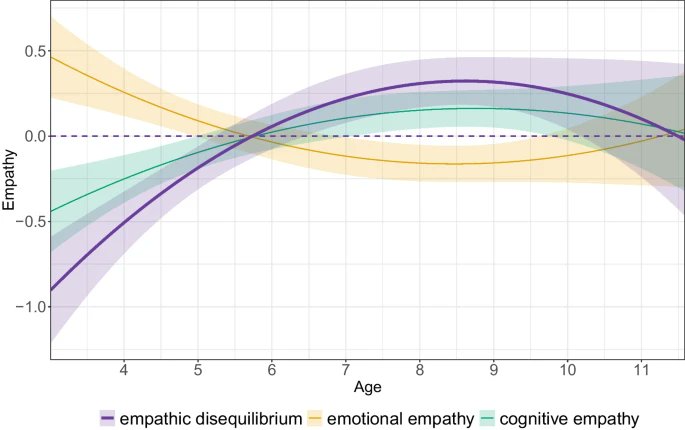
Excited to share our new study tracking how empathic disequilibrium develops in children aged 3–12! Led by
@FUzefovsky and together with Dr Rebecca Waller (@EDENLabUPenn) and @nickjameswagner, we found that both forms of empathic disequilibrium are common across development.
Finally published! In a longitudinal study (N=250) we show that empathy development is a dynamic, bidirectional process. We found that children's cognitive empathy buffered personal distress for mothers at high risk for maltreatment.
https://t.co/GMITbPeh8c
@Meidan_Adi@IdoShal
Check out our new study where we characterize groups of children who receive a late diagnosis of autism. This sheds light on possible biases/clinical challenges which impede timely diagnosis.
When datascience and clinical insight meet!
Thrilled to share our latest publication in @NatMentHealth 🚨
We explored the multimodal neural signature of face processing in autism using normative modeling and linked ICA in the EU-AIMS dataset.
Read more here: https://t.co/qXLO55zrMD
New paper led by Yael Dann in collaboration with bestie @FUzefovsky looking at paternal depressive symptoms and infants' early empathy responses (spoiler: not necessarily what you would expect).
https://t.co/IVroODWlQM
Interested in biological markers of empathy? Completed your PhD and thinking of next steps? Come work with me through the Azrieli post-doc fellowship. Details here 👇
https://t.co/F8cDZX2zXv
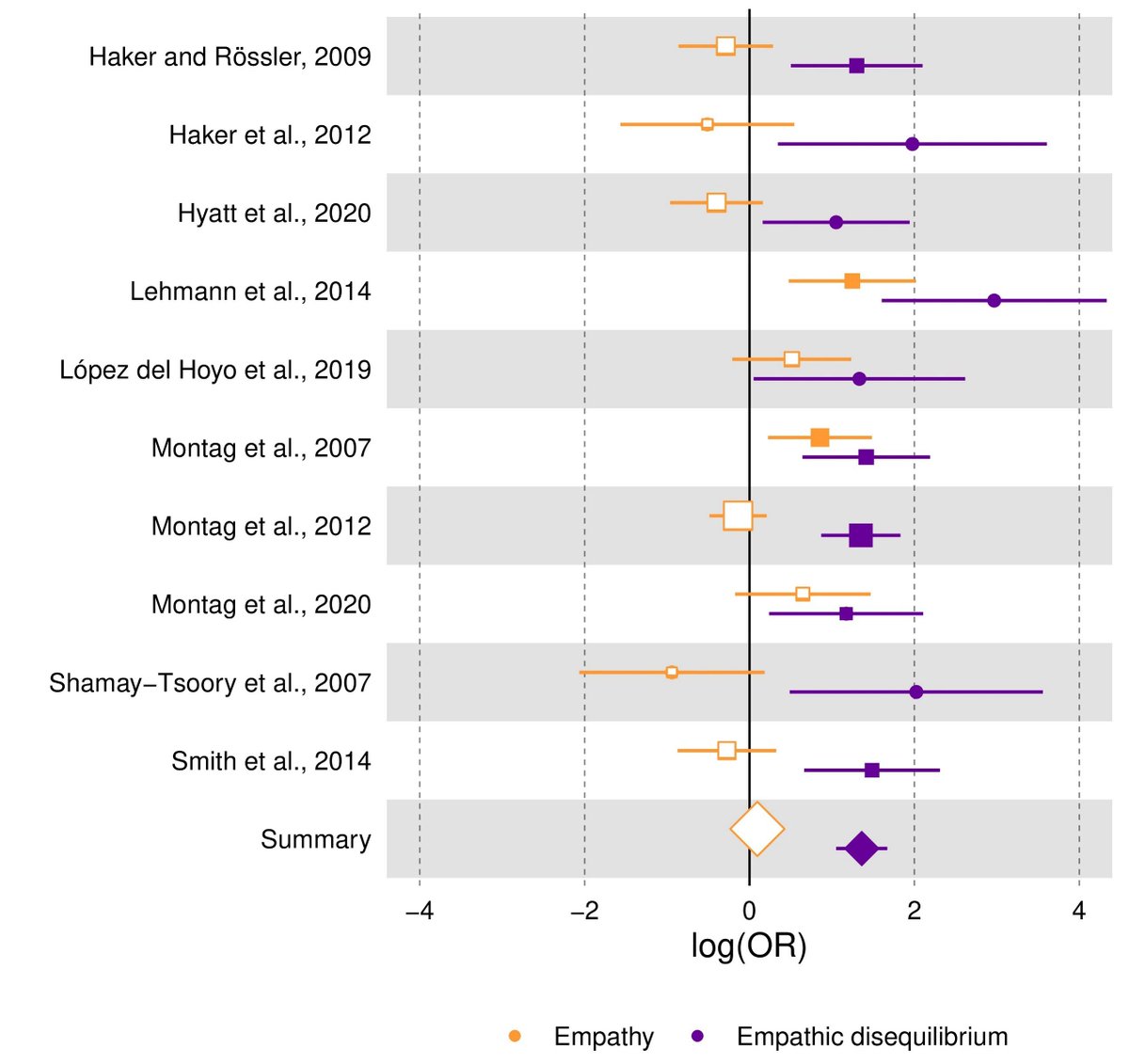
Why does this matter? Beyond understanding social difficulties, empathic disequilibrium could be a stable behavioral marker for schizophrenia—helping advance diagnosis, treatment, and stigma reduction.
Schizophrenia is complex, but empathic disequilibrium may hold the key to understanding some of the related social challenges. Check out our newest paper 🧵
https://t.co/jTZoW7WbN2
How do infants and young children empathize with others' emotions? Our latest study sheds light on a key distinction: emotional empathy is valence-specific, while cognitive empathy functions similarly across emotions. Here's what we found 🧵
https://t.co/163uZRA5lw
Our findings suggest that fostering emotional empathy for joy (not just distress) could play a crucial role in supporting positive social development in children.