New Research: Exploring the application boundaries of LLMs in mental health: a systematic scoping review https://t.co/RPCeNmYfOR #FrontiersIn#Psychology
We then discuss current limitations of the concept, the many open questions that remain, and urge future research to investigate empathic disequilibrium carefully and together with people who share this unique experience.
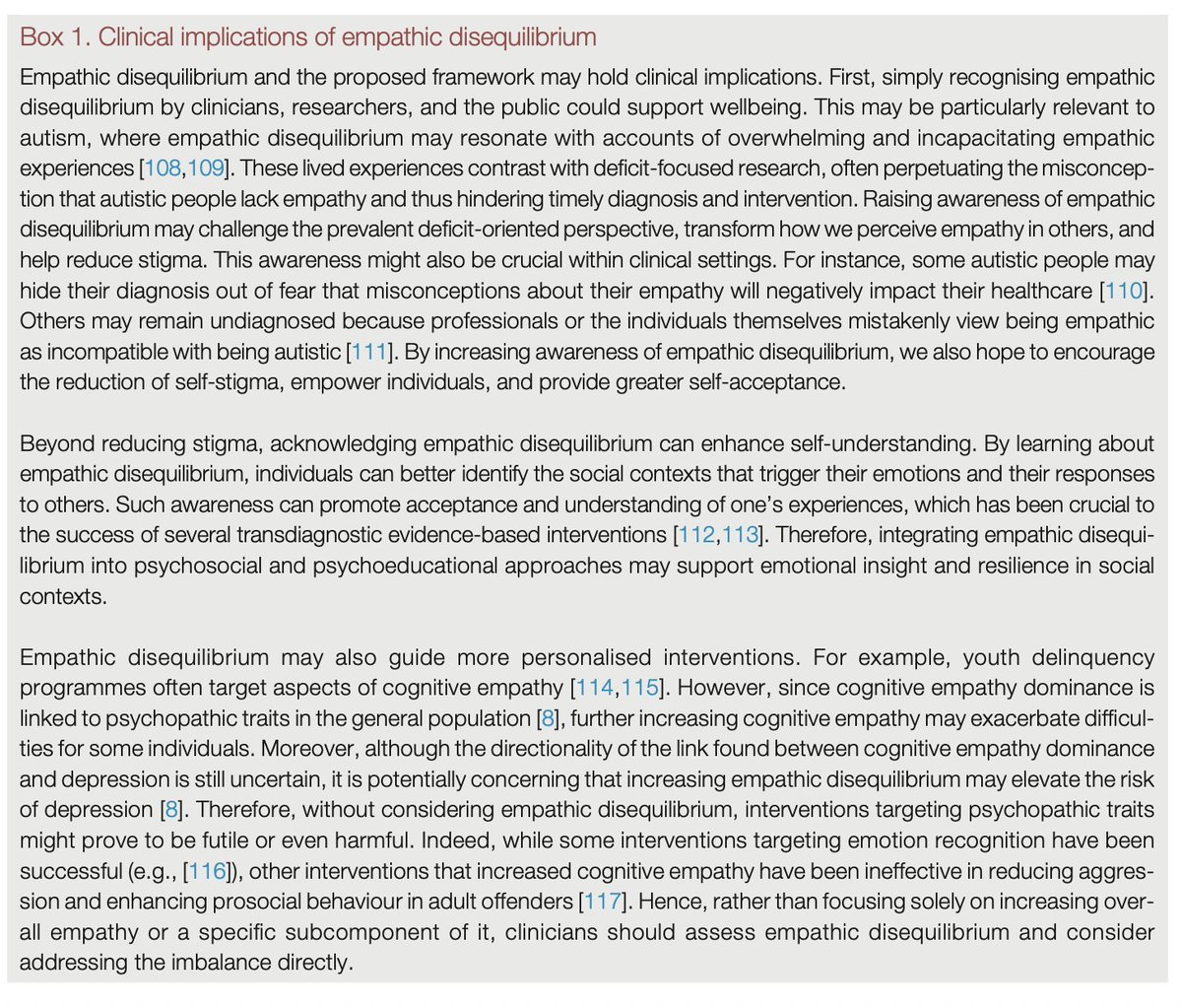
🧵New paper! Five years ago, we, @FUzefovsky, Dr Alal Eran, and I, introduced empathic disequilibrium, the mismatch between cognitive and emotional empathy. In our article published in @TrendsCognSci, we discuss its theoretical and clinical implications.
https://t.co/ihwCK4Fses
The idea has theoretical and clinical implications. It may change the way we think about empathy and help recognise and accept diverse empathic experiences, moving us beyond the usual “low” or “high” empathy narrative.
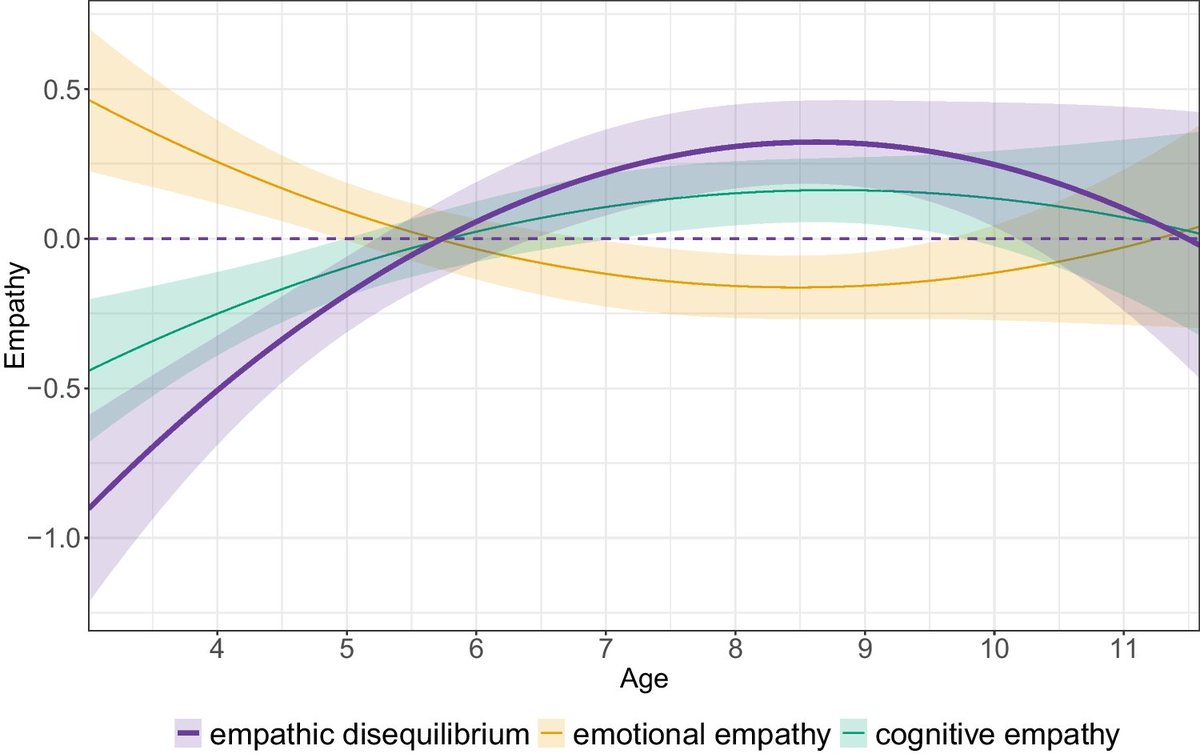
Excited to share our new study tracking how empathic disequilibrium develops in children aged 3–12! Led by
@FUzefovsky and together with Dr Rebecca Waller (@EDENLabUPenn) and @nickjameswagner, we found that both forms of empathic disequilibrium are common across development.
Recognising empathic disequilibrium can help caregivers better appreciate the strengths and challenges tied to children’s empathy and their responses to it. The study was published in European Child & Adolescent Psychiatry
@ESCAPonline, read it here:
https://t.co/YCNopyugi5
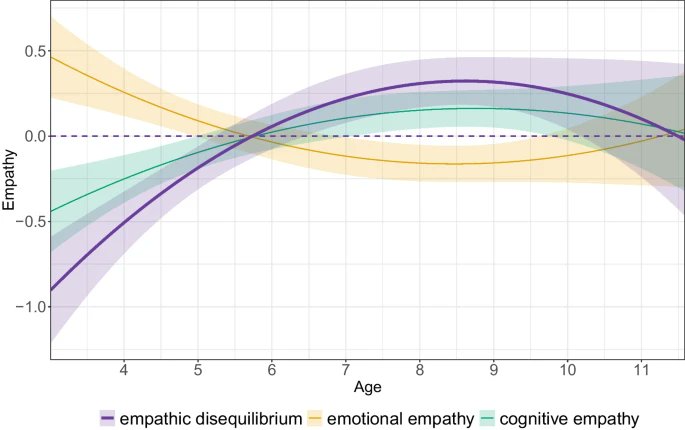
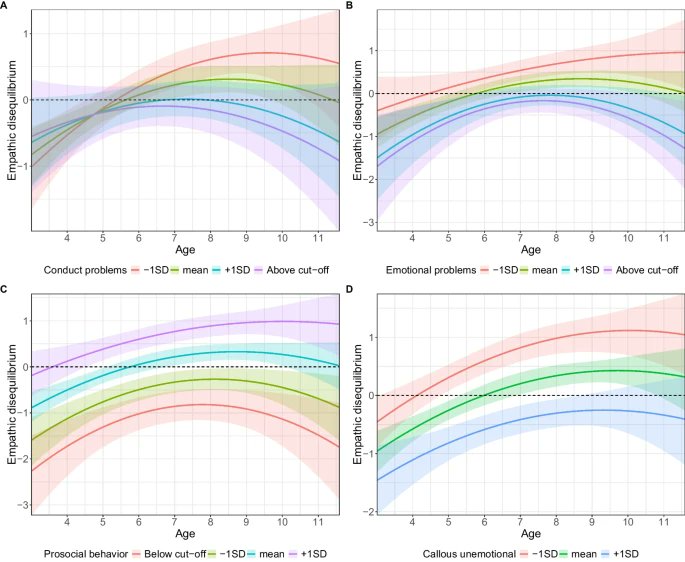
Emotional empathy dominance was typical in early childhood, while cognitive empathy dominance emerged later, with children showing empathic balance on average by age 6. These patterns also predicted emotional and behavioural challenges three months later.
What began as a hallway chat at @mrccbu with @IdoShal grew to a deep conversation and turned into a BNA insight paper. We explored subjectivity in neuroscience from the voices of ECRs.
Endless thanks, dearest Ido, and @NimrodHertz@BritishNeuro
https://t.co/Jpx8ofgV0J
Finally published! In a longitudinal study (N=250) we show that empathy development is a dynamic, bidirectional process. We found that children's cognitive empathy buffered personal distress for mothers at high risk for maltreatment.
https://t.co/GMITbPeh8c
@Meidan_Adi@IdoShal
This study identified two distinct groups among individuals with delayed autism diagnosis: one with lower support needs and fewer comorbidities, and another with higher support needs and more comorbidities. https://t.co/meQF94nwQW
New paper led by Yael Dann in collaboration with bestie @FUzefovsky looking at paternal depressive symptoms and infants' early empathy responses (spoiler: not necessarily what you would expect).
https://t.co/IVroODWlQM