Attention rate payers within the Frenchman Wood River Weed Management Area!
We have a pilot program available for funding to help off-set the cost of controlling leafy spurge!
Our thanks to the Saskatchewan Fish and Wildlife Development Fund for supporting this program!
The Sask Pasture Tour was a great success in Val Marie. Amber Kapchinske with Grassland National Park, a partner on our board, explained how they are managing invasive weeds, and their plans for leafy spurge control. Thanks to everyone who attended!
Our staff will be collecting Leafy Spurge control beetles in early July and providing them free of charge to rate payers within the Frenchman Wood River Weed Management Area. They are best suited to infestations at least 20m by 20m that will not be sprayed with herbicide.
Yellow star-thistle is an annual that spreads by seed and causes "chewing disease" in horses. It was reported in 2024 just north of Saskatoon. The weeds were eradicated and the site will be monitored for the next 5 years. Be aware and act early to keep it out of Saskatchewan.
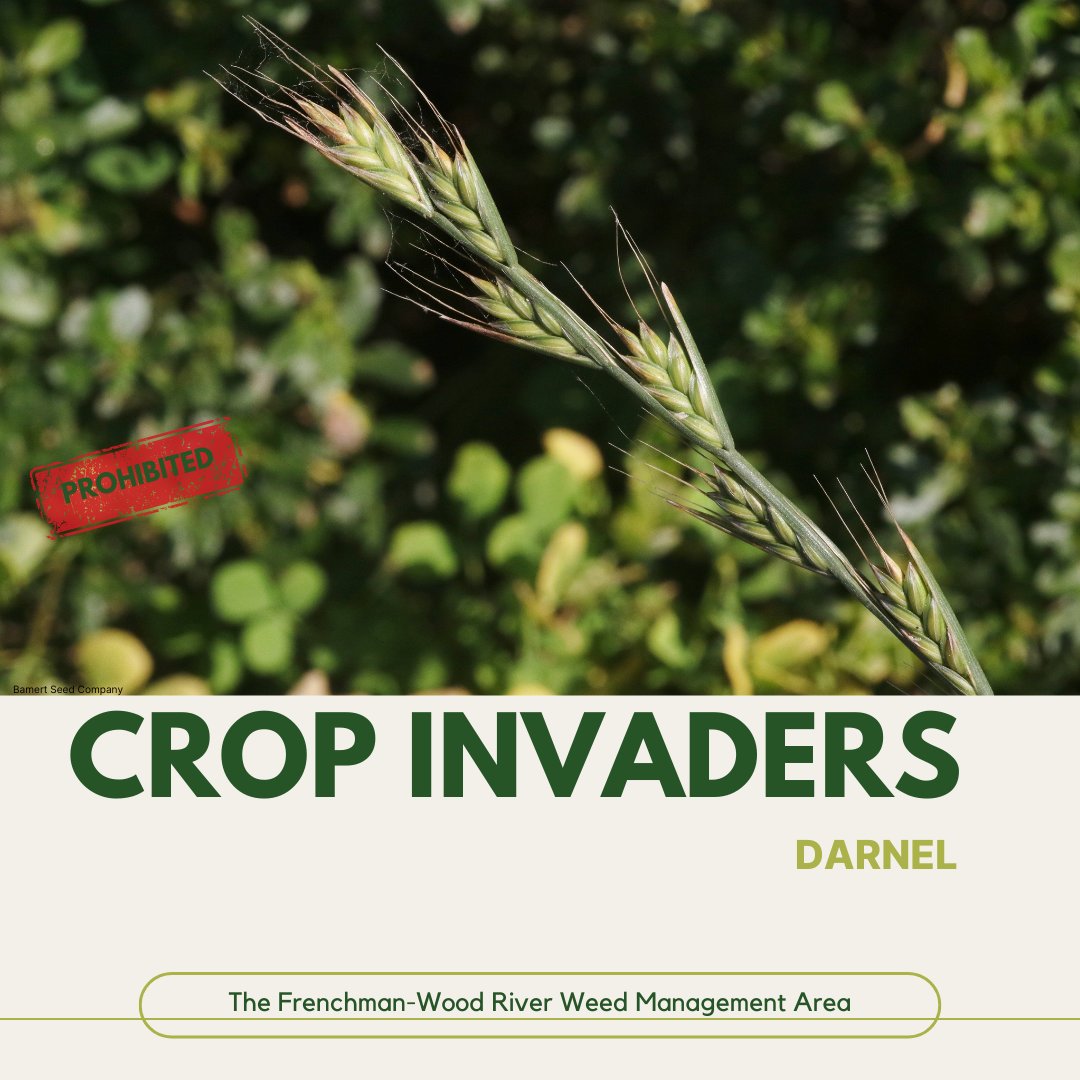
Darnel looks a lot like wheat but doesn’t belong in your crop! It competes for nutrients, lowers grain quality, and can even be toxic when consumed in large amounts. Scout for weeds early in the season and clean equipment to prevent it from entering your field.
Hound’s-tongue produces burr-like seeds that stick to clothing, fur, and animals. It's also toxic to livestock. Control before it sets seed to help stop the spread!
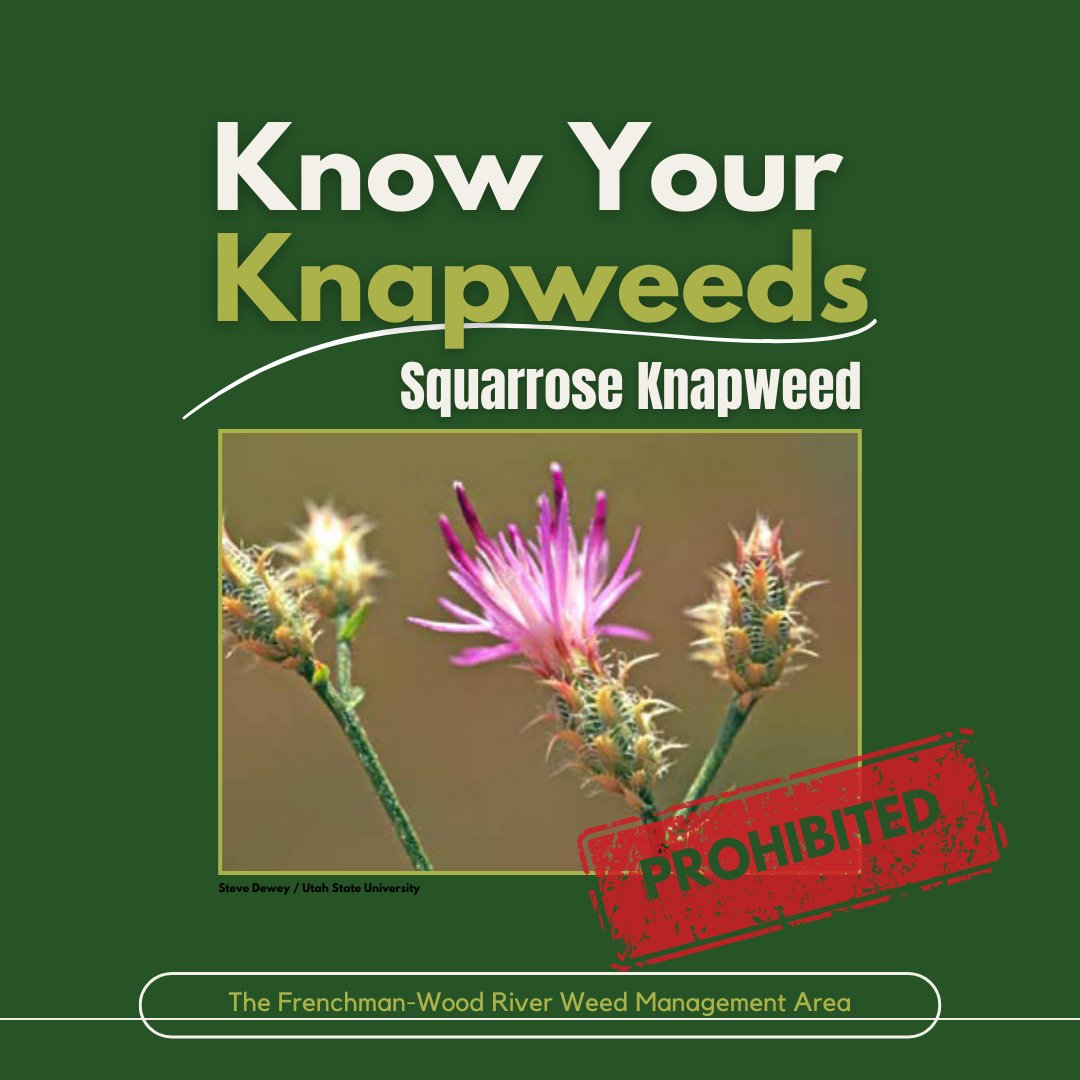
Squarrose knapweed is tolerant of alkaline soils and dry conditions. In unfavourable conditions, it can remain as a rosette for several years. Early detection helps protect our grasslands.
Saltcedar consumes large amounts of groundwater and increases soil salinity. It displaces native vegetation and alters wetland ecosystems. Learn how to spot and report it.
Woolly cupgrass can quickly take over cereal crops and reduce yields. Look for it's hairy leaves and one side of the leaf blade that has a distinct crinkle along the edge. Learn to ID it in case you encounter it in the field!
Poison hemlock is highly toxic to people and livestock; if eaten, it can result in death. It has purple blotches on the stem, a hollow stem, and a strong smell. If found, report it immediately for the safety of livestock and people.
Diffuse knapweed (looks similar to spotted knapweed) normally has white flowers and spreads quickly across rangeland from seed.
It forms stands that cattle avoid because of their sharp spines which can reduce the value of pasture. Learn how to identify and remove it early.
Garlic mustard doesn't tolerate full sun but spreads quickly in moist and shaded areas, crowding out native plants. It's easy to pull when young and should be cut or removed by the root before it sets seed.
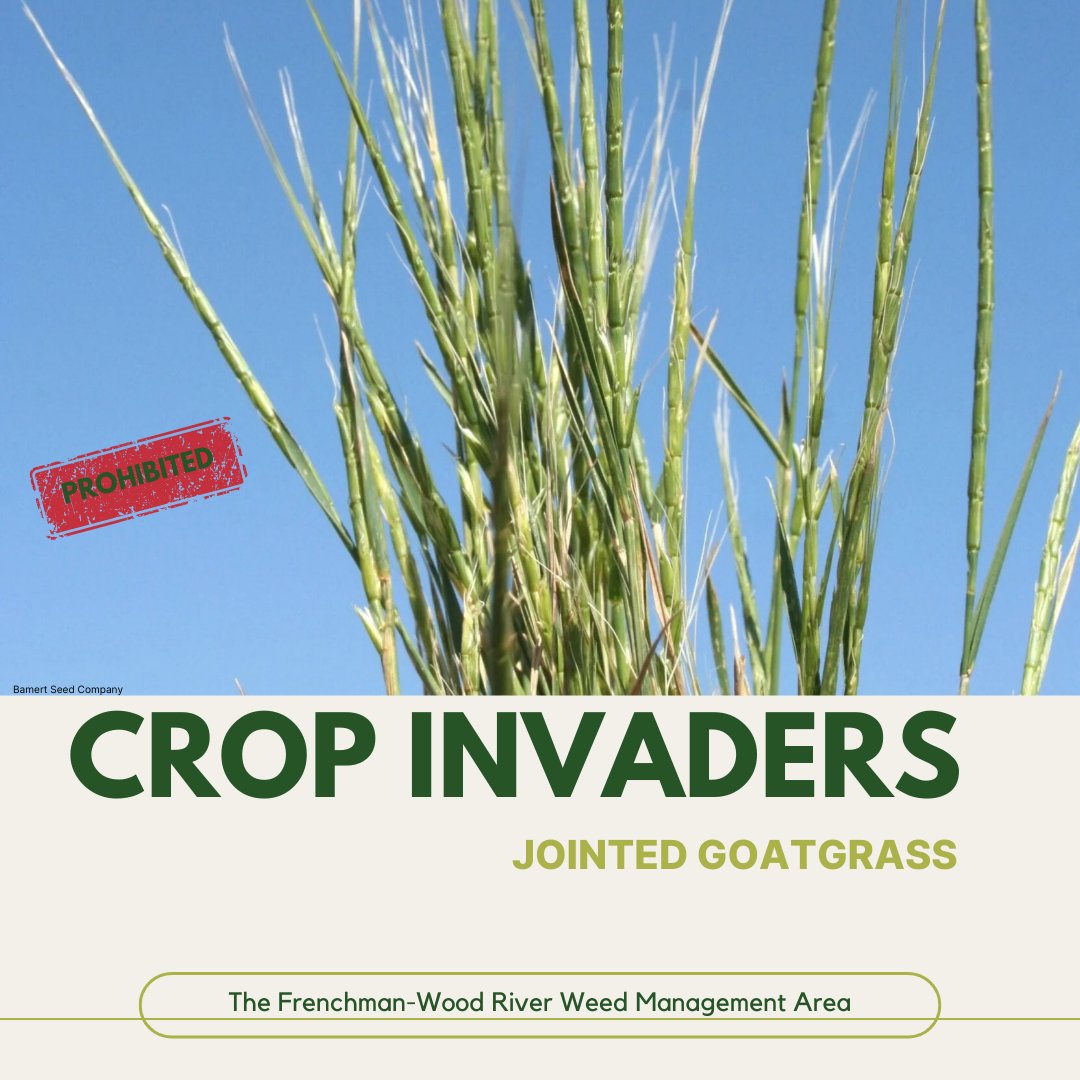
Jointed goatgrass is a winter annual that blends in easily with wheat. It reduces crop quality and yield, and its seeds are nearly impossible to separate from wheat at harvest. Prevention includes cleaning equipment and using certified seed.
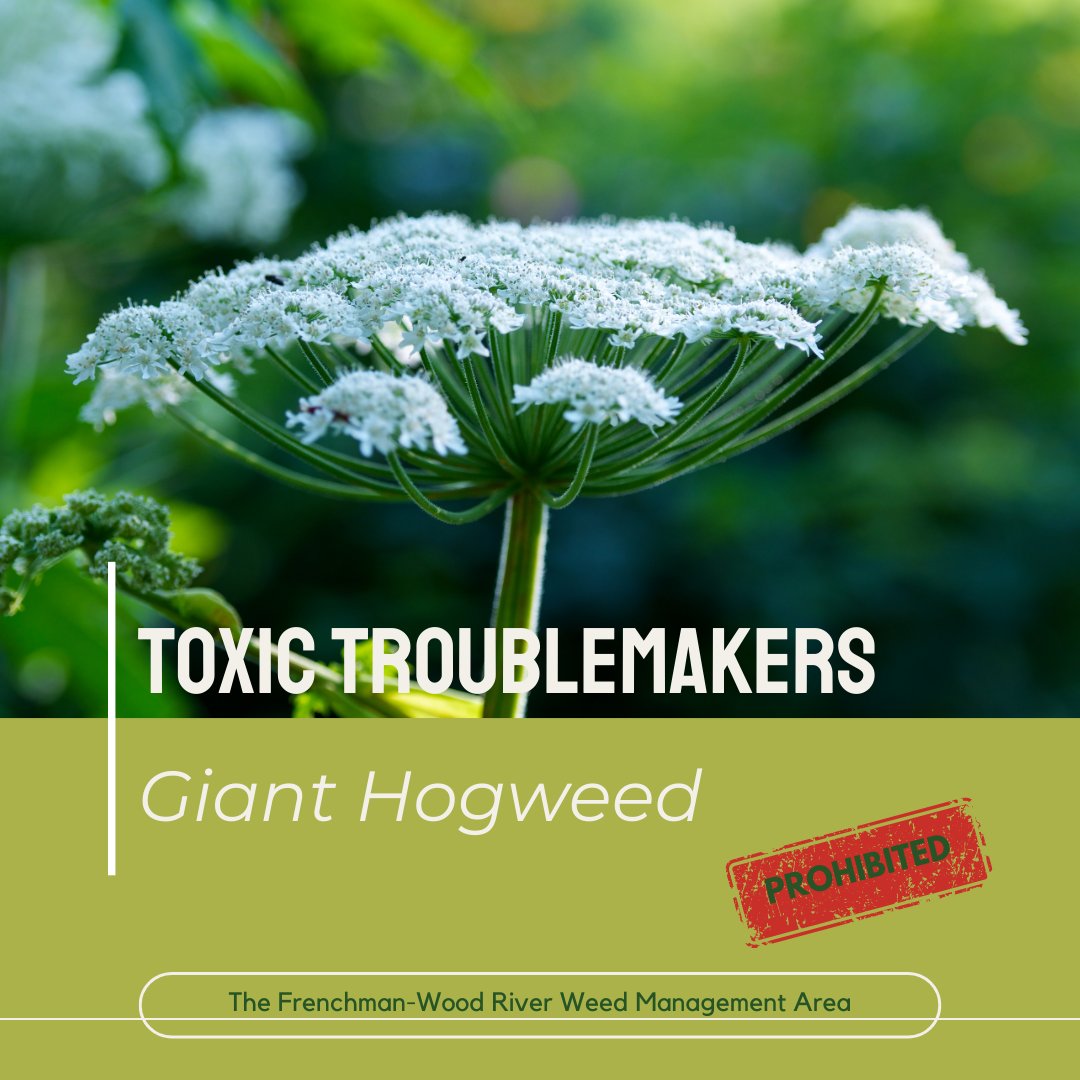
Giant hogweed can cause skin burns when exposed to sunlight. Although it hasn't been reported in Saskatchewan yet, it's best to keep an eye out. If you think you've found it, do not touch. Report it immediately.
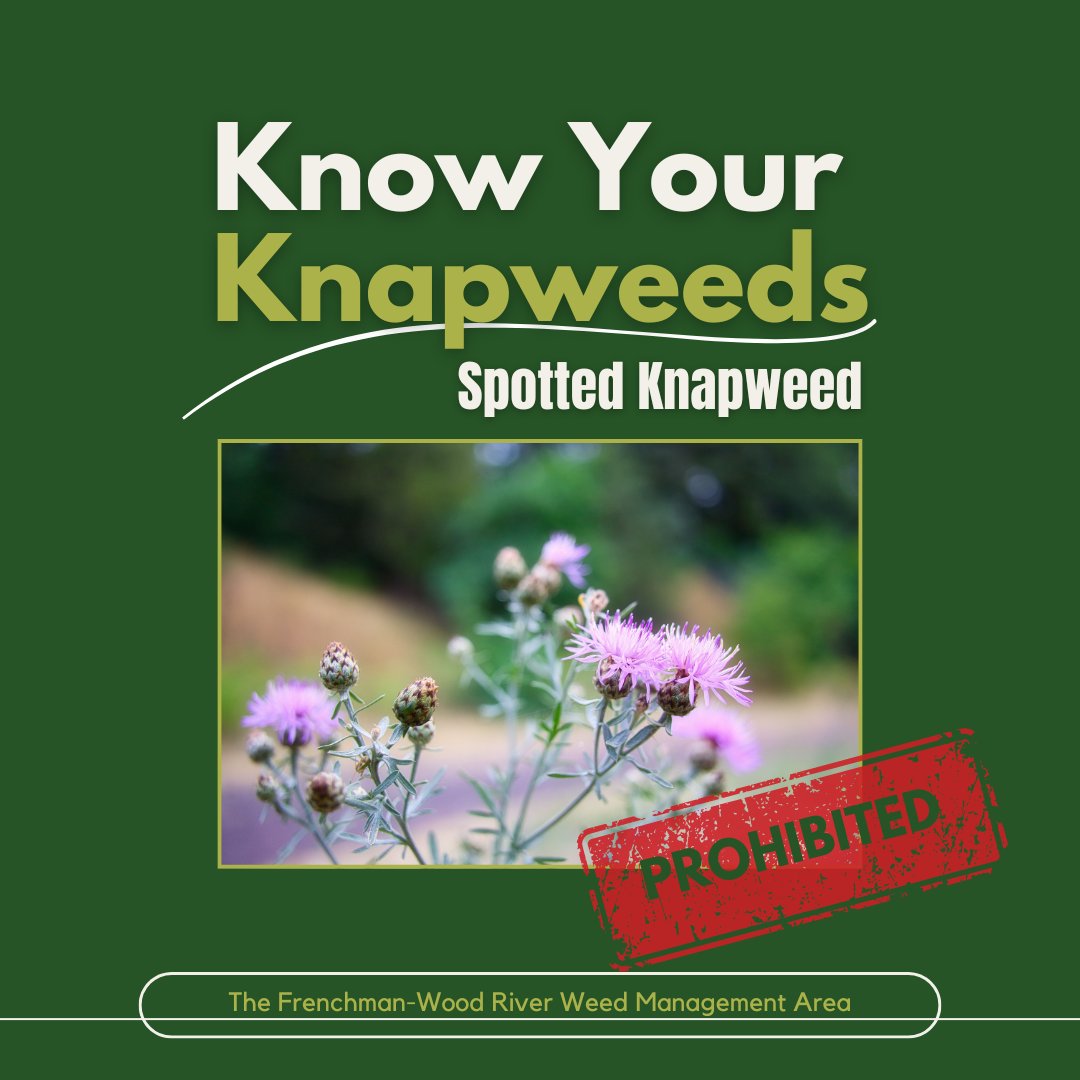
Spotted knapweed is an aggressive invader that outcompetes native plants and reduces forage for wildlife and livestock. Look for it in pastures, roadsides, and disturbed prairie. If you see it, report it!
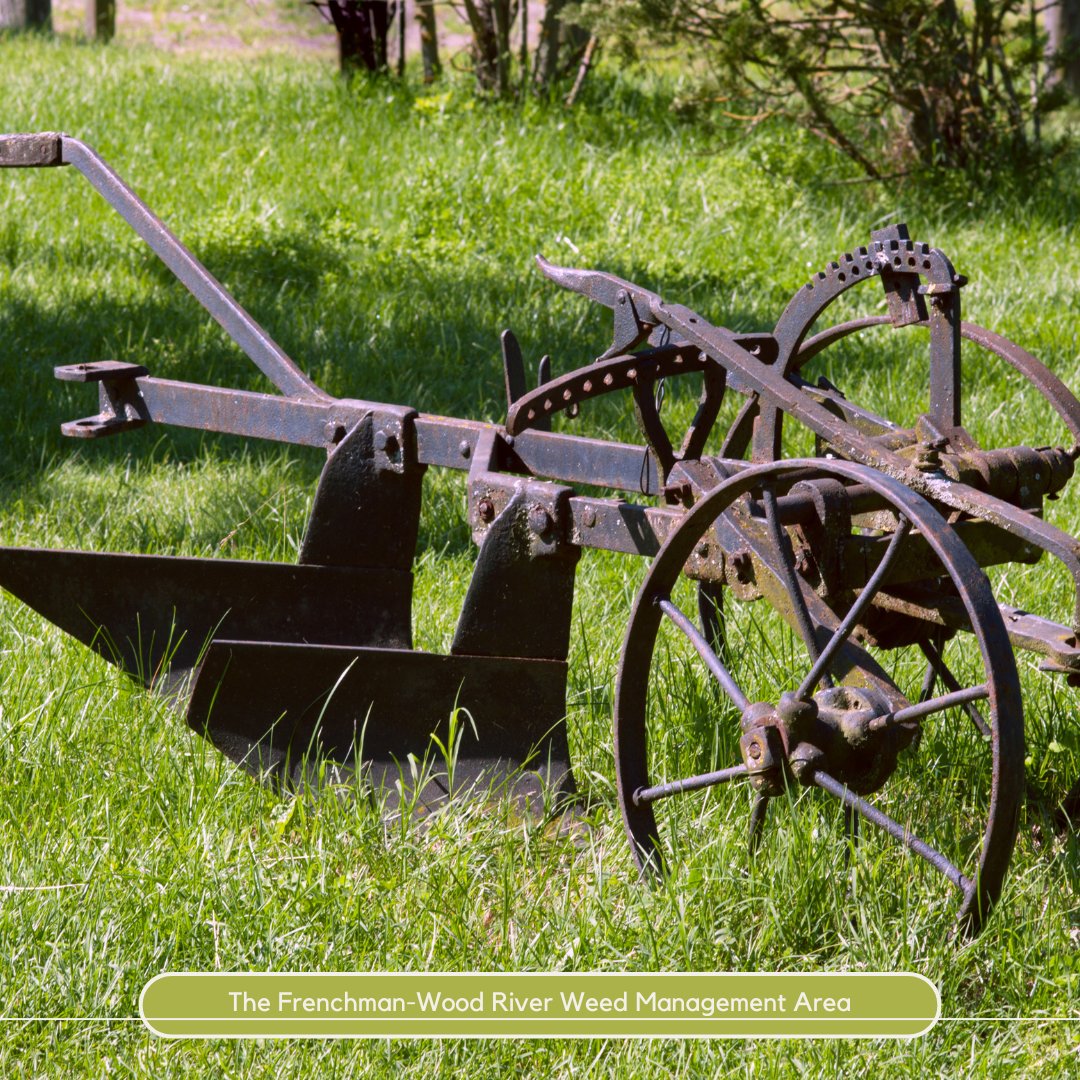
Prairie weed control has evolved from hand-pulling and plowing to herbicides and now integrated management. Early methods often led to soil erosion, while herbicides raised resistance concerns. Today, cover crops, grazing & reduced tillage balance productivity & sustainability.
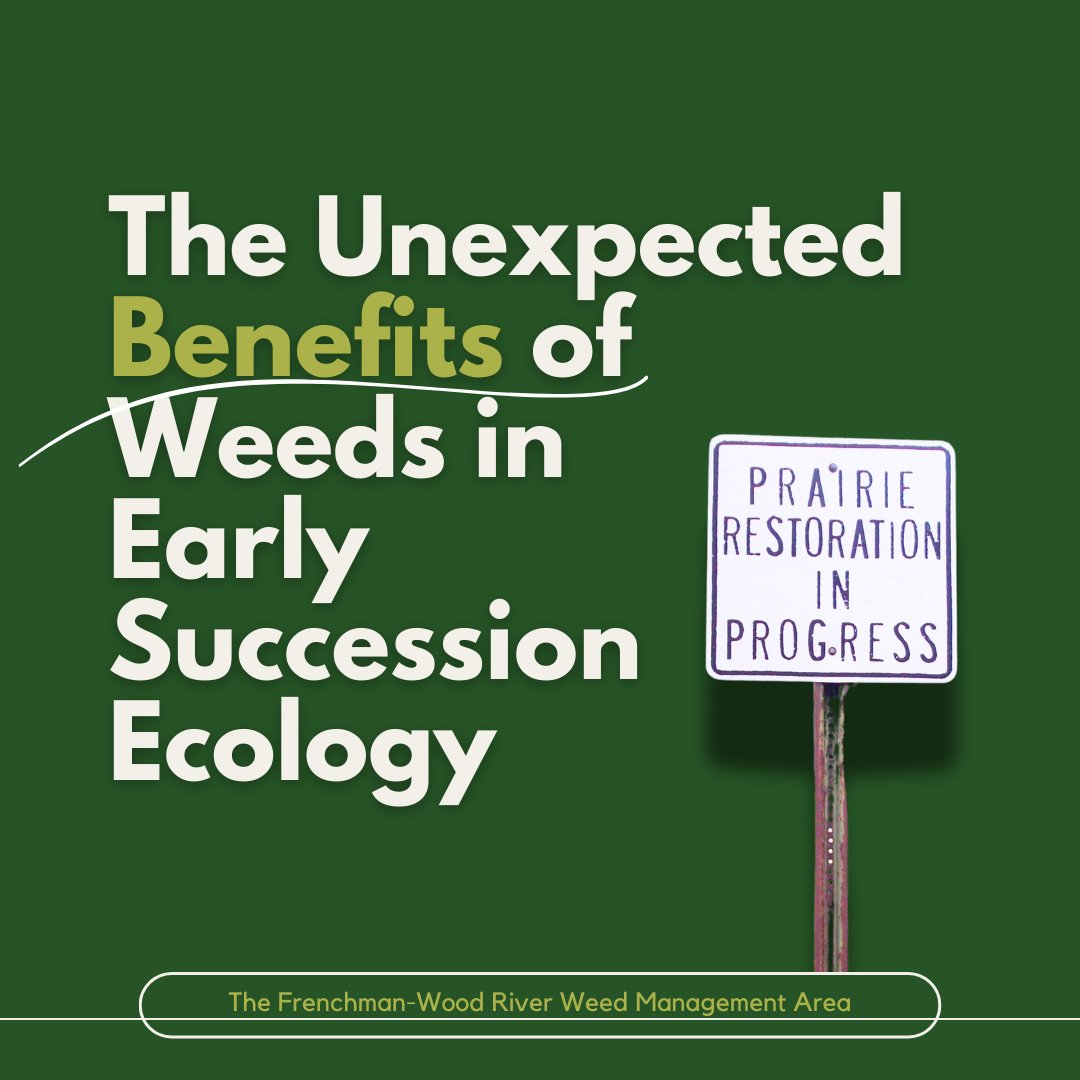
What?! Some weeds (not all!) can actually play a beneficial role in early succession ecosystems. They help stabilize the soil, create habitat for insects, accumulate and disperse plant-available minerals, and eventually pave the way for native plants to thrive.
Did you know that some weeds accelerate soil erosion? Deep-rooted weeds (like Canada thistle) can disturb and displace the soil, harden it, reduce its ability to retain moisture, and make it more difficult for native plants to grow and thrive.