A COMPANY IS A LANGUAGE
Companies are akin to complex languages, each with its own unique dialect and cultural nuances.
And I think this explains why it’s so hard for executives — especially executives — to come in from outside an organization and find their way.
At lower levels within an organization, you don’t need to be as proficient a speaker of “the language” to get by. Just as if you were a tourist with just enough basic local language skills to order lunch on vacation. If that’s all you have to do, you can get by, and the locals appreciate that you’re trying your best to be as clear and accurate as possible. The bar is lower, and the assistance and understanding from others is higher.
But at the executive level, the linguistic demands intensify. You’re quickly expected to be a proficient speaker. To know the rules, grammar (and the esoteric exceptions), phonetics, intonation, semantics, and even the non-verbal cues that influence how someone else understands what you’re trying to communicate. It’s a tall order to learn a company — a language — quickly.
As an executive, you aren’t a tourist. You’re a shopkeeper. A local. Someone who other people look to to find there own way. To get things from. To help them get unstuck. And these other employees — these these native speakers — consider you a local by way of power and position fairly quickly.
A casual browse through LinkedIn at C-level folks will unearth many short tenures. 2 years. 3 and a half. Sometimes just 1. It’s incredibly hard to become a high-expectation native speaker in such short order. This leads to what I call “churnover” — a high turnover rate driven by the churn of executives struggling to fully integrate into their new corporate language.
I don’t think there’s a fix for it either. And I don’t think it’s a bad thing. Companies try, executives try. Sometimes someone feathers in, loses their accent, and becomes a native speaker quickly. “Wow, I would have thought you grew up here”. It happens in society, it happens at work. But it’s not common. Typically, people struggle to learn a new language. They hit plateaus. Remnants of where they came from stay on the surface. Hints of their native tongue still chirp from time to time.
Ultimately, some people are better at picking up new languages than others. We know it’s true for actual languages, so we should assume it’s true at the company level, too.
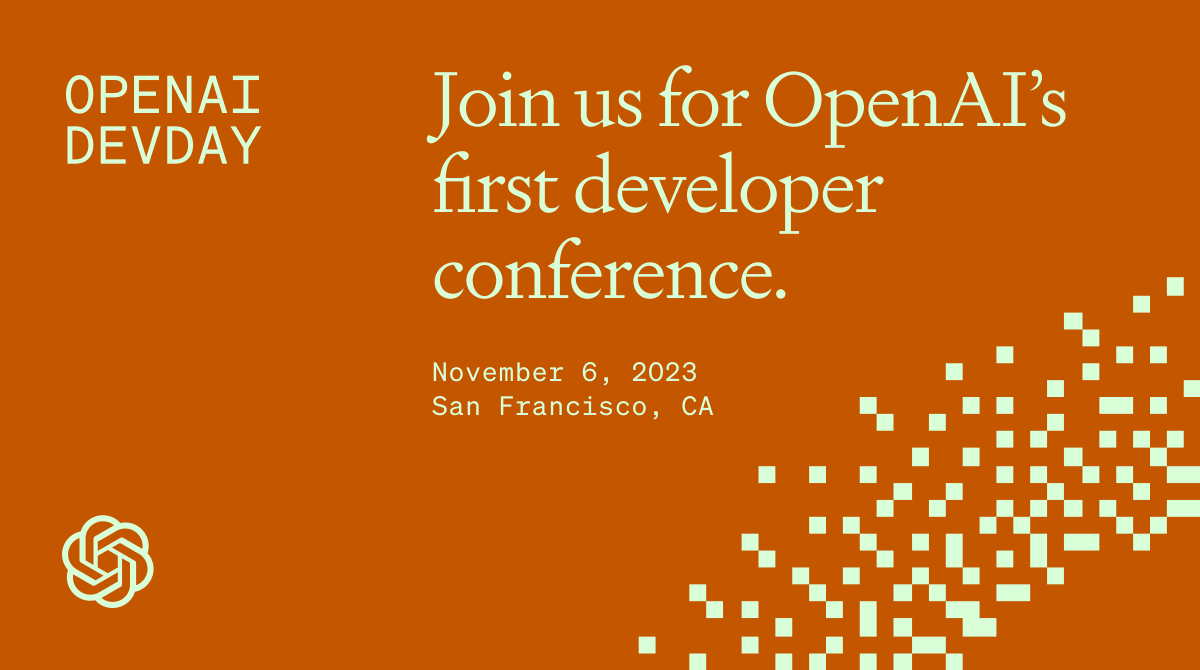
We’ll be hosting our first developer conference, OpenAI DevDay, on November 6. Registration to attend in person in San Francisco will open in a few weeks. We’ll also livestream the keynote. https://t.co/pbTc0kT5GA
We’re releasing a guide for teachers using ChatGPT in their classroom — including suggested prompts, an explanation of how ChatGPT works and its limitations, the efficacy of AI detectors, and bias. https://t.co/rVFdEUH6ph
𝗗𝗲𝗳𝗶𝗻𝗶𝗻𝗴, 𝗠𝗲𝗮𝘀𝘂𝗿𝗶𝗻𝗴, 𝗮𝗻𝗱 𝗠𝗮𝗻𝗮𝗴𝗶𝗻𝗴 𝗧𝗲𝗰𝗵𝗻𝗶𝗰𝗮𝗹 𝗗𝗲𝗯𝘁 𝗯𝘆 𝗚𝗼𝗼𝗴𝗹𝗲
In the latest paper by Google Engineers, they researched how to define, measure and manage Technical Debt. They use quarterly engineering satisfaction surveys to analyze the results.
𝟭. 𝗗𝗲𝗳𝗶𝗻𝗶𝘁𝗶𝗼𝗻 𝗼𝗳 𝗧𝗲𝗰𝗵𝗻𝗶𝗰𝗮𝗹 𝗗𝗲𝗯𝘁
Google took an empirical approach to defining technical debt. They asked engineers about the types of technical debt they encountered and what mitigations would be appropriate to fix this debt. This resulted in a collectively exhaustive and mutually exclusive list of 10 categories of technical debt, including:
🔹 Migration is needed or in progress: This may be motivated by the need for code or systems to be updated, migrated, or maintained.
🔹 Code degradation: The codebase has degraded or not kept up with changing standards over time. The code may be in maintenance mode, needing updates or migrations.
🔹 Documentation on project and application programming interfaces (APIs): Information on how your project works is hard to find, missing, or incomplete.
🔹 Testing: Poor test quality or coverage, such as missing tests or poor test data, results in fragility and flaky tests.
🔹 Code quality: Product architecture or project code must be better designed. It may have been rushed or a prototype/demo.
🔹 Dead and abandoned code: Code/features/projects were replaced or superseded but still need removal.
🔹 Team needs more expertise: This may be due to staffing gaps, turnover, or inherited orphaned code/projects.
🔹 Dependencies: Dependencies are unstable, rapidly changing, or trigger rollbacks.
🔹 Migration could have been better executed or abandoned: This may have resulted in maintaining two versions.
🔹 Release process: The rollout and monitoring of production need to be updated, migrated, or maintained.
𝟮. 𝗠𝗲𝗮𝘀𝘂𝗿𝗶𝗻𝗴 𝗧𝗲𝗰𝗵𝗻𝗶𝗰𝗮𝗹 𝗗𝗲𝗯𝘁
Google measures technical debt through a quarterly engineering survey. They ask engineers about which of these categories of technical debt have hindered their work. The responses to these surveys help Google identify teams that struggle with managing different types of technical debt. E.g., they found that engineers working on machine learning systems face different types of technical debt compared to engineers who build and maintain back-end services.
They focused on code degradation, teams needing more expertise, and migrations being required or in progress. Then, they explored 117 metrics proposed as indicators of one of these forms of technical debt—the results were that no single metric predicted reports of technical debt from engineers.
𝟯. 𝗠𝗮𝗻𝗮𝗴𝗶𝗻𝗴 𝗧𝗲𝗰𝗵𝗻𝗶𝗰𝗮𝗹 𝗗𝗲𝗯𝘁
Over the last four years, Google has made a concerted effort to define better, measure, and manage technical debt. Some of the steps taken include:
🔸 Creating a technical debt management framework to help teams establish good practices
🔸 Creating a technical debt management maturity model and accompanying technical debt maturity assessment that
evaluates and characterizes an organization's technical debt management process
🔸 Organizing classroom instruction and self-guided courses to evangelize best practices and community forums to drive continual engagement and sharing of resources.
🔸 Tooling that supports the identification and management of technical debt (for example, indicators of poor test coverage, stale documentation, and deprecated dependencies)
It's important to note that zero technical debt is not the goal at Google. The presence of deliberate, prudent technical debt reflects the practicality of developing systems in the real world. The key is to manage it thoughtfully and responsibly.
Check the full link in the comments.
_______
If you like my posts, please follow me, @milan_milanovic, and hit the 🔔 on my profile to get a notification for all my new posts.
Grow with me 🚀!
#technology #softwareengineering #programming #techworldwithmilan #development
@Ari_Reinventada Ser bastante explicito en las reglas que tiene que seguir, que las reglas estén formuladas como una lista y sean sencillas, si pasas Informacion de tu proyecto delimitarla ...
Este curso gratuito tiene bastantes trucos y colabora OpenAI https://t.co/ruFNcd4iTX
We’ve added initial support for ChatGPT plugins — a protocol for developers to build tools for ChatGPT, with safety as a core design principle. Deploying iteratively (starting with a small number of users & developers) to learn from contact with reality: https://t.co/ySek2oevod
Microsoft announces Microsoft Copilot, and declares that it will unleash creativity, by having more time to spend on making great the content instead of starting to draft. Read the article in #WorklLab: https://t.co/TYgp862JvJ
I am in shock. Just received a notification from my apartment complex of 18% rent increase, and monthly-to-month basis rent of $21,365. Are you kidding me right? I can’t afford leave in this city anymore 🤨 #Seattle
2021 was our biggest Black Friday Cyber Monday ever! Together with our friends at @GoogleCloud we achieved near-perfect uptime while averaging ~30TB/min of egress traffic across our infrastructure. That’s a massive ~43PB/day!
Here are some of the most interesting stats 🧵👇
Introducing #Evergine, I have to say that working in technology is a big challenge but at the same time it is the best experience possible, learning every day and being part of a talented group of people where nothing is impossible. https://t.co/P3JLJloBHi
i present to u the most important NFT. RT for a chance to win one of ten exclusive #McRibNFT
no purch. nec. 50 U.S./DC, 18+ only. winners need crypto wallet to receive NFT. rules: https://t.co/2QRhsPlpur
We're looking for a web developer to join us in our @PlainConceptsEN Seattle team, physically or virtually! Our team works mainly with Microsoft, creating public-facing websites, interactive experiences, and reference apps #hiring#JobAlert https://t.co/ttJGkW2M8e
I wonder sometimes if the rampant burnout and anxiety we feel is because we don’t accept — nor truly believe — that thinking is work.
But it is. And thinking can happen anywhere. At the gym. In bed. On a walk. In a sauna. At lunch.
Ideas require quiet. Solutions too.
The #edge browser on iPad has a surprising great performance compared with other options, just see how the #MSIgnite presentation runs using the #Ignite2Screen mode. https://t.co/veiPIvPMgd
A las 15h CET comienza el primer día de evento #AnfitrionasW4TT. Mi charla es a las 20.30h. Anímate a conocer sobre #accesibilidadweb mientras preparas la cena! 😛
Agenda 👉https://t.co/FbwkCcOhn9
Registro 👉 https://t.co/efXo7N8EBM
Spent part of the day testing with @VicFerGar the new @azure Remote Rendering integration for #WaveEngine.
It is amazing be able to see a 40M polygon model running on #hololens 2.
It is possible to use local and remote objects because the depth buffer is shared.