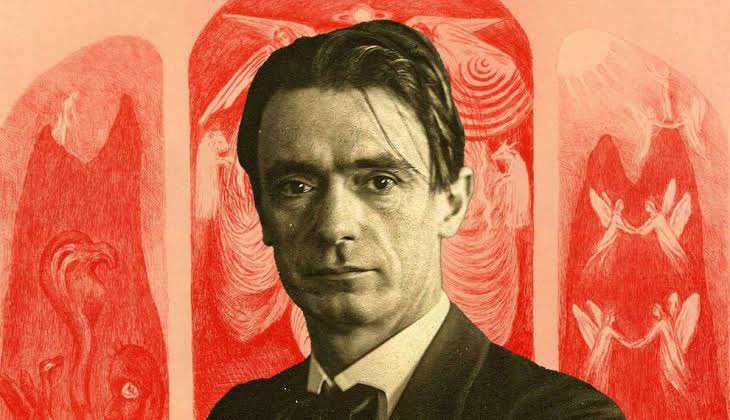
Neville is highly effective for changing outer conditions through inner assumption.
Gurdjieff and Steiner are more oriented toward long-term transformation of consciousness itself and understanding the larger spiritual picture. Many people find Gurdjieff and Steiner harder at first and less immediately rewarding in the “get what I want” sense.
Ask yourself:
• Do you mainly want better outer results (money, relationships, circumstances) plus a strong mystical identity? → Stay primarily with Neville for now and deepen it.
• Are you more drawn to rigorous self-observation, waking up, or a systematic spiritual science? → Explore Gurdjieff or Steiner in parallel.
• Which style actually holds your attention and produces results for you?
If Neville is already resonating, keep working with it seriously rather than switching out of FOMO. You can always read In Search of the Miraculous (Ouspensky on Gurdjieff) or Steiner’s Knowledge of the Higher Worlds as complementary material without abandoning what you’re liking.
The most useful path is the one you actually practice.
Gurdjieff's claim is simple and uncomfortable: most people live on autopilot.
Same reactions, same moods, same thoughts, all running without you.
His path starts with waking up to that, before you try to change anything else.
Try his basics for 30 days:
1. Every time you walk through a doorway, stop for one breath. Feel your feet, your hands, your whole body in the space.
2. Pick one habit and watch it run without fixing it. The way you reach for your phone, how you sit, your tone when you're irritated.
3. Once a day, do the opposite of what your mood wants, in something small. Tired and skipping the walk? Take it. Annoyed and about to snap? Stay quiet.
Ask yourself:
• How much of today did I actually live awake?
• Can I watch myself react without reacting?
• Which of these will I actually practice?
In Search of the Miraculous is the book to start with. The most useful path is the one you do.
Gurdjieff and Steiner both say you're asleep, but they wake you up differently.
Gurdjieff: you're a machine running on autopilot. Wake up by watching yourself in the moment.
Steiner: you're a being with untapped faculties. Wake up by training them step by step.
Try Gurdjieff's way today:
1. Set 3 alarms. When each one goes off, stop and feel your whole body in the room: hands, feet, breath.
2. Watch one habit run without changing it. Your reaction to a text, how you hold your phone, your tone when you're annoyed.
3. Notice how often you're lost in thought instead of present.
Try Steiner's way this week:
1. 5 minutes of full attention on one simple object, daily.
2. Do one deliberate action at the same time each day.
3. Replay your day backward at night, as a neutral observer.
Gurdjieff trains awareness in the moment.
Steiner builds the faculties over time. Start with one, then add the other.
Start with In Search of the Miraculous or Knowledge of the Higher Worlds.
Pick the one you'll actually practice.
GTA 6 drops in 8 days.
Millions will spend hundreds of hours controlling a character on a screen.
Now ask yourself who's controlling you.
Tonight, run this test:
1. Count how many times today you reached for your phone without deciding to.
2. Notice how many reactions were scripted. Same irritation, same excuse, same loop.
3. Ask: if this were a game, would I be the player or the NPC?
Over the next 8 days I'll show you how three teachers saw life as a game, and how to take the controller.
Neville changes your outer world through inner assumption.
Rudolf Steiner changes the one doing the assuming.
His path is slower and harder at first, but it builds a mind that stays steady when conditions don't.
Try his basics for 30 days:
1. Pick a simple object, like a pin or a pen. Hold your full attention on it for 5 minutes. Every time your mind wanders, bring it back.
2. At night, replay your day backward, from bed to morning, like watching a film as a neutral observer. No judgment, no guilt.
3. Do one small action at the same time each day, on purpose, for no reason except that you chose it.
Ask yourself:
• Do you want faster outer results? Stay with Neville.
• Do you want a mind that can't be shaken? Add Steiner.
• Which one do you actually practice?
Knowledge of the Higher Worlds is the book to start with. The most useful path is the one you do.
A shorter version, if you want a quick follow-up:
Neville: change what you assume. Steiner: train who is assuming.
Five minutes of pure focus on one simple object, every day, will do more for your mind than an hour of scrolling.
Do both. Practice daily.
Neville is highly effective for changing outer conditions through inner assumption.
Gurdjieff and Steiner are more oriented toward long-term transformation of consciousness itself and understanding the larger spiritual picture. Many people find Gurdjieff and Steiner harder at first and less immediately rewarding in the “get what I want” sense.
Ask yourself:
• Do you mainly want better outer results (money, relationships, circumstances) plus a strong mystical identity? → Stay primarily with Neville for now and deepen it.
• Are you more drawn to rigorous self-observation, waking up, or a systematic spiritual science? → Explore Gurdjieff or Steiner in parallel.
• Which style actually holds your attention and produces results for you?
If Neville is already resonating, keep working with it seriously rather than switching out of FOMO. You can always read In Search of the Miraculous (Ouspensky on Gurdjieff) or Steiner’s Knowledge of the Higher Worlds as complementary material without abandoning what you’re liking.
The most useful path is the one you actually practice.