I was going to make this into a nicely phrased point about venture debt, but I decided to just give you a screenshot of the DM I sent to a YC founder yesterday.
We are excited to announce that Quora has raised $75M from Andreessen Horowitz. This funding will be used to accelerate the growth of Poe, and we expect the majority of it to be used to pay bot creators through our recently-launched creator monetization program. (thread)
Founder Life Pro Tip: Pick a co-founder whom you love.
Not just like--but love like a brother or sister, where you feel like that person always has your back.
Startups are hell, but doing it with someone whom you trust 100% makes it tolerable. Dare I say fun?
A friend who works at Google said he wanted to raise a topic at the next team all-hands.
His manager took him aside and said they don't use the phrase "all-hands meeting" on his teams at Google because it's insensitive language.
Because not everyone has hands.
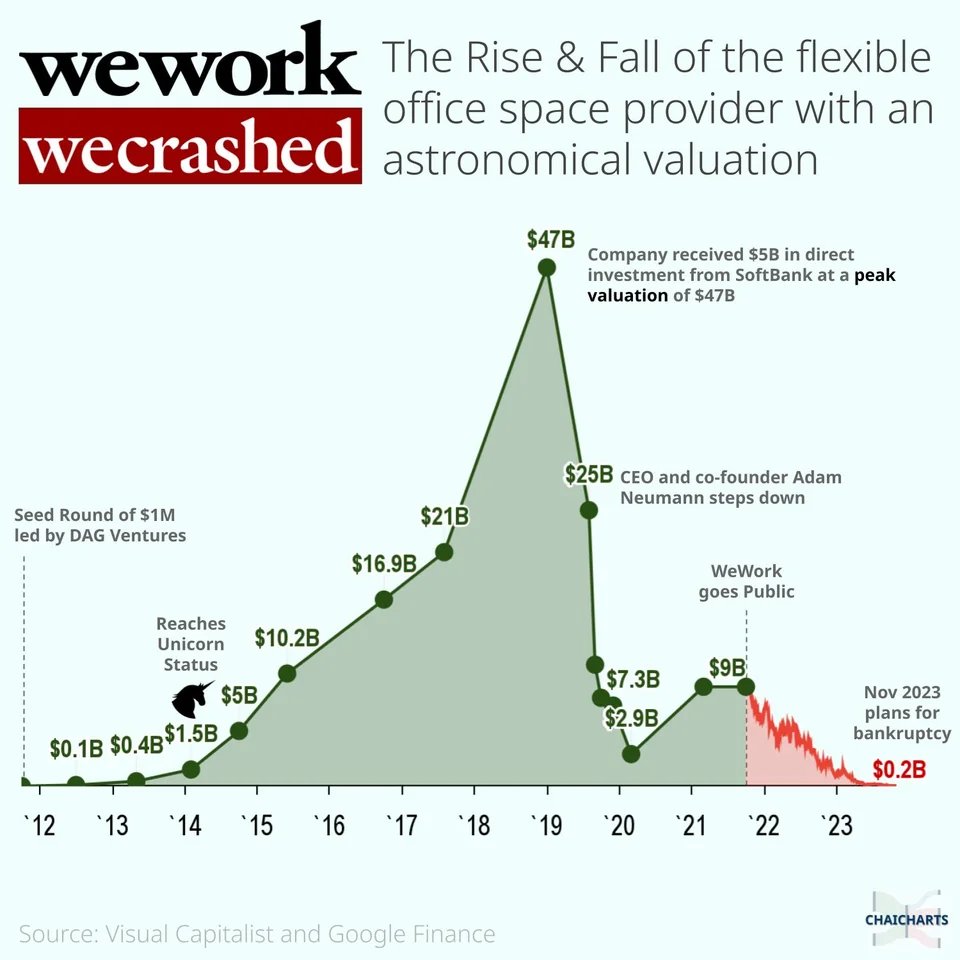
The news JUST broke that WeWork is filing for BANKRUPTCY next week
The same WeWork that was valued at $48 billion is now worth ~$48 million
I sold my company to them in 2019. And was briefly the head of Product Strategy of WeWork.
Here's what went wrong and what we can learn:
#1 People can turn on you on a dime
In the WeWork corporate halls, I witnessed folks singing praises of Adam Neumann, almost to the point of worship.
Adam could do no wrong, Adam knew all the answers, Adam could fix this.
But as soon as they realized their stock was tanking, they turned on him.
It happened overnight. Literally.
This taught me a lot about human nature.
Trust can be broken in seconds.
#2 Doing too much in business never works
WeWork was working on like 100 businesses at once, but never really figured out the economics of the core business.
Seems obvious, but get your house in order first, before you go and decide to venture out.
I’m a big believer in the multipreneur movement, owning a portfolio of businesses that cash-flow, not a bunch of businesses that drain cash aka WeWork.
#3 The valuation of your venture-backed business really doesn't mean a whole lot.
I met people at WeWork in summer 2019 that told me they were excited for the IPO so they could buy their house.
They were already house shopping.
"Yeah, I'll probably put $600k into renovations too. I know a good contractor if you need one."
I cringed.
Pretty delusional.
Never count on your stock options.
Consider it gravy.
(Thankfully I had very little stock.)
#4 The community piece was actually on-point.
This one is kinda a hot take.
Probably because the community-adjusted IPO was pretty made fun of.
But that's not what I'm talking about.
The idea of WeWork being a community is a valuable one.
Because when you build a community, you have trust and attention.
And when you have trust and attention, you can build products to support their rituals.
So, here's what would have made WeWork more successful:
I think if WeWork built vertical-specific co-working, that would have worked better.
WeWork for designers, WeWork for artists, etc.
With the ultimate goal of building a portfolio of vertical SaaS.
I think there is a tremendous opportunity to:
Step 1) Build community
Step 2) Build vertical SaaS on top of it
(I'll link an interesting graph on the state of verical SaaS in the next tweet)
If WeWork would have had a smaller portfolio of niche co-working spaces, say in NYC, London, and LA only... and built their enterprise value via vertical software...
Now that could have been not just a $47 billion startup, but a $470 billion business.
What do you think about this whole WeWork bankruptcy?
--
If you want more stories like this, reply to this tweet so I know you liked it.
Follow me at @gregisenberg if you enjoyed, and link in bio for deeper stuff like this. It'll take a few seconds
I don't share stuff that ChatGPT wrote, but real raw stories of my unedited thoughts.
Have a beautiful day!
@paulg Fascinating how this will happen soon also to universities. You will have to understand from where and how you will learn in a distributed and horizontal way rather than pick up a university brand. Next big thing is about education.
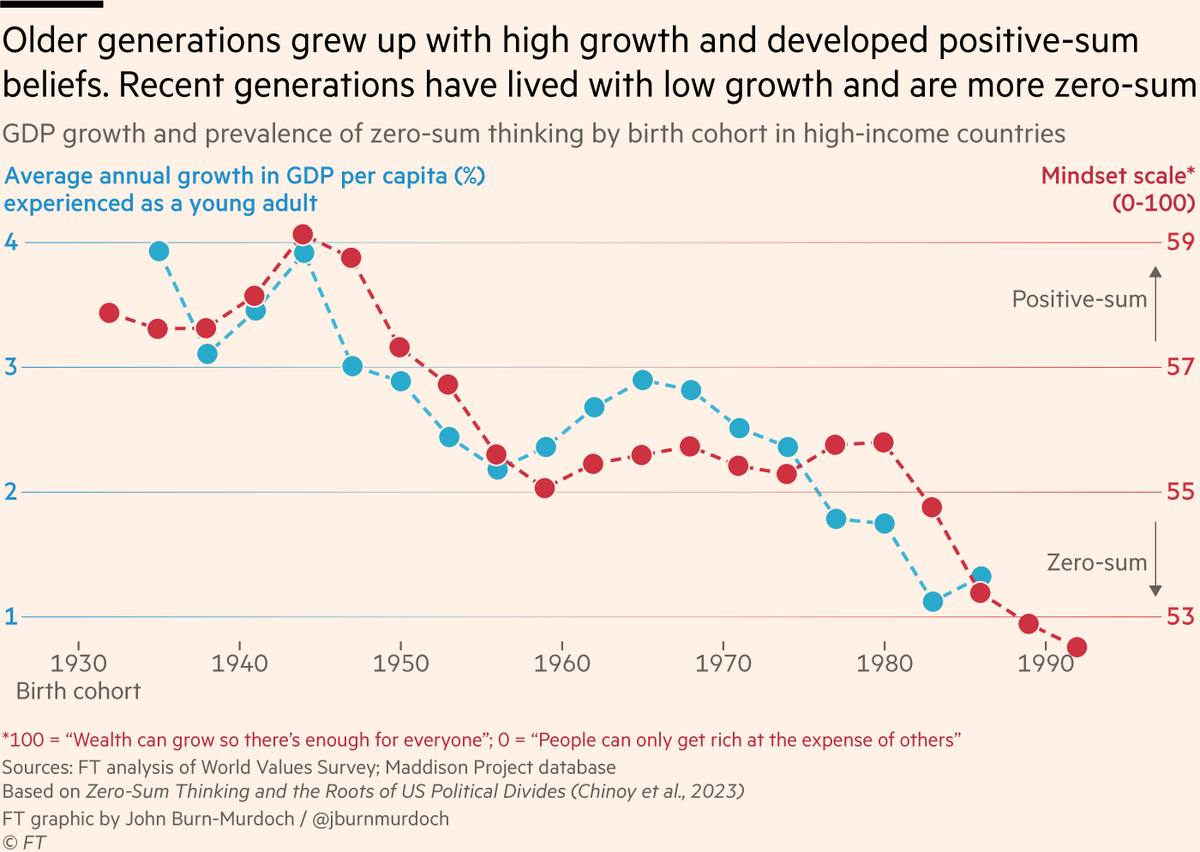
NEW: a recent study found a fascinating pattern
People are becoming more zero-sum in their thinking, and weaker economic growth may explain why
Older generations grew up with high growth and formed aspirational attitudes; younger ones have faced low growth and are more zero-sum
One of the greatest lectures on innovation, entrepreneurship, and @elonmusk I have ever heard. It is a must listen to conversation that will inspire you to find and unleash the Elon within! Great job Lex and Walter! Just Wow. ❤️