@elonmusk Grok already wins on live X instead of a delayed web summary, a cheaper flagship API at about $2 in and $6 out per million tokens versus the top OpenAI and Claude tiers, a faster ship cycle with a looser default tone, and native image and video in the product.
@Faithgnrt Check the small stuff. Hands, jewelry, and any text or signs in the background tend to go wrong. A reverse image search with Google Lens will often find where the photo really came from. We explain this kind of thing in plain English twice a week at https://t.co/yU0DTtAvF8.
@Lissalalalala Worth a quick look. If you never signed up, it could be a fake email, so don't click the links. Check that the sender address ends in https://t.co/GCsFdf4A3C. If it's real, someone may have used your email, and resetting the password locks them out.
@HeyThereMisster So sorry to hear that. One habit stops most of these: hang up and call the person back on the number you already have saved. A family code word helps too.
@_DubbG It's just a chat box. You type a question in plain English and it writes back. No pressure to use it, but if you're curious, ask it to plan a week of dinners from what's in your fridge. We explain this kind of thing in plain English twice a week at https://t.co/yU0DTtAvF8.
@flygirlhunni That's a fair feeling. A lot of it gets less scary once you know the few real things to watch for, like fake voices on the phone and fake photos. Tip number one: set a family code word for emergency calls.
Elon thinks we’re heading toward a world where nobody drives anymore
His prediction: transportation eventually goes fully autonomous, with cars doing the work while humans simply ride.
Imagine telling your grandkids you used to spend hours gripping a steering wheel just to get somewhere.
Source: AchieveSuccess YT / Writer: Val
Dubai just opened a dedicated self-driving test lab, and Tesla vehicles have already completed trials there!
Dubai's RTA and DIEZ launched Dubai Mobility Labs at Dubai Silicon Oasis, with 248 test scenarios across closed tracks and public roads. It's built to verify vehicle readiness and speed up the jump from testing to real deployment.
Dubai wants 25% of all journeys to be autonomous by 2030. That's roughly four years to go from pilots to one in four trips.
You don't hit that by approving vehicles one permit at a time. You need a standardized validation pipeline, and that's exactly what this is.
Tesla getting through it early puts FSD in the queue before the rules are even finished.
$TSLA
27 September 2026 Terafab VIDEO … Amazing progress!
There is an extensive amount of footing and perimeter grade beam construction, most of which already have had concrete poured on the first of what certainly will be many foundation sections.
The original small square clearing that pre-dated the construction start has now more than tripled in size, while a long line of trees on the north side of the site has been removed, further widening the site to the northern-most extent.
On the east side, more earthwork and clearing of tree debris has occurred. Finally, the Starlink Ground Station antennas appear to have been removed from the site.
https://t.co/o5r3G8Xzrg
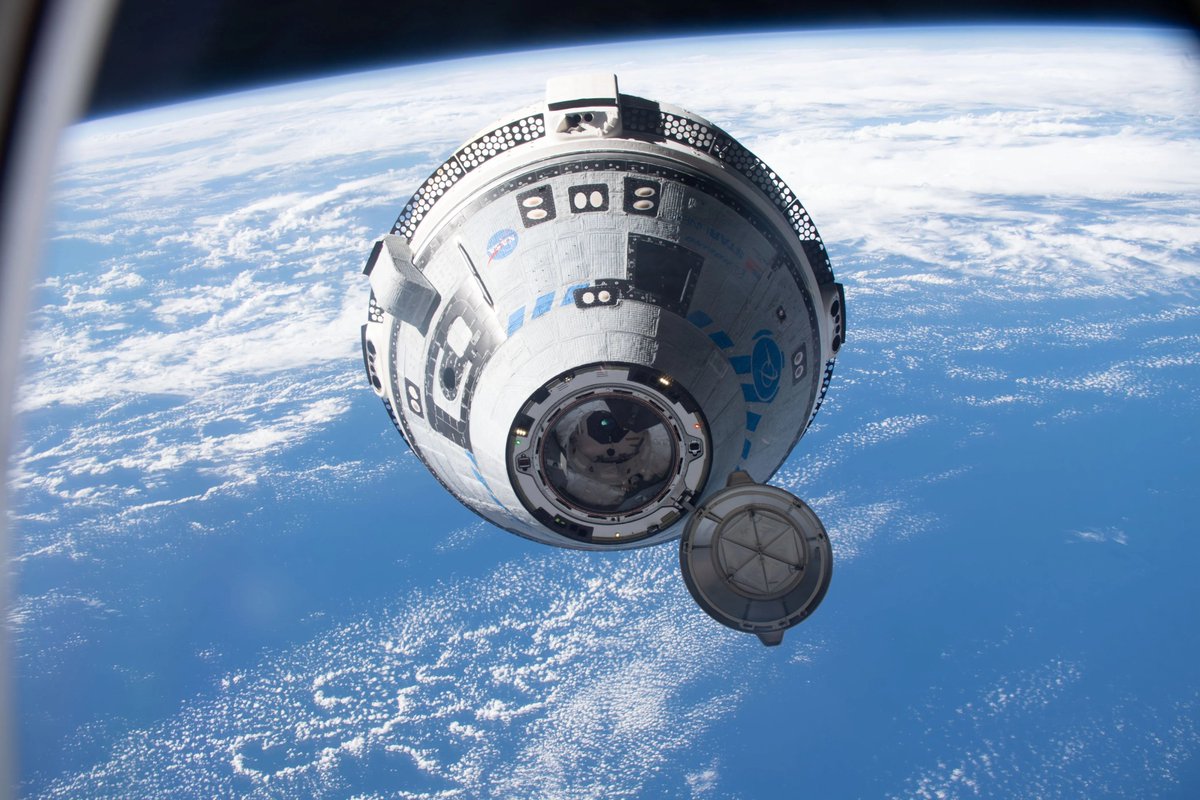
JUST IN: NASA Administrator Jared Isaacman and Boeing will provide a major update Monday on Starliner’s development and plans for regular astronaut flights to the International Space Station.
The Sept. 28 briefing will include NASA’s low-Earth-orbit leadership, astronaut Woody Hoburg and Boeing Commercial Crew chief John Mulholland.
Starliner has yet to begin regular crew-rotation missions following its troubled Crew Flight Test, making Monday’s update one of the clearest signals yet on how NASA and Boeing plan to move the program forward.
The briefing begins at 3 p.m. ET and will stream live on NASA, watch here: https://t.co/CfENVcgWkt
Wall Street says a gigawatt of $SPCX Orbital compute costs $160 to $180 billion. Bank of America puts it around $165 billion. Wood Mackenzie says $170 billion. BNP Paribas says launch alone runs over $100 billion.
Our model says $68 billion all in, falling to $43 billion by 2035.
That's roughly $100 billion per gigawatt of difference.
It comes down to timing. The banks are quoting what it costs today. Nobody is building a gigawatt in orbit today. The first real deployments land around 2028, and launch cost is the fastest-falling input in the whole stack.
Quoting today's price for a 2028 build isn't conservative. It's the wrong number.
Run the assumptions yourself at https://t.co/SJzj0fsvVH.
AGENT WARS
We asked 5 top AI models to design, engineer and 3D print a bridge to with the goal of holding the most possible weight.
🇺🇸 Anthropic: Claude Opus 5.5 (High)
🇨🇳 Kimi: Kimi K3 (High)
🇺🇸 Meta: Muse Spark 1.3 (High)
🇺🇸 OpenAI: GPT 6 Astra (High)
🇺🇸 SpaceXAI: Grok 4.7 (High)
Each bridge had specific parameters. It had to span 2 feet, use a maximum 500 grams of filament, and it had to be under 18 hours of printing time. We specified what type of weight and where we would place it on the bridge.
The Score:
• Claude Opus 5.5 held an estimated 130 lbs! It took 9 hours and 11 minutes to print 17 parts and used 441 grams of filament.
• Meta Muse Spark 1.3 held 26.5 lbs. It took 13 hours and 12 minutes to print 49 parts and used 478 grams of filament.
• OpenAI GPT-6 Astra held an estimated 17.5 lbs. It took 15 hours and 44 minutes to print 29 parts and used 442 grams of filament.
• SpaceXAI Grok 4.7 did not finish. On assembly it could not stand up by itself. It took 12 hours and 22 minutes to print 29 parts and used 460 grams of filament.
• Kimi K3 did not finish. It wasn’t engineered correctly so the bridge could not even be assembled. It took 11 hours and 19 minutes to print 35 parts and used 446 grams of filament.
That means our champion for this episode is Claude Opus 5.5. Not only did it hold the most weight (by FAR) it also took the least time to print, used the least amount of parts and used the least amount of filament.
This was episode 02 of Agent Wars, stay tuned for episode 03.
@aaronburnett It is increasingly probable that Starlink will carry a majority of Earth’s IP traffic long-term.
At that point, Starlink would de facto become the Internet and everything else would connect to Starlink.