As someone who has experienced only about 5% of America's 250-year history, having moved here 13 years ago and becoming a U.S. citizen 7 years ago, I have a few thoughts on this country.
First, I am deeply grateful to be here. I've traveled enough to say this with confidence: I cannot imagine building the life or the work I care about anywhere else. I love what I do, I love the opportunities I've had, and I genuinely don't believe I could have achieved the same things anywhere but the United States.
The generosity of the American people continues to amaze me. In many ways, it reminds me of the best traditions of the Arab world, where hospitality and generosity are deeply valued. It's one of the cultural similarities I appreciate most.
While politicians sometimes use negative rhetoric about people of Middle Eastern descent, that rarely reflects my experience with ordinary Americans. Iraqi, Lebanese, Syrian, and many other Middle Eastern immigrant communities have built remarkable lives here. They have started businesses, raised families, contributed to their communities, and found opportunities that would have been difficult or impossible in the countries they left behind.
Some argue that the United States "destroyed" their home countries, as if history began with American foreign policy. I would encourage them to look further back. Ask what those societies looked like under centuries of Ottoman or Persian domination, long before the United States even existed. The challenges facing our region have deep historical roots, and reducing them to a single explanation does not help us understand them or solve them.
No country is perfect. America certainly isn't. But it remains a country worth investing in, worth improving, and worth defending. For millions of immigrants like me, it has offered something priceless: the freedom to build a life based on talent, effort, and ideas.
Happy 250th Birthday, America. 🇺🇸
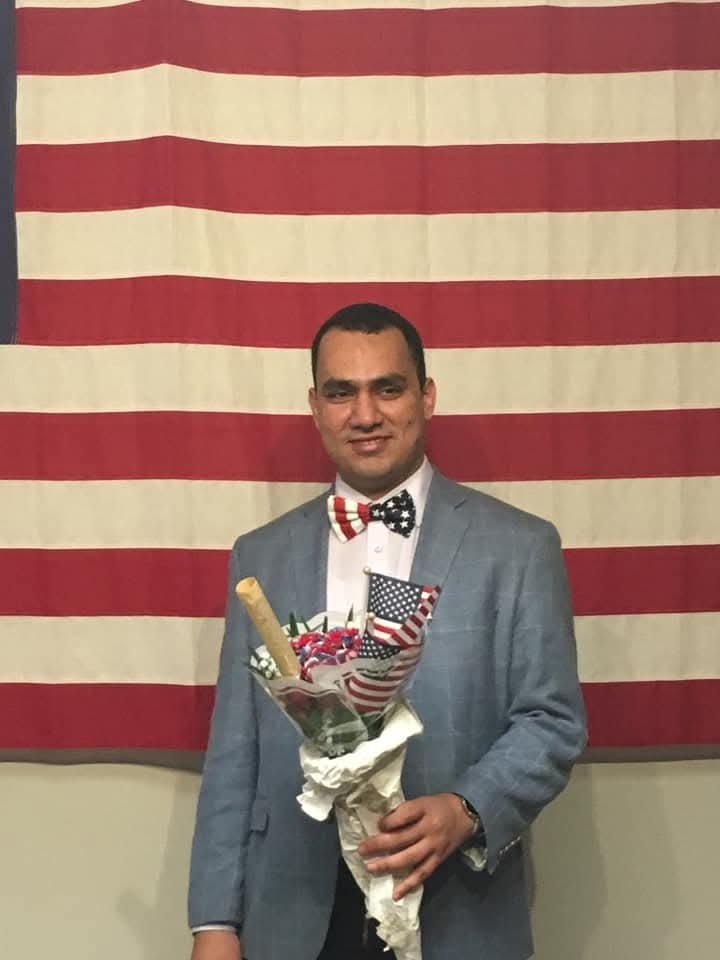
Photo 1: Becoming a United States citizen in 2019. One of the proudest days of my life.
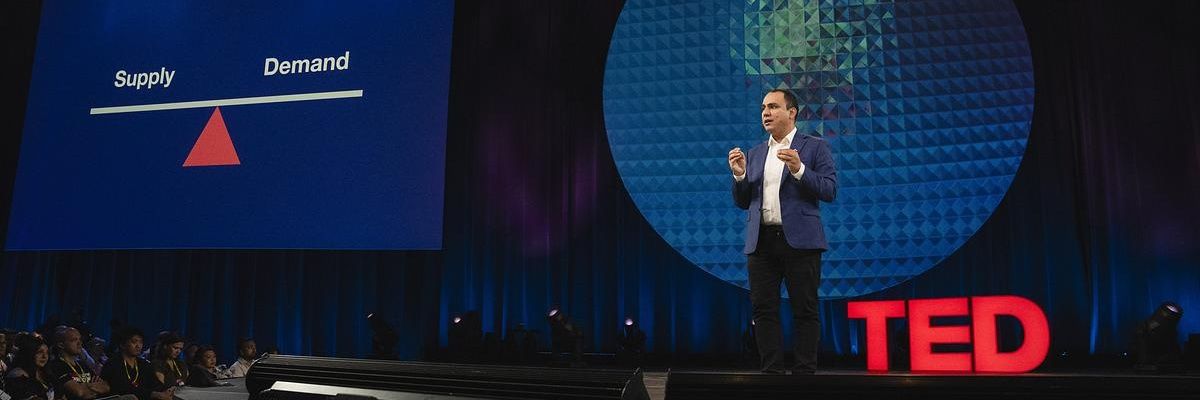
Photo 2: With Neil deGrasse Tyson after receiving the President's Volunteer Service Award from the White House in recognition of my volunteer work expanding access to education and knowledge.
Photo 3: Receiving the Beacon Award from the Ellis Island Honors Society, recognizing young leaders for their contributions to the United States and the world.
Photo 4: Receiving an Honorary Doctorate of Humane Letters from Whittier College, one of the nation's leading liberal arts colleges for advancing social mobility, in recognition of my work promoting education, freedom, and opportunity.
Three scenarios after the Houthis entered the US - Iran war and oil hit $98 a barrel.
1. The economic pain becomes too much. The U.S. decides that protecting global energy markets is now more important than continuing the war, and pushes for an off-ramp.
2. Iran is playing one of its last cards. Hezbollah in Lebanon is weakened. Syria is gone. Iraqi militias are unreliable and lazy.
That leaves the Houthis. If that's true, expect Iran to maximize the economic damage before negotiations and it means they are in a really bad place.
3. Nobody blinks. Both sides keep escalating despite the costs, I think this is the least likely scenario but I can always be wrong.
Thank you for your attention to this matter.
"For most governments, diplomacy is a tool used to prevent war. Fighting begins only after negotiations have been exhausted. But Iran’s leaders do not see the two as separate phases." Read @faisalalmutar's latest for @MEastUncovered 👇 https://t.co/lEy9iomz4H
Going live today at 1:00 PM EDT with Jacqueline Cole on her Substack, Iran War Dispatches. The topic: "The Gulf Under Fire: Iran War This Week."
We'll talk about what's actually happening on the ground, how the war is being felt across the region, and the kind of perspective we work to bring through Middle East Uncovered. Tune in on the Substack app.
https://t.co/LyB0LzZfTi
‼️ US/ Iran Update:
• U.S. military completed 10 consecutive nights of strikes targeting Iranian military capabilities.
• Since July 7, the Pentagon confirmed 3 U.S. service members have been killed and around 100 casualties .
• Iran has launched strikes against Kuwait, Jordan, Bahrain, and Syria over the past 10 days.
• The U.S. has surged additional military assets to the region, including F-35 and F-16 fighter aircraft.
• A commercial tanker near the Strait of Hormuz was struck by an unknown projectile.
• The U.S. has advised Americans in the Middle East to exercise increased caution and urged those considering travel to the region to reconsider travel.
• The Houthis announced they will impose a naval blockade on Saudi Arabia.
• Saudi Arabia condemned the Houthi announcement and said it will take all necessary measures in accordance with international law.
• Lebanese President Joseph Aoun is scheduled to visit the White House on Tuesday.
• Ahead of the visit, the U.S. announced the launch of pilot zones in southern Lebanon.
"You can be an ally and partner to America, and a friend to Iran. But you cannot be a strategic ally to both America and Iran at the same time; because the policy of holding two apples in one hand is no longer acceptable in the region's arrangements". Dr Ayad al-Anbar
There exists an entire class of analysts who want to tell you that the Islamic Republic's decades-long policy of 'Death to America' & 'Death to Israel' has nothing to do with the fact that it is now at war with America and Israel.
It won't pass the most basic common sense test.
When ISIS overran Mosul in June 2014, a young historian named Omar Mohammed expected to spend his life in archives, not hiding from a death sentence. His ambition had been quiet: to write history, teach students, and preserve his city's past. But within days, Mosul was sealed off from the world—its streets patrolled, its memory suffocating under propaganda—and he found himself forced into a role he had never imagined.
From a small room no one ever saw, under a name no one knew, Omar created Mosul Eye. What began as a personal attempt to record the first days of the occupation became, without his knowing it, the only reliable source from inside the terror state. Every detail he wrote—checkpoints, executions, heritage destruction, forbidden rumors—was a risk. Every sentence could have exposed him. ISIS hunted him relentlessly, promising to kill him in a manner “humanity had not yet discovered.”
But he survived. And the archive he built survived with him.
Only years later would he discover that his secret reports, written by generator light to the sound of drones overhead, were being read not only by his neighbors and the world's newspapers—but by governments, analysts, and intelligence agencies, including the CIA, which relied on his work as one of the finest inside sources produced during the occupation.
Mosul Eye: A Scholar’s Clandestine War Against ISIS is the story of how a quiet scholar became the most elusive witness to one of the darkest chapters of the 21st century, and how knowledge, discipline, and truth outlasted a terror state.
Order your copy today: https://t.co/Mv1ECasTbO
@gwupoe
This week, Treasury led a series of high-level meetings with the Governor of the Central Bank of Iraq. During these meetings, Treasury affirmed that Iraqi banks may be reintegrated into non-U.S. dollar correspondent banking channels after the first phase of the Central Bank of Iraq’s bank reform process, provided these banks meet required compliance and governance standards. The first phase of the bank reform process is scheduled to conclude this summer. Currently, no banned banks have regained access to foreign currency transactions.
Banks that successfully complete the entire bank reform and relicensing process – including by undertaking a satisfactory third-party audit of their compliance function, securing a qualified institutional investor, and meeting international fit and proper standards – will also be eligible to conduct U.S. dollar transactions at the conclusion of the process. All banks authorized to transact in international currencies will have the opportunity to establish correspondent banking relationships with international financial institutions.
The bank reform and relicensing initiative forms part of the Central Bank of Iraq’s broader strategy to modernize and strengthen the Iraqi banking sector. Treasury supports the efforts of the Central Bank of Iraq to bring greater transparency and integrity to the Iraqi banking sector, including a focus on eliminating money laundering and illicit finance activity. The United States will not tolerate the abuse of Iraqi banks by Iran-aligned militia groups and will take independent action, if necessary, to target such activity.
JPMorgan to open a branch in Iraq to support financing for projects led by U.S. companies, following talks between Prime Minister Ali Al-Zaidi and bank officials during his visit to Washington.
#Breaking After Washington, Iraqi Prime Minister Ali al-Zaidi will travel to Tehran for talks with Iranian officials: Iraqi Foreign Minister Dr. Fuad Hussein tells me @RudawEnglish
Prime Minister Ali al-Zaidi will travel to Qatar on his way back from Washington (to attend the funeral) later heading to Tehran for talks with Iranian officials.
Rudaw has learned that following his visit to Iran, al-Zaidi is also expected to visit Turkey as part of a regional diplomatic tour.
Rudaw has learned that following his visit to Iran, al-Zaidi is also expected to visit Turkey as part of a regional diplomatic tour.
I am in Iraq & find notion of a decline in Iranian influence unsubstantiated. Outside observers can have distorted view of role pro-Iran armed groups play in people’s daily lives (wrote about that recently). But they’re embedded in the state & serve as important ally for Tehran.