FakeBelieve is a blog about disinformation, ‘fake news’ and social media that publishes counter-disinformation case studies and resources. Admin: @williampdance
New 🚨
“Disinformation and Algorithms: Amplification, Reception and Correction”
I contribute to the theory around #disinformation and #misinformation studies and carry out a corpus-based analysis of the use of tokens like ‘disinformation’ on Twitter.
https://t.co/xNCANb9Bgk
We’re experiencing an interesting phenomenon here:
There is a Pikachu-themed activist in the demonstrations in Türkiye, but the visual used here (and elsewhere) is AI generated. The blending of legitimate and fabricated content further complicates what people can believe online.
I talked about the social and technical factors that contribute to belief in celebrity misinformation to @TheAthletic/@nytimes and how it’s often family members and people associated with celebrities who end up the targets of false information too. https://t.co/spWRN9o9Xp
My blog @FakeBelieveBlog had its best year in 2024: 3,151 visitors from 72 countries spanning 5 continents! 🌍
The top countries were the US, UK, Canada, Germany, and the Philippines. I published 5 new posts with new resources for adults and kids too.
https://t.co/0pqYQ1wXm2
I was asked to make a simple explainer for kids on how to navigate and understand information online, so I made this.
It teaches kids how to process information online, reiterating the specific things they can do when on social media/the wider internet.
https://t.co/icMVQ5tCkQ
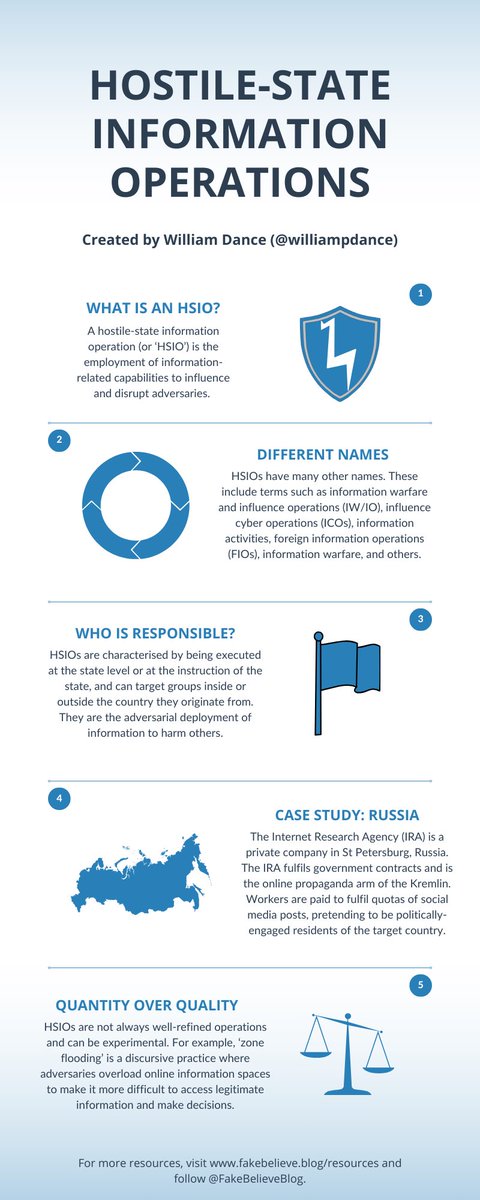
I thought I'd make a new explainer for my blog (@FakeBelieveBlog).
For this one l've focused on hostile-state information operations (HSIOs).
The explainer is available as a PNG or PDF from my blog as a whole, or as individual tiles, here: https://t.co/vEkUKL4WuZ
The latest FakeBelieve blog post takes a look at Apple News, the UK’s most used news app.
It finds that #AppleNews is an outlier with its lack of editorial transparency and simultaneously slips through the cracks when it comes to regulation.
More at: https://t.co/aU0r3kECSs
‘The mystery of Apple News’
In this new blog post I explore the UK’s most used news app and the astonishing lack of transparency that surrounds it.
I discuss how news aggregators lack oversight and that @AppleNews is an outlier with its opaque policies. https://t.co/kJ6WeTioUg
It’s easy to forget amid the absurdity of claims like ‘immigrants eat pets’ that there are real people who are harmed by disinformation.
Because of lies that have been popularised by political operatives, multiple locations in Springfield, OH were closed due to bomb threats.
The power of linear broadcasting has diminished in recent years, but it is still a potent force for spreading false content.
Through events like these, misinformation can be spread to tens of millions of people instantly. It’s a basic but effective form of message dissemination.
“We argue that strategic and false allegations of misinformation (i.e., fake news and deepfakes) benefit politicians by helping them maintain support in the face of information damaging to their reputation.”
This is the liar’s dividend in action.
I was just on @BBCLancashire talking about disinformation, social media, and the UK riots.
I spoke about needing a stronger deterrent for online hate and disinformation, freedom of expression, and how social media algorithms make things worse.
Listen at: https://t.co/sKbJ9Dai1V
I’m going to be on The Phone In show on @BBCRadioWales at just gone midday.
I’ll be talking about how people can take simple measures to try and spot disinformation, and what needs to be done at the wider level to prevent scenes like those in Southport.
In 2019 I tried to compile a list of examples in the UK where disinformation had led to real-world harms. I had a high burden of proof and wanted examples where there was a clear causal link.
I struggled to even find a couple. 5 years later, there’s dozens to choose from.
1/🧵
A point I wanted to make on @BBC5Live but didn’t have time is:
Amid all the fears of artificial intelligence and sophisticated information operations, this Sunak-Starmer tax row shows how sometimes it’s the most basic forms of (mis)information that can have the biggest impact.
I’ll be on the @BBC5Live ‘5 Live Drive’ programme at 18:15 this evening to talk about how decontextualised and unsubstantiated claims can spread on social media, and the battle fact-checkers have to catch up with them.
This is not good fact-checking practice.
Provide context at the point of dissemination (i.e. in the tweets below), rather than only in a webpage that people need to visit.
It means the clips are being further shared without any context, the opposite of Full Fact’s intentions.