Ex-Nematologist. Ph.D. Financial Blogger est. 2001. Jack of No Trades. @CMTAssociation Affiliate. Freelancer. #Usability#UX#UI. #Sectorbreadth analysis.
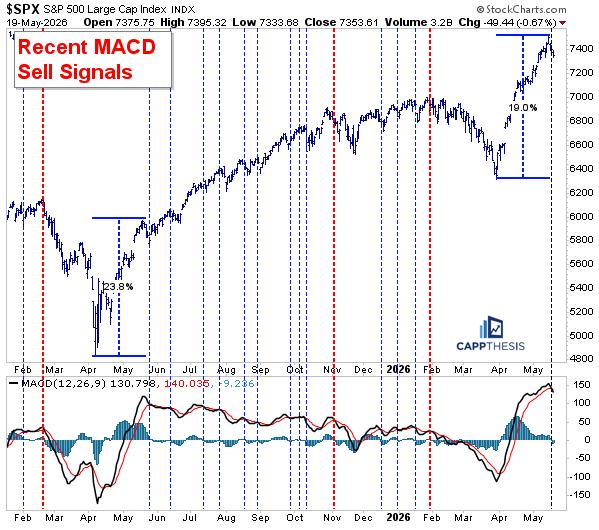
As we head into 2026 we have a mixed bag of metrics to look at. Those that are bullish tend to be near term (for next year), those that are bearish will likely gain influence in the years ahead until they can be held back no longer. $SPX, $COMPQ, $DJIA, $IWM.
You have noticed it. ChatGPT feels dumber than it used to. Your prompts that worked six months ago produce worse results now. The writing sounds flatter. The ideas sound safer. The internet itself feels like it is shrinking. Every article reads the same. Every email sounds the same. Every answer sounds like it was written by the same voice.
You thought it was you. It is not you.
Researchers at Oxford and Cambridge published a paper in Nature proving what is happening. They call it Model Collapse.
Here is the mechanism in one sentence. AI trained on AI-generated data gets dumber every generation until it forgets what real human data looked like.
The internet is filling with AI-generated content. Blog posts. Articles. Reviews. Comments. Social media. AI companies scrape the internet to train the next generation of models. Which means the next generation of AI is being trained on the output of the current generation.
Each cycle loses information. Not randomly. It loses the rarest, most unusual, most creative parts first. The researchers call these the "tails of the distribution." The weird ideas. The unexpected perspectives. The things that made the internet feel human. Those disappear first.
What remains is the average. The safe. The expected. The bland.
Then the next generation trains on that. And loses more. And the next generation trains on that. And loses more. The researchers proved this is not a slow decline. Major degradation happens within just a few iterations. Even when some of the original human data is preserved.
They tested it on large language models. On image generators. On statistical models. The pattern was the same every time. The output converges toward a narrow, flattened version of reality that looks nothing like the original data.
The lead researcher put it plainly. "Large language models are like fire. A useful tool. But one that pollutes the environment."
The pollution is invisible. You cannot see which sentence on the internet was written by a human and which was written by AI. Neither can the AI that is about to train on it. And once the tails are gone, they do not come back. The damage is irreversible.
This is not a prediction anymore. It is a diagnosis.
The internet you grew up on was built by humans writing things no algorithm would have written. Strange, personal, imperfect, alive. That internet is being diluted. One generation of AI at a time. And the models trained on what remains are learning a smaller and smaller version of the world.
Model Collapse is not a technical problem. It is a cultural one. The thing that made the internet worth reading is the thing that disappears first.
coin ($BTCUSD.X) lose 5%+ as Semiconductors ($SOX) gain 5%. Go figure. This divergence can't continue, but which side blinks first remains to be seen. The Russell 2000 ($IWM) offers the best risk:reward at current levels.
The Nasdaq ($COMPQ) reached its measured move target today, so could be an aggressive short - but don't hold on if it pushes through. Equal weight averages ($SPXEW, $QQEW) made their breakout moves, and could still have more in the tank, but
I wrote a website for 18 years for free
This is not theory, it is real-time track record
It's easy to say after the fact "I made it"
Not so easy to show up for 18 years
I actually do not trust people that just showed up one day, and told us they won
That doesn't help me - show me how you build, when you build
Hey Ho, the rally goes. New breakouts, this time in the Russell 2000 ($IWM), just keep feeding into demand. The Semiconductor Index ($OX) looks set to double in value in just a few months. Who can stop this advance?
Equal weighted averages ($SPXEW and $QQEW) are getting into the game now. Nasdaq breadth metrics suggest we may even be some 2 years away from a major top, but at what cost in the long term? AI has its uses, but it's far from the finished product and is not Production ready, but
I had a discussion yesterday with somebody about Father Ted and we ended up trying to choose, at first, our top 5 moments, which became 10, and then 20.
Anyway, here's what I believe was my #4, featuring Ted, Dougal and "Your man from One Foot in the Grave. The, I don't believe it, man".
Enjoy the sunshine 🌞
Markets post gains, with the equal-weighted Nasdaq 100 ($QQEW ) managing to deliver a breakout. The Russell 2000 ($IWM) rallied off support and Bitcoin ($BTCUSD.X) edged higher. x
@JesperDavidsen1 Tests of support give relatively low risk entry points irrespective of distance from 200-day MA. But indices trading below their 200-day give the long term buy signals.
Selling was the dominant action today, but many indices remain in well established bull trends ($COMPQ, $SPX), while others develop the makings of new trading ranges ($IWM, $BTCUSD.X). Those looking to play long can look to buy support of latter ranges,