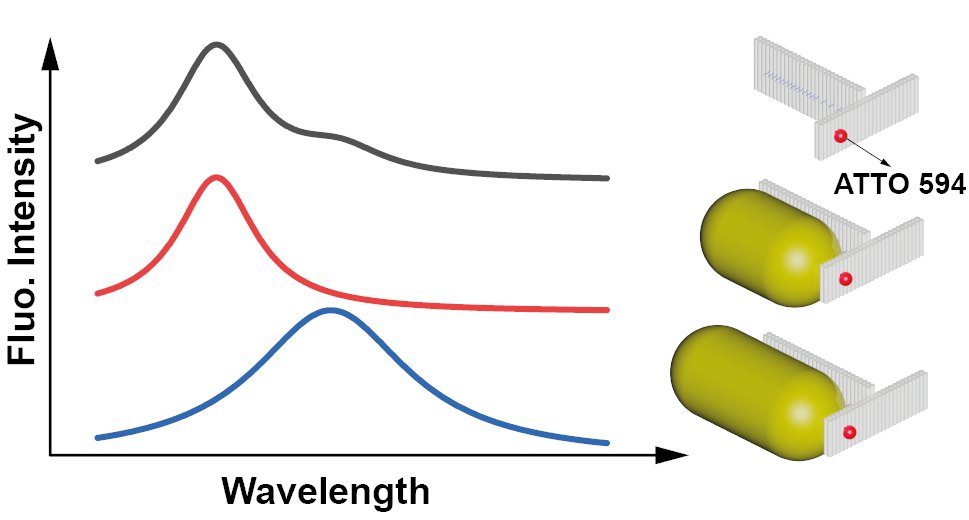
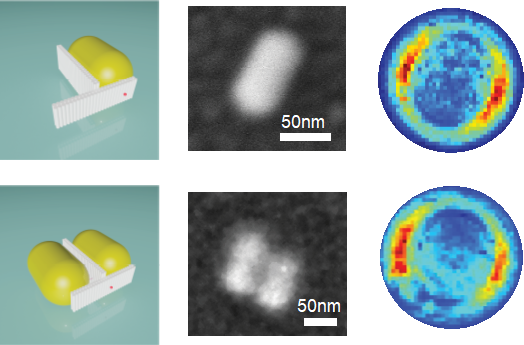
Do you remember our previous work on controlling the position and orientation of single emitters? 🚀 We’ve taken it to the next level! 1/5 @ACSPhotonics https://t.co/FfFSIWq1me
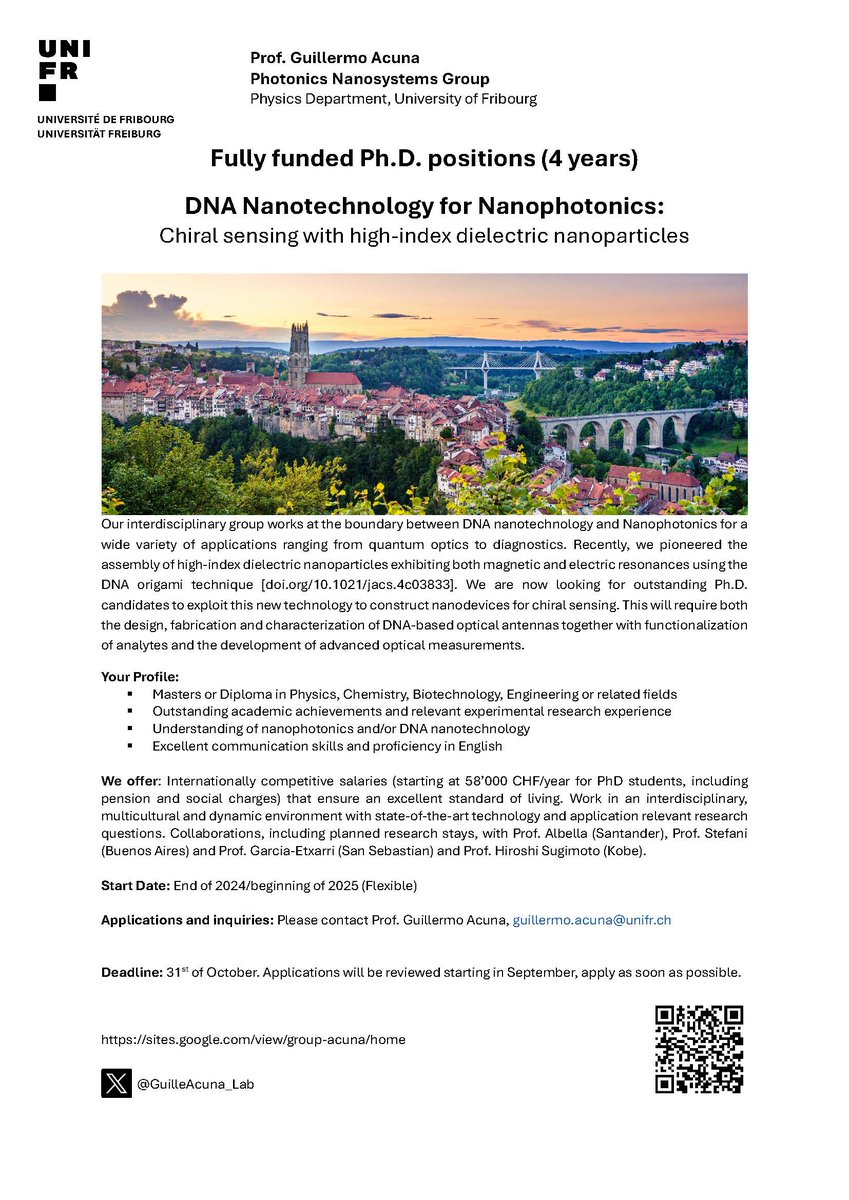
We have open positions for PhD and Post-doc researchers in my group to work on Nanophotonics and DNA nanotechnology for sensing. I paste here the flyer with more information.
I want to congratulate @FangjiaZ for his outstanding thesis defense. Also a very special moment for me as Fangjia is my first student to graduate. It was a pleasure to work with you.
How to direct the light from single photon sources? Check our latest publication https://t.co/VuImlPXSTS in collaboration with the Nanoplasmonics group lead by Prof. Jer-Shing Huang @Leibniz_IPHT 1/3
Our work “DNA Origami Assembled Nanoantennas for Manipulating Single-Molecule Spectral Emission” carried out by María Sanz Paz, @FangjiaZ, Nicolas Bruder, Karol Kołątaj, led by @aifernand and @Guille_P_Acuna has just been published in Nano Letters. https://t.co/8nJUwAuoZ7 1/6
In particular, we study how different parameters such as the shape of the plasmonic nanorods, possible defects in the dimer assembly, and different positions and orientations of the emitter can affect the directionality. https://t.co/G4849W40m4. 2/3
@ACSPublications Editors' Choice free for a limited time "DNA-Templated Ultracompact Optical Antennas for Unidirectional Single-Molecule Emission" @FangjiaZ, Sanz-Paz, Fernández-Domínguez, Zhuo, @LizMarzan_Lab@FerStefaniLab, Pilo-Pais, & @GuilleAcuna_Lab https://t.co/utwKXYckwy
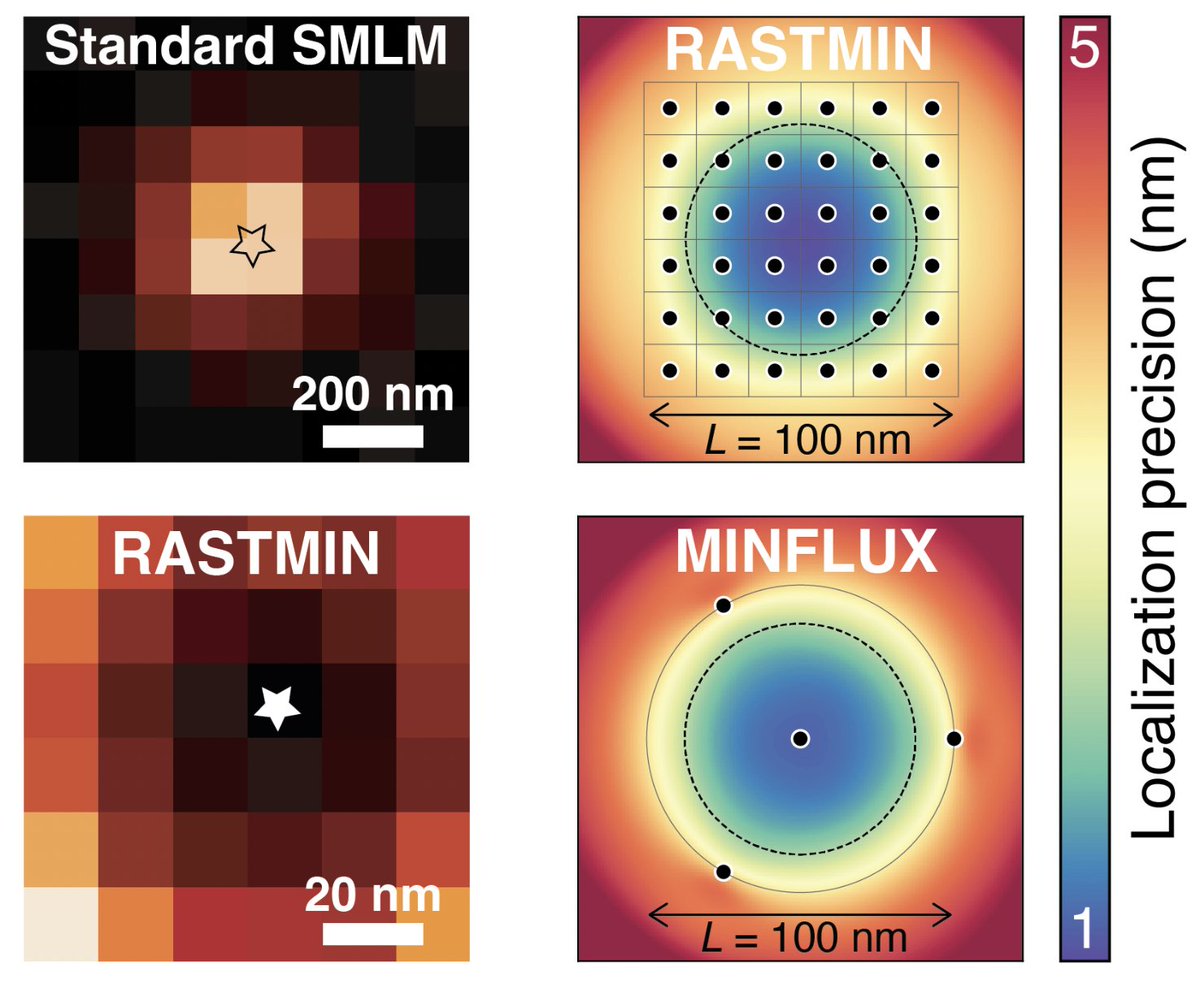
Do you have a confocal microscope in your lab? Then you can perform 1-nm single-molecule localizations in it with only a few modifications. We present #RASTMIN, an alternative to #MINFLUX that can be easily implemented in existing confocal setups. 1/6
https://t.co/s3z1lAFFte
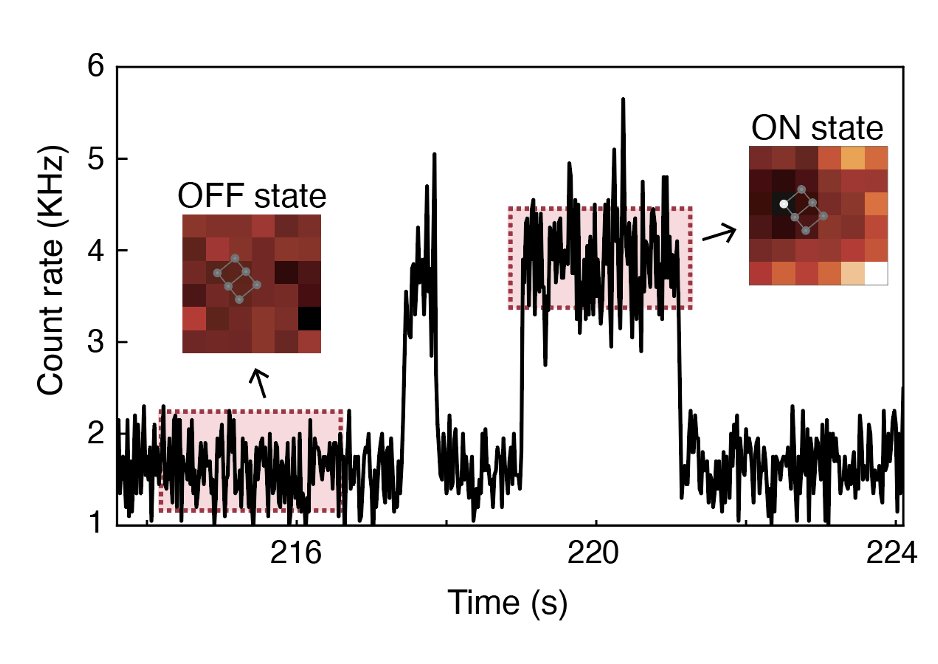
Combining #RASTMIN with ON/OFF stochastic blinking we performed proof-of-principle nanoscopy experiments by imaging DNA origamis with 2-nm precision using only N ~ 2000. 4/6
In this way, we raster scan over the region of interests with a doughnut-shaped beam. The image of the single-molecule that we produce is basically a dark spot, making the localization extremely photon-efficient. 3/6
For #RASTMIN, we only made two modifications to our beam-scanning confocal microscope: we added a Vortex Phase Plate (VPP) in the excitation path and a cost-effective active stabilization system. 2/6
Also, using the unique advantages of DNA origami we could show that when one rod is missing, or the fluorophore is placed equidistant from the two rods, unidirectionality is lost and a symmetric 2 lobe pattern is detected.7/8
Interested in nanophotonics? We present ultra-compact optical antennas based on gold nanorods capable of directing the emission of single fluorophores. Theoretically predicted more than a decade ago and finally realized thanks to the DNA Origami technique! https://t.co/r4xjw54zoX