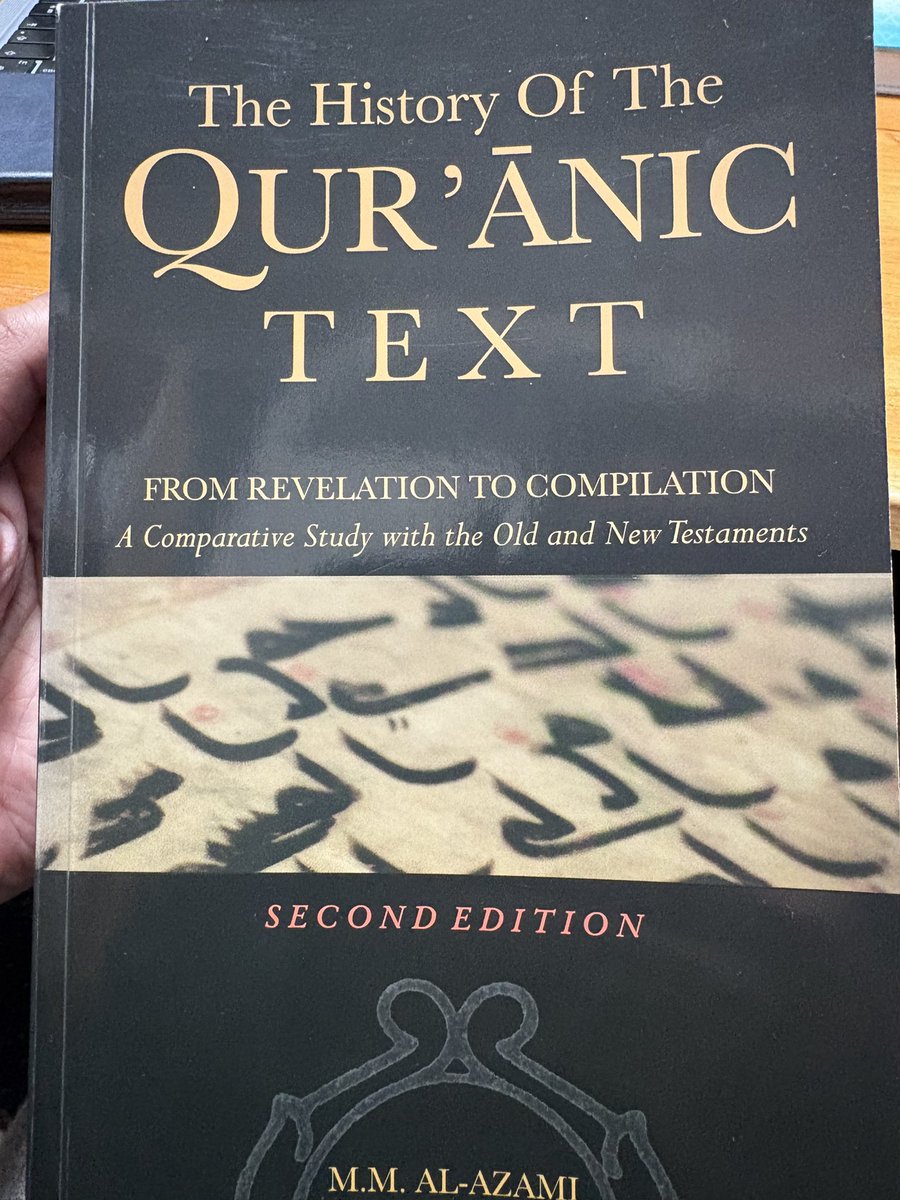
I cannot emphasise enough the importance of this book for every dāʿī and scholar in our times.
Shaykh Muṣṭafā al-Aʿẓamī (raḥimahullāh), who completed his Islamic studies at Dār al-ʿUlūm Deoband (1952), his MA at al-Azhar University, Cairo (1955), and his PhD at the University of Cambridge (1966), was an erudite scholar who specialised in various subjects, particularly Ḥadīth.
In this work, he rigorously and in an impassioned tone defends the preservation of the Qurʾān, drawing upon various forms of evidence, including manuscripts, whilst also making comparisons with the Old and New Testaments.
I think this book is a must-read for all students. It is a masterclass in scholarship on a very important topic, particularly at a time when assailing the Qurʾān has become all too common.
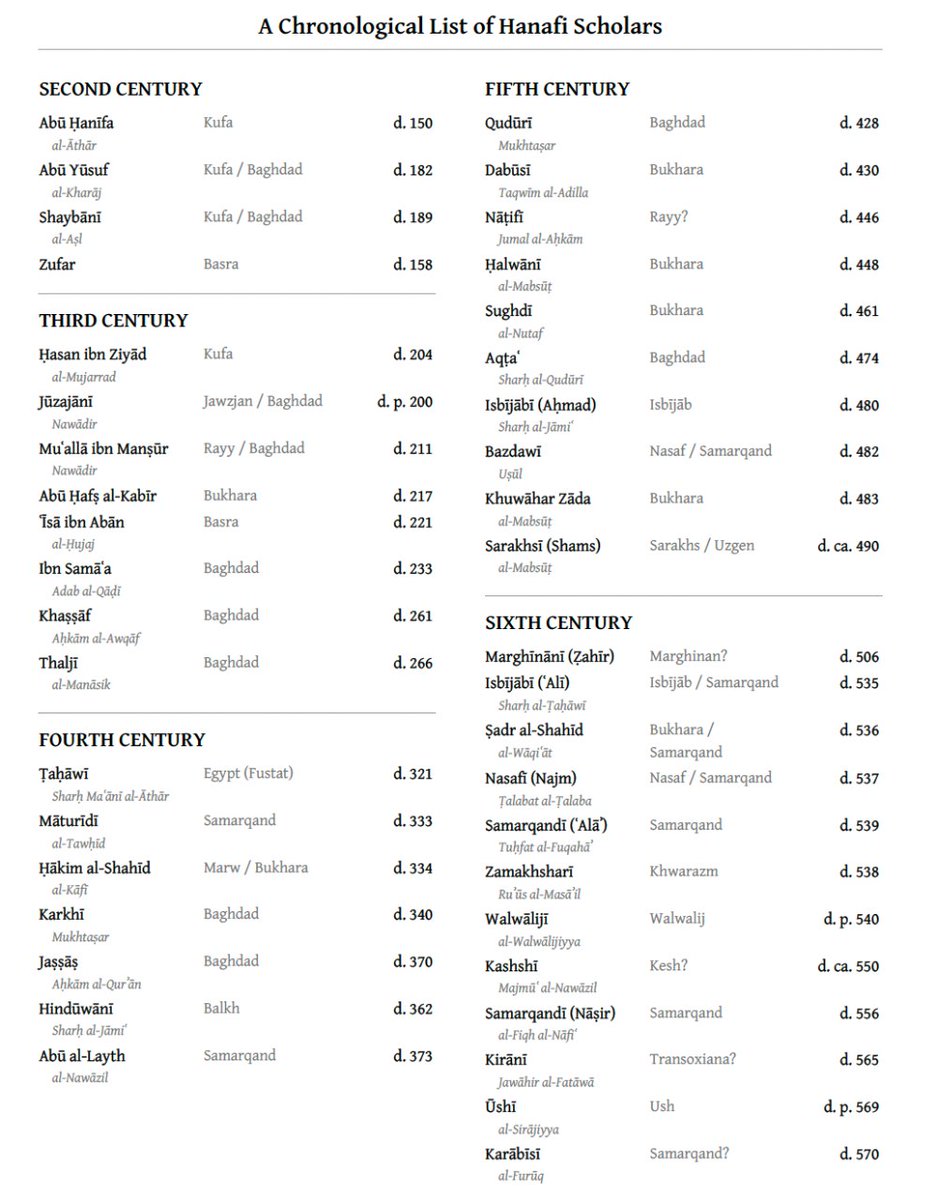
Knowing scholars’ death dates helps beyond hadith studies. Here’s a chronological list of notable Ḥanafī scholars to help students memorize. Ornate and complex timelines can be distracting, so I prefer to keep it basic.
In researching for our History Course, we learned about the qualities Salahuddin al-Ayyubi in 'al-Kamil Fi al-Tarikh' by Ibn al-Athir.
Here are a few excerpts:
I recently purchased this phenomenal 14-volume explanation of the Quran. However, it is not a standard exegesis of the Quran; instead, it mainly explains the similar verses (mutashābihāt) repeated throughout the Quran.
Can you imagine a 14-volume work devoted only to the mutashābihāt of the Quran? This work is particularly useful to those who have memorised the Quran (Ḥuffāẓ). The respected Ḥuffāẓ will know that the mutashābihāt of the Quran can be challenging, and one can easily get confused, especially when leading Tarāwīḥ, for example.
This work first explains how many times a given verse appears in the Quran. The author then lists all similar verses, using red and blue colours to make them easier to remember. The best part is that the author endeavours to give grammatical reasons for the variations of the same verse and what difference they might make to the meaning. This is all presented in a Q&A format, making it easy for the reader to remember.
The other amazing thing about this work is that the author was a Christian who accepted Islam in 1992. He dedicated his whole life to serving the Quran. May Allah bless him immensely. Amin.
@dom_lucre Not sure if people know this, touching the crown prince or the king, is the easiest way to get your head on the chopping board. By Saudi law, its one of the biggest crimes.
@YasirQadhi Shaikh, this was the case in Australia too as witnessed by the massive Sydney protests. All it took was one false flag, and the normal state of affairs is back.