Petty Officer 3rd Class Lauren J. Singer was traveling over the Coronado Bridge near San Diego, California, returning to her on base residence, when she noticed a stranded motorist outside his vehicle.
Singer asked if he needed any help, and the driver responded that he was fine. Something in the manner of the driver’s response triggered her intuition and made her feel that something was not right.
She noticed the driver putting a rope around his neck. As he was putting a foot on the barrier to jump over the side, Singer rushed to his side, pulling him back. Startled, she grabbed him and asked what he was doing. He coolly responded by saying that today was the day he was going to die. While Singer was holding the driver, she noticed a knife on the barrier ledge. She cut the rope from around his neck, dropped the knife and kicked it underneath the car. She then identified a gun in his pocket. She removed the firearm and directed other stopped motorists to lock the gun securely in the trunk and call 911.
She stayed with the suicidal driver until the California Highway Patrol arrived. Singer’s willingness to assist a stranger undoubtedly resulted in saving his life.
We salute you Petty Officer Singer! The 2020 USO Sailor of the Year!
#Military #Hero #SuicidePrevention
When Navy seaman Douglas Hegdahl fell overboard into the Gulf of Tonkin in 1967, North Vietnamese forces pulled him out of the water and dragged him to the most feared prison of the Vietnam War — the Hanoi Hilton.
He was young. He was low-ranking. And the moment he arrived, he made a decision his captors never saw coming.
He would become the dumbest man in the room.
Hegdahl shuffled around the prison yard with a blank expression and a dopey grin, tripping over things, asking confused questions, acting like a man who couldn't tie his own shoelaces. His guards laughed at him. They gave him a nickname — "The Incredibly Stupid One" — and, crucially, they gave him something no other prisoner had: the freedom to wander.
They thought he was harmless.
He was anything but.
While his captors looked away, Hegdahl quietly dropped dirt and stones into enemy truck fuel tanks, sabotaging their operations one engine at a time. But that wasn't his real mission. His real mission was invisible.
Every day, Hegdahl watched. He listened. He memorized — the name of every American prisoner held in that camp, their capture date, the conditions they endured, the torture they suffered. Information the North Vietnamese deliberately hid from the outside world. Information that hundreds of families back home were desperate for.
And he found a way to make sure he'd never forget a single detail.
He set every name, every date, every fact — to the tune of "Old MacDonald Had a Farm." He sang it silently in his head, day after day, in a prison cell, surrounded by men who had no idea what the young fool was quietly carrying.
In 1969, the North Vietnamese released him early as a propaganda gesture. They wanted to show the world their generosity. They thought they were setting a harmless simpleton free.
Instead, they handed the United States one of the most valuable intelligence assets of the entire war.
The moment Hegdahl reached American soil, he delivered everything — name after name after name. Over 250 prisoners accounted for. Families who had waited years in agonizing silence finally learned their sons, husbands, and fathers were alive.
Senior military officers later said his information was so detailed, so precise, that it fundamentally changed how America understood the POW situation in Vietnam.
Douglas Hegdahl never fired a weapon. He never led a charge. He won his battle by making the enemy believe he was nothing — and quietly becoming everything.
The most dangerous person in the room isn't always the loudest. Sometimes, it's the one they forgot to watch.
In 1961, a man with an 8th-grade education picked up a pencil in his prison cell and accidentally changed American history forever.
Clarence Earl Gideon was a poor drifter with weathered skin, gray hair, and a lifetime of bad luck behind him. He bounced between odd jobs, cheap rooms, and occasional jail time, barely surviving from one day to the next.
When he stood trial in a Florida courtroom in 1961 for allegedly breaking into a pool hall, he had no money and no lawyer.
The evidence was weak. Someone claimed they saw him near the building with coins in his pocket. A little cash and some beer had been stolen.
That was enough.
Before the trial began, Gideon made a simple request.
“Your Honor, I request this court to appoint counsel to represent me.”
The judge refused.
Florida only provided lawyers for capital cases, not for poor men accused of smaller crimes. So a man who never finished middle school was expected to defend himself against trained prosecutors.
He tried anyway.
He questioned witnesses.
Argued his innocence.
Did everything he could.
The jury found him guilty in minutes.
Five years in prison.
Most people would have accepted defeat. Gideon didn’t.
Inside the prison library, he slowly taught himself the Constitution. He read about the Sixth Amendment and became consumed by one question:
How could justice exist if only rich people could afford real defense?
After Florida courts rejected him, Gideon sat down in his prison cell with a pencil and wrote directly to the United States Supreme Court. Five handwritten pages. Misspelled words. Shaky handwriting.
But the message was clear:
This is not right.
Against impossible odds, the Supreme Court agreed to hear his case.
They assigned him attorney Abe Fortas, one of the best lawyers in America. Fortas argued something painfully obvious: if even great lawyers hire attorneys when accused of crimes, how could an uneducated man defend himself alone?
On March 18, 1963, the Supreme Court ruled unanimously in Gideon’s favor.
Every poor defendant charged with a serious crime now had the constitutional right to an attorney.
The decision changed the American justice system forever.
Gideon received a new trial, this time with a lawyer. The prosecution’s case quickly fell apart. Witnesses were exposed as unreliable. Doubt flooded the courtroom.
The verdict came back:
Not guilty.
After more than two years behind bars, Clarence Earl Gideon walked free.
He died poor years later, buried at first in an unmarked grave. But his words survived him.
Today, every time someone hears, “If you cannot afford an attorney, one will be appointed to you,” they are hearing the echo of one man sitting alone in a prison cell with a pencil in his hand.
Clarence Gideon proved that sometimes history changes because one ordinary person refuses to stay silent.
I’m 68 years old, a biker with more miles on my boots than most men dream of, and three years after losing my wife, I never thought life had any big surprises left for me. Then, by pure accident, I met Maya.
She was four months old, lying in the NICU, crying like the world had already given up on her. Born with Down syndrome, a serious heart defect, and addicted to methamphetamine from birth, she had been turned down by twelve families. Too many complications. Too much risk. Too expensive. They were preparing to send her to institutional care.
I had wandered onto the wrong floor while visiting a buddy when a nurse saw me standing there in my leather vest and said, “That baby’s been crying for hours. Nothing calms her. You want to try?”
I picked her up, held her against my chest, and started humming a low, rumbling note—the same way I used to calm my Harley on cold mornings. Maya stopped crying instantly. Her tiny hand wrapped around my finger, and something in my chest that had been frozen since my wife passed came roaring back to life.
I came back every single day for two weeks. When the social worker said they had no choice but to move her to a group home, I looked her in the eye and said, “No. I’ll take her.”
They laid out every reason I shouldn’t: my age, my lifestyle, the surgeries ahead, the years of therapy and special care. I listened to all of it, then told them the only thing that mattered: “She deserves to grow up with someone who chooses her.”
My motorcycle brothers showed up like a cavalry. These rough, tattooed men spent a whole weekend painting her nursery a soft sunny yellow and wrestling with a crib that took four of us three hours to assemble. They brought diapers, clothes, and enough casseroles to feed a platoon. For the first time in years, my house felt alive.
At five months old, Maya went in for open-heart surgery with only a seventy percent chance of making it through. I sat in that waiting room for six long hours, making every promise to God I could think of. When the doctor finally came out smiling, I cried like a kid.
Today, Maya is nine months old and she is the brightest light in my world.
She smiles the moment I walk into the room, lighting up like I’m the best thing she’s ever seen. Her little laugh fills the house when I make silly faces or dance her around the living room to old rock ballads. She’s hitting her milestones with that stubborn fighter spirit I’ve come to love so much. The heart defect is behind us, and every day she grows stronger, happier, and more curious about the world.
I know I won’t be here for all of her life. I’m old, and the road I’ve traveled has been long. But I’ll be here for every single day I have left, and I’ve already made arrangements with my brothers and their families so Maya will never know a day without love and protection.
She was nobody’s baby once. Now she’s mine—completely, fiercely, and forever.
Every night I lay her down in her yellow nursery, kiss her forehead, and whisper the same thing: “You were chosen, little girl. You are wanted. You are loved beyond measure.”
And as she drifts off with my finger still in her tiny hand, I realize something beautiful: I didn’t just save Maya.
She saved me.
I’m the luckiest man who ever lived.
1 AM. Arkansas. A dog won't stop barking.
A father walks down the hallway. Opens his 14-year-old daughter's bedroom door.
The bed is empty. The window is open.
He already knows the name of the man who took her.
He's known it for three months.
Aaron Spencer is 37 years old. Army veteran, 82nd Airborne, deployed to Iraq. Farmer. Husband. Father of a little girl who used to sleep with the light on.
The man who took her is named Michael Fosler. 67 years old.
Three months earlier, when she was still 13, Arkansas had arrested Fosler and charged him with 43 separate crimes against her.
Sexual assault of a minor.
Internet stalking of a child.
Sexual indecency with a child.
Possession of child pornography.
43 counts. Against a 13-year-old girl.
43.
The judge looked at all of it. And set the bond at $50,000.
Fifty. Thousand. Dollars.
Then she wrote "no contact order" on a piece of paper and called it justice.
Fosler walked out the same day.
And on the night of October 8, 2024, he came back for her.
That's when Aaron Spencer grabbed his Glock 19.
That's when Aaron Spencer climbed into his Ford truck.
That's when Aaron Spencer stopped waiting for the system to save his daughter.
He found Fosler's truck on Highway 31. His little girl was inside it.
He chased him six miles. High beams flashing. Horn screaming. Begging him to pull over.
Fosler did not pull over.
So Aaron rammed the truck into a ditch.
Drew his pistol.
And fired sixteen rounds.
Fifteen of them found the man who raped his daughter.
Then he picked up the phone, called 911, and said the only words a father can say in that moment:
"Michael Fosler is dead on the side of the road for trying to kidnap my daughter. I had no choice."
The state charged him with second-degree murder.
The prosecutor went on TV and said, quote: "We don't live in the Wild West."
The judge slapped him in a jail cell.
And every father in this country went silent for a long, long minute.
Then something happened that nobody predicted.
Aaron Spencer, awaiting trial for killing the man who raped his little girl, announced he was running for Sheriff of Lonoke County.
A murder defendant. Running for the badge.
The whole country laughed. The pundits called it a stunt. The papers called it impossible.
March 3, 2026. The voters of Lonoke County walked into the polls.
They did not laugh.
They gave Aaron Spencer 53.5% of the vote.
They threw out the incumbent sheriff who had locked him in a cell. They gave him a 27-point landslide.
The father who killed his daughter's rapist is now the Republican nominee for sheriff in a county where Trump pulled 76%.
His murder trial begins June 22, 2026.
Five weeks from today.
If he wins the trial, his name stays on the November ballot.
If he wins November, he becomes the sheriff who answers 911 calls in Lonoke County, Arkansas.
The father. With the badge. Of the same county that arrested him.
This is what happens when a system lets a 43-count predator walk free for $50,000.
This is what happens when a judge writes a paper order instead of doing her job.
This is what happens when a father decides he is done waiting.
There is something left in this country.
Something the courts cannot kill.
Something the judges cannot bond out.
Something the prosecutors cannot silence.
It is called a father.
And in Lonoke County, Arkansas, 53.5% of the voters just looked Aaron Spencer in the eye and said:
"Sir. You did the right thing. Now come run the whole damn sheriff's office."
His trial starts in five weeks.
God bless Aaron Spencer.
And God bless every American standing behind him.
Gary Wetzel was serving as a helicopter door gunner. His mission sounded simple on paper, but in reality it meant everything: protect the aircraft, protect the men below, and keep the landing zone open long enough for wounded soldiers to get out alive.
Then the sky turned into fire.
As the helicopter pushed into intense enemy resistance, an RPG struck the aircraft. The explosion ripped through the cabin in an instant-metal fragments, smoke, and chaos filling the air.
Wetzel was badly hit. One arm was almost completely destroyed, and his body was torn by shrapnel.
The aircraft became a storm of noise, fire, and blood.
Medics moved in to pull him back. The crew prepared for emergency evacuation. Under those conditions, survival was the only priority most men would think about.
But Wetzel refused.
"No," he said. "Leave me."
Then, despite everything, he grabbed his machine gun with his remaining strength and returned to the fight.
For over half an hour, Gary Wetzel stayed in the open doorway of that helicopter-barely conscious, losing blood fast, every burst of fire pushing his broken body further past its limit. Below him, American troops were still exposed, surrounded, and in danger of being overrun. It the helicopter pulled out too soon, they would be left behind.
So he stayed.
With one arm, he kept firing. He suppressed enemy positions.
Covered the evacuation. Held the line long enough for wounded soldiers to be lifted to safety.
Pilots shouted for him to stop. Medics pleaded with him to let go.
He didn't.
Only when the last soldiers were finally safe did his strength give out, and he collapsed.
Doctors later said his survival itself was extraordinary. He would permanently lose his arm and carry lifelong consequences from that day—but many soldiers came home because he refused to abandon them.
Gary Wetzel was later awarded the Medal of Honor for his actions.
When people called him a hero, his response stayed simple.
"I was just doing my job."
My heart melted here🥹😭
An dog adoption event was happening in Ohio where many people came to see the dogs.
There was an old man, 71-year-old Gerald, who also attended the event, but he was sitting far away in a chair.
His wife had passed away some time ago; a few days later, his dog also died.
Gerald, with a heavy heart, told a volunteer, "I don’t know why I came here; I just know that I can't bear the loneliness at home."
He just sat on a bench and was watching the people and the dogs with them.
After a while, a 3-year-old Blue Heeler dog named "Hank" was brought into the room, who was looking good and often didn’t go near anyone.
Hank ignored everyone who was standing near him in the room and walked over to Gerald, who was sitting on the bench.
He stopped next to him and sat down by his feet, as if he had found his person.
When Gerald saw him doing this, he became sad and started crying, and Hank was right there with him.
A little while before the event ended, Gerald adopted Hank.
The next morning, we received a message from Gerald, stating that Hank slept with him all night.
He mentioned that it was the first time in the last four months that he slept peacefully at night.
🚨 SECWAR JUST ADMINISTERED THE REENLISTMENT OF MARINE LEGEND STAFF SERGEANT JOHNNY JOEY JONES!
The Department of War making it official, one of America’s greatest living heroes is back in uniform.
From machine gunner in Iraq to EOD tech in Afghanistan… losing both legs to an IED in Helmand… fighting through recovery at Walter Reed… and never stopping his service to this country.
Now he’s re-enlisting.
On April 20, 1999, the Columbine High School shooting changed America. Thirteen lives were lost. Hundreds were wounded. And one student who walked out of that school that day made a promise to himself — a promise so specific, so personal, that it shaped every single decision he made for the rest of his life. Two months later, he walked into a Navy recruiter's office. His reason, in his own words: "No one will ever suffer because I didn't know what to do."
His name was Hospital Corpsman 2nd Class Charles "Luke" Milam. Born in Albuquerque, New Mexico and raised in Littleton, Colorado — he graduated from Columbine High School in May 1999. In June 1999, at 18 years old, he enlisted in the U.S. Navy. The tragedy he witnessed did not break him. It built him into something extraordinary.
He began his career as a Hospital Corpsman and then pushed toward one of the most demanding qualifications in the entire naval special operations community — Special Amphibious Reconnaissance Corpsman, known as SARC. A SARC is a Navy Corpsman who completes both Marine Recon and special operations training on top of their medical qualification — giving them the ability to operate as a fully capable special operator and combat medic simultaneously. Luke Milam earned that qualification and was assigned to the 2nd Marine Special Operations Battalion under MARSOC.
He served three consecutive combat tours in Iraq in support of Operation Iraqi Freedom before deploying to Afghanistan. In 2006, he was named the MARSOC Operator of the Year — recognized across the entire command for his performance as both a warrior and a medic. He held a black belt in the Marine Corps Martial Arts Program. His fellow Marines called him "Cool Hand Luke" — because under direct fire, he never once lost his composure. He was the man everyone wanted beside them when things went wrong.
On September 25, 2007, during a motorized combat patrol with Golf Company in Helmand Province, Afghanistan, his vehicle was struck by a rocket-propelled grenade. Luke Milam made the ultimate sacrifice in that moment. Four other personnel were wounded. He was posthumously recognized as the MARSOC Medic of the Year for 2007 — an honor that speaks to who he was in his final deployment. He rests with full military honors at Fort Logan National Cemetery in Denver, Colorado.
In March 2010, the U.S. Marine Corps dedicated the Charles Luke Milam Clinic at MARSOC Headquarters at Camp Lejeune, North Carolina — a state-of-the-art medical facility named in his honor, treating the very operators he once served beside.
He made a promise at 18 years old — standing in the shadow of one of the darkest days in American history — that no one would ever suffer because he was unprepared. He spent the next eight years making sure of it. Three tours in Iraq. One in Afghanistan. MARSOC Operator of the Year. "Cool Hand Luke." A man so calm under fire that the most elite Marines in the world trusted him completely.
A clinic at Camp Lejeune carries his name. Every service member treated inside those walls is a continuation of the promise he made at 18.
Story based on historical records and shared for educational remembrance.
Bronze Star with combat V and gold star in lieu of second award, two Purple Hearts, two Navy-Marine Corps Achievement Medals, two Combat Action Ribbons, and two Good Conduct Medals.
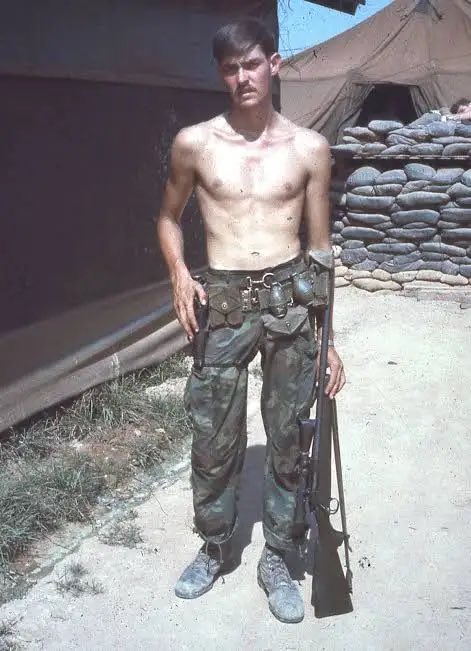
🇺🇸 Most Badass Marines You Don’t Know: #3 Charles “Chuck” Mawhinney
Charles “Chuck” Mawhinney is a Marine Badass
Did you know the deadliest Marine sniper in history was Chuck Mawhinney and not Carlos Hathcock? America didn’t know either.
That’s because he didn’t tell anyone, including his own wife, until more than two decades after the war what he did.
Born February 23, 1949, in Lakeview, Oregon.
A natural-born hunter who grew up shooting rabbits and deer from small airplanes with his dad, he enlisted right after high school in 1967.
He graduated Scout Sniper School at Camp Pendleton in April 1968 and shipped out to Vietnam with the 1st Marine Division.
Mawhinney saw every mission as the ultimate hunting trip. His rules were simple: if they had a weapon, they were going down.
On Valentine’s Day 1969 near Da Nang, a large portion of the NVA army was heading to attack the city.
Mawhinney knew the only place they could cross was the shallow river in the An Hoa Basin. He volunteered to go.
When his Captain warned him of the risk, Chuck replied, “If I stay here, we’ll all get killed.”
He switched guns with his spotter so he would have the starlight scope. They set out that evening through elephant grass eight feet tall.
They made it to the river and found a peninsula that offered cover and protection. They set up and waited in the pouring rain.
Soon they saw movement. A single solder with his face green in the starlight scope. He had a NVA pith helmet and held his rifle above his head as he entered the water.
Chuck knew it was a scout. He knew if he shot him it would end in disaster with the full force of the enemy still across the river. He aimed at him and waited.
The scout crossed the river and climbed the bank. He stood feet from him. Close enough where they could hear the water dripping off him.
Mawhinney held his breath. The scout turned and waded back.
His spotter, Carter, asked Chuck what they would do if the NVA decided to cross.
Mawhinney whispered, “We’ll be here. And when they come, I’m gonna surprise ’em with a party. It’s Valentine’s Day, you know.”
They waited in the rain for an hour.
Then the platoon came single-file, wading, holding their rifles high.
Chuck centered the reticle on the leaders forehead.
He whispered to Carter, “Get ready to haul ass. When I yell go, run for your life.”
He opened fire with his M14. In less than 30 seconds he put 16 rapid headshots on target, moving from head to head.
Sixteen enemy soldiers dropped.
Pith helmets and bodies floated downstream.
He would average four kills per week on his 16 month tour in Vietnam.
One miss haunted him for life. He always wondered how many Marines that enemy later killed.
Mawhinney kept his record completely secret for more than two decades.
Even his own wife had no idea.
Friends and family knew he’d fought in Vietnam, but no one in his life knew he was a living legend with a Bronze Star, a Navy Commendation Medal, a Navy Achievement Medal, and two Purple Hearts.
It only came out in 1991 when fellow sniper Joseph Ward mentioned him in the book Dear Mom: A Sniper’s Vietnam.
Ward credited him with 101 kills. Marine researchers dug into the archives and confirmed the real total: 103 confirmed and 216 probable. That surpassed Carlos Hathcock’s 93-kill record.
We only know a fragment of the stories because of his quiet and humble ways.
After Vietnam he served as a marksmanship instructor, then left the Corps in 1970.
He spent the rest of his life working road maintenance for the U.S. Forest Service in Baker City, Oregon, and quietly spoke to kids about courage and service.
When he was interviewed at age 69 and talking about his time as a sniper, Mawhinney said “Don’t talk to me about hunting lions or elephants; they don’t fight back with rifles and scopes. I just loved it.”
Charles “Chuck” Mawhinney is a Marine Legend 🇺🇸
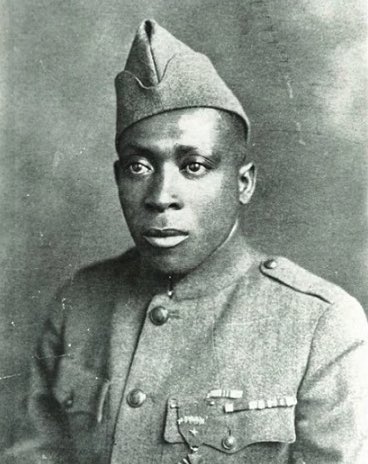
🇺🇸 Most Badass Americans You Don’t Know: #7 Henry Johnson
Henry Johnson is an American Badass
They called him Black Death. The Germans earned every syllable the hard way.
This 5’4” Harlem Hellfighter turned a two-man listening post into a one-man meat grinder on the night of May 14-15, 1918 near Vaux, France.
A 20-man German raiding party ambushed him and his buddy in the dark. No backup. No mercy coming.
His rifle jammed mid-fight? Didn’t matter. He swung it like a club until the stock splintered across enemy skulls.
Then he dropped the broken weapon, pulled his bolo knife, and went savage. He drove the blade straight through one German’s head.
Shot and bayoneted 21 times, bleeding out and half-dead, this legend still dragged his badly wounded comrade to safety under fire to keep him from capture.
He stopped the entire raid cold.
Johnson fought with the all-Black 369th Infantry Regiment, also known as the Harlem Hellfighters.
They spent 191 days in combat, longer than any other American unit, without losing a single foot of ground or a single man to capture.
France pinned the Croix de Guerre with Palm on him immediately — the very first American to ever receive it.
The U.S. took 97 years to finally catch up, awarding him the Medal of Honor in 2015.
Henry Johnson is an American Legend 🇺🇸
Today is the 15th anniversary of the death of LCpl. Ronald D. Freeman. He was k¡ll€*d on April 28, 2011 while deployed in Afghanistan. His widow Katie was informed of his death while celebrating their daughter Katelyn's first birthday. Their newborn son William Douglas was only 10 days old.
Rest easy Hero 🇺🇸
He drives a school bus in Dallas, Texas. But the kids on his route call him something else — Dad.
Every morning before the sun is fully up, Curtis Jenkins pulls his yellow school bus to the curb and waits. Not just to pick up kids. To see them.
For seven years, Curtis noticed things other people missed. The little girl who folded her paper lunch bag perfectly every day but left it on the bus — because there was nothing inside. The boy whose shoes were too small. The kids who got on quiet, eyes down, carrying weight no child should have to carry alone.
So Curtis did something simple. He made his bus a community.
He gave every child a job — a greeter, an assistant, a "police officer" keeping order in the aisles. Every morning he'd call out, "We're going to care about each other and love everybody, right?" And 50 small voices would answer back.
But it didn't stop there.
Over the years, Curtis spent thousands of dollars of his own money — money he saved by skipping his own Christmas gifts with his wife — on birthday cards, bikes, backpacks, turkeys at Thanksgiving, and 70 hand-wrapped Christmas presents. He didn't buy random gifts. He asked each child what they wanted. Then he went and got exactly that.
No donation page. No announcement. No cameras.
When the story finally got out and people questioned how a bus driver could afford it, Curtis just smiled.
"It doesn't take money. It takes discipline."
But here's the part that will stay with you.
When a reporter asked the kids what they loved most about Curtis — not one of them mentioned the gifts.
A fifth grader named Ethan, whose parents had divorced when he was four, looked up and said quietly:
"He's the father that I always wanted. In some ways, I wish my dad could have been like that."
Curtis heard it. Didn't flinch. Just nodded.
"That's the paycheck right there," he said later. "If I can get that, you can keep the money."
He wasn't looking for a medal. He wasn't going viral on purpose. He was just a man who decided, every single morning, that his bus would be the safest place those kids walked into all day.
Sometimes the person who changes a child's life forever isn't a teacher or a coach or a counselor.
Sometimes it's the person behind the wheel of a yellow bus at 7 a.m. — who chose to show up, and chose to care, when nobody was asking him to.
Tag someone who needs to read this today. 💛
The Notre Dame community and the public are invited to attend visitation for legendary coach Lou Holtz.
Sunday, March 15
7–10 p.m.
Basilica of the Sacred Heart
More details: https://t.co/WwA1PsQjgw
🙏🇺🇸🙏
In the dense jungles of Laos during a classified 1970 mission, Green Beret medic Sgt. Gary M.
Rose faced a hail of enemy fire that would break most men-but not him.
Wounded by rocket shrapnel that tore through his back, foot, and leg, Rose ignored his agony, crawling through mud and bullets to treat over 60 injured comrades over four grueling days in Operation Tailwind.
He shielded the fallen with his own body, dragged the helpless to safety, and even used a stick as a crutch to keep going, refusing evacuation until every last soldier was accounted for.
His unyielding courage turned certain death into survival for dozens, embodying the raw essence of brotherhood in hell.
Decades later, in 2017, he received the Medal of Honor-long overdue recognition for a hero who asked for none.
Stories like Rose's remind us: true valor whispers in the face of thunder. God bless our warriors.
🙏🇺🇸🙏