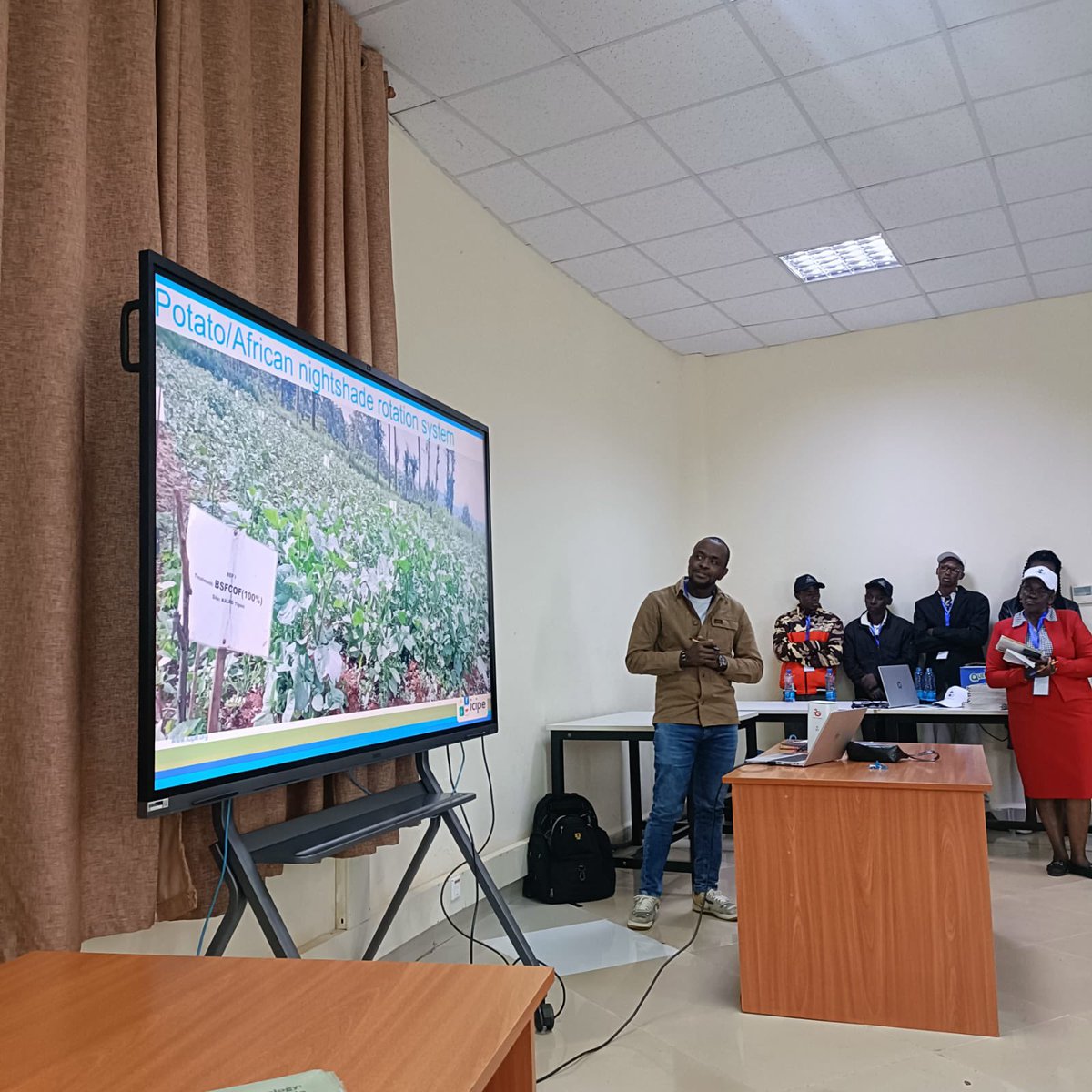
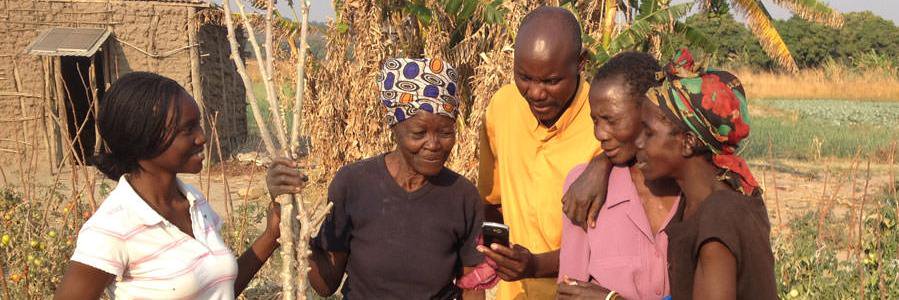
FarmIT is a mobile-based information platform that offers precision agricultural advisories and market linkage services to smallholder vegetable farmers
Kenya’s tree-seed sector needs a policy overhaul to meet restoration goals.
Without strong frameworks, farmers struggle to access quality native seeds, hindering efforts to restore ecosystems and support livelihoods.
Read more:↪️ https://t.co/jRHnkRAQs4
#Trees4Resilience
HONOURING OUR TOP FARMERS AT THE NATIONAL FARMERS AWARDS IN KERICHO
Kericho County will take centre stage on 19th December 2025 as the National Farmers Awards & Celebrations return with a powerful tribute to the men and women driving Kenya’s food systems,
Calling all Food Systems Dashboard users! An independent review is assessing how the Food Systems Dashboard supports decision-making and how the platform can be improved.
𝐀𝐫𝐞 𝐲𝐨𝐮 𝐚 𝐜𝐚𝐮𝐥𝐢𝐟𝐥𝐨𝐰𝐞𝐫 𝐟𝐚𝐫𝐦𝐞𝐫?
In our range of products, we have Cauliflower Smilla F1; Which performs well and very ideal for fresh and export markets.
𝟐𝟓𝟎𝟎 𝐬𝐞𝐞𝐝𝐬 𝐢𝐬 𝐤𝐬𝐡 𝟏𝟗𝟓𝟎
KALRO–TRI Provides Insights into Its Technologies to KTDA Zone 10 Directors and Management Staff
On 16th December 2025, a delegation of 40 directors and management staff from KTDA Zone 10, Nyamira, led by CPA Robert Nyanyuri of KTDA Tombe, visited KALRO – Tea Research Institute (TRI) to gain insights into TRI’s technologies and research in tea production.
The delegation was formally received by the Deputy Institute Director, Dr. Tony Maritim, who welcomed the team and presented the Institute’s mandate. In his remarks, Dr. Maritim highlighted the FAO‑supported low-emission tea initiative, part of the Global Low Carbon Tea – Triangular Cooperation in the Kenya tea value chain. The initiative aims to assess and reduce greenhouse gas emissions across the tea value chain, promote climate-smart practices, and build capacity for sustainable tea production. He noted that KTDA will partner through selected factories in the West and East of the Rift to implement the project.
The visit provided practical insights into modern tea production technologies, nursery management, and value addition processes, strengthening collaboration between KALRO–TRI and stakeholders.
Today, as a way of appreciating you for being our loyal viewers, we are offering you something small for the weekend.
We can’t wait to see what you come up with.
Good luck!
#betterfarming#betterfood#betterhealth
Stanford's Christopher Gardner on why diet wars miss the point: it's food quality, not macros, that matters. Plant-based means mostly plants with flexibility, not strict veganism. His advice: more whole plants, less processed food. Listen on #FutureFork#NutritionScience #PlantBased
"Food brings people together" Heritage Space Food Co-founder Dalia David discusses gastrodiplomacy and why sometimes the most powerful changes begin with believing it's possible. #space#food#future#futurefork
Africa’s next food revolution won’t come from policy papers—it will come from You- the youth. 🌍
4⃣days left to share what drives or holds you back in agri-food systems.
Add your voice 👉https://t.co/v5Kg1bzC0p
#YouthInAg#TransformFood#GrowEntreprenuers
FarmIT just completed the Meta Llama Impact Accelerator, presenting our AI-driven software for sustainable farming. Honored to be among the startups using open-source AI to tackle real-world challenges in agriculture
Day 4 in Jimma 🇪🇹: Today’s PCN diagnostics training focused on **viability & hatchability assays**, alongside continued **PCN extraction & microscopy**. Building skills to better understand and manage this hidden pest! #PlantHealth#PCN#CapacityBuilding
In sub-Saharan Africa, #ClimateChange is intensifying land degradation, eroding ecosystems, and threatening livelihoods.
Read how communities along the #GreatGreenWall are tackling these challenges.
🔗: https://t.co/Oa2sTmhRNr
#RegreenAfrica#TreesPeoplePlanet
It has been a very long journey! When we planted our tomatoes 🍅 in the onset of the cold season, most people were like us a bit skeptical 🧐!
This farm it has been very close monitoring of the crop, balanced nutrition & of all GOD!
#MboleaNiYara@rodgers_kirwa@Billngeno
Imagine buying fertilizer like NPK for Ksh 6,500 and Urea for Ksh 5,800, spending months tilling your land, fighting unpredictable weather and pests — only to sell a 90kg bag of maize for Ksh 4,000.
It doesn’t make sense, does it?
But this is the harsh reality for many Kenyan farmers today. The prices of farm inputs keep rising, while the returns from harvested crops remain stagnant or even drop. Right now, one bag of maize can’t even buy a single bag of fertilizer.
We need to pause and ask:
✅ How will smallholder farmers survive this cycle?
✅ Can we even talk about food security when producing food brings losses?
✅ Why would a young person venture into farming when the math just doesn’t add up?
When the cost of growing food is higher than its market value, the entire agricultural system is hanging by a thread.
Here’s what needs to happen:
👉 Input subsidies to ease the burden on farmers.
👉 Promote local production of fertilizers and seeds.
👉 Stronger policies that protect local farmers.
👉 Shielding local markets from unfair competition.
Because when a farmer’s income dries up, the whole nation feels the hunger.
To get the weed control right in sunflowers, we have typically had to spend around 12,000 ksh/ha on pre ems. Which makes up around 26% of total variable costs. Trying a new mix that costs just 4,700 ksh/ha here and appears a step up on Bidens pilosa too.