🌍 Save the date! The 36th Symposium of the @ESNematologists will take place in Egmond aan Zee, the Netherlands, from June 1–5, 2026.
🔗 First details now live: https://t.co/esjAucMhP2
#ESN2026#Nematology
Deepak Haarith, Ann E. MacGuidwin, and Andrew F. Bent report that Rhg1 can hinder the parasitism of the root lesion nematode #Pratylenchus penetrans, which is commonly found along with the soybean cyst nematode in northern U.S. soybean fields. Learn more: https://t.co/5ev3aS1qZM
How do nematodes shape soil functions? We're seeking studies that advance understanding of nematode communities across environmental, land use, and management gradients.
Find out more: https://t.co/law3xvwwaC
@Soil_Science#soil#soilscience#nematodes#soilhealt
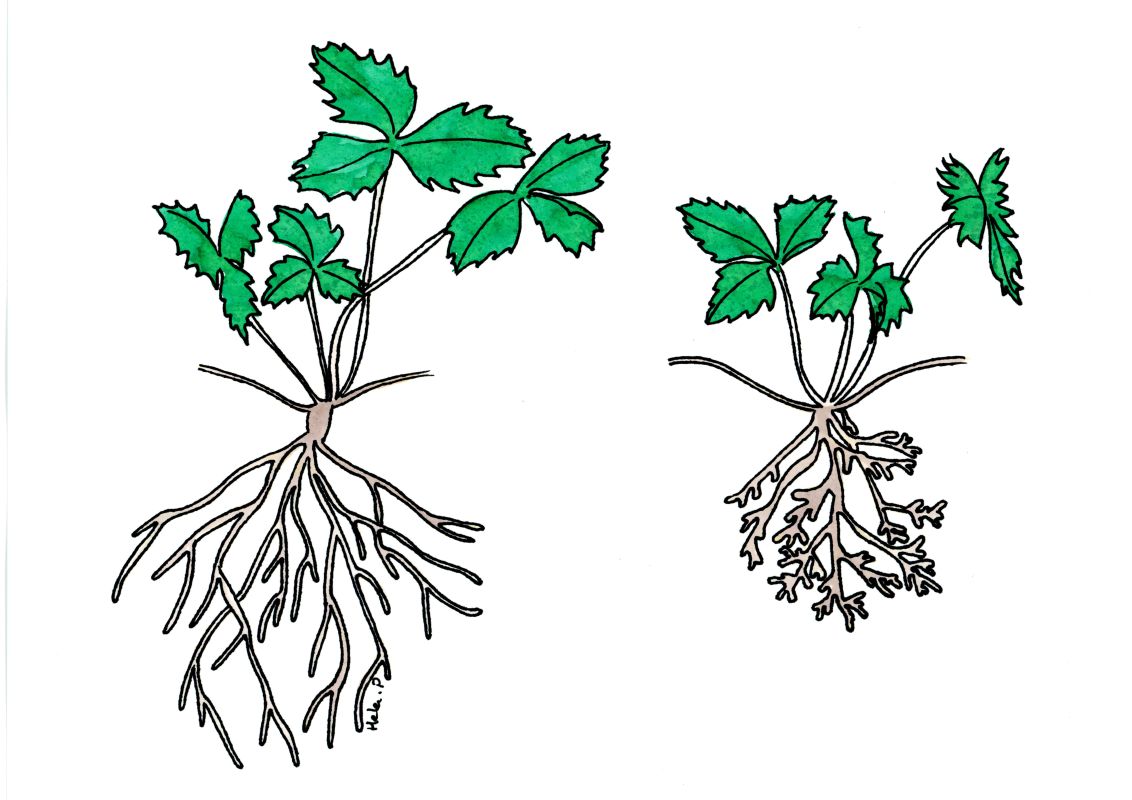
The sting nematode (Belonolaimus longicaudatus) damages root tips, resulting in short, stubby roots and reduced plant growth.
I illustrated a healthy strawberry plant alongside an infected one for comparison https://t.co/g3XfMvbdhY
Congratulations to Anika Damm, selected as a rising star of MPMI - a webinar showcase by the international society for plant-microbe interactions featuring outstanding early-career PhD students & postdoctoral researchers.
Register for the webinar: https://t.co/ujXT2mEuV2
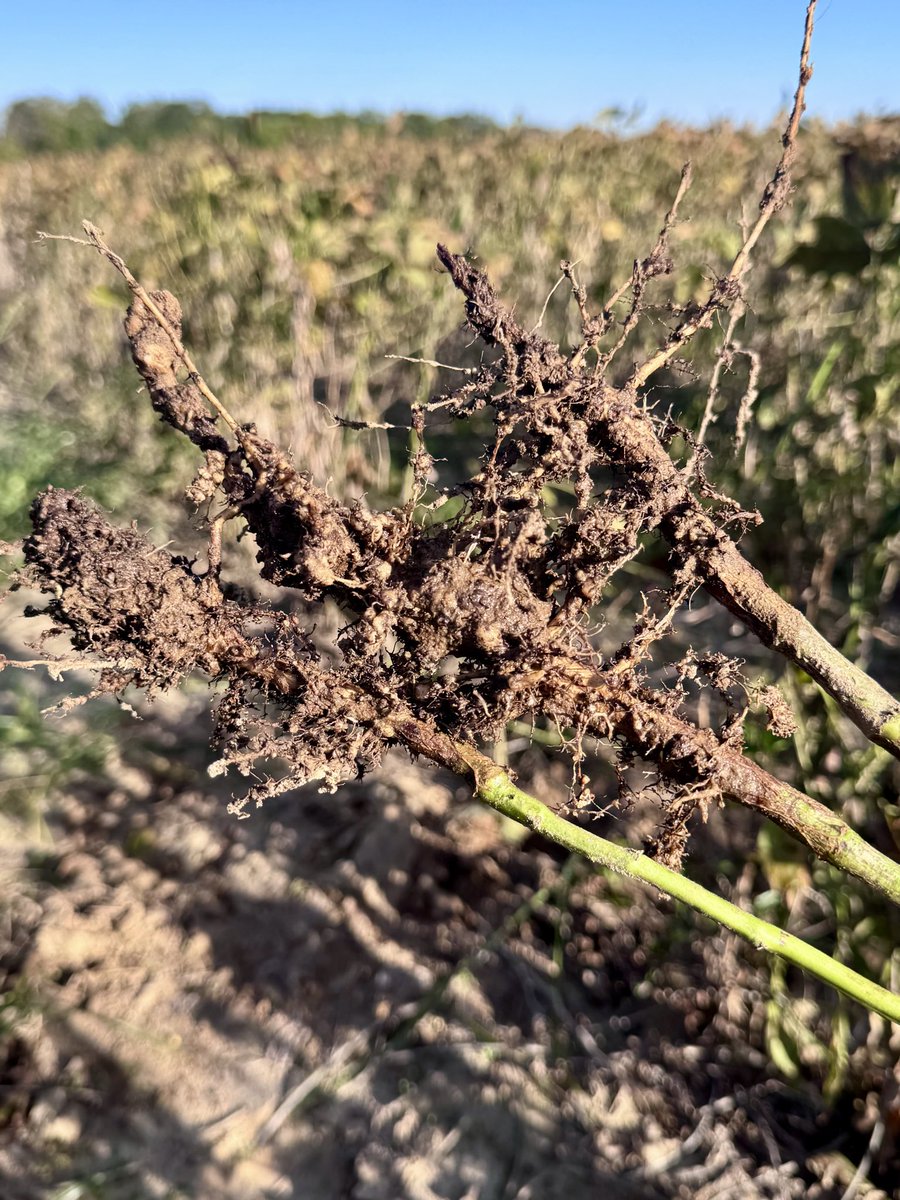
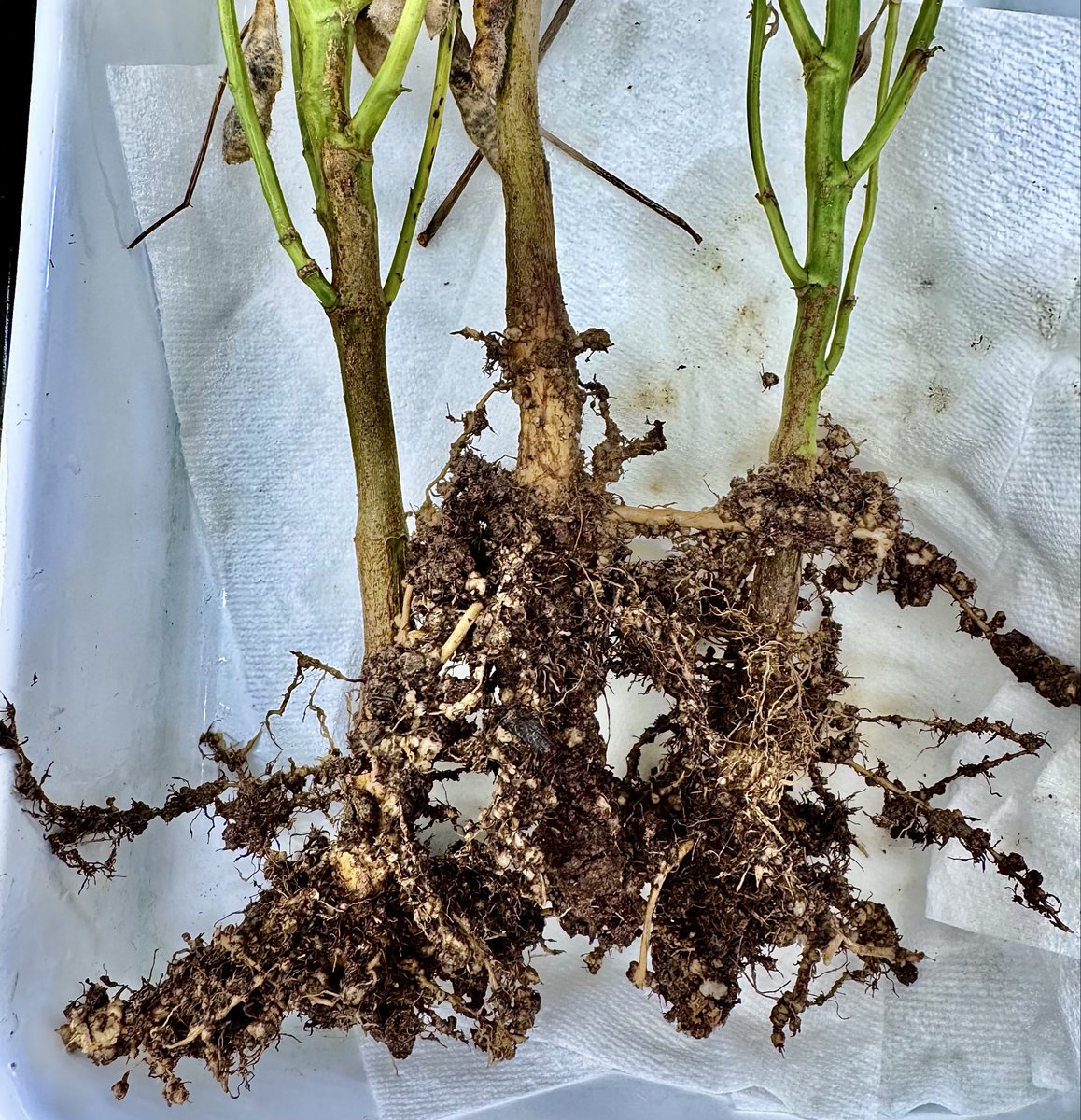
NEMATODE MONDAY: symptoms of Root-knot nematode damage on roots of soybeans in the field and in the lab after a thorough washing. A close examination in the lab gives a clear view of the large root galls (knots) incited by this pathogen. This helps to distinguish root-galls from beneficial Rhizobium nitrogen-fixing nodules (common on legumes), which rub off easily and are pink/soft inside #Nematode @CropNetwork@soydisease #Soybean
🧬 #NEMEMERGE researcher @edanchin (@INRAE_France ) presented findings revealing two large genomic deletions (~1% of the genome) in virulent lines, suggesting that gene loss may drive virulence acquisition.
Moreℹ️https://t.co/DKKX8buguk
#nematology#HorizonEU
🚨 Just 1 week left to submit an abstract 🚨
Don't miss the chance to share your science at Advances in Nematology 2026!
⏰ Abstract submission closes 30th October!
👇👇👇
On 21 October, NemAfrica welcomed nematology experts Dr Inga Anne Zasada (NemaSolutions, LLC), Dr Cynthia Gleason (@wsu ) and Prof Louise-Marie Dandurand (@uidaho ) to our lab for research presentations and scientific exchange on nematode management and plant health. @IITA_CGIAR
💼 A tenure-track Assistant Professor position in #Parasitology and/or Parasite Ecology is available at @SamHoustonState 🎓 (Dept. of Biological Sciences) for a broadly trained researcher.
👉 More info, requirements and application process here: https://t.co/OtJnSn5RO1
We are excited to announce our next Trends in Nematology Webinar on Anthelmintics!
When: 5th November 2026
Time: 16:00-17:15 CET
Register here or using the QR code below -> https://t.co/rUqIHCGmCF
Looking forward to seeing you there!!!
Current Trends and Management of Plant-Parasitic Nematodes in Missouri Soybeans
Join Dr. Mandy Bish and Jefferson Barizon from the University of Missouri to learn about the findings from a survey of 200 soybean fields across Missouri to assess plant-parasitic nematode diversity and population densities.
@ncipmc's October Pests & Progress Webinar October 21st at 1pm ET / 12pm CT
Register here: https://t.co/iG2rlLFDfJ
This webinar qualifies for 0.5 CEU in IPM for Certified Crop Advisers
@MizzouExension@MizzouIPM@MandyBish1
Multi-site evaluation of Chilean native rhizobacteria for the sustainable management of the walnut root-lesion nematode Pratylenchus vulnus (Tylenchida: Pratylenchidae)
https://t.co/LhD6zR1O4L
♻️