Paper @PNASNews
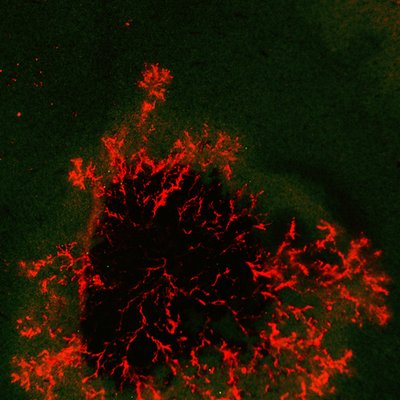
We think nematodes break open plant cells, sense small molecules (termed effectostimulins), which switch on a master regulator SUGR1, which switches on effectors, which break cells.
Looks like a feed-forward loop driving infection.
https://t.co/plCau36wlH
In case you missed it - @AnikaDamm's @ISMPMI Rising Star talk - 'From host signals to parasitism: a transcription factor due orchestrates effector production' - is now available to watch on YouTube.
https://t.co/cbfZQ8IQlq
My first post😀
Our new preprint is now online!
In this study, we show how nonhost resistance can help uncover new immune receptors in rice. A big thank you to all our co-authors and collaborators who made this work possible.
#NLR,#rice,#wheat
https://t.co/A2F1PmK9ni
Starting in 20 mins! Don't miss out on the chance to see the next generation of Rising Stars of IS-MPMI sharing their amazing science! Link to register in the thread below👇
Excited to share our lab's first foray into phytocytokines, now on bioRxiv.
Our technician Euan found yet another broken immune system component of the model plant N. benthamiana, leading to insensitivity to its own systemin peptides (NbSYS).
https://t.co/Rh57z29ezN
Some rhizobia transform legume nodules via native T-DNA transfer systems.
This reframes how bacteria-to-plant DNA transfer evolved, and opens a route to legume engineering.
w/ @ShanChiHsieh1@erhminlai
https://t.co/SIoP4pC0tl
Some rhizobia transform legume nodules via native T-DNA transfer systems.
This reframes how bacteria-to-plant DNA transfer evolved, and opens a route to legume engineering.
w/ @ShanChiHsieh1@erhminlai
https://t.co/SIoP4pC0tl
Job opportunity!
University Assistant/Associate Professor
We welcome applicants interested in computational approaches applicable to any crop, supporting the department's existing strengths.
Apply by 06 January 2027: https://t.co/vJRWqQ3aam
Our work is out! We identified a fungal effector required for root colonization. Its expression tracks host phosphate status and is repressed by the fungal phosphate starvation regulator. Fungi may balance colonization and low-phosphate adaptation.
https://t.co/mBkom3u5c6
Coming up! 🌟 Rising Stars of IS-MPMI is back with an amazing lineup of speakers 🤯
🗓️ Wed 18 Nov, 3pm UTC
@AnikaDamm (U of Cambridge, UK)
@shikhahere_ (NIPGR, India)
@IamJawaharSingh (SLCU, UK)
Sejin Choi (Kyung Hee Uni, South Korea)
Register free 👇
https://t.co/48WUsmt60N
Applications are now open for 7 exciting PhD projects in the IMPRS Call 2027 at the University of Cologne (UoC) and Max Planck Institute for Plant Breeding Research (MPIPZ)!
🌱 Explore the projects and apply now!
#PhDPositions#IMPRS
https://t.co/Mcivg6Kez3
Instructions for building EZ-Gels - cheap agarose mini-gels for DNA separation with 3D printed vessel, dams and comb, glass microscope slide base, conductive plastic electrodes and low ionic strength buffer. https://t.co/1CuqyaC55o
The Academy for Maths (in the UK) has written a 'white paper' to give an overview of the opportunities and challenges of AI in mathematics.
It was written with a broad audience in mind (academics, media, funders, government, etc)
Comments welcome!
https://t.co/73viv1TMUI
PhD opportunity to study RNA modifications and splicing @alperakaylab. Open to home-fee qualifying students (UK, settled and Irish students who meet residency requirements). In collaboration with James Smith lab and @WHaerty. @uniofeastanglia https://t.co/jGzNA0zaEK
In new work, we report a surprising finding: prompting Evo 2 with a handful of sequences of shared function can steer the model to generate new sequences with similar function, a form of generative in-context learning (ICL). This is an emergent phenomenon that we did not anticipate during training.
In a first study, led by Alex Hao, we show that ICL enables few-shot design of mammalian regulatory elements, including novel enhancers with cell-type specificity for a neuronal subtype in the mouse brain.
In a second study, led by @garykbrixi and Alex Hao, we extend these results to the computational design of natural proteins, de novo antibodies, protein-RNA systems, and complete bacteriophage genomes.
As part of this work, we also release several useful new artifacts, including a highly efficient new inference stack. 1/n
Postdoc opening in my lab! Looking for someone excited about genomes, symbionts and plant–insect interactions to join our team at @TheSainsburyLab 🧬🍄🌿🦟
Applications reviewed from 16 Nov.
https://t.co/ECezWOJE5T
Congratulations to Dr Jeanne Salje on securing new funding to advance research into Lyme disease. The award will support work to better understand the disease and improve diagnosis and treatment.
🔗 https://t.co/P14tTHYjxl
Congratulations to Dr Adriane Esquivel Muelbert on being awarded a Philip Leverhulme Prize for her work on the impacts of global change on forest biodiversity & ecosystem functioning! 🍃
Read more: https://t.co/ezvNA1KbYG