Providing Hi-tech Synthetic Fibre Solutions to Pakistan 🇵🇰 Textile Indsutry. Team of passionate Textile experts from NTU FSD, NED KHI & UNI. OF BOLTON UK
Techtextil Frankfurt puts Europe's top workwear buyers under one roof. Demand for FR, hi vis and safety fabrics is there. A real opportunity for Pakistan's exporters to meet buyers face to face, prove their quality, and walk home with solid orders
Saluting those who serve — on duty and on the green.
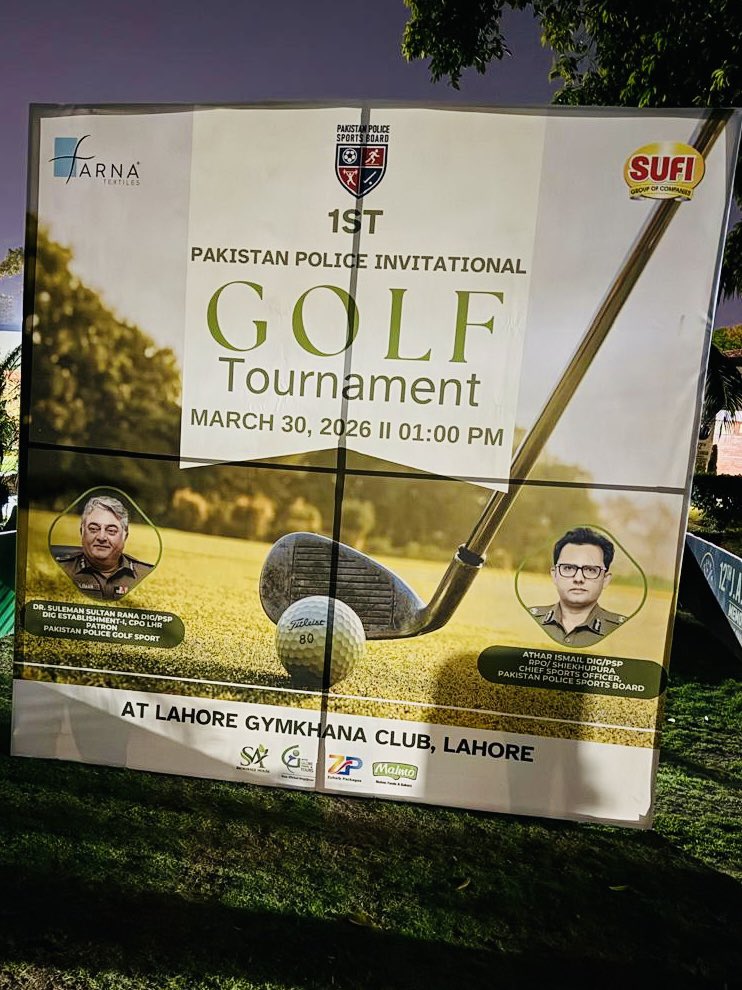
Farna Textiles is proud to support the 1st Pakistan Police Invitational Golf Tournament, March 30 at Lahore Gymkhana Club.
Good luck to all players!
#FarnaTextiles#PakistanPolice#GolfTournament@OfficialDPRPP
Eid Mubarak from Farna Textiles.
On this blessed occasion, we extend our heartfelt wishes to our valued clients, partners, and colleagues. May this Eid bring prosperity, success, and continued growth for all.
Warm regards,
Team Farna
#Eid#Pakistani#Textiles
It’s a matter of great satisfaction that the Act was promptly amended and New private sector led board formed as per the recommendations of the Working Group led by me. I had recused myself from being on the Board as that would have been a conflict of interest. Would like to appreciate the efforts of @BilalAKayani for steering the process.
@PakPMO@mincompk@jam_kamal@81ShahbazRana
Scientists have developed a smart-textile vest that can detect early signs of hypothermia in older adults. Created at Nottingham Trent Uni, it uses four tiny thermistors woven into the yarn to track body temperature and send real-time data via Bluetooth. https://t.co/sYYG5S3p9H
Startups do fail due to weak execution. Our real challenge is quality, low-grade products, poor service culture, limited skills and teams lacking professional integrity. Globally, startups grow where systems, skills and accountability are strong. #startups#Innovation
We Love You Subhash
A few memories to share on the sad demise of Professor Subhash Anand, MBE DCE CompTI CText FTI, an Indian-origin British textile professional, scholar, and mentor who devoted his life to the UK’s textile industry, technical textiles, research, and textile education. A devoted teacher who shared knowledge generously across borders and continents
Today, a class fellow from Bolton times shared a Facebook post from The Textile Institute UK. The Textile Institute announced the death of Professor Subhash, who passed away on 22 December 2025. It was such sad news for me and for other students of Professor Subhash Anand. Time flew fast and took me back 30 years to when I started my undergraduate studies at Bolton Institute of Higher Education. It was not a university at that time; however, it was one of the best textile education centres in the world. I can’t say what makes an institute the best, was it the expensive textile machines and hardware they had, the decades-old manufacturing industry presence which, although fading away, still carried a rich textile history, or was it the presence of teachers who were dedicated, hardworking, and passionate about sharing their knowledge. It’s also interesting that Bolton Institute had a range of high-quality textile lecturers who not only had excellent subject knowledge, but many of them were also working in industry in the 70s and 80s. They represented a unique blend of textile qualifications and industry experience
Being an overseas student, we didn’t have classes with him in the first year, and I cannot remember when I first saw him in class. I think it was my second year. However, when he entered the classroom, his presence was bold and everyone used to take notice of it. He was tall and had a powerful personality with full of confidence. He had extraordinary knowledge of textile technology and used to say that he studied weaving in India and graduated as a textile engineer in weaving. Then he would make a big laugh and say that he finally saw the “light,” and that light was knitting technology. When he moved to the UK, he developed a lot of interest in knitting, and I think his PhD research was also in the knitting area.
Now, after 27 years of work experience in textiles myself, I realise that we textile engineers and technologists usually work in very specific domains, like doctors specialising in their own areas. We don’t like to get involved in other specialties once we are pursuing careers in yarns, weaving, knitting, dyeing, or printing. However, Subhash was different. He was so talented and developed such extraordinary passion for textiles that he made a big jump from the woven area to knitting. Taking his lectures was a treat, as he explained things so well. However, there was also a tougher side, which sometimes worried us. We overseas Indian and Pakistani students were used to strict teaching styles, as we came from the Indian and Pakistani education systems of the 80s and 90s. For local students, however, it was tougher, as Subhash was very objective, straightforward, and sometimes loud in passing candid remarks whenever he felt a student was not following him or his lectures. I believe this was not toughness; it was his deep devotion to studies and his desire for students to get the best out of his classes. That was Subhash as a teacher.
We also had a lot of fun, and he used to make us laugh a lot. Sometimes, with overseas Pakistani students, it was literally a “mind your language” class. There were many incidents that I still remember. Once, he asked in class, “Do you know lingerie?” and one of our close friends replied loudly, “Yes sir, we know laundry.” On another occasion, Subhash asked a Pakistani student why he had missed previous classes, as he had gone to Pakistan to see his family during Eid. The student got nervous and said, “Sir, I went on leave as there was an emergency.” Subhash asked what the nature of the emergency was, and the student replied, “Sir, it was Eid.” That was it for Subhash. He said, “Well, Indians have Diwali, in the UK we have Christmas, are these emergencies?” The poor guy was left without words, as Subhash effortlessly turned the moment into laughter with his unique sense of humour.
Subhash never spoke with us in Urdu or Punjabi; he always talked in English. Once, a friend came to me full of excitement and said that Subhash could speak Punjabi. I said, “No way.” He replied that while passing his room, he heard him on the phone saying, “Papu da ki haal way” (How Papu is doing).
Time passed. He taught us in the second year, and again his lectures and notes on weft knitting and warp knitting were amazing. He also taught nonwovens and was very good in that area as well. In the final year, I took marketing with dyeing, so I didn’t study fabrics, as I felt two majors in technology would be too tough. However, students who took fabrics as a major knew how beneficial it was to be taught by Subhash. His knitting knowledge was ahead of its time, and in his lectures he always touched on modern areas such as warp-knitting machine improvements and knitted spacer fabrics.
Subhash was about 6 ft 1 or 2 inches tall, and I was 6 ft 3 inches. This created a unique, unspoken connection between us, as we shared our height in common. In the final year, I asked him if I could sit in his classes even though I was not taking fabrics, and he gladly allowed me. Sometimes, even when I was not enrolled in his class, he would ask me to accompany his group on industry visits. One such visit became quite interesting. He was driving the car, made me the navigator, and gave me a map. Our car was followed by four to five other cars. I didn’t know how to read the map, and on top of that, I had never driven in the UK. However, Subhash had such a personality that I could not say no. At one point, we couldn’t figure out where to go, so he stopped the car in the middle of the road while we were confused, and the cars following us had to stop right in the middle of a traffic light.
Subhash had deep knowledge and interest in technical textiles and medical textiles. He was a recognised authority in the UK in these areas and always guided us towards modern technologies. I remember my last meeting with him in the UK, when I graduated and went to his room to say goodbye. He gave me advice about the future and handed me brochures of very small-diameter knitting machines for medical textiles. When I returned to Pakistan, I kept those brochures for years.
Most Pakistani, Indian, Turkish, and other international students returned to their countries. I came back to Pakistan with many other Pakistani students and started working. Days, weeks, months, years, and decades passed. Then we met again, and surprisingly in Pakistan. In 2015, I learned that Subhash was visiting Pakistan to deliver a visiting lecture at the National Textile University, Faisalabad, one of the most prominent textile institutes in Pakistan. I didn’t have his contact details, but eventually managed to invite him to dinner and gathered many textile friends from our Bolton days. We went to dinner, and he was so happy to see us. We were meeting after a long time, and everyone was delighted. The entire evening was filled with laughter and memories of our UK days.
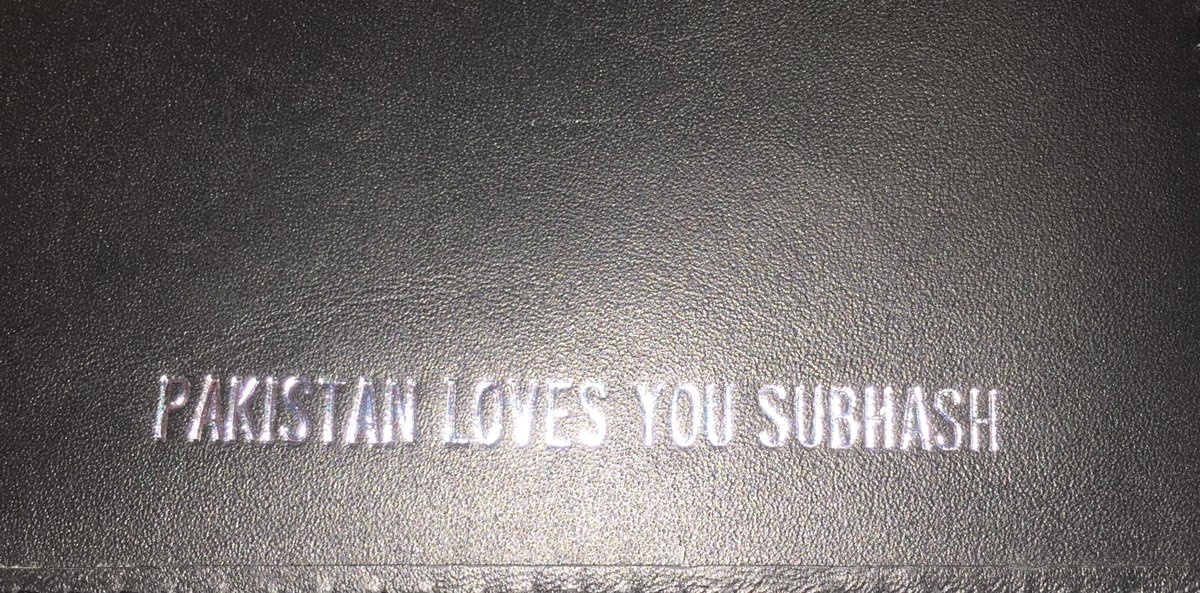
The next day, I thought we should give him a gift from our side. Like textiles, Pakistan is also known for leather goods, so I went to a store and bought a few leather-based gifts for Subhash. The brand offered a service to personalise items with names, so I had “Subhash Anand” printed. However, something still felt missing, and I couldn’t stop myself from also printing “Pakistan loves you Subhash.” I dropped the gifts at his hotel, but I couldn’t see him as he was not there. The night before, at dinner, was the last time I saw him.
Almost two weeks later, I received a surprising call from the UK. Subhash didn’t have my number and obtained it through someone else. He was very excited and happy. In fact, he had not opened the leather gifts until he returned to the UK. When he saw the words “Pakistan loves you,” he called me and thanked me warmly. His voice carried both happiness and emotion. He invited me to be his guest whenever I visited London; by then, I think he had moved there.
After that, I lost touch with him, and today I heard this sad news. I pray that his soul rests in peace and that God grants him heaven. I simply wanted to pay tribute to such a knowledgeable, passionate, and wonderful person. My few words cannot fully capture his legacy. It was not only Subhash; there were teachers like Karen, Barbara, Keith, Steve, Phil, Mr Halfpenny, Ian, Mike, Trevor, Dave Hill, Richards, Mike Lomas, Mohsin and many others. They were the reason Bolton Institute became one of the best textile institutes in the 1990s. It was not only about textile education; they also tried to make their students successful and better human beings.
I pray for all of them with love and deep respect. Special prayers for Mr Subhash Anand and his family.
Rest in peace, Subhash — Pakistan loves you.
#Textiles #Pakistan #India #UK #Textileinstitute #knitting #weaving #Medicaltextiles
Chargé d’Affaires Natalie Baker recently toured a U.S. company in Karachi where cutting-edge innovation is helping power Pakistan’s textile exports overseas.
Through radio-frequency identification (RFID) and smart labeling technology, U.S. businesses are transforming supply chains — making them more efficient, reducing losses, and boosting consumer confidence. These advances support Pakistan’s textile industry and build stronger trade ties that benefit both our countries.
Researchers have developed fiber-like pumps that allow high-pressure fluidic circuits to be woven into textiles without an external pump. Soft supportive exoskeletons, thermoregulatory clothing, and immersive haptics can therefore be powered from pumps sewn into the fabric of the devices themselves.
Credit: @EPFL
EU-funded research is helping turn old clothes into new, high-quality products, reducing textile waste and making recycled textiles the norm. Will Europe’s fashion future be powered by recycled fibres?
➡️ https://t.co/UOGum0l4jt
#ResearchImpactEU#Science4EU
For decades, nylons and polyesters have revolutionized textiles with their durability and versatility, yet they remain petro-plastic polluters. Natural fibers like cotton offer limited availability and carry their own environmental burdens from cultivation to dyeing. With the global population surpassing 8 billion, it’s time for breakthroughs, biodegradable man-made fibers, dope-dyed innovations, and water-saving processes that can scale sustainably. #Textiles #Sustainability #Innovation
Farna Textiles (Pvt.) Ltd. is proud to have sponsored a vibrant Spanish Cultural Event held in Lahore, celebrating the spirit of art, music, and cross-cultural exchange between #Pakistan and #Spain@SpaininPakistan