Tom Brady: To be successful at anything, the truth is, you do not have to be special.
You just have to be what most people aren not: consistent, determined and willing to work for it. No shortcuts.
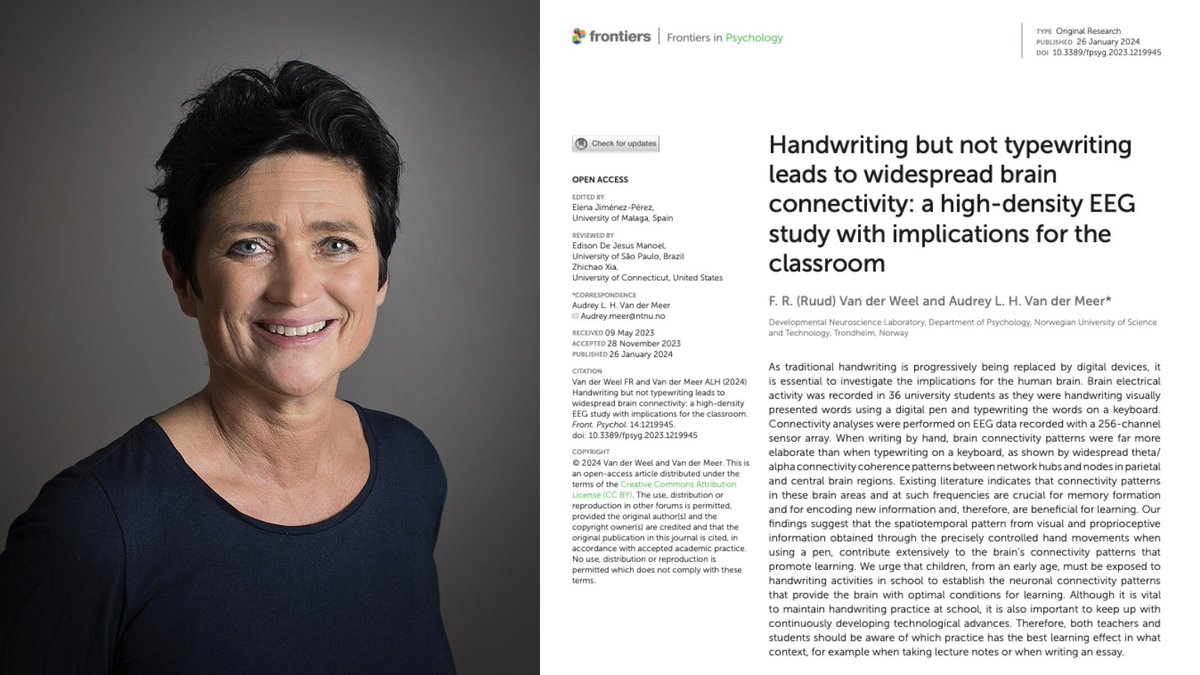
A Norwegian neuroscientist spent 20 years proving that the act of writing by hand changes the human brain in ways typing physically cannot, and almost nobody outside her field has read the paper.
Her name is Audrey van der Meer.
She runs a brain research lab in Trondheim, and the paper that closed the argument was published in 2024 in a journal called Frontiers in Psychology. The finding is brutal enough that it should have changed every classroom on Earth.
The experiment was simple. She recruited 36 university students and put each one in a cap with 256 sensors pressed against their scalp to record brain activity. Words flashed on a screen one at a time.
Sometimes the students wrote the word by hand on a touchscreen using a digital pen, and sometimes they typed the same word on a keyboard. Every neural response was recorded for the full five seconds the word stayed on screen.
Then her team looked at the part of the data most researchers had ignored for years, which is how different parts of the brain were communicating with each other during the task.
When the students wrote by hand, the brain lit up everywhere at once.
The regions responsible for memory, sensory integration, and the encoding of new information were all firing together in a coordinated pattern that spread across the entire cortex. The whole network was awake and connected.
When the same students typed the same word, that pattern collapsed almost completely.
Most of the brain went quiet, and the connections between regions that had been alive seconds earlier were nowhere to be found on the EEG.
Same word, same brain, same person, and two completely different neurological events.
The reason turned out to be something nobody had really paid attention to before her work. Writing by hand is not one motion but a sequence of thousands of tiny micro-movements coordinated with your eyes in real time, where each letter is a different shape that requires the brain to solve a slightly different spatial problem.
Your fingers, wrist, vision, and the parts of your brain that track position in space are all working together to produce one letter, then the next, then the next.
Typing throws all of that away. Every key on a keyboard requires the exact same finger motion regardless of which letter you are pressing, which means the brain has almost nothing to integrate and almost no problem to solve.
Van der Meer said it plainly in her interviews.
Pressing the same key with the same finger over and over does not stimulate the brain in any meaningful way, and she pointed out something that should scare every parent who handed their kid an iPad.
Children who learn to read and write on tablets often cannot tell letters like b and d apart, because they have never physically felt with their bodies what it takes to actually produce those letters on a page.
A decade before her, two researchers at Princeton ran the same fight using a completely different method and ended up at the same answer. Pam Mueller and Daniel Oppenheimer tested 327 students across three experiments, where half took notes on laptops with the internet disabled and half took notes by hand, before testing everyone on what they actually understood from the lectures they had watched.
The handwriting group won by a wide margin on every question that required real understanding rather than surface recall.
The reason was hiding in the transcripts of what the two groups had actually written down.
The laptop students typed almost word for word, capturing more total content but processing almost none of it as they went, while the handwriting students physically could not write fast enough to transcribe a lecture in real time, which forced them to listen carefully, decide what actually mattered, and put it in their own words on the page.
That single act of choosing what to keep was the learning itself, and the keyboard had quietly skipped the choosing and skipped the learning along with it.
Two studies. Two countries. Same answer.
Handwriting makes the brain work. Typing lets it coast.
Every note you have ever typed instead of written went into your brain through a thinner pipe. Every meeting, every book highlight, every idea you captured on your phone instead of on paper was processed at half depth.
You did not forget those things because your memory is bad. You forgot them because typing never woke the part of the brain that would have made them stick.
The fix is the thing your grandmother already knew.
Pick up a pen. Write the thing down. The slower road is the faster one.
I asked my husband and he said I could share his photos. This is 3 days of carnivore on psoriasis. Really we were focused on the psoriatic arthritis but the side effects are telling and amazing!
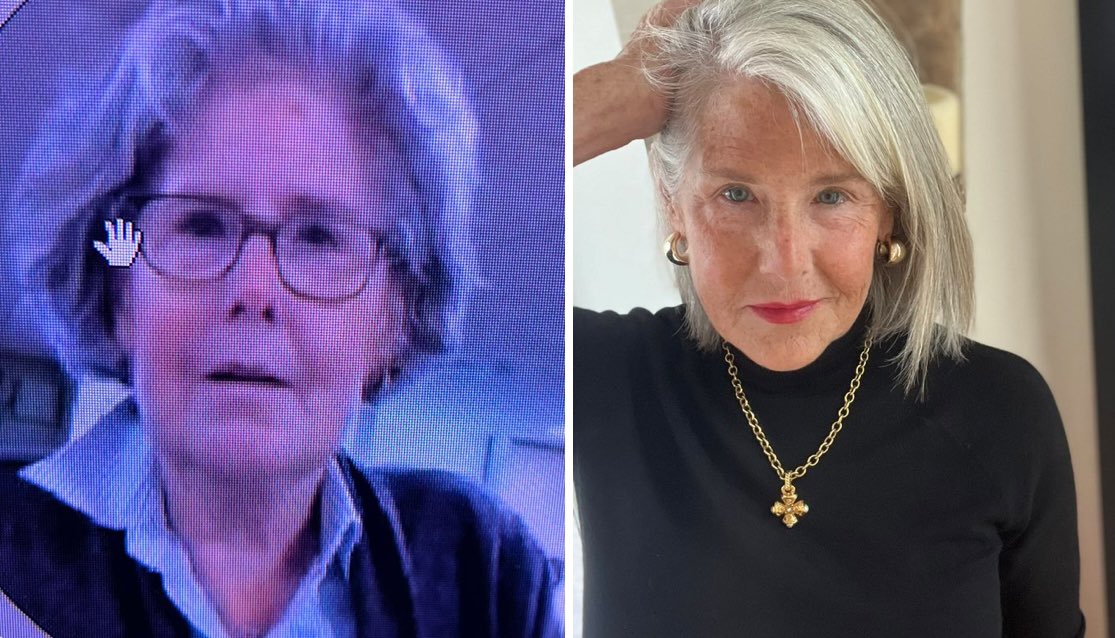
The most terrifying part of my “Parkinsonism” was witnessing me loosing myself…I knew it was happening.
Eyes don’t lie…you can see the stark contrast between the photos, 9 yrs apart…the one on the left is me, 9 yrs younger than the right.
The image on the left, I’m lost, confused, frightened as I slowly faded away loosing my ability to remember, complete easy tasks, calculate simple math.
Frozen in fear as I tried to recall how to write the letter L, wondering what town I was in as I stood on a street corner 2 blocks from work…it’s hell to watch your mind and all you know slip away.
9 months into my Keto journey as I slowly regained my capabilities, I discovered the work of @marynewportmd . I began adding Coconut Oil & MCT oil daily.
Though I am Carnivore now, I keep my diet high in fat to remain in Ketosis…my gut tells me it serves as a preventative as well. I continue to include Coconut & MCT oil in my daily intake.
“Bringing awareness of ketones as an alternative fuel for the brain as a potential treatment for Alzheimer's and other neurodegenerative diseases was, and still is, my primary objective in writing these books.”
UP to 80% of those with Parkinson’s will go on to develop Dementia.
This is the research we need, research that benefits people not big Pharma.
There is no profit, just hope…
On Wednesday, @RobertKennedyJr will testify before the Senate Finance Committeee.
The chair of that committee, @MikeCrapo , gave a powerful testimony to our Roundtable last year defining the stakes.
He talked about being let down by the current healthcare system, taking matters into his own hands by consuming books and podcasts, and experimenting with a WHOLE FOOD diet to radically improve his biomarkers (and thus his health, happiness, and longevity).
He talked about how the current FDA and CMS regulations disincentivized him on this journey of wellness by preventing access to preventative monitoring.
Our country would be RADICALLY TRANSFORMED if more Americans embarked on Senator Crapo’s path of curiosity to spur awe of the inter-connectivity of our human bodies and implement common sense actions to reverse disease.
Let’s not forget the monumental stakes of this nomination.
@SenRonJohnson@CaseyMeansMD@JillianMichaels@jordanbpeterson@maxlugavere@ferrisbuhler81@MartyMakary@thefoodbabe@travelingenes@MikhailaFuller@realfoodology@humankarp
Forget what other people are doing, forget what they’re doing wrong. You’ve got enough on your plate. Focus on yourself—focus on what you might be doing wrong. Fix that. Keep an eye fixed on your own life. Frankly, there’s not enough time to waste a second spying on other people.
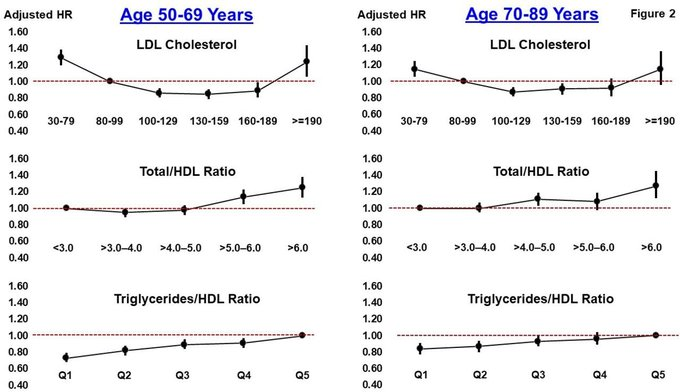
Lowest mortality for LDL cholesterol is in the wide range of 100–189 mg/dL
This is much higher than current recommendations.
Narrative violation.
Primary prevention, patients not on statins nor diabetic. PMID: 38548371
Oceans cover 72% of earth's surface to an average depth of 3.68 kilometres. This is earth's thermostat holding 94% of all retained heat energy. Deep ocean currents carry warmth & on a conveyor belt to modify world climate. Oceans are the source of all weather, not carbon dioxide.
Harcombe/Kendrick vs Associated Newspapers...
I'm delighted to say it's finally over!
5.5 years after the articles were published, they are down and an apology has been made.
Thank you SO much to everyone who made this even possible - especially Claire & Dominic at Carter-Ruck and Adrienne & Godwin at 5RB🙏🍾
Very interesting practical implications! "This work highlights that tissues have a much higher capacity to incorporate exogenous-protein-derived amino acids than previously assumed and that the duration of the postprandial period is proportional to the size of the ingested meal."
ApoA4 🤔 in #LMHR, lipid energy model (#LEM), cardiovascular protection, and more...
🧈ApoA4 is most responsive apolipoprotein to dietary lipids; think #keto
⚡️Enhances LPL-mediated TG-rich lipoprotein turnover #LEM
🫀Atheroprotective...⬆️ Reverse Cholesterol Transport, ⬇️ LDL oxidation, and more...
Video @YouTube
👉 https://t.co/26zklbNtxe👈
Cc' @realDaveFeldman@SBakerMD
Could a #ketodiet or #carnivorediet help treat inflammatory bowel disease (IBD)?
https://t.co/wJkpJyMTGJ
👉New Literature Suggests Biological Plausibility
👉Combined with dozens of patient attestations, providing hope
👉"Absence of [strong clinical] evidence ≠ evidence of absence" ... why wouldn't diet help IBD?
Case series planned for 2024... hopefully interventional trial thereafter...
Link to YouTube: https://t.co/wJkpJyMTGJ
Please share if you know someone with Ulcerative Colitis / Chron's. Hope matters. Trust me. Been there...
& Keep an Open Mind 😊
Cc' @SBakerMD@KenDBerryMD@KetoCarnivore@AdrianSotoMota@ClemensZsofia
💥🫀#LMHRstudy DATA DROP🫀💥
👉 KETO (#LMHR) group had mean LDL-C 272 mg/dl (max 591 mg/dl), age ~55
👉NO INCREASED PLAQUE on CCTA after 4.7 years on #ketodiet vs. to matched control group
👉NO ASSOCIATION between LDL-C and Plaque
👇Clip from vid: https://t.co/Zie5ZgyGfh
More resources:
PI, Matt Budoff MD, presentation: https://t.co/xhYdNOpvLs
Dave's commentary: https://t.co/eMlRFF2Xba
SELECTED PAST PAPERS
Lipid Energy Model: https://t.co/ZqfbkcA2L7
LMHR, first paper: https://t.co/VTf65ezE8c
JCL LMHR editorial: https://t.co/GHzp6XDDcY
RT' Share Widely! More to come...
cc' @realDaveFeldman
Your physical and emotional battle scars are proof of your evolution.
From wounds to wisdom, the journey is all about rising.
90% give up at the first sign of adversity. The other 10% shape the world.
Which side of history will you be on?