𝗔 𝗹𝗼𝘁 𝗼𝗳 𝗽𝗿𝗼𝘁𝗼𝗰𝗼𝗹𝘀 𝗰𝗮𝗻 𝘁𝗲𝗹𝗹 𝘆𝗼𝘂 𝘄𝗵𝗮𝘁 𝗵𝗮𝗽𝗽𝗲𝗻𝗲𝗱
The harder problem is deciding and executing what should happen next
A condition is observed
Now something still needs to fetch the required information run the computation coordinate the workflow and return the result where it can be acted on
That gap is where @fermah_xyz comes in
Fermah is building Protocol Agency Infrastructure: a programmable execution layer that lets protocols turn verifiable conditions into complete workflows
At the center is Kernel Fermah's Protocol Agency Engine
Kernel can observe a condition execute the required workflow in a sandboxed environment and return an attested cryptographically verified result onchain without requiring a human to coordinate every step
So the idea goes beyond simple automation
It's about giving protocols the ability to move from:
From this happened to now execute what comes next
With Kernel underneath workflows can be composed across different protocols and applications from ZK proof generation through Froben to automatically resolved prediction markets through Flashcast Social
That's the part I find interesting:
Fermah is building the execution layer that can turn a verifiable condition into an entire sequence of actions
@7wealthh
𝗝𝗼𝗶𝗻𝗲𝗱 𝗙𝗲𝗿𝗺𝗮𝗵’𝘀 𝗳𝗶𝗿𝘀𝘁 𝗼𝗳𝗳𝗶𝗰𝗶𝗮𝗹 𝗔𝗠𝗔 𝗹𝗮𝘀𝘁 𝗻𝗶𝗴𝗵𝘁
It was genuinely good to hear from the team directly and get a better understanding of what they’re building
What stood out to me was how openly they addressed the community’s questions the answers gave me more context around the product the vision and the thinking behind what @fermah_xyz is building
That made the AMA feel more useful than just another community session I left with a much clearer idea of where Fermah is heading
And honestly it made me even more curious about what they’re building next
@vanishree_rao@7wealthh
𝗪𝗵𝗮𝘁 𝗶𝗳 𝗭𝗞 𝗽𝗿𝗼𝗼𝗳 𝗴𝗲𝗻𝗲𝗿𝗮𝘁𝗶𝗼𝗻 𝗯𝗲𝗰𝗮𝗺𝗲 𝘀𝗼 𝗶𝗻𝘃𝗶𝘀𝗶𝗯𝗹𝗲 𝘁𝗵𝗮𝘁 𝗯𝘂𝗶𝗹𝗱𝗲𝗿𝘀 𝗯𝗮𝗿𝗲𝗹𝘆 𝗵𝗮𝗱 𝘁𝗼 𝘁𝗵𝗶𝗻𝗸 𝗮𝗯𝗼𝘂𝘁 𝗶𝘁?
That’s the direction @fermah_xyz is taking with Froben
Generating ZK proofs can be resource intensive
There’s compute to coordinate
Proving infrastructure to manage
And workloads that need to be routed to the right resources
Fermah turns that into a shared infrastructure layer
Froben is its Universal Proof Market connecting protocols that need proofs with the compute required to generate them
But the part I find most interesting is what happens behind the request
Kernel orchestrates the workflow:
match the prover → generate the proof → verify it → settle the result
No separate system for every step
No need to build the entire proving workflow from scratch
And this is already running on mainnet
Froben supports any proof system any chain and any VM with Kernel handling the proof generation workflow underneath
That changes the role of proving infrastructure
The complexity doesn’t disappear
It moves underneath the application where it can be handled as infrastructure instead of becoming another problem for every builder
And that’s what makes @fermah_xyz interesting to me
Because when infrastructure works well enough people stop thinking about the infrastructure
They just build
And that’s exactly the kind of shift ZK needs
@7wealthh
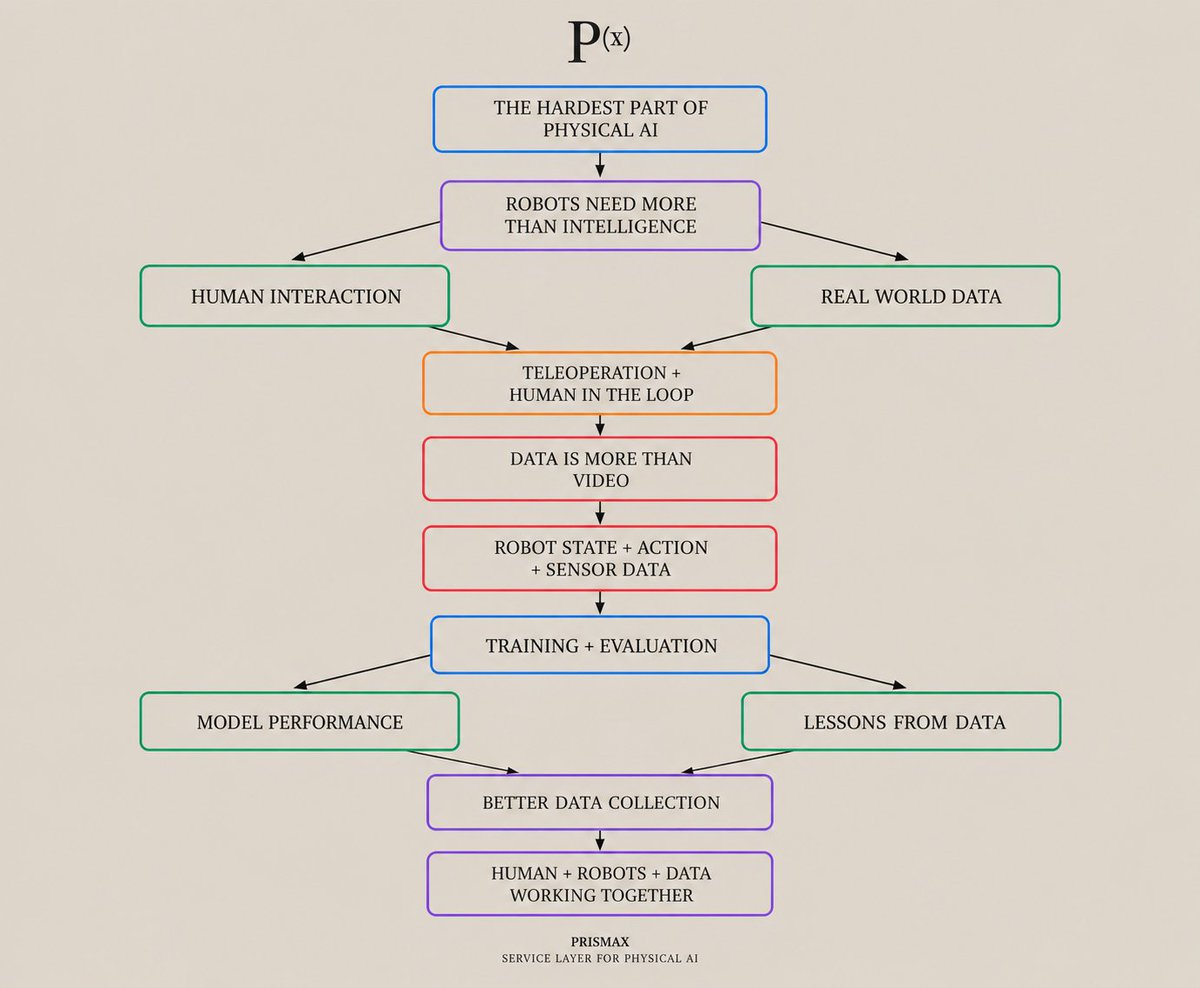
𝗧𝗵𝗲 𝗵𝗮𝗿𝗱𝗲𝘀𝘁 𝗽𝗮𝗿𝘁 𝗼𝗳 𝗯𝘂𝗶𝗹𝗱𝗶𝗻𝗴 𝗽𝗵𝘆𝘀𝗶𝗰𝗮𝗹 𝗔𝗜 𝗶𝘀𝗻’𝘁 𝗷𝘂𝘀𝘁 𝘁𝗵𝗲 𝗿𝗼𝗯𝗼𝘁
It’s also about the data that teaches it how to operate in the real world
@PrismaXai describes its approach through three connected pieces:
➜ Robots
➜ Data
➜ Intelligence
The connection starts with human interaction
Through teleoperation and human in the loop systems people can operate robots while real world interactions are collected as training data
And the data is more than just video
PrismaX focuses on robotics foundation model data that can pair video with action information while also capturing robot state such as joint positions and other sensor data
Why does that matter?
Because physical AI models need to learn from how actions relate to what is happening in the physical environment
That makes data quality a core part of the problem
By operating the full loop themselves PrismaX says they can see what separates data that helps models learn from data that quietly degrades their performance those lessons then shape how robots are operated how tasks are structured and how the next round of data is collected
That creates a real feedback loop:
Human interaction
→ Real world robotic data
→ Training and evaluation
→ Lessons from model performance
→ Better data collection
→ The next cycle
PrismaX is building around this cycle by connecting teleoperation robotics data human work and intelligence within physical AI systems
The interesting part is that the challenge isn’t simply making robots smarter
It’s building the systems that allow robots people and data to work together so each deployment can contribute to the next stage of learning
That is the role PrismaX is building as the service layer for physical AI
𝗪𝗵𝗮𝘁 𝗺𝗮𝗸𝗲𝘀 𝗭𝗞 𝗽𝗿𝗼𝗼𝗳𝘀 𝘀𝗼 𝗽𝗼𝘄𝗲𝗿𝗳𝘂𝗹?
You can prove that something is true without revealing the information behind it
Imagine you need to prove that you know a secret
You can prove that you know it without revealing the secret itself
That’s the basic idea behind zero knowledge proofs
But in real applications the proof still has to be generated from an actual computation and that can require significant compute as proving workloads grow
This is where Fermah comes in
Fermah Froben is a Universal Proof Market for ZK proof generation
A protocol can request a proof, while Kernel orchestrates the workflow around getting that proof generated and verified
The process can look like this:
➜ Request a proof
➜ Match the prover
➜ Generate the proof
➜ Verify the result
So ZK proofs provide a way to verify computations without revealing all the underlying information
Froben focuses on the infrastructure needed to coordinate the work behind generating those proofs
That becomes an important part of making proof generation practical as ZK workloads continue to grow
@7wealthh
𝗪𝗵𝗮𝘁 𝗵𝗮𝗽𝗽𝗲𝗻𝘀 𝗮𝗳𝘁𝗲𝗿 𝗮 𝗽𝗿𝗼𝗼𝗳 𝗿𝗲𝗾𝘂𝗲𝘀𝘁 𝗶𝘀 𝗺𝗮𝗱𝗲?
In a distributed proving network sending a proof request is only one part of the problem
The bigger challenge is coordinating that request with the compute needed to generate the proof
That’s where @fermah_xyz Universal Proof Market comes in
It connects two sides:
→ developers and protocols that need proof generation
→ compute suppliers providing hardware mostly GPUs
Fermah’s orchestration layer then matches proof requests to machines
This creates a clear separation between requesting a proof and finding the infrastructure needed to generate it
And that coordination matters
A proving network isn’t simply about having more GPUs available
It needs a way to connect proof demand with available compute and make proof generation faster more reliable and cost efficient
That’s the role Fermah is building around its Proof Market
Instead of every protocol having to manage proving infrastructure on its own the network connects proof requests with compute suppliers through an orchestration layer
The interesting part to me isn’t just the proving hardware
It’s the coordination layer that connects the request to the compute behind it
That’s what makes distributed proof generation practical at scale
@7wealthh
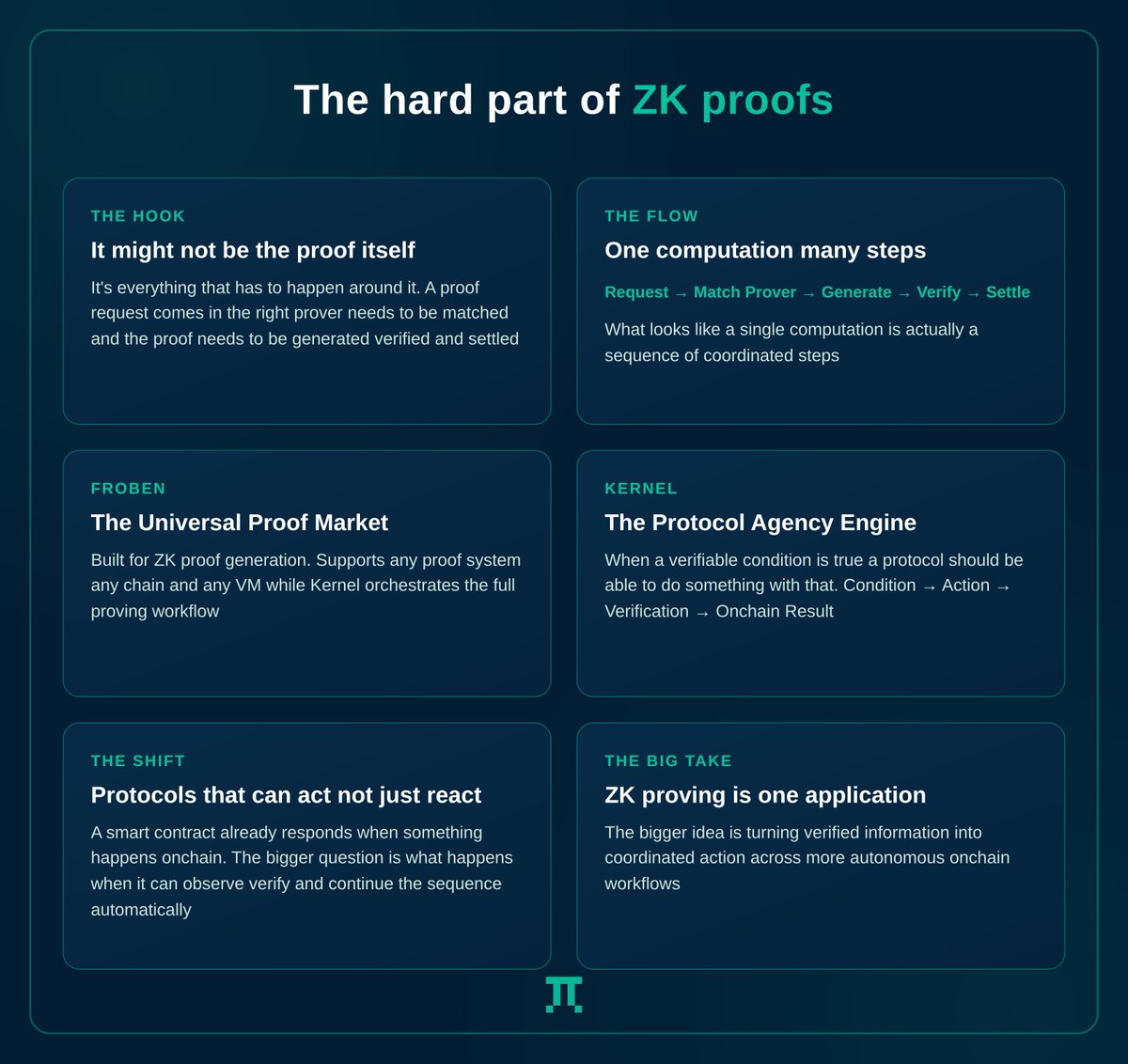
𝗧𝗵𝗲 𝗵𝗮𝗿𝗱 𝗽𝗮𝗿𝘁 𝗼𝗳 𝗭𝗞 𝗽𝗿𝗼𝗼𝗳𝘀 𝗺𝗶𝗴𝗵𝘁 𝗻𝗼𝘁 𝗯𝗲 𝘁𝗵𝗲 𝗽𝗿𝗼𝗼𝗳 𝗶𝘁𝘀𝗲𝗹𝗳
It’s everything that has to happen around it
A proof request comes in
The right prover needs to be matched the proof needs to be generated verified and ultimately settled
So what looks like a single computation is actually a sequence of coordinated steps
That’s where @fermah_xyz gets interesting
Fermah’s Froben is its Universal Proof Market built for ZK proof generation it supports any proof system any chain and any VM while Kernel orchestrates the full proof generation workflow
The important part is that Kernel isn’t just designed around ZK proving
Kernel is Fermah’s Protocol Agency Engine
Its broader idea is simple but powerful: when a verifiable condition is true a protocol should be able to do something with that information
Instead of stopping at:
this condition has been verified
the workflow can continue:
condition → action → verification → onchain result
Kernel can take that verified condition trigger the required workflow execute conditional logic in a trustless environment and return a cryptographically verified result onchain
That changes the role of infrastructure
It’s no longer only about providing the computation a protocol needs
It’s also about coordinating what happens before during and after that computation
Froben shows this idea through ZK proving
A proof request enters the workflow the proving process is coordinated the result is verified and the completed result can move back into the onchain environment
But the underlying architecture is broader than proof generation
Fermah is building toward protocols that can act not simply react
A smart contract can already respond when something happens onchain
The more interesting question is:
what happens when a protocol can observe a verifiable condition execute the required workflow verify the result and continue the sequence automatically?
That’s the part of Fermah I find worth watching
ZK proving is one application
The bigger idea is turning verified information into coordinated action
And that could become an important piece of how more autonomous onchain workflows are built
@7wealthh
𝗜 𝗹𝗼𝗼𝗸𝗲𝗱 𝗶𝗻𝘁𝗼 𝗮 𝗽𝗮𝗿𝘁 𝗼𝗳 𝗯𝗹𝗼𝗰𝗸𝗰𝗵𝗮𝗶𝗻 𝘀𝗰𝗮𝗹𝗶𝗻𝗴 𝘁𝗵𝗮𝘁 𝗱𝗼𝗲𝘀𝗻’𝘁 𝗴𝗲𝘁 𝗲𝗻𝗼𝘂𝗴𝗵 𝗮𝘁𝘁𝗲𝗻𝘁𝗶𝗼𝗻: 𝗵𝗼𝘄 𝗱𝗮𝘁𝗮 𝗺𝗼𝘃𝗲𝘀
A blockchain can have fast execution but that still depends on data reaching the nodes that need it
Traditional gossip can involve redundant transmission using more bandwidth and slowing propagation under load
This is where @get_optimum caught my attention
Instead of changing how a blockchain reaches consensus Optimum focuses on the propagation layer
Its mump2p protocol uses Random Linear Network Coding (RLNC) to encode blockchain data and send encoded packets through the network
The interesting part is that RLNC isn’t simply about making the network faster
It changes how the data is transmitted
Optimum reports 6–20x faster block and blob delivery and around 90–95% lower bandwidth usage compared with Gossipsub
And mump2p is designed to integrate with existing node setups through an API without requiring changes to blockchain consensus
That makes the problem more interesting to me:
scaling isn’t only about processing more data
It’s also about making sure the data can move through the network efficiently in the first place
𝗭𝗞 𝗽𝗿𝗼𝗼𝗳 𝗴𝗲𝗻𝗲𝗿𝗮𝘁𝗶𝗼𝗻 𝗶𝘀𝗻’𝘁 𝗷𝘂𝘀𝘁 𝗮𝗯𝗼𝘂𝘁 𝗴𝗲𝗻𝗲𝗿𝗮𝘁𝗶𝗻𝗴 𝗮 𝗽𝗿𝗼𝗼𝗳
There’s a whole workflow that needs to happen around it
A verifiable condition is observed
The required workflow needs to be executed the computation needs to run, and the result needs to be delivered and settled onchain
That’s where @fermah_xyz gets interesting
Fermah is building Protocol Agency Infrastructure with Kernel at the center as its Protocol Agency Engine
Kernel can turn a verifiable condition into an executable workflow run conditional logic in trustless containers, and deliver cryptographically verified results back onchain without asking a human to coordinate each step
For ZK this powers Froben Fermah’s Universal Proof Market
Froben supports any proof system any chain and any VM while Kernel orchestrates the full proof generation workflow
What I find interesting is that Fermah isn’t only focused on the computation itself
It’s building infrastructure that makes workflows executable composable and autonomous
That’s the shift: from a protocol reacting to a condition to a protocol being able to act on it
@7wealthh
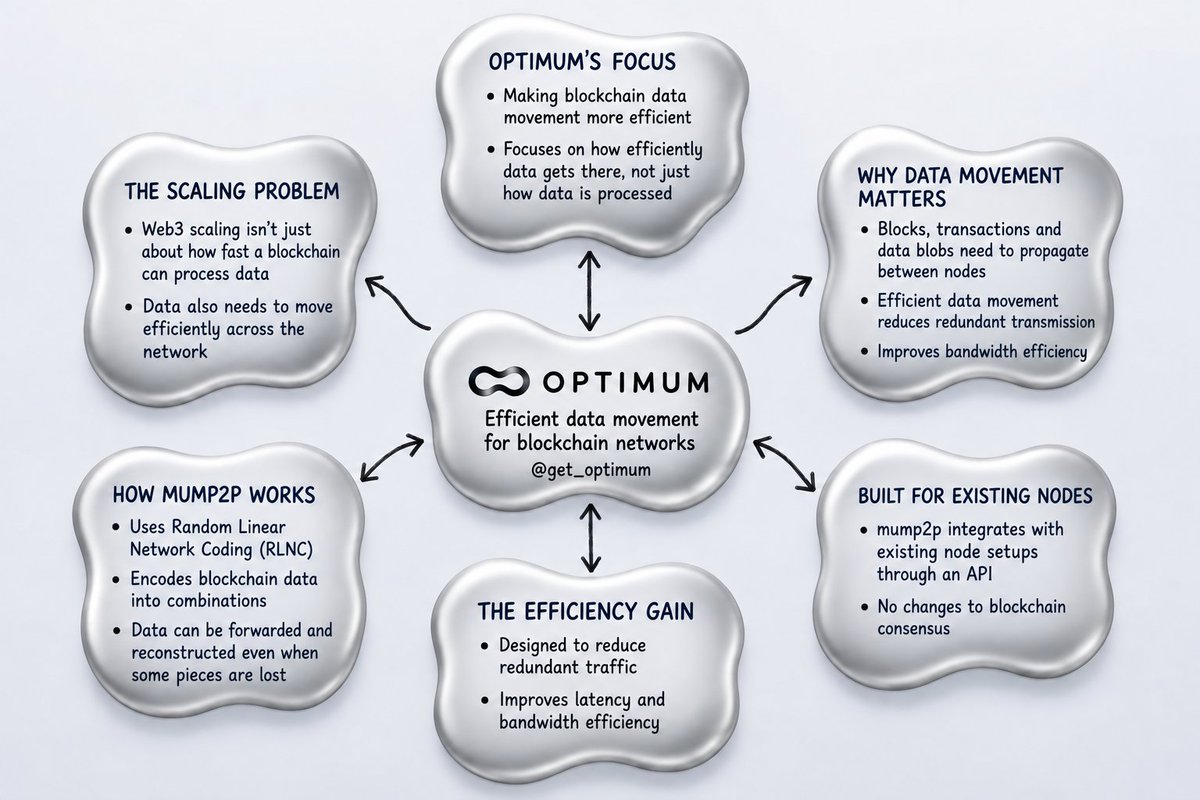
𝗪𝗲𝗯𝟯 𝘀𝗰𝗮𝗹𝗶𝗻𝗴 𝗶𝘀𝗻’𝘁 𝗷𝘂𝘀𝘁 𝗮𝗯𝗼𝘂𝘁 𝗵𝗼𝘄 𝗳𝗮𝘀𝘁 𝗮 𝗯𝗹𝗼𝗰𝗸𝗰𝗵𝗮𝗶𝗻 𝗰𝗮𝗻 𝗽𝗿𝗼𝗰𝗲𝘀𝘀 𝗱𝗮𝘁𝗮
There’s another part that matters just as much:
how efficiently can that data move across the network?
Blocks transactions and data blobs need to propagate between nodes
Optimum focuses on making this data movement more efficient by reducing redundant transmission and improving bandwidth efficiency
That’s where @get_optimum focuses its infrastructure
Its mump2p protocol uses Random Linear Network Coding (RLNC) to encode blockchain data into combinations that can be forwarded and reconstructed even when some pieces are lost along the way
This approach is designed to reduce redundant traffic while improving latency and bandwidth efficiency
What I find interesting is that mump2p integrates with existing node setups through an API without requiring changes to blockchain consensus
Optimum is focusing on a part of blockchain infrastructure that is easy to overlook:
not just how data is processed but how efficiently it gets there