When the unrealized profit metric for short-term holders rises above 0.4, you need to consider the end of the bull cycle.
The maximum of this cycle is 0.29.
How to TRADE using Time Frames
- To execute a trade in 4H, look for confirmation in 15' TF
- To execute a trade in 1H, look for confirmation in 5' TF
Identify market structure in HTF and confirmation in LTF, then place a trade.
You don't have to be a genius to make big profits in the bull market.
Success will come to those who choose the right projects now and exercise patience.
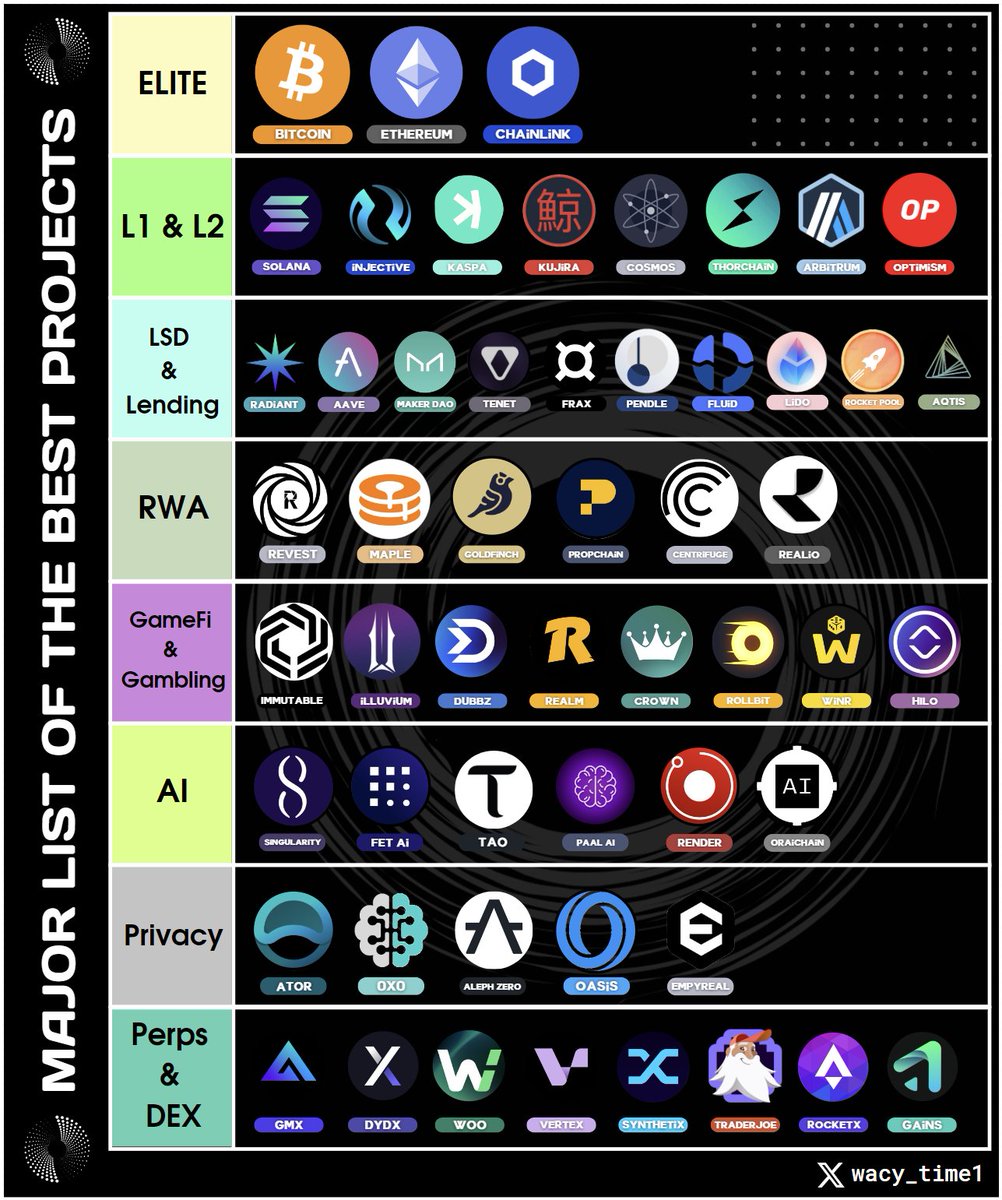
List of 55 projects that have 5-100x potential in 2024-2025 🧵⬇️
After a break out on almost anything (20-50% move, you want to watch for 5 min 200EMA for an entry.
This is the typical place you want to buy AFTER a breakout.
If you want to play a really aggressive trend, zoom in to the 3 min 200EMA (but slightly higher risk.)
1st test - 2-3% move.
2nd test - retests highs
3rd test - breaks highs and pushes 1.618 fib extension. (if it's a strong trend)
4th / 5th test not high % enough to buy.
5th test usually breaks down to 15 min 200EMA. (great buy.)
Price can move up 5-20% (or more depending on the asset) just off 5 min 200EMA after a breakout of strong resistance (daily 200EMA/weekly resistance zone).
$TIA as an example, but I can show this across 50+ charts as well.
Don’t fuck this cycle up… AGAIN.
A thread of helpful tips. 🧵 👇
Almost everything is breaking multi year bear market trend ranges to the upside.
Your only goal is to get in a position and ride the trend until it gets euphoric.
This is the market condition where you can typically get a win rate of 90%+ with an RR over two.
The key is to buy support when you get the dips and the pull backs. This comes down to emotional mastery and your ability to execute when you get the proper trade set up.
Remember- ABS. Always be scanning. Find the trades around your style.
Don’t over leverage yourself where you’ll get spooked on every little pull back.
#Bitcoin spot ETF approval will bring in a wave of new money looking for ‘the next bitcoin.’
#Ethereum spot ETF approval will giga pump Eth and the ERC-20 ecosystem, especially the tools that every project relies on.
Then the money will trickle to the ETH L2’s and their ecosystems.
Solana continues to dominate market share just because it has a great narrative around it and they’re constantly making the blockchain better and faster.
This may be an actual rival this market cycle just because they have a rival amount of dev and vc support in the ecosystem.
There will be AI narrative that pumps that sector, then gaming coins, then there will probably be a big regulation story with the DOJ that will cause decentralized exchange tokens to pump hard as well.
Real world assets (RWA’s) are also getting some pretty major traction that I would dive in to as well.
Airdrops for protocols and dApps that pay users a % of profits for staking or holding the token will be huge. I have 6-7 spot bags paying out pretty healthy right now from fees.
Mess around with protocols on all the ecosystems (naming protocols, swaps, dex’s, NFT’s, yield farms, LP on dex’s, etc) to get in on those.
If your shitcoin spot bags pump hard… just remember to take SOME profit at least and let the rest ride. I like 60-70%.
If it can change your life or pay off debt, do it. I promise you will not regret it when the market gets frothy.
Set part of it aside for taxes so you don’t get caught with your pants down from your gains next year.
Last, but not least, follow some OG accounts that know what they are doing for trading and finding quality altcoins that have a team following the market that post a lot of alpha.
Here is a helpful list of people I like to follow to give a wide range of opinions on the market:
@CryptoGodJohn@bitbitcrypto@ShardiB2@Nebraskangooner@truecrypto@joemccann@elliotrades@ZssBecker@TraderMercury
@jordan_weaver18
@SalsaTekila
@EmZ_xbt
Most importantly. Don’t rely on others for your trades and your investments. Be accountable to yourself and don’t let others opinions dictate whether you hodl or sell.
That’s for you to decide.
This is your shot to make it. Don’t fuck it up again.
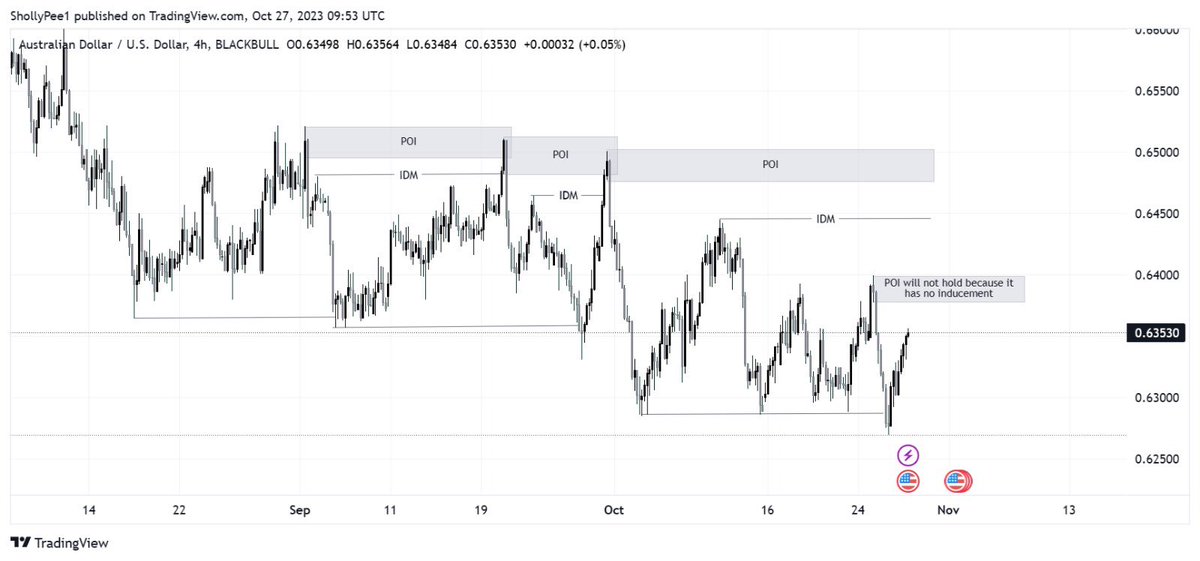
I used to hit consecutive SL💔 till I understood Inducement.
INDUCEMENT : A powerful tool for a strong win rate.
The Concept of Inducement is often underrated. I will explain in this thread how Inducement works and how to utilize it for good trade entries.
A THREAD 🧵👇
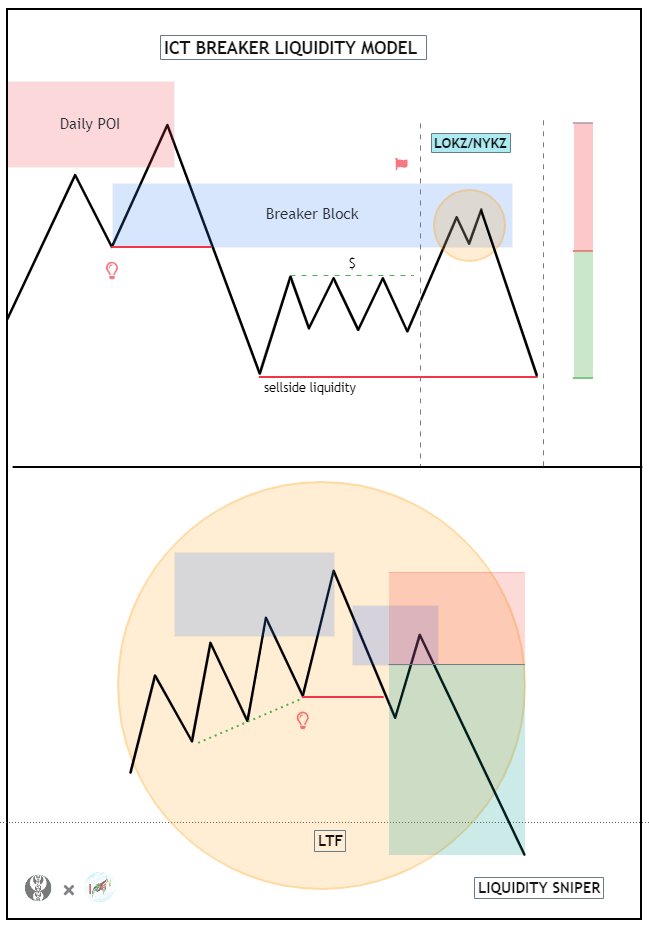
ICT BREAKER LIQUIDITY MODEL :
- Wait for Killzone (8:30-11am or 1:30-3pm EST)
- Verify ForexFactory calendar for crucial news
- Watch for H1/M15 zone tap, sweep, and shift on M5 or M1 frames
- Market Entry on displacement candle closure
Credit : @I_Am_The_ICT@casper_smc
Price spends most of its time consolidating to engineer liquidity in the marketplace.
As an ICT trader, your goal should be to only engage in price at certain times linked to manipulation or distribution.
It is crucial to limit yourself during consolidations.
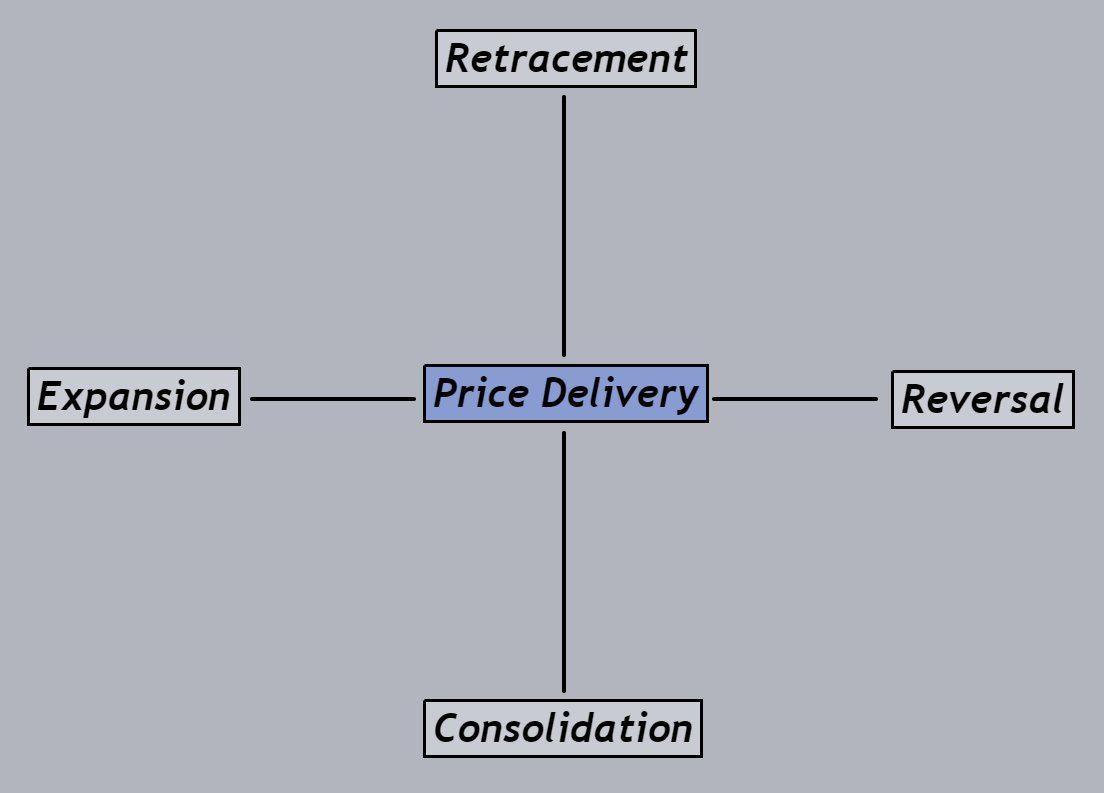
Here's how I trade the various stages of price delivery:
If price is expanding, then I focus on orderblocks.
If price is retracing, then I focus on imbalances.
If price is consolidating, then I focus on equilibrium.
If price is reversing, then I focus on liquidity pools.
Simple Model Example Diagram
In Bearish Markets, using Premium Arrays anticipate Bearish Breakers to form. Wait for Price to displace lower, Short the -Breaker, use Stop Loss above the High of -Breaker.
Target Discount Arrays, like opposing +Breaker. Target Mean Threshold.
There are 4 Steps To a Profitable Strategy.
If you're tired of making trading profit then giving it all back. Here's how to build a strategy that actually works.
Here's your guide for:
1) Identifying market phases
2) Maximising profits
3) Making profit consistent
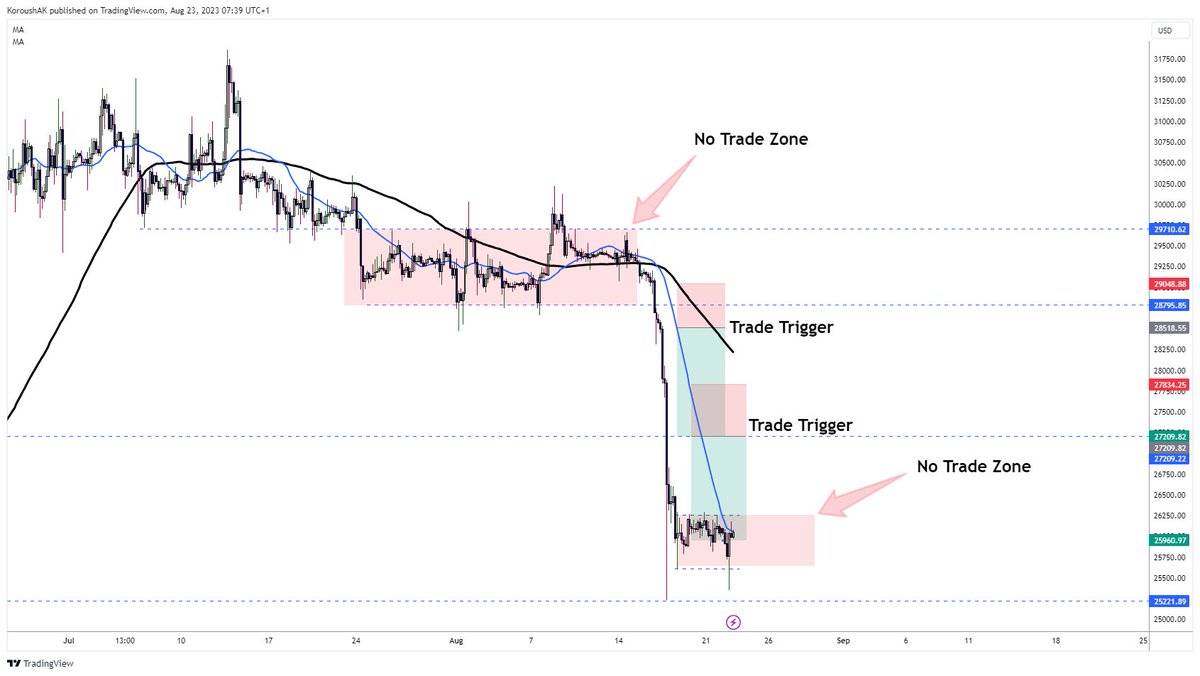
Step 1: Identifying The Environment
This is the biggest secret to trading less and making more profit.
It helps you figure out your "no trade zones".
There are 3 ways to identify environment
A) Market structure
B) Market sentiment
C) Market news
I've done detailed tutorials on all 3 methods. I'll show you where to find them later.
Use the above to identify market conditions.
There are only 6;
-Up
-Up volatile
-Sideways
-Sideways volatile
-Down
-Down volatile.
Know which ones you do best in and avoid the other ones.
If you look through your trades, your biggest loss streaks will come from trading the wrong environment.
Step 2: Logic
Form a hypothesis: "I think x will happen because y"
90% of trading strategies fall into 2 categories.
-I think price will trend
-I think price will revert to the mean
Have a set of consistent conditions that you can use.
The simpler the better.
Step 3: Risk Management
A) Entry
B) Stop Loss
C) Profit Target
D) Risk (Position size)
I call this whole section risk management.
Because you're making sure that if you are wrong on your idea you limit losses relative to potential wins.
You can find tutorials on position sizing, stop losses and profit taking on my telegram.
Step 4: Execution/Management
A) Stick to your plan
B) Make changes based on new data
Trade management requires, testing, experience and intuition.
Execution is what separates the good from the great.
I've trained dozens of traders at this point. Step 1 - 3 are easy with the right guidance.
But even when traders have a profitable strategy, they can still lose money.
Execution of your system requires extreme psychological discipline.
This is a lifelong challenge that even traders with 20+ years experience face.
Your lifestyle needs to be regimented and healthy.
Without this you're like a formula 1 driver who turns up to work every day hungover, under slept and mad at his wife. No matter how good the car is you will eventually crash.
If this helped you, then help me out by giving this a retweet.
Trading Mindset Cheat Sheet
To be a profitable trader you need three things:
1. A trading system with an edge.
2. Proper position sizing per trade.
3. The right trading mindset.
If you don’t have the right mindset for trading then the other two will not work.
Here is a trader cheat sheet of the principles you must understand to create the right mindset in trading. A trading cheat sheet for the psychology of profitability.
•A new trader must understand that trading is not a get rich quick scheme, it is a professional endeavor that requires learning how to create quantified trading systems that have an edge over other participants.
•Professional trading is not gambling it is like running a business. Profitable trading is more like operating a casino than emotional gambling if done correctly. Think like a business manager not an emotional gambler.
•Successful traders have an edge in trading systems and signals not predicting and having strong opinions. Traders don’t know the future, they know what has the best odds of working in the present. Traders should have a flexible opinion about price action.
•Great traders have losing trades, profitability doesn’t come from perfection it comes from creating good risk/reward ratios at entry. Losing trades must be accepted as just part of doing business.
•To keep a stable mindset, position sizing should be kept consistent and at a size that doesn’t cause excessive stress, emotions to become too loud, or ego engagement where you want to be right.
•A trader must have faith in their trading system. This comes through research and backtesting into a method that has a positive expectancy and fits their belief system.
•A trader must have faith in their self to execute their system with discipline. This comes with time and success in execution. A trader must trust their self to not let impulses cause bad decisions.
•Traders must have the mindset of discipline to follow their trading plan’s rules and believe that a good trade is one that followed their system regardless of results.
•A trader must have the perseverance to trade their system through losing streaks and drawdowns understanding that it is just part of the process.
•Trading results must be kept separate from a traders self worth. A trader can’t control market outcomes, they can only control their own actions.
•A positive mindset must be maintained to avoid a negative emotional spiral. Focus on the positives on every trade, like you kept losses small or followed your process with discipline.
•Don’t become euphoric with big wins or depressed during losses or drawdowns, keep your emotional equilibrium after each trading outcome. Stay off tilt in either direction. Each trade is just one of the next one hundred, divide you emotional reaction between them.






![Liq_Sniper's tweet photo. ICT Mentorship 2023 Model :
- PM session
- AM session
- London / new your Launch time
- Killzone's [ LOKZ / NYKZ ]
Credit : @I_Am_The_ICT @LumiTraders https://t.co/FX4D6Z2Mq2](https://pbs.twimg.com/media/F9x0b-EbwAAYxCL.jpg)
![Liq_Sniper's tweet photo. ICT 2022 MENTORSHIP SELL MODEL :
-Price trades into HTF POI
- Sweep of Buyside Liquidity
- Trade in Killzone's LOKZ/NYKZ [ 02:00 - 05:00 / 08:00 - 10:00 EST ]
- Market structure shift
- Entry at LTF FVG
- Stops at local high
- Target Sellside Liquidity
Credit : @I_Am_The_ICT https://t.co/weF2lJBBFQ](https://pbs.twimg.com/media/F9iRwaPbgAArS-T.png)

![Liq_Sniper's tweet photo. ICT Optimal Trade Entry Model :
- HTF + BOS + IDM + FVG + OTE
- OTE Range [ 0.62 - 0.79 ]
Credit : @I_Am_The_ICT @TTrades_edu
All Models Explain In Thread 👇 https://t.co/sWQddwr9Jf](https://pbs.twimg.com/media/F9netuQbgAAYpWp.jpg)