Researches on Literatures of the African Diaspora, African Literatures, Kenyan Popular & Digital Cultures, African Masculinities, Power and the Nation State
9 days left to apply for this exciting writing workshop and mentoring programme. Dear ECRs, please apply and see you in Nairobi in August!
https://t.co/VfHIM75NeK
Sleeping in the Colonizer’s Bed: A Kenyan Novelist Confronts British Colonial Nostalgia in Laikipia’s Luxury Hotels — Now Voyager Magazine https://t.co/Bit3AjqOMg Behold, a new baby is born!! @nowvoyagermag I couldn't be more proud to make a contribution to this exciting venture.
Clean air isn’t a luxury, it’s a lifestyle. With the CUCKOO K Model Air Purifier, you don’t just breathe—you thrive. Fresh air, healthier living, happier you.
Live a better life now via https://t.co/EqGUEqvPk0
#CUCKOOeBrandShop#HealthyHomeCreators#SAMASAMAHealthier
About half of all jobs in capitalist economies are considered pointless and unproductive, i.e., they are socially useless, according to the people who hold them.
David Graeber argues that this is by design. In his book, Bullshit Jobs: A Theory, Graeber posited that the ruling class believes that if ordinary people have both enough free time and material security, it would inevitably lead to a social revolution.
Graeber refers to the 1960s in the United States, when the abovementioned condition was met, albeit briefly. During these few years, housing, healthcare and higher education were affordable, workers’ unions were strong, and gains from production and technology actually translated to security for the majority.
As a result, people had time on their hands. They used this time to engage in something very dangerous: thinking.
According to Graeber, many young people were being relieved of the need to worry about survival, which allowed them to start asking questions and to organise to change the world. This was the ultimate nightmare of the ruling classes. So, they reacted by deliberately creating a world based on work discipline.
In 1930, John Maynard Keynes had predicted that by 2030, people would be working 15 hours a week. Graeber explains that the reason we didn’t get anywhere close to the 15-hour workweek predicted by Keynes is that the gains from productivity were diverted into creating administrative hierarchies.
Graeber wrote that “Rather than allowing a massive reduction of working hours to free the world’s population to pursue their own projects, pleasures, visions, and ideas, we have seen the ballooning not even so much of the ‘service’ sector as of the administrative sector…It’s as if someone were out there making up pointless jobs just for the sake of keeping us all working.”
Millions of people hold jobs in which they are being paid to do nothing, but for that very reason, they are kept under constant surveillance and control. This explains why people feel busy but feel it is unnecessary.
This is neoliberalism, which, to Graeber, was a project of political control, rather than an economic efficiency project, to keep people busy in a world that no longer needed their labour as much as it used to.
To Graeber, a population that depends on meaningless work for survival is easier to govern than one with time to reflect.
This is because surveillance-heavy, low-autonomy jobs are training grounds for obedience, where work becomes a moral credential without contributing meaningfully to anything.
This helps explain why unemployment is somehow stigmatised even when jobs are useless, overwork is celebrated even when it destroys health, and why automation is resisted even when it could reduce toil.
In summation, modern capitalism no longer needs most people’s labour, but it still needs their compliance, and that’s what work has become.
We accuse William Ruto of lying to and stealing from Kenyans but no one has ever asked him to stop. So let me try. Mr. President, PLEASE STOP LYING TO AND STEALING FROM KENYANS
Thank you @Kenyajudiciary! The court was able to sit till late in the night to deliver the “BBC Blood Parliament Ruling”. The court begins its “ Perjury Reference” on 7th Jan ‘26 by issuing summons against the 2 officers from @DCI_Kenya regarding installation of spyware & cloning
I am free. I was arrested last friday (by DCI officers) in my rural home, taken to DCI headquarters and later transferred to muthaiga police station. I was arraigned at Milimani law courts on monday and released on kes 15000 cash bail. Thank you all for your concern.
So what's the difference between healthy and unhealthy competition? The curriculum? The numbers? The "high achievers" are still on the headlines and boys are being promised that girls beat them at every turn.
Stop lying to Kenyans, please. There is no healthy or unhealthy competition. There is just a bad economy. It doesn't matter whether kids score B+ or 6 points. They won't get jobs because Kenyan economic decisions are made by robbers and thieves who have never worked in an honest job their entire lives. And then when the Gen Zs say they can't enter the economy, the government shoots and abducts them.
#CBCisheretostay
#KJSEA2025
#GatekeepingKE
@Saitabao Because it is in the nature of cannibalistic and parasitic organisms to suck the lifeblood out of the host till it drops dead. It is both suicidal for the host to assume that the engorged parasite would get its fill and let go unless it is forcefully removed.
Meja Mwangi, who died yesterday, is/was the Greatest KENYAN Writer of all time.
I emphasize KENYAN, before I get into trouble with Ngugi wa Thiong’o’s disciples. Ngugi, who died in May this year, was a perennial nominee for the Nobel Prize in Literature, a continental (African) and global figure, widely regarded as one of the most consequential postcolonial writers, thinkers, and philosophers, especially in the English-speaking world.
But back home, Ngugi’s universe was the Kikuyu community (nothing absolutely wrong with this, as some of his detractors kept harping about it every time he was perennially nominated for the Nobel Prize in Literature). Ngugi’s first four novels were set against the backdrop of the Mau Mau and colonialism. None of these in any way negates Ngugi’s contribution to Kenyan letters, but he was of the world.
Enter Meja Mwangi.
Meja was ours. Kenyan to the core.
Meja Mwangi’s literature was more cosmopolitan, as most of his books were set in Nairobi, a synecdoche for Kenya and the Kenyan.
I first read Going Down River while in Class 8 or Form 1. I couldn’t put the book down. The prose was viscerally realistic. The writing was too detailed; it’s little wonder I learned later in life that Meja Mwangi went on to be a filmmaker. I wish I could watch any of his screen productions. Mwangi was only 28 when he penned what I consider the greatest Kenyan novel of all time and generations.
Nearly 35 years later, when the film Nairobi Half-Life was released, I observed that very little of Nairobi had changed between 1976 and 2012. Nairobi Half-Life was a descendant of Going Down River Road. That Nairobi underclass that will never change, no matter the speed of our internet, the Expressways, you people adopting BDSM, and such.
Around 2014, my uncle (bless his soul) took me back to Kibera to show me where I was born and spent part of my childhood. It was almost 20 years later. For sure, the roads were now paved, and there were huge streetlights, but that slum vibe was still there. My uncle took me to a woman who had been brewing chang’aa since the 1980s, still doing her thing, and introduced me to her, and told her this is the Son of Norah, and she was like, “How did you get so big?”
While there, I couldn’t help but think about how every part of Nairobi changes: people move on, out, and about, but our slums eternally retain that gritty persona. People may come and go, but newcomers always slip into the slum persona like gloves.
Anyone who grew up in Nairobi’s slums, Eastlands, Kawangware, Kangemi, can identify with all the characters in Meja Mwangi’s books, such as Going Down River Road, Kill Me Quick, Cockroach Dance, and a host of his other latter-day works. Any Kenyan, for that matter, save for the upper middle-class and the rich folks who live in a completely different Nairobi. Kill Me Quick " is the story most of us can relate to, because education promised us so much, and we moved to Nairobi, but now we live with no jobs, and all we can do is drink cheap liquor (Kill Me Quick), eat miraa, and smoke joints, because we are disillusioned. Younger millennials and Gen Zs definitely know what I am talking about.
Along with other writers such as Mwangi Ruheni, Mwangi Gicheru, Charles Mangua, and the Kibera brothers, Meja was among those who captured the zeitgeist of Nairobi and Kenya, as writers like Ngugi became full ideologues and full-time revolutionaries. Mwangi opted to be a revolutionary with his pen, hiding behind satire (that escaped authorities), while entertaining and provoking us.
Sadly, Mwangi was extremely reclusive and rarely granted interviews to scholars or journalists.
Last year, he wanted to come out and meet his fans and lovers of his work, thanks to the spirited efforts of his adopted literary daughter, @Lexa_Lubanga. We cleared our schedules in readiness to meet the man, the myth, and the legend himself, but unfortunately, he was taken ill, and that particular meet-up didn’t happen, and none would ever happen, as he has been sickly, and now he is gone.
A few years back, I asked what the Kenyan novel should be, and my choice was Going Down River Road.
The irony of his dying on the Eve of our 62nd anniversary of Independence is not lost on me, more so when successive regimes are determined to keep the youth poor, unemployed, and disillusioned, like a character in Mwangi’s book.
You can draw a straight line from Going Down River Road, to Ukoo Fulani’s Tafsiri Hii (1997), to Nairobi Half Life (2012), to Wakadinali’s Geri Inengi (2021), to whatever song that will come out of Kayole in 2030, depicting the never-changing life in the ghetto.
He leaves behind a vast body of work.
May Meja Mwangi travel well to the land yonder. Say hi to Ngugi wa Thiong’o, David Mulwa, Mwangi Gicheru, Margaret Ogola, Grace Ogot, Micere Mugo, Binyavanga Wainaina, and all the great men and women of letters we lost.
Photo: Courtesy
Uhuru Kenyatta's regime introduced wholesale theft of our resources, he was so incompetent that he once asked Kenyans, mnataka nifanye Nini. Ruto took over and continued what they had started. For Kenya to prosper these two criminals should be hanged.
I am deeply honoured to receive the 2025 Vanguard Warrior Award.
I accept this recognition with humility and profound gratitude.
May this recognition inspire us all to remain vigilant, courageous, and faithful to the values that bind us as a nation.
Nuria Bookstore Mourns the Passing of Meja Mwangi
With deep sorrow, we announce that Kenya’s literary giant, Meja Mwangi (born David Dominic Mwangi), has passed away this morning in Malindi.
Author of timeless classics like Kill Me Quick, Carcase for Hounds, Going Down River Road, and The Last Plague, Meja gave voice to the voiceless and painted Kenya’s struggles and spirit with unmatched honesty and power. His stories of the streets, the slums, the Mau Mau, and the forgotten shaped generations of readers and writers.
A proud son of Nanyuki, a storyteller without equal, and a quiet revolutionary, Meja Mwangi will never truly leave us; his books will keep speaking.
Rest in peace, Baba wa Riwaya.
Your words live forever.
From all of us at Nuria Bookstore
thank you, Meja.
Kenya will miss you.
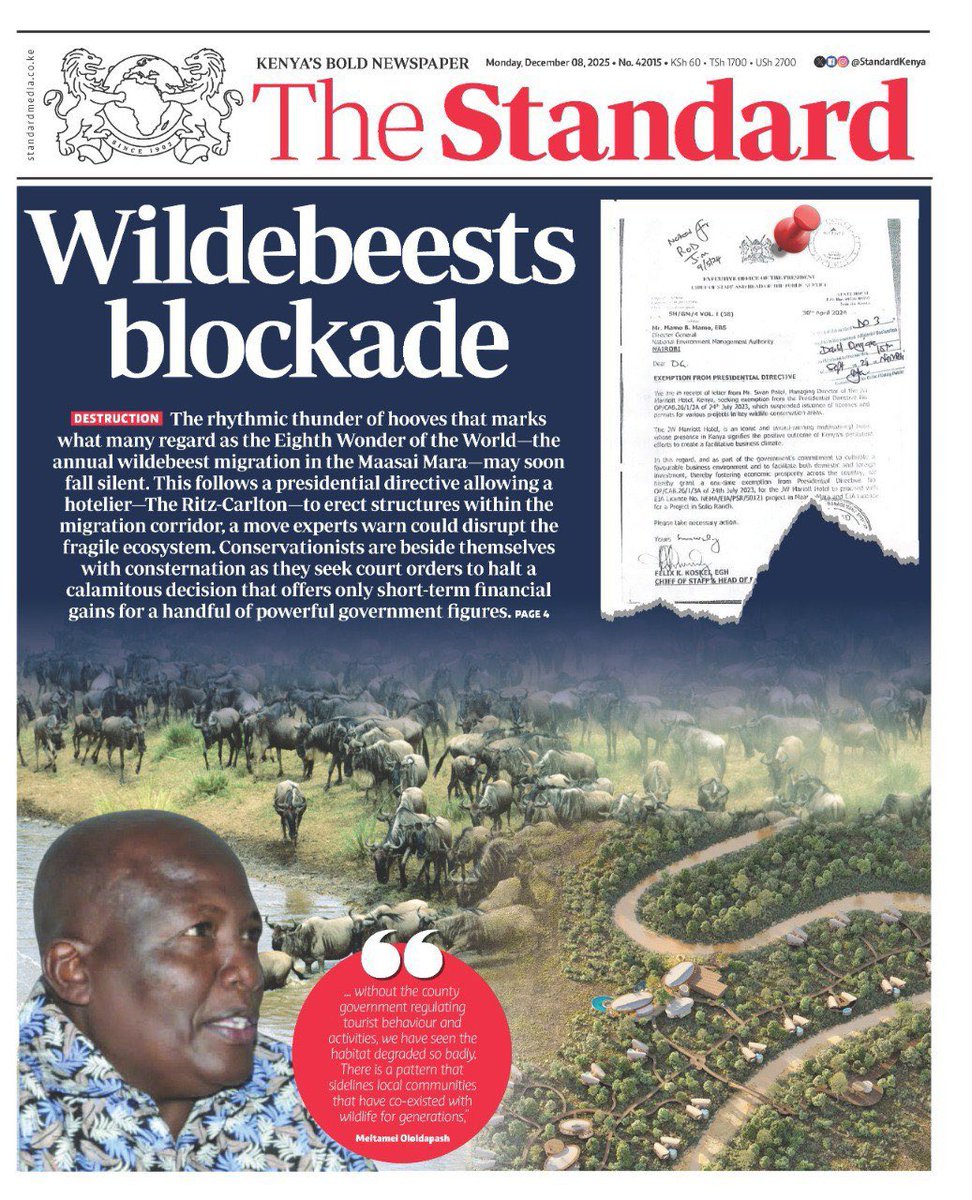
They come here, replace the natives, take massive tracts of land with the help of your “leaders” then claim they’re here to help us CONserve the environment😳
They brand themselves as “guardians of nature,” while displacing the very communities that have lived in harmony with that land for centuries.
They romanticize tourism ,build luxury lodges that block ancient animal routes and when you question it, they tell you no law is being broken, everything was done according to the law.
They design poverty into the landscape, keeping roads around these CONservancies underdeveloped so tourists can enjoy the “off-road African experience.” Because to them, Africa’s poverty isn’t a tragedy, it’s part of the adventure.
They promise “jobs” for your children, but pay poverty wages, while using your land, your water, and your resources to enrich themselves. They build an EMPIRE on YOUR SOIL, then convince you it’s in your best interest.
They have the police, the courts, and the politicians in their pockets. So when guards shoot your sons, when people like BRIAN ODHIAMBO and DANIEL MWANIKI disappear, you’ll be told it was an accident, or that justice will take its course. It never does!!
And then, when they’ve taken enough, they’ll come back and say, “The rhinos are endangered. We need more land to protect them.” But whose land is that, really? Whose safety? Whose lives?
One day, Africans will wake up and realize that CONSERVATION was just another word for COLONIZATION rebranded, legalized, and romanticized. But by then, it may already be too late.
Get Mordecai Ogada’s new book Green and Evil from @NuriaStore and thank me later ✌️✌️
Europe isn't a predator of Africa. It's a parasite. That's different. Predators don't disturb their prey when they are not hungry. They know their survival depends on herbivores surviving. But parasites leech all the time on the host, even when they are killing the host. They can't stop themselves. So the treatment for Africa must be on us, the hosts. We must develop our own knowledge and social medicines to get the parasite off us.
Victory for the people!
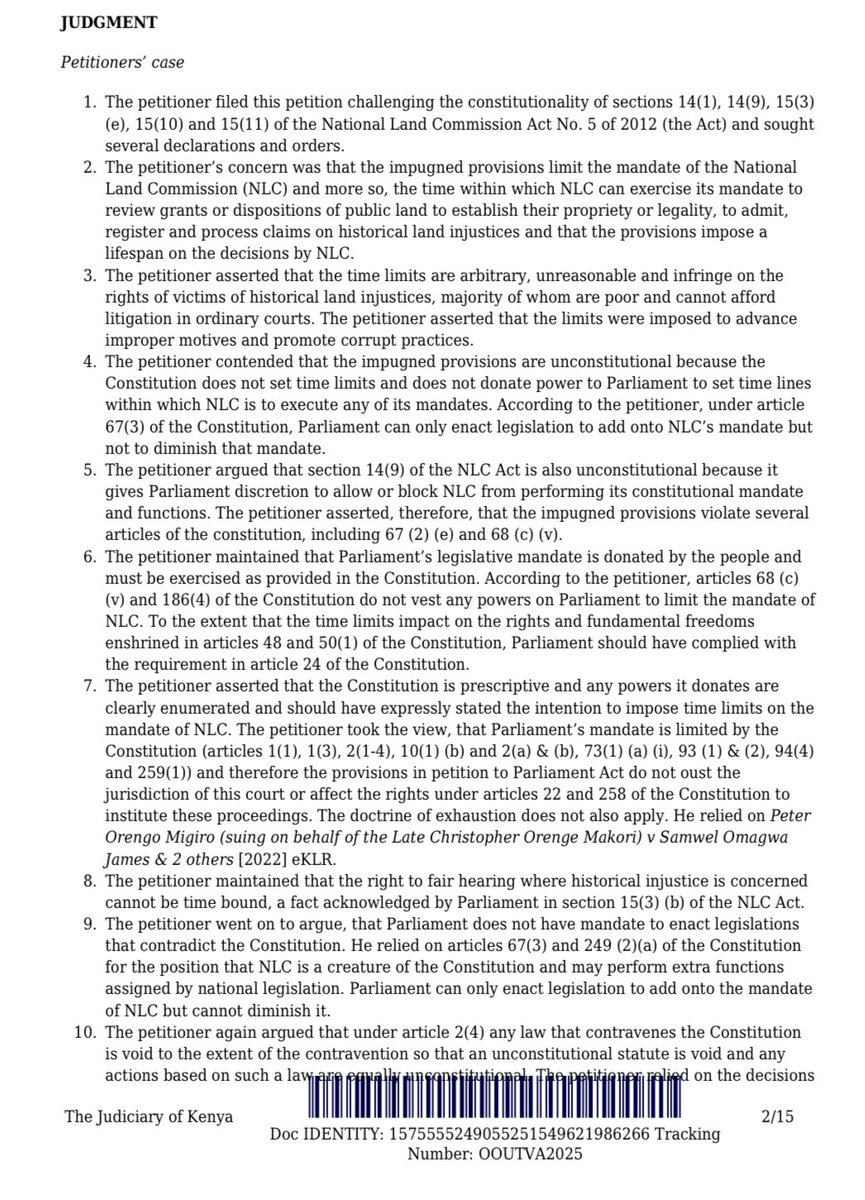
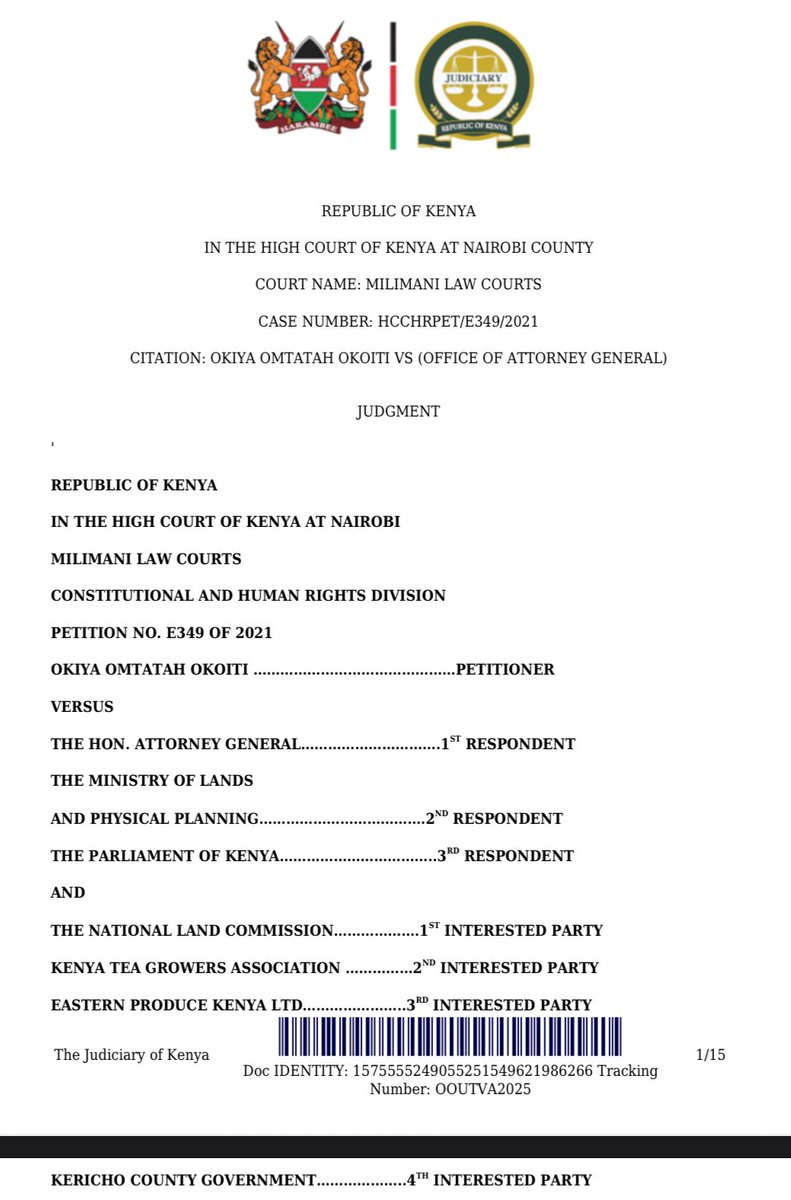
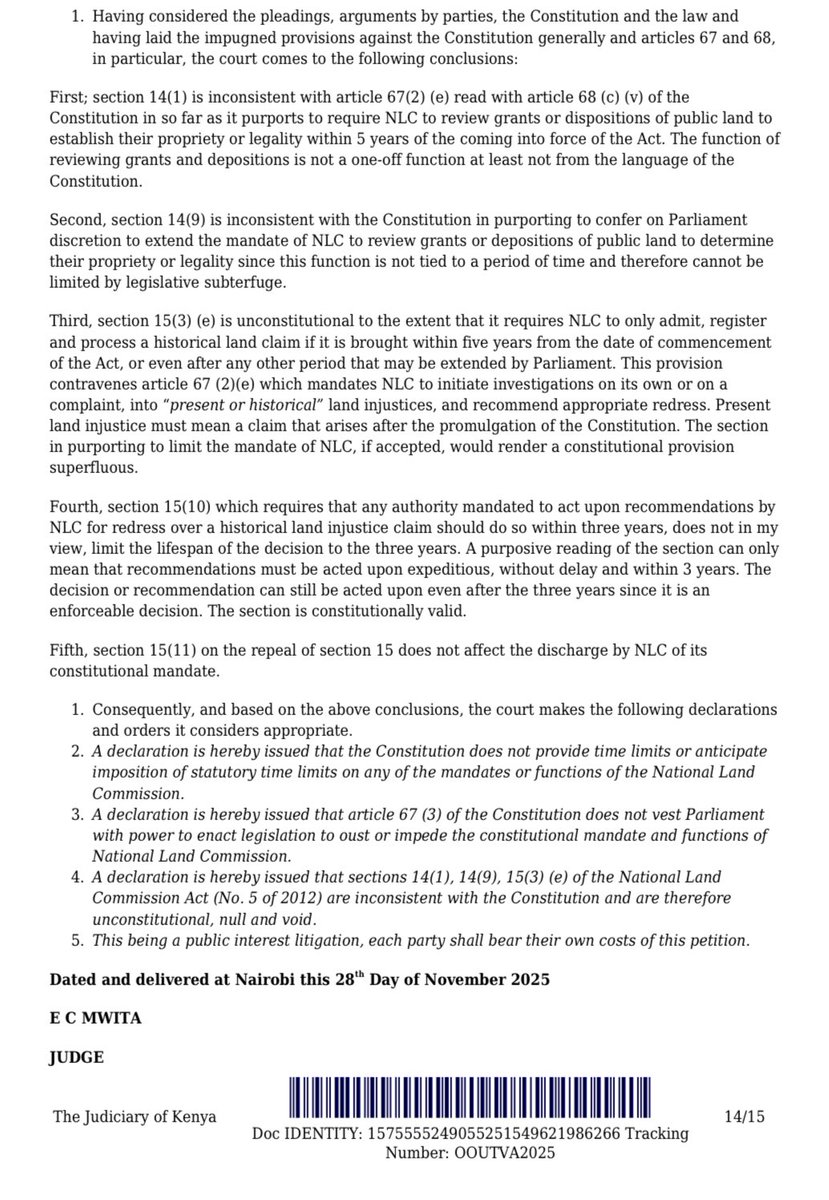
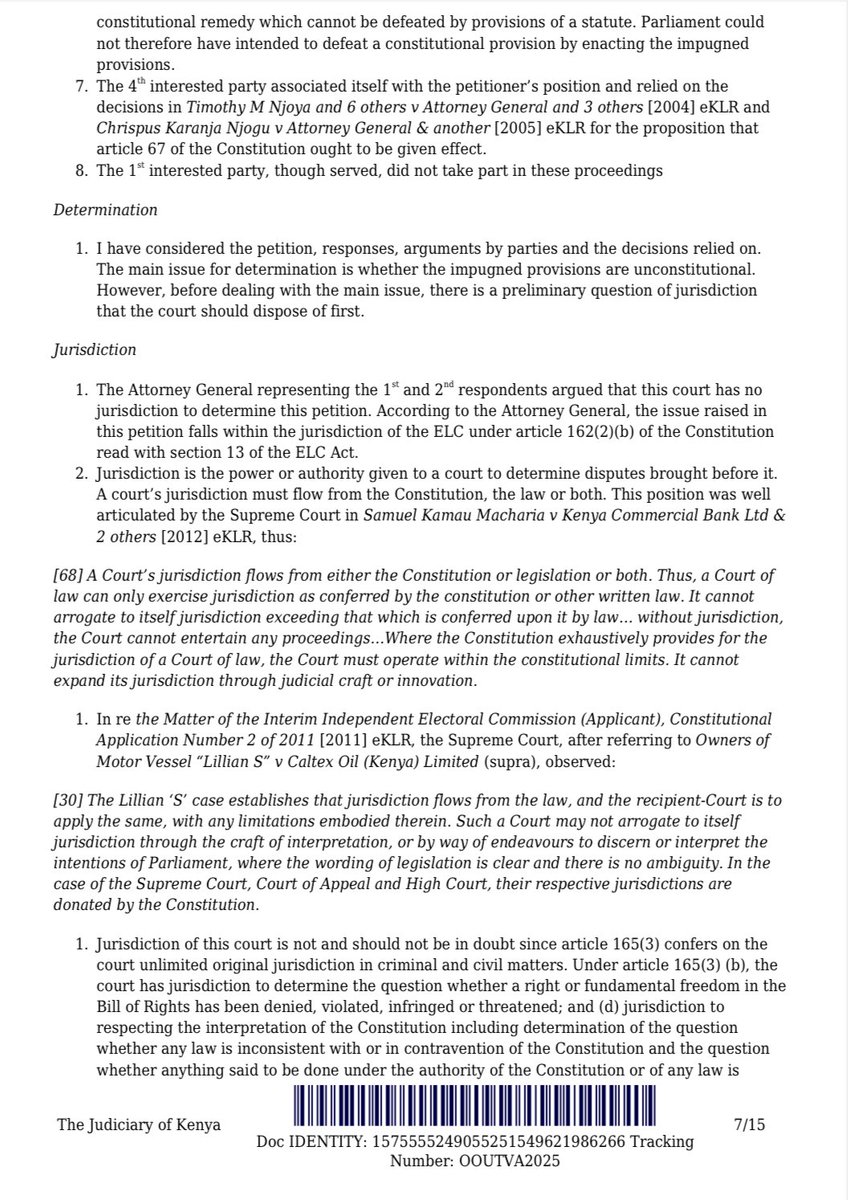
Today, justice has prevailed: the court affirms that the National Land Commission’s mandate to investigate historical and present land injustices cannot be limited by arbitrary timelines. This is a triumph for every Kenyan seeking fairness and protection of their land rights.
This ruling sends a clear message: no law, no decree, no political maneuver can deny Kenyans their constitutional rights. We defend the people, ensure justice is served, and give hope to those long waiting to be heard.
Together, we reclaim what is rightfully ours and build a Kenya where fairness, accountability, and the rule of law guide every action.
#REKE