#44ISEA Updates
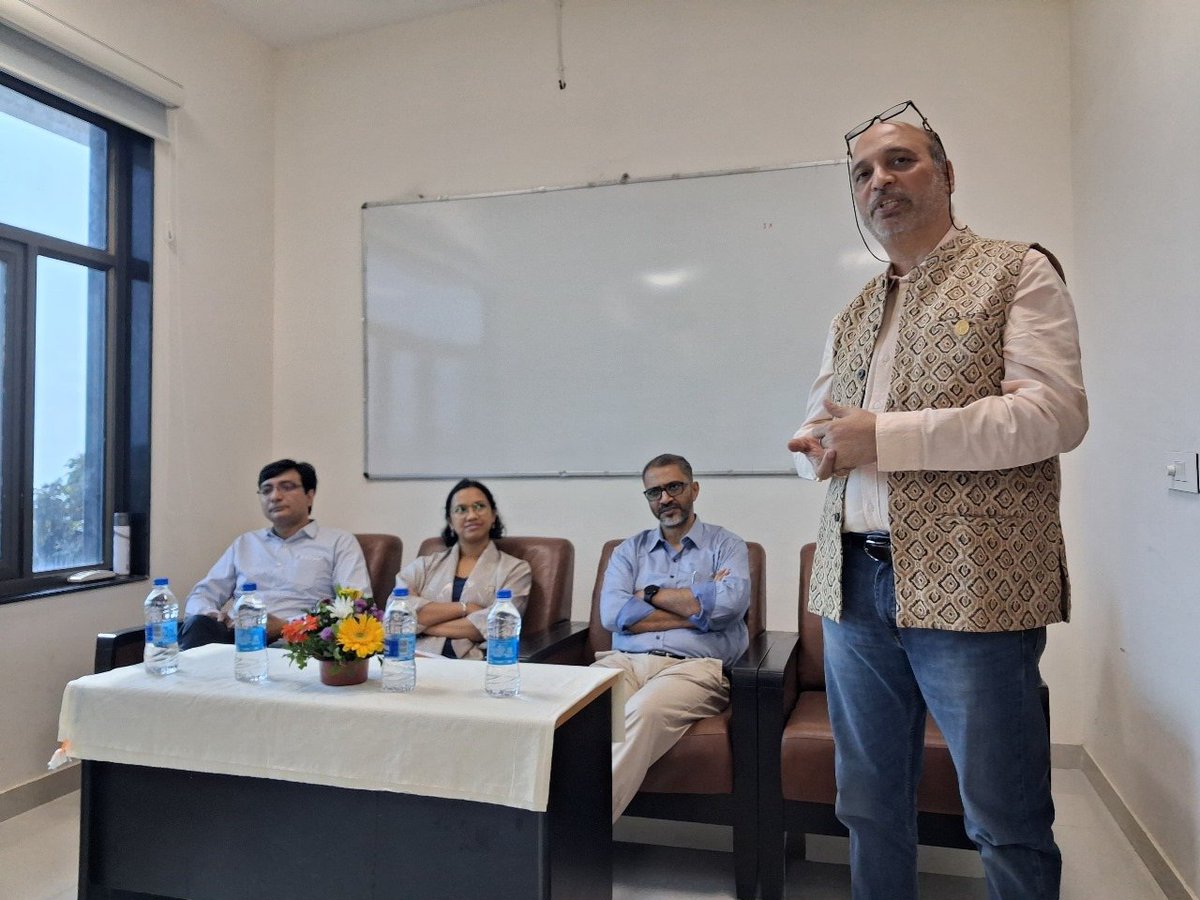
The Antarctic #expedition vessel is scheduled to sail from Cape Town towards the end of this month. Voyage team and Leader, Dr. Ravi Mishra were welcomed and briefed by Director on 11 Dec 2024. Dr. Vijay Kumar discussed about the Indian Antarctic Act, 2022. #Antarctic veterans, Dr. Vikas Dogra and Dr. Gautami Samui delivered briefing lectures.
@DrJitendraSingh@moesgoi@Ravi_MoES@TMeloth@Vijay_MoES@Rahul
Phynteny, developed by Susie Grigson at Flinders University, stands out from other tools by using a language-learning model for gene annotation. This tool provides a new way to approach this problem by using a concept called synteny.
https://t.co/1mfQVFcwxg
New PERSPECTIVE: A framework for understanding collective microbiome metabolism.
By Matthias Huelsmann, Olga Schubert & Martin Ackermann @MicSysEcoLab @ETH_en@EawagResearch
https://t.co/svlM8w8kXH
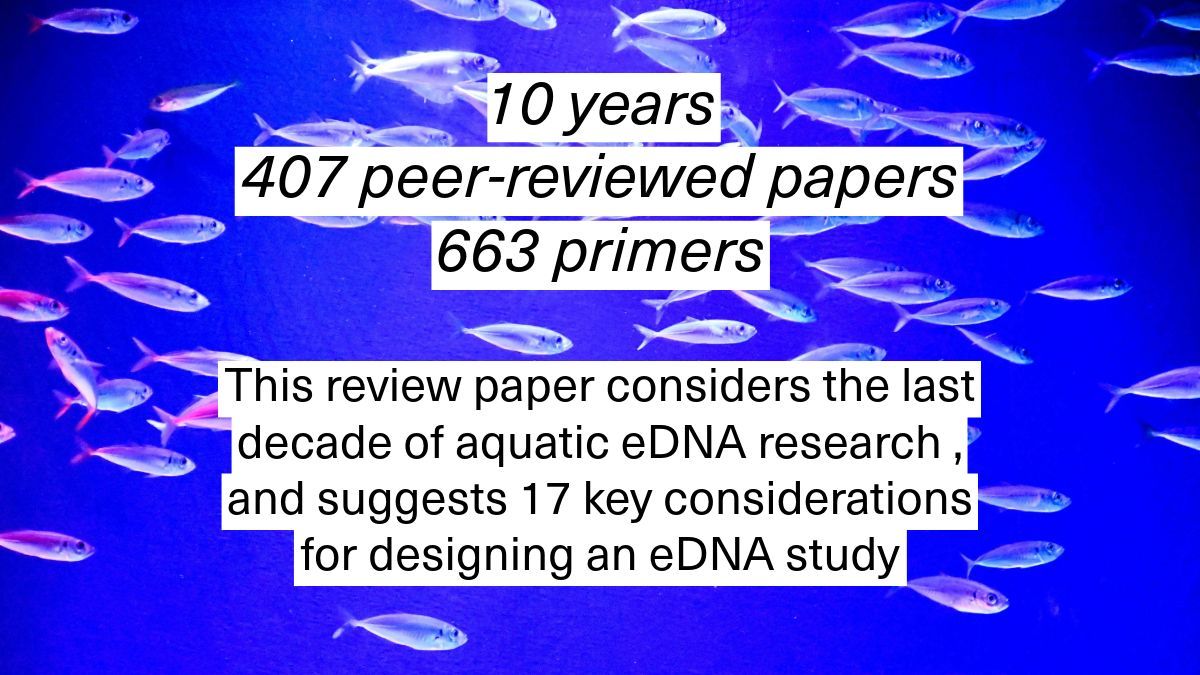
For aquatic eDNA enthusiasts, here’s an interesting and useful review of the last 10 years in the field by Takahashi et al. (2023), covering 407 articles and including 522 single-species primers and 141 metabarcoding primers.
This could be a good article to read if you want:
🐟A broad overview of the last 10 years
🐟An update on advances and knowledge gaps
🐟Key methodological recommendations
🐟A lot of referenced articles to check out
🐟A great primer lookup table.
Interestingly, despite efforts to standardise methods, the authors report a huge explosion of different approaches, indicating that there is no one-size-fits-all approach in sight. They attribute this to the wide variety of different habitats being sampled and constant methodological advances in aquatic eDNA research.
To help navigate these complexities, the authors provide 17 key considerations for designing an eDNA study, discussing:
⭐ Replicates and water volume
⭐ Sampling, preservation, and extraction methods
⭐ Selecting primers and negative controls
You can find the article here:
Takahashi et al. (2023). Aquatic environmental DNA: A review of the macro-organismal biomonitoring revolution. Science of the Total Environment, 873, 162322.
https://t.co/k9wvG7U0bF
Photo by Aya Sanyoura on Unsplash
"Surviving Indoors: a school of fish swimming in one direction like their lives depend on it."
Excited to share our latest work led by @JoshuaSotoOc & @elliotsfriedman in @mbiojournal today! Together with Gary Wu's team, we suggest metals may be an important nutritional factor shaping early life microbial ecology. https://t.co/iVOlIZkyW7
The 2025 @AntICON_SCAR & SC-ATS Science-Policy Fellowships are now open for early-mid career researchers!
Gain experience at the CEP-ATCM meetings or SC-CAMLR/CCAMLR meetings & contribute to the science-policy interface.
📅 Apply by 31 Dec 2024: https://t.co/Bh5GJYJBOQ
Here’s an interesting PCR method for working with extremely low concentrations of DNA: “Booster PCR”.
It looks like a rarely used and now obsolete method for most research, but it may be worth a try to give a PCR a boost if you can't access other more sensitive amplification or detection methods.
Source article:
Ruano et al. (1989). Biphasic amplification of very dilute DNA samples via 'booster' PCR. Nucleic Acids Research, 17(13), 5407.
https://t.co/WLMCCH9ccB
Booster PCR was developed to allow amplification of DNA over a very large number of cycles without an increased occurrence of primer dimers.
It does this by splitting the amplification into two steps:
1) An initial PCR where the primers are diluted to an estimated 10^7x concentration compared to that of the template DNA, or more simply a 1/10th dilution of standard primer concentrations in some versions.
In this step, some template amplification should occur, but primer dimers are much less likely to occur because the primers are also low in concentration.
2) A second standard PCR that uses the PCR product of the first PCR as a DNA template.
In this step, the small amount of target amplicons are further amplified to detectable levels.
Modifications include a) adding more primer to the PCR tubes after the first 20 cycles and then continuing for another full set of cycles, b) also using a lower concentration of dNTPs in the first PCR (presumably to minimise any additional non-specific amplification), and c) various variations in primer concentration. But the principle of these is essentially the same - an initial boost to the target DNA before the main PCR.
It's been reported to be up to 10 to 20x as sensitive as a single PCR, and able to detect a single colony-forming unit of Salmonella in a gram of chicken droppings:
Cohen et al. (1994). Detection of Salmonella enteritidis in feces from poultry using booster polymerase chain reaction and oligonucleotide primers specific for all members of the genus Salmonella. Poultry Science, 73(2), 354-357.
https://t.co/VfQ5CI5JE3
And it's also been modified into a reverse transcription booster PCR where it was found to be up to 100x as sensitive as a single RT-PCR:
De Medici et al. (2004). Reverse transcription-booster PCR for detection of noroviruses in shellfish. Applied and Environmental Microbiology, 70(10), 6329-6332.
https://t.co/sB2wH1Jvfc
So if you're having trouble amplifying an important specimen, and you think it's due to a low concentration of DNA, why not give it a boost with an initial PCR with a 1/10th dilution of primers, then run a normal PCR using the PCR product as a template, and see what happens!
If it does work, please let us know!
Disclaimer: we haven't tried Booster PCR ourselves yet, but we may give it a go soon on some extremely tiny specimens that are proving difficult to amplify from using other methods...
📢The Zlitni Lab at UCSF is recruiting postdocs (experimental and computational) to join our team. We study microbial communication & quorum sensing in the human microbiome, and how these processes influence health and disease. To apply https://t.co/J1NlHVtCdM Please share widely
I started gathering a list for REUs/Summer research opportunities for undergraduate students in Ecology/Conservation/Evolutionary Biology. Feel share to share with any undergraduate students who may be interested in participating in *PAID* research.
https://t.co/ENjlNM1ixi
The #EGU25 Call for Abstracts is OPEN!
Need financial support? Submit your abstract by 13:00 CET 2 Dec 2024: https://t.co/ny9A5drPGR How to submit your abstract: https://t.co/roqWyFKcnX
EGU25 submission deadline is 13:00 CET 15 January 2025!
Read more: https://t.co/7HMNWyZEle
I'm looking for #Postdocs ! 🧑🔬🔍
I'm a highly motivated researcher with experience in R programming, network analysis, and multivariate statistics. My focus is on the evolution of ecosystems and biodiversity over deep time. Any retweets or shares are greatly appreciated! 🙏
Introducing NanoCore! A user-friendly software for Nanopore-based genomic surveillance in healthcare facilities. 🖥️Presented in @mSystemsJ, the software's accuracy is equivalent to gold standard short read-based analyses. Read the article: https://t.co/gpNRDCZT1W