Hormuz Crisis Makes Freight Efficiency a Strategic Priority
3PLs - outsourced operators that help other companies move, store & coordinate goods across a supply chain - face a tough backdrop. AI-enhanced planning can help 3PLs gain predictive visibility.
https://t.co/bsYbcYSfCY
The disruption in the Strait of Hormuz has caused 2 problems: a fuel price shock and a supply chain planning headache.
Companies that manage this shock will react fast & forecast, route, allocate inventory & plan scenarios to avoid unnecessary shipments.
https://t.co/s3Cgg82Rxw
AI improves business forecasting by using real-time internal & external signals, such as point-of-sale data, local weather patterns, store-level traffic and pricing behavior, product shelf life, and local and regional events. Click here for full article: https://t.co/Eey8sdXUF5
Equities could rally based on expectations of stronger growth and lower inflation. The Court’s verdict could be months away, but the timing would not detract from the implications of their decision. (Source: Yale Budget Lab)
Supreme Court Ruling Could Halve U.S. Tariffs - If the Supreme Court invalidates the IEEPA tariffs, this will nullify approximately 70% of U.S. tariffs. Even if additional Section 232 tariffs are subsequently imposed, the average tariff level would likely decline by half.
This would boost trade in goods, soften inflation & inflation expectations, promote household consumption & business capex, lower the incentive of firms to fire workers, and drive economic activity. Bond yields might fall given lower revenue and a higher deficit.
We have discovered that the AP payments small & midsize US businesses are sending over BILL's platform are highly correlated with value added GDP.
The fastest growth in these payments is from midsize cities in the Sunbelt, Mountain West and Pacific.
https://t.co/CA9DppLb99
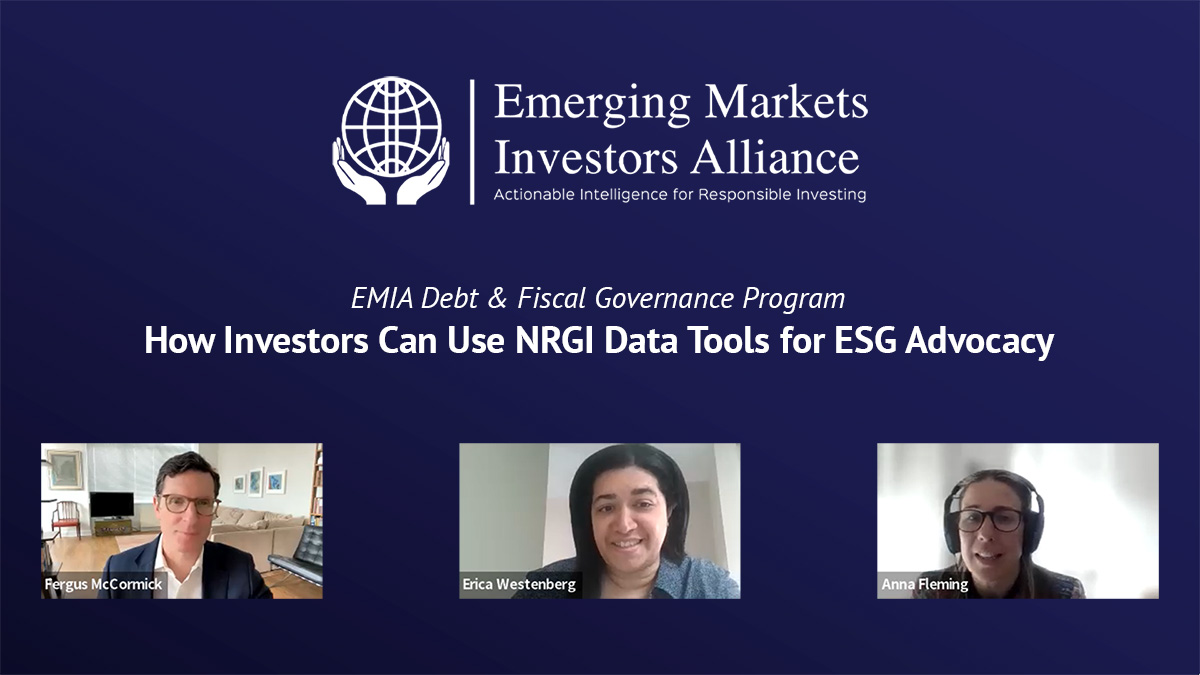
By 2030, 96% of upstream petroleum #CO2 emissions will come from countries where civic space is “closed”. In our last webinar, @NRGInstitute's Erica Westenberg & Anna Fleming discussed with @FergusMccormick how investors could urge countries & firms to adopt better policies.
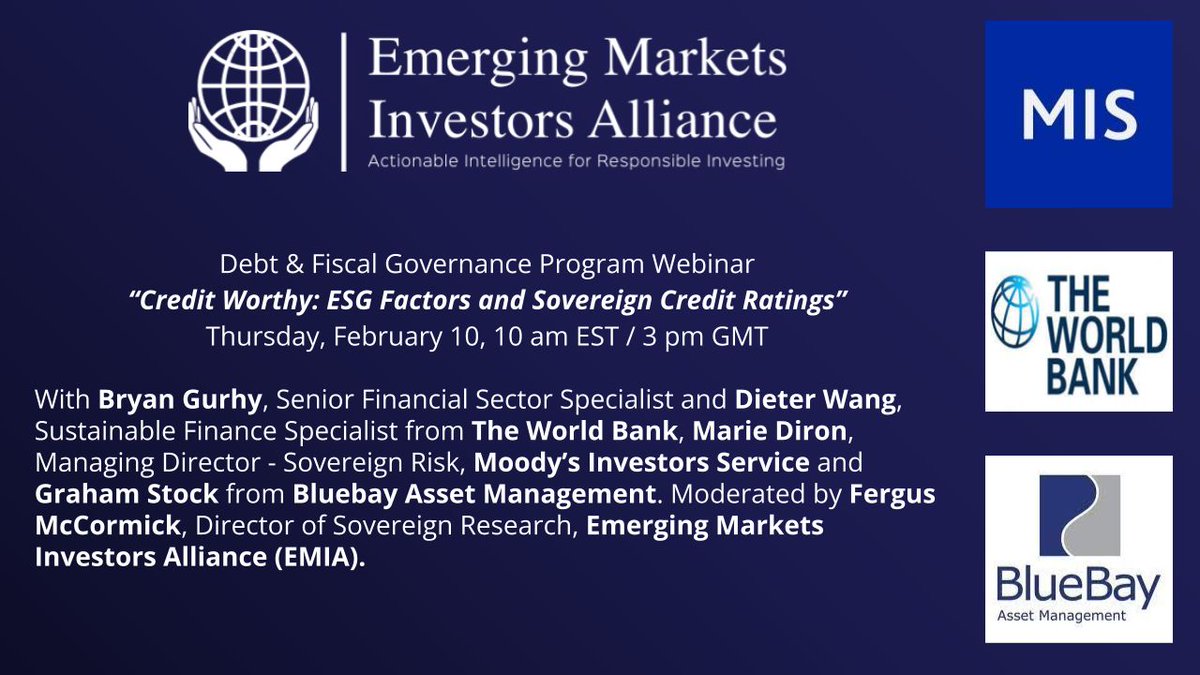
How #ESG factors reflect in sovereign credit ratings? This is the topic of our next webinar with Bryan Gurhy and Dieter Want from @WorldBank, Marie Diron from @MoodysInvSvc and Graham Stock from @BlueBayAM.
The event is for financial professionals only. https://t.co/brrEWACINZ
On Tuesday, February 1, EMIA will host Lindsey Marchessault, from @opencontracting to discuss the “Benefits of Open Contracting”. EMIA's Fergus McCormick will moderate the webinar. Open to EM investment professionals only. #ESG#debt#sustainability https://t.co/js4f331e1t
Looking fwd to moderating an Alliance call w/ José Franco Medeiros de Morais, Under-Secretary of Public Debt, National Treasury of Brazil, on Brazil’s Fiscal Future After Pension Reform. Tues Nov 19 13:30 EST. If you are an investor/analyst & interested I will send you an invite.
On Venezuela at the Global Growth Advisory Monday Club last week, I argued that before debt restructuring, the humanitarian catastrophe must be addressed. Following this, price indices need to be rebuilt for the IMF to provide loans. Then some assembly of creditors is called for.
Asked this Q at Emerging Markets Investors Alliance https://t.co/hxknGmw5pm conference in London week before last: Can ESG factors improve both real-adjusted returns & environmental conditions, social equity & governance? Much uncertainty still on lack of ESG standardization.
In Dakar last week at a World Bank Debt Management Facility conference discussing benefits of debt transparency. Without disclosure of govt guarantees, contingent liabilities, PPPs agreements, difficult for creditors to understand sovereign risk. https://t.co/1IYwDK2JlB
Thanks to the kind invitation from IPSASB to speak on a panel at the World Bank on "Leveraging Government Financial Reporting for Fiscal Policymaking and Management of Public Wealth", chaired by Ed Olowo-Okere, with Jim Brumby, Jas…https://t.co/oNv8YoVytT https://t.co/WVcoN4IqBK
Takeaways from an https://t.co/hxknGmw5pm panel I moderated yesterday on the significance of the Oct IMF Fiscal Monitor w/ Willem Buiter, Ken Rogoff, and Alex Tieman: countries w/ stronger balance sheets pay lower interest on debt & experience shallower and shorter recessions.
Engaging discussion last week in Brussels at the Centre for European Policy Studies on how to enhance growth & stability through effective public financial management. Better communication on the value-for-money created by good public management is needed:
https://t.co/3rrj4mDMIt