⚡️ Statement by the Embassy of Russia in Ireland (October 23, 2026)
The much-publicised discussion in Ireland of the issues with the “Triple Lock” legislation and Irish neutrality includes continuing references to Russia made by the leaders of the Irish government, which contain unfounded allegations, as well as misrepresentation of the way the UN Peacekeeping mechanism works.
In the course of the debate in the Dáil on October 21, Helen McEntee, the Minister for Foreign Affairs and Trade, and Defence, strongly objected to the current “Triple Lock” legislation on the grounds that it presumably allows Russia, as a permanent member of the UN Security Council, “to have a say over which peacekeeping missions we can send our troops to”, or even to veto Irish participation in such missions, and that ostensibly does not sit well with the Minister who believes that Russia is “attacking European member-states, including Germany, Lithuania, Latvia, Estonia and Poland”.
We strongly believe that any decisions on the matters of neutrality or any other policy matters are sovereign issues to be discussed and decided solely by the Irish government and the Irish people. At the same time, it is obvious that such decisions – whatever they are – should not be made under false assumptions, which is exactly the case with the Minister’s statements. Contrary to her assertions, the UN Security Council does not vote on what countries take part in a peacekeeping mission – its composition is agreed in the course of multilateral consultations conducted by the UN Secretariat and the interested UN member-countries. Also, there is no known record of Russia being against Ireland’s participation in any UN peacekeeping mission. Consequently, the allegations by Minister McEntee are reprehensible and misleading, grossly distorting the substance and the meaning of procedures provided by the UN Charter.
❗️In the same manner, the Minister’s speculations over Russia’s “attacks” on the EU countries are totally baseless, dangerously provocative and unacceptable. This kind of rhetoric is unthinkable for any responsible member of a government.
It is regrettable that the Irish government has chosen to deliberately question the workings of the UN – despite its much-advertised commitment to the central role of the UN in the international order – with the aim to promote domestic policy agenda. It is also incumbent upon Irish leadership to realise that exercises in Russophobia cannot make up for a serious failure in its approach to relations with Russia and issues of peace and stability in Europe.
AI is now being used to recreate Adobe’s software, a developer has released seven free, open-source apps as clean-room alternatives to Adobe’s main tools:
- PhotoCraft → Photoshop
- VectorCraft → Illustrator
- FilmCraft → Premiere Pro
- LightCraft → Lightroom
- EffectCraft → After Effects
- DesignCraft → InDesign
- PrintCraft → Acrobat Pro
Built in Rust with help from Claude Opus 5.5, they run on Windows, Linux, and macOS under MIT/Apache licenses without using Adobe’s source code.
I want to ask the students screaming “Death to America”, do you have any idea what happens when American values die?
Because I do.
My family fled Iran, a country where freedom died. You don’t know what you have until it’s gone.
You think America is oppressive because you have never experienced real oppression.
You think silence is violence because you’ve never been silenced.
You think words are dangerous because you have never watched a government drag someone away for speaking them.
You think capitalism is evil because you have never stood in a bread line.
You think borders are immoral because you have never had to flee across one.
You think revolution is romantic because you have never had a revolution take everything from you.
I have.
And that’s why I refuse to be quiet.
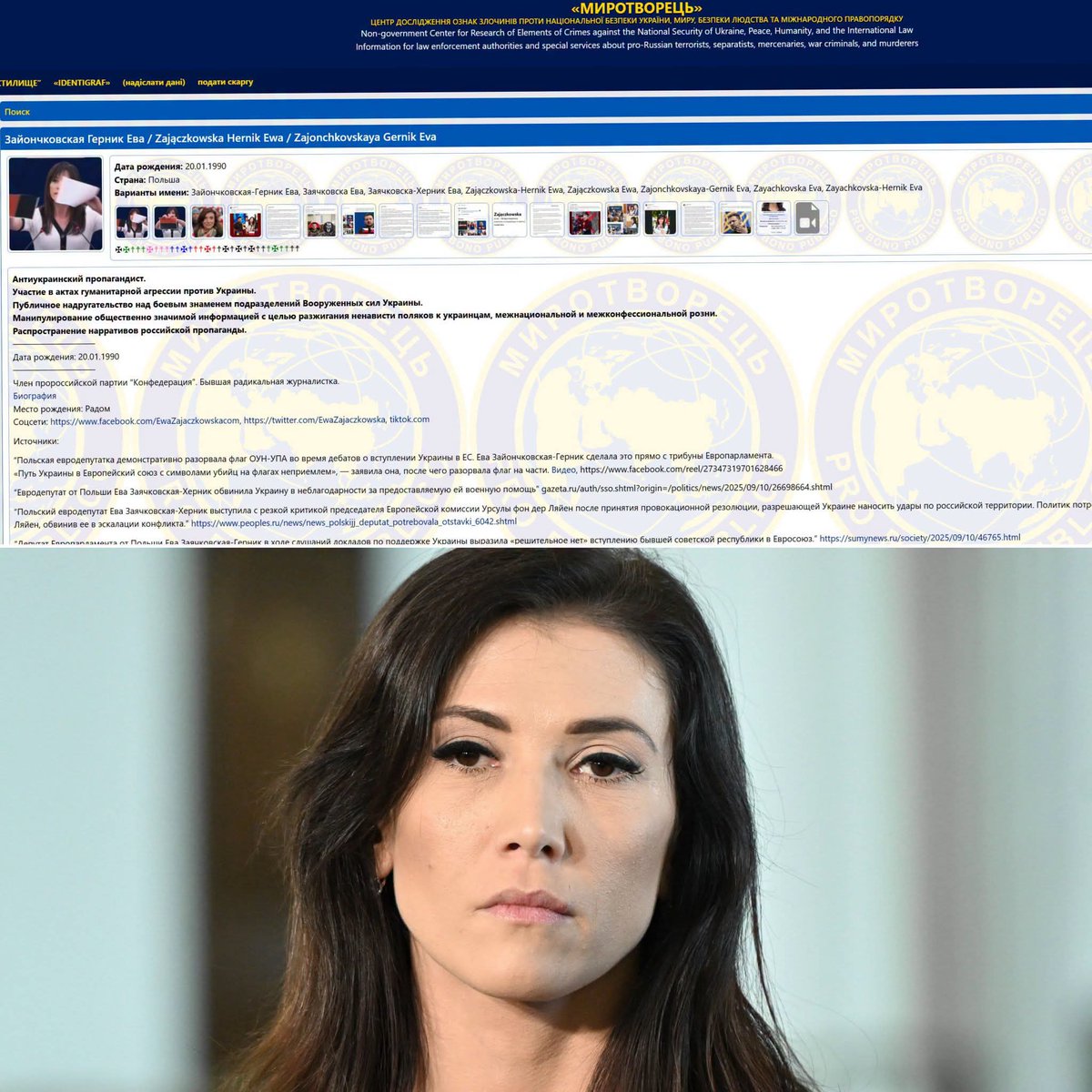
Właśnie dowiedziałam się, że po wystąpieniu w Parlamencie Europejskim, gdzie potępiłam ludobójców z UPA, trafiłam na stronę Myrotworeć - listę "wrogów Ukrainy" prowadzoną przez ukraińskie służby.
To bardzo ciekawe, że strona ukraińska prowadzi listę polskich patriotów do wyeliminowania. Jeśli trafia się tam za piętnowanie bestialskich mordów niewinnych Polaków przez ukraińskie oddziały UPA, to widać czym się kierują i jakich "wartości" tam bronią. Sami wystawiają sobie świadectwo. Dlaczego polskie MSZ nie reaguje i nie staje w obronie polskich dyplomatów? Dlaczego toleruje łajdackie metody nękania i zastraszania? To jawny akt wrogości wobec Polski.
I takie państwo Unia Europejska chce jak najszybciej przyjąć w swoje struktury? Wolne żarty. Dla Ukrainy, która niesie na sztandarach zbrodniczą ideologię banderyzmu i niepohamowaną korupcję, nigdy nie powinna być miejsca we Wspólnocie.
Jeśli kto tam sądzi, że dam się zastraszyć tego typu "wrzutkami" to gratuluję optymizmu i mam wiadomość: nie cofnę się ani o krok w obronie polskiej racji stanu i pamięci ofiar ludobójstwa na Wołyniu.
Możecie to dodać w opisie na stronie.
@KillorglinKen@PaulTreyvaud@irishdailymail@GeorgeLeeRTE That article is out of date. The IPCC quietly dropped Pathway 8.5 because it is implausible.
P8.5 is the one all the alarmists point to in their end of the world scenario. Did @rtenews report on this?
On the lookout again - is there anyone out there who works in Waters Technology in #Weford who'd be willing to speak to me 100% anonymously about Sky allegedly sending people into their workplace to serve legal letters in relation to dodgy-boxes? Seems a really odd move. 🤔
I spent a large part of yesterday trying to explain to people who supposedly are proponents of science what a "confounding variable" is.
Rather than say the same thing again today to about 100 people in about 100 different replies, I'm going to write it all in one place, here.
When scientists do science, in the form of an experiment or study, they will ultimately write it up in a standard report format containing the same sections:
Abstract
Introduction
Method
Results
Discussion
References
One of the most important aspects of the Discussion is a critical analysis of what was done. What went well, what could have been done better, what should be done next time. In particular, the authors attempt to identify if there are any "confounders" which may have influenced the results and rendered them invalid.
Let's take the example of a medicine in a clinical trial. We might, if we are ethical scientists, want to study whether a particular medicine causes adverse effects to those taking it before letting it loose in the wild. So we might recruit some people for a trial, and divide them into two groups. The first receives the actual medicine, the second receives a placebo. We might then monitor the recruits for a few months (or, preferably, a much longer period) on a daily basis and note any illnesses suffered in both groups.
We would then do a statistical analysis on the results from the two groups. If the results of that analysis showed that there was no statistical difference in the levels and types of illness suffered in the two groups, we might then conclude that no adverse effects were caused by the medicine. If, on the other hand, there was a significant difference between the two groups, that would point towards the need for further study and might lead us to conclude that the medicine was the cause of the difference.
The key thing here with our experimental design is that we want to make sure that the two groups in the study - the experimental group who receive the medicine and the control group who do not - are, in every other way, identical. Because if they're not, those differences might have caused the effect we observed, rather than the differences we created in our experiment.
What factors might make these two groups different?
1. Age differences. If one group was older, we might expect they might suffer more illness than the younger group.
2. Gender. Dependent on the medicine, males or females might be more affected. If the groups weren't balanced for gender, this might distort the reported illness results.
3. Health differences. If one group had poorer general health than the other at the beginning of the trial, we might expect them to report more illness during the trial.
These are all examples of "confounding variables". Factors which we did not control but which might influence the outcome and render our results invalid.
So in our experimental design we would want to make sure the experimental group and the control group are closely matched for age, gender and health status.
Which brings me onto climate change.
Climate scientists contend that Carbon Dioxide created by human activity in the industrial age is causing global atmospheric temperatures to increase.
As evidence, they point to an increase in global atmospheric temperatures over the last 200 years or so.
So far so good. Temperatures have, broadly, risen during that time. There are plenty of other things to criticise about this hypothesis and about climate "science" in general but that is for another time.
Yesterday we saw, all over the media, headlines about new record May temperatures of 35 degrees at Kew and Heathrow, and below the headlines was text saying that experts were saying this was another example of evidence of how the climate is warming.
Now I don't deny that it's been hot the last couple of days - where I am it has been around 32 degrees - so I don't doubt that the May record may have been broken somewhere in the country.
But the specific problem I have is with the temperatures at Heathrow and Kew, or indeed anywhere close to London or a big urban area being used as the evidence that the May record has been broken,or that they are evidence of atmospheric warming.
Why? Because of a confounding variable.
When we say a temperature record has been broken, we need to make sure we are comparing apples with apples. So not only do we need to compare temperatures that were measured in the same site using the same type of equipment in both instances - we need to make sure that the sites themselves have not changed.
We know that modern urban areas create a "heat island" effect. The expanses of heat-retaining materials like concrete, asphalt and cement retain heat during the day and release it slowly overnight, leading to higher daytime and nighttime temperatures. Added to which are the many buildings and vehicles in urban areas generating their own heat. All of this means that temperatures in, or close to, an urban area are typically several degrees warmer than in countryside some distance away.
Given the expansion and urbanisation of London over the last century, this effect will only have grown over time.
Arup measured this effect in London and concluded that temperatures there are often 4.5 degrees hotter than in the surrounding countryside (see first comment for link).
This effect obviously varies between different parts of London, as shown on the heat map, and reduces as you move away from central London, but even at Kew, the effect is estimated to cause temperatures to be 0.9 degrees higher than would be the case if Kew was sited in the countryside.
And Heathrow clearly creates its own heat island effect given the scale of the airport and the big expanses of heat absorbing materials there.
So if we are going to use temperatures measured in, or close to, London as evidence of atmospheric warming, we have a problem. We have a significant confounding variable. The warming caused by the heat island effect is going to add to any warming in the atmosphere, and give us an exaggerated result.
You can perhaps forgive tabloid newspapers for running headlines about this, just quoting the raw temperatures measured. They want to make money and it being very hot outside is a great news story. And urban areas becoming increasingly hot in summer is an issue in its own right.
But what is unforgiveable is people who claim to be scientists using these measurements as evidence of atmospheric warming, when there's such a glaring confounding variable influencing the data.
How would a proper scientist deal with this confounder?
Well, they might say "from now on, we will only use temperatures from rural weather stations which are not subject to urban heat island effects, and we will only declare records on the basis of those measurements"
And they might say "we will not use temperature measurements from areas subject to urban heat island effects as evidence of atmospheric warming".
But the Met Office and the climate science people aren't saying that. They're going with the artificially inflated temperatures. Because they have an agenda to push, a vast Net Zero industry to sustain, research grants to chase, and any evidence, however shonky, which backs up the global warming narrative is welcome.
This isn't science!
A MIT professor who built the world's first neural network machine said something about intelligence that nobody in Silicon Valley wants to admit.
His name was Marvin Minsky.
He co-founded MIT's artificial intelligence lab with John McCarthy in 1959. He built SNARC the first randomly wired neural network learning machine in 1951, as a graduate student at Princeton. He won the Turing Award.
He advised Stanley Kubrick on 2001: A Space Odyssey. Isaac Asimov, who was not a modest man, said Minsky was one of only two people he would admit were more intelligent than him.
In 1986, after decades of building machines that could think, Minsky published a book about something far more unsettling.
How humans think. And why we are wrong about almost everything we believe about it.
The book is called The Society of Mind. It has 270 essays. Each one is a page long. Together they build a single argument that most people, when they first encounter it, reject immediately because it is too uncomfortable to accept.
The argument is this: you do not have a mind. You have thousands of them.
What you experience as a single, unified self making clear-headed decisions is not a thinker. It is an outcome. The result of hundreds of tiny, specialized, mostly mindless agents competing, negotiating, overriding, and occasionally cooperating with each other beneath the surface of your awareness. You do not decide things. You are what is left over after the arguing stops.
Minsky was precise about this.
He wrote that the power of intelligence stems from our vast diversity, not from any single perfect principle. He called this the trick that makes us intelligent, and then immediately added: the trick is that there is no trick. There is no central processor. No ghost in the machine. No unified self sitting behind your eyes, calmly evaluating options and choosing rationally.
There is only the parliament. And the parliament is always in session.
This reframing destroys the standard explanation for every failure of self-control.
The reason you procrastinate is not laziness. It is that the agent in you that understands long-term consequences is losing an argument to the agent that wants comfort right now, and neither of those agents has a decisive vote. The reason you change your mind the moment someone pushes back is not weakness. It is that the social agent, the one that monitors status and belonging, just outweighed the analytical one. The reason willpower fails is not a character flaw. It is that you sent one small agent into a fight against dozens, and you called that discipline.
Minsky had a specific line that breaks this open completely. He said: in general, we are least aware of what our minds do best.
The things you do with the most apparent ease, reading a face, walking through a crowded room, understanding a sentence, catching a ball, are not simple at all. They are the products of staggeringly complex agent networks that run so smoothly, so far below conscious access, that you experience them as effortless. The things that feel like work, the logical arguments, the deliberate choices, the careful plans, are actually the clumsy surface layer, the small fraction of mental activity you can observe at all.
You have been taking credit for the wrong parts of your own intelligence.
The practical implication is the one that most productivity advice misses entirely. If your decisions are not made by a single rational self but by whichever coalition of agents happens to win the moment, then the game is not about training yourself to be more disciplined. The game is about designing the environment so that the right agents win without needing a fight.
This is why removing your phone from the room works better than deciding not to check it. This is why writing one task on an index card works better than building a sophisticated system. This is why commitment devices beat motivation every time. You are not strengthening your will. You are changing the conditions of the argument so that the outcome you want becomes the path of least resistance.
Minsky spent his entire career building machines that could imitate intelligence. What he discovered in the process was that natural intelligence, the kind running inside every human brain on earth, is nothing like what we think it is.
It is not a single flame burning in a single chamber.
It is a city. Loud, chaotic, full of competing interests, with no mayor.
The people who understand this stop trying to win the argument through force of will.
They learn to build a better city instead.
@qatarairways Hi I have successfully rebooked a flight out of Australia on the same day as original. I had upgraded to premium economy on the original flight. How do I get premium economy on the new flight? I can't seem to change seats.
Emirates resumes operations
Emirates will resume operations. Passengers who have confirmed bookings for this afternoon’s flights may proceed to the airport. This includes customers transiting in Dubai, if their connecting flight is also operating.
Customers can check the flight schedule for upcoming flights, as well as book seats to travel via https://t.co/K4Fcp37GYR.
Emirates continues to monitor the situation, and we will develop our operational schedule accordingly.
We would like to thank our customers for their understanding and patience. The safety of our passengers and crew is our highest priority and will not be compromised.
Look at the body language of the Irish state media "Interviewer" as Professor Jeffery Sach's destroys his delusions over Ukraine.
He literally crumples into a pile, desperately trying to interrupt, bereft of any plausible counter argument
A massacre.
The CEO of Qantas has revealed crucial new details about the airline’s upcoming ultra long-haul flights which will directly fly between Sydney and London. https://t.co/kqPjrEc7mn
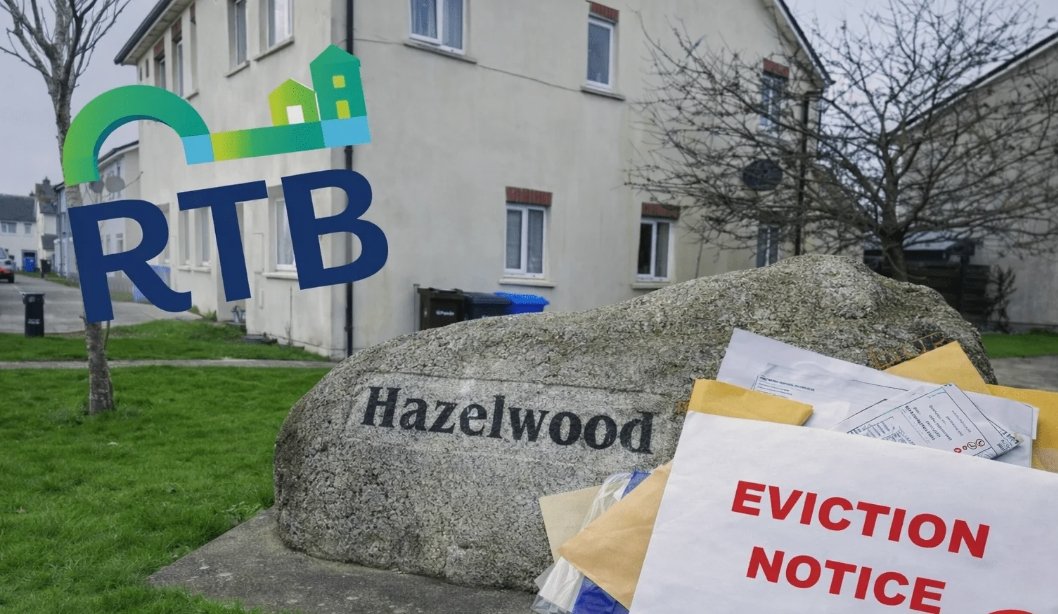
100 Wexford Residents Shocked by Mass Eviction Notices: ‘This is Really Scary’
Around 100 people, including many children, in Hazelwood Estate, Bridgetown, Co Wexford, have been hit with 36 eviction notices delivered on Friday, just two days before Ireland’s new rental laws took effect on Sunday.
The fresh regulations cap rent increases at 2 per cent or the rate of inflation for existing tenancies. Landlords can, however, reset rents to full market rates for any new leases. New agreements must run for a minimum of six years and eviction grounds have been significantly tightened.
Tenants held an emergency meeting in the local hall yesterday to discuss their options. Single mother Ann Marie Lamb, who has two sons, one with additional needs, said the situation is causing huge stress. “Thirty-six households are affected and behind every door is a real family trying to work out what happens next,” she explained. Many residents work full-time, pay their rent on time and are simply trying to keep life stable.“This isn’t just about houses,” Lamb added. “It’s about children in local schools, families rooted in the community, and people who have nowhere to go in the middle of a housing crisis where rentals are almost impossible to find. For me, the thought of uprooting my settled children is terrifying.”
The properties are owned by developer Patchflow Ltd. However, they have refused to comment at the time of writing.
Ronan Kavanagh (49), a healthcare worker, and his partner Ashling Keating (41), who have lived in their home for ten years, said they returned from work to find the notice and felt “totally gutted”. They earn too much for housing assistance or social housing but too little for a mortgage. Keating added: “This is really scary. I’ve barely slept since Friday.”
Labour TD George Lawlor, who met residents on Sunday, described the wave of notices as “shocking” and called for immediate government intervention. He linked the timing directly to the new rules and warned that Wexford already faces acute housing shortages and soaring rents. “Families cannot simply pick up and find another affordable home overnight,” he said.
The Department of Housing confirmed that Minister James Browne has contacted the Residential Tenancies Board, which is now working closely with Wexford County Council to protect tenants’ rights. Under Section 34 of the Residential Tenancies Act, landlords must give a valid reason for termination and notify the RTB.
Wexford County Council will hold an emergency information meeting later today and Aontú councillor Jim Codd has organised a dedicated advice clinic for the affected households from 4pm to 6pm at Bridgetown Youth Centre.
This is a very difficult pill to swallow when the taxpayer is noting such an uncapped expenditure of state funds, most notably the €1.2 billion in 2025 alone on asylum seeker accommodation, even as around 80 per cent of claims are refused at first instance and widely seen by many as 'economic opportunists', rather than genuine protection needs. This leaves a strong feeling of inequality and local tenants feeling like they’re at the very back of the queue.
This sudden wave of eviction notices also brings home the fear and uncertainty these families are facing in Ireland’s housing crisis, and why stronger tenant protections are really needed now more than ever.
Aren’t @FineGael just wonderful!!
One month after Harvey’s death.
You weren’t wonderful to Harvey and the other children you’re failing now.
You can stick your insulting propaganda where the sun don’t shine.
The people will not stop until they get #JusticeForHarvey