Just to be clear: the president of the United States called into a private company’s board meeting and pressured them into reinstating a fired CEO whose actions his own government is investigating, and personally made 15 million dollars in the process.
In any other era, a monumental political scandal for the president. But not in ours, apparently.
217 DAYS IN THE DARK: THE HUMAN COST OF BRITAIN'S SILENT DETERRENT (1/3)
A young Lieutenant stands on the rain-swept jetty at Faslane, takes one last look at the Scottish hills, and exchanges a quiet embrace that has to last half a year.
He walks across the brow onto the wet black casing of HMS Vengeance, climbs down the vertical steel ladder through a narrow circular hatch, and hears the heavy hull locks dogged shut above his head.
From that exact second, the sun ceases to exist.
For the next 217 days, thirty-one unbroken weeks beneath the ocean, his entire universe shrinks to a 150-metre tube of high-yield steel displacing 16,000 tonnes.
Because a Vanguard-class boat was originally engineered for 80-day patrols, preparing for a seven-month deployment means every spare inch of internal volume is crammed with provisions. For the first month at sea, the junior officer and his 149 shipmates literally walk on wooden planks laid over crates of tinned food stacked along the narrow passageways.
The environment inside is an assault on human biology. There are no windows, no seasons, and no natural rhythms. The air he breathes is manufactured, split from seawater by electrolysers and scrubbed of carbon dioxide, leaving the unmistakable, slightly sweet chemical tang of amine clinging to his uniform, his skin, and his bedding.
Time is measured not by daylight, but by six-hour watch rotations and the colour of the bulbs in the control room, shifting to red at night so the watchkeepers can read their consoles. Off watch, he pulls a curtain across a cramped bunk near the wardroom scarcely wider than a shelf, sleeping inches below pipes carrying high-pressure steam and hydraulics while the hull groans gently under deep oceanic pressure.
Most people imagine a nuclear submarine prowling dramatic coastlines or surfacing for air. A ballistic missile boat does neither.
Once HMS Vengeance clears the North Channel and dives into the deep abyssal plains of the North Atlantic, she never surfaces once. She rarely even creeps to periscope depth, lest a mast break the swell and betray her position to a satellite. Instead, she sinks into the cold black depths and patrols vast, uncharted boxes of ocean at a whisper of three or four knots, simply making a silent hole in the water while trailing a sonar array hundreds of metres astern.
Think about what seven months of that isolation does to the human mind.
Conditions aboard a British deterrent patrol are so extreme that NASA has studied Royal Navy submariners to model the psychological toll of deep-space missions to Mars. As historians Peter Hennessy and James Jinks documented in their landmark book The Silent Deep, the outside world is reduced to short, one-way Familygrams of a few dozen words from home. Every single message is vetted before transmission.
Under the grim protocol of the Silent Service, bereavements and serious family illnesses are withheld from the crew so no sailor loses focus beside a nuclear reactor or a missile tube. Only on Day Zero, the final hours before berthing back at Faslane, are affected men quietly summoned to the captain's cabin to be told the news and taken ashore first.
When you lock 150 men into a steel cylinder for thirty-one weeks, friction is inevitable. By month five, the fresh fruit and eggs are long gone, replaced by tinned rations and daily vitamin D tablets. Everyone knows how everyone else breathes, chews, and sighs. 👇
There is nothing quite as insulting as a Westminster photo op built on the backs of exhausted men.
The only reason HMS Vengeance was at sea long enough to break endurance records is because politicians refused to fund the maintenance infrastructure required to bring her home on schedule.
The political class forced this crew into a 217 day psychological pressure cooker just to mask their own failure to build dry docks.
For a cabinet minister to now use that exact same crew as a prop for social media engagement is beneath contempt.
True respect for the military involves funding them properly, not putting on a navy jacket for half an hour to farm likes on the internet.
Quality of life in this country is at an all time low, energy and food bills are through the roof ,everything’s being banned and you cant even protest
Andy Burnham: “I’m just an average bloke that loves chips and gravy. Did you know I’m from Manchester I’m just a lad”
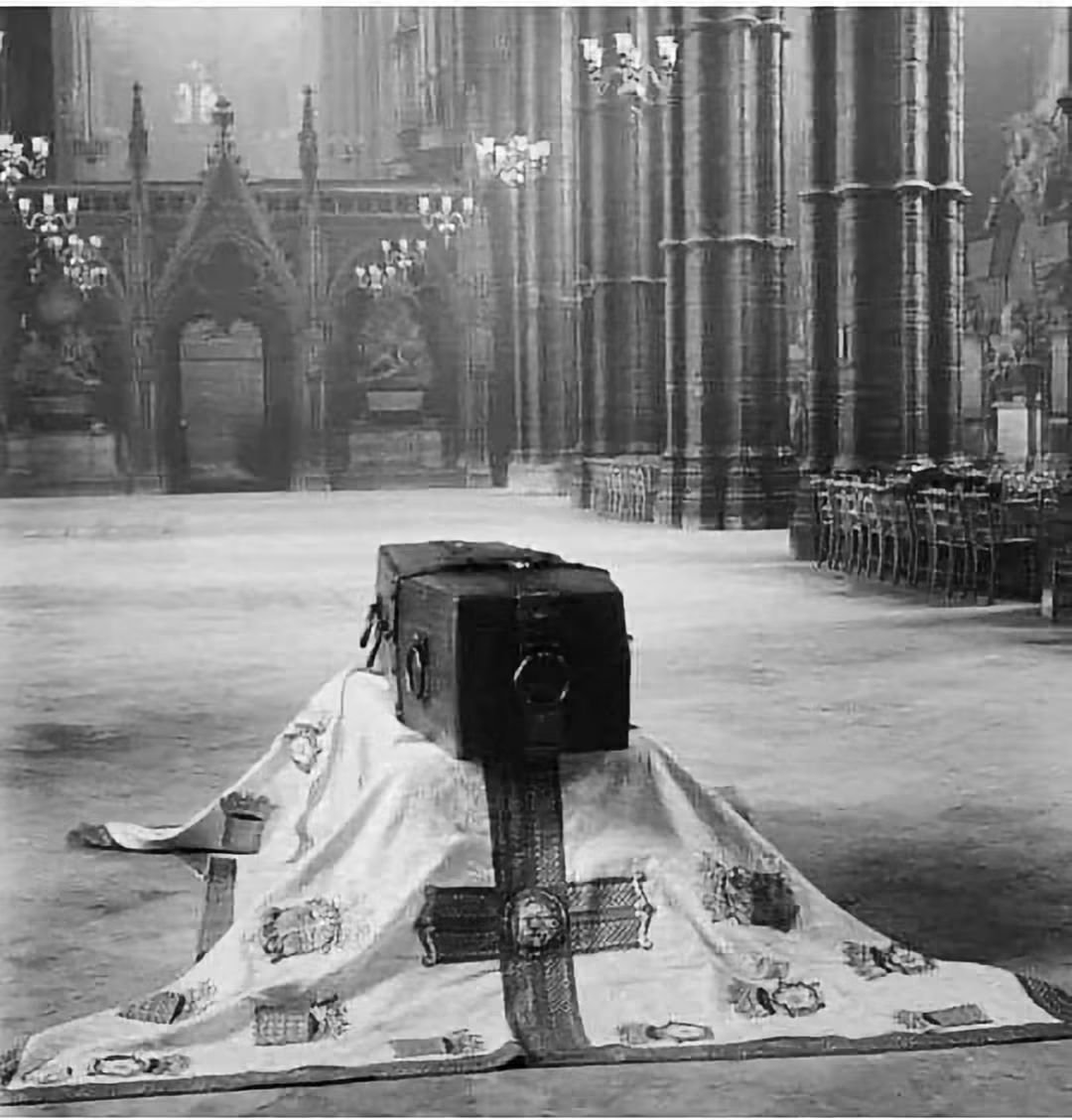
On November 7, 1920, in the strictest secrecy, the bodies of four unidentified British soldiers were exhumed from temporary cemeteries in Ypres, Arras, the Aisne, and the Somme. None of the soldiers who dug up the bodies were told why. The remains were taken to military headquarters at Saint-Pol-sur-Ternoise, France.
There, the bodies were covered with Union Jack flags. A guard was posted, and Brigadier General Wyatt and Colonel Gell randomly selected one of the four fallen soldiers.
The other three bodies were reburied. A French guard of honour was appointed to stand beside the coffin of the chosen soldier throughout the night.
On the morning of November 8, a specially designed oak coffin arrived, made from timber grown in the grounds of Hampton Court Palace. The remains of the Unknown Warrior were placed inside.
A Crusader's sword was mounted on top, along with a shield bearing the inscription:
"A British Warrior who fell in the GREAT WAR 1914–1918 for King and Country."
On November 9, the Unknown Warrior, accompanied by a guard of honour, was transported on a horse-drawn carriage. He was received by Marshal Ferdinand Foch before being taken aboard HMS Verdun for the journey to Dover.
The coffin rested on the deck, covered with wreaths and surrounded by a French guard of honour.
Upon arrival in Dover, the Unknown Warrior was greeted with a nineteen-gun salute — an honour normally reserved for field marshals.
A special train then carried the coffin to Victoria Station in London, where it remained overnight.
On the morning of November 11, 1920, exactly two years after the guns fell silent on the Western Front, the Unknown Warrior was finally taken to Westminster Abbey.
The idea of honouring an unidentified fallen soldier came from a British Army chaplain named David Railton, who had served on the front lines during the Great War.
The Union Jack he had used as an altar cloth during the war was the same flag that covered the coffin.
Railton wanted the families of the hundreds of thousands of servicemen whose remains had never been identified to believe that the Unknown Warrior might be their own lost husband, father, brother, or son.
A man without a name became a symbol of every soldier who never returned home.
A single grave became a place where an entire nation could mourn.
Every year on November 11, Britain remembers the Unknown Warrior and all those who gave their lives in war.
They had names. They had families. They had dreams. They had futures that war took away.
We may never know who lies beneath that stone.
But we know what he represents.
Lest we forget. 🌹
P.S. I'm moving from Twitter/X to Substack. Join me there and follow my work.
https://t.co/CRmAgIp5CW
During a silent patrol, the crew of a Royal Navy Amphion-class submarine investigates an unfamiliar sound echoing through the hull.
In the 125-year history of the Royal Navy Submarine Service nearly 6000 submariners and over 150 submarines never returned. Lest we forget.
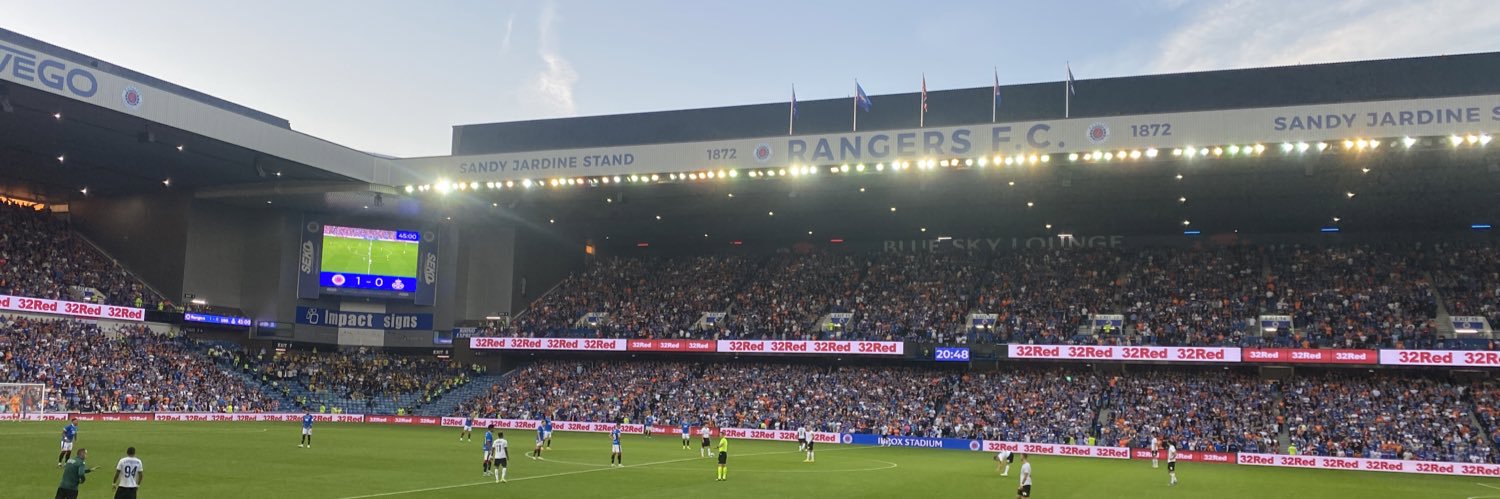
@BigDaveWHUFC There were only 2 games in Britain in season 04-05 than finished 7-1.
Rangers V Dundee United and Man City V Barnsley.
The same two goalkeepers played in both games - Ronald Waterreus for Rangers and City, Nick Colgan for Dundee Utd and Barnsley.