The opinions expressed herein are presented for informational purposes only. No representations are made as to the accuracy or completeness of any information.
“There are decades where nothing happens, and weeks where decades happen.”
I can’t help but think Lenin was referring to the S&P 500 this week, with intraday moves of 8.5% on Monday, 7.3% on Tuesday, and a jaw-dropping 10.8% on Wednesday.
#Stocks #Today #stocklive #stockmarket #money #trading $SPY $QQQ $IWM
Folks, a 10% broad tariff on everything plus 125% on China, is a **25pp increase in the effective tariff rate**, even accounting for USMCA exemptions.
That's almost exactly where 2025 tariff policy was this morning. It was just less concentrated on China & more weighted overseas
The "Liberation Day" tariffs on Thailand are set at 36%, leading to an 18% decline today in Western Digital $WDC shares. Both Seagate $STX and Western Digital manufacture hard drives in Thailand. However, as a duopoly, customers have limited alternatives. Additionally, approximately 90% of revenue comes from cloud clients—primarily large hyperscalers—who are likely less price-sensitive and purchase based on expanding storage needs. We believe this selloff is an overreaction, and the recent spinoff of the SanDisk business has created an attractive investment opportunity for Western Digital, both on an absolute basis and relative to Seagate. #Stocks #Today #stocklive #stockmarket #money #trading $SPY $QQQ $IWM
University of Michigan has been measuring consumer sentiment since 1952. Today's reading was incredibly weak at just 57.9 (median reading is 89). Luckily, consumer sentiment has historically been a contraindicator to future market returns. Going back to 1952, there have only been 24 previous times when the consumer sentiment index was below 60 and the median S&P500 return was 21% over the next year (positive 88% of the time).
University of Michigan has been measuring consumer sentiment since 1952. Today's reading was incredibly weak at just 57.9 (median reading is 89). Luckily, consumer sentiment has historically been a contraindicator to future market returns. Going back to 1952, there have only been 24 previous times when the consumer sentiment index was below 60 and the median S&P500 return was 21% over the next year (positive 88% of the time).
University of Michigan has been measuring consumer sentiment since 1952. Today's reading was incredibly weak at just 57.9 (median reading is 89). Luckily, consumer sentiment has historically been a contraindicator to future market returns. Going back to 1952, there have only been 24 previous times when the consumer sentiment index was below 60 and the median S&P500 return was 21% over the next year (positive 88% of the time).
University of Michigan has been measuring consumer sentiment since 1952. Today's reading was incredibly weak at just 57.9 (median reading is 89). Luckily, consumer sentiment has historically been a contraindicator to future market returns. Going back to 1952, there have only been 24 previous times when the consumer sentiment index was below 60 and the median S&P500 return was 21% over the next year (positive 88% of the time).
University of Michigan has been measuring consumer sentiment since 1952. Today's reading was incredibly weak at just 57.9 (median reading is 89). Luckily, consumer sentiment has historically been a contraindicator to future market returns. Going back to 1952, there have only been 24 previous times when the consumer sentiment index was below 60 and the median S&P500 return was 21% over the next year (positive 88% of the time).
University of Michigan has been measuring consumer sentiment since 1952. Today's reading was incredibly weak at just 57.9 (median reading is 89). Luckily, consumer sentiment has historically been a contraindicator to future market returns. Going back to 1952, there have only been 24 previous times when the consumer sentiment index was below 60 and the median S&P500 return was 21% over the next year (positive 88% of the time).
University of Michigan has been measuring consumer sentiment since 1952. Today's reading was incredibly weak at just 57.9 (median reading is 89). Luckily, consumer sentiment has historically been a contraindicator to future market returns. Going back to 1952, there have only been 24 previous times when the consumer sentiment index was below 60 and the median S&P500 return was 21% over the next year (positive 88% of the time).
University of Michigan has been measuring consumer sentiment since 1952. Today's reading was incredibly weak at just 57.9 (median reading is 89). Luckily, consumer sentiment has historically been a contraindicator to future market returns. Going back to 1952, there have only been 24 previous times when the consumer sentiment index was below 60 and the median S&P500 return was 21% over the next year (positive 88% of the time).
University of Michigan has been measuring consumer sentiment since 1952. Today's reading was incredibly weak at just 57.9 (median reading is 89). Luckily, consumer sentiment has historically been a contraindicator to future market returns. Going back to 1952, there have only been 24 previous times when the consumer sentiment index was below 60 and the median S&P500 return was 21% over the next year (positive 88% of the time). #Stocks #Today #stocklive #stockmarket #money #trading $SPY $QQQ $IWM
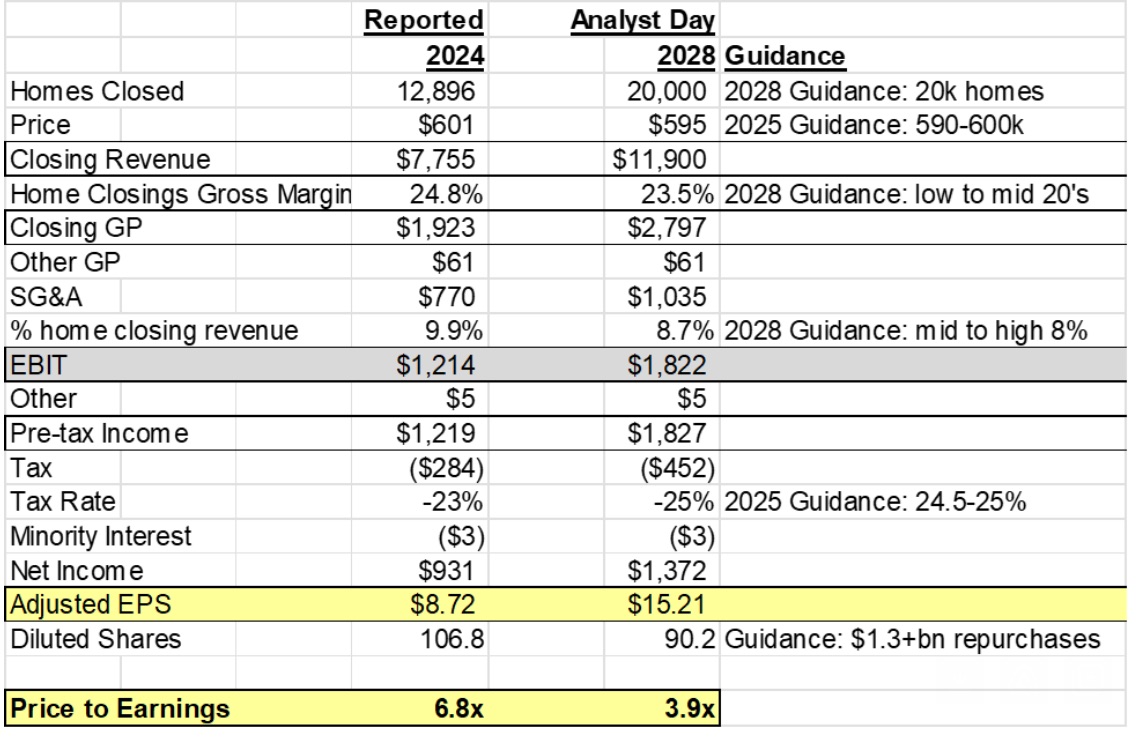
Taylor Morrison ( $TMHC ) held its inaugural analyst day last week, offering valuable insights into what sets this home builder apart (https://t.co/prajV9w14B ) . Management outlined 2028 targets that imply $15 in earnings, while the stock is currently trading at just $60. We continue to own and see significant upside. The U.S. housing shortage only strengthens the case for investing in $TMHC, America needs more homes! #Stocks #Today #stocklive #stockmarket #money #Trading $SPY $QQQ
Barry Banister ( @BannisterBB ) delivered another incredibly insightful macro analysis of the markets, underscored by his impressive command of historical data. Similar to our perspective, he is bullish on the future returns of value over growth and small cap over large cap. Looking at data going back to 1925, the chart below highlights the extraordinary divergence (shown in red and green lines) observed over the past decade. #Stocks #Today #stocklive #stockmarket #money #trading $SPY $QQQ
@Taylor_Morrison ($TMHC) held its inaugural analyst day last week, offering valuable insights into what sets this home builder apart (🔗 https://t.co/prajV9wyU9 ). Management outlined 2028 targets that imply $15 in earnings, while the stock is currently trading at just $60. We continue to own and see significant upside. The U.S. housing shortage only strengthens the case for investing in $TMHC, America needs more homes! #Stocks #Today #stocklive #stockmarket #money #trading
@Taylor_Morrison ($TMHC) held its inaugural analyst day last week, offering valuable insights into what sets this home builder apart (📷 link). Management outlined 2028 targets that imply $15 in earnings, while the stock is currently trading at just $60. We continue to own and see significant upside. The U.S. housing shortage only strengthens the case for investing in $TMHC, America needs more homes! 🏠📈 #Stocks #Today #stocklive #stockmarket #money #trading
@Taylor_Morrison ($TMHC) held its inaugural analyst day last week, offering valuable insights into what sets this home builder apart (🔗 link). Management outlined 2028 targets that imply $15 in earnings, while the stock is currently trading at just $60. We continue to own and see significant upside. The U.S. housing shortage only strengthens the case for investing in $TMHC, America needs more homes! 🏡📈 #Stocks #Today #stocklive #stockmarket #money #trading
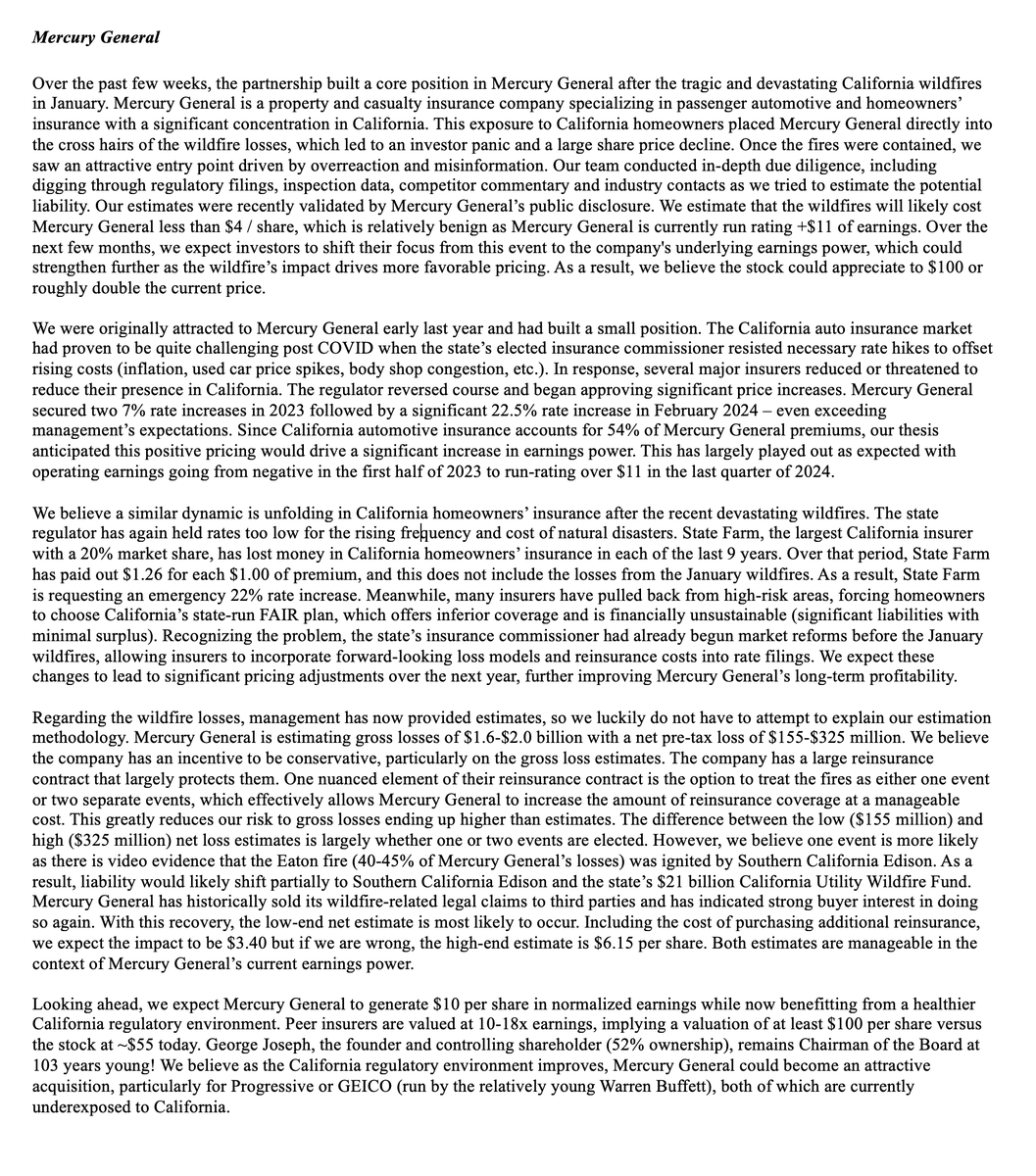
Last Tuesday (Feb 18), we featured $MCY (Mercury General) in our letter to investors. Due to the tragic fires in Los Angeles, $MCY's stock price is down considerably YTD. We believe this sell-off presents a unique buying opportunity, as the company's liability from the fires may not be as severe as some investors initially anticipated.
We believe $MCY can double and also believe this is an opportune time to accumulate the stock. Please see the image below for our write-up on the company.
Feel free to reach out if you would like to discuss further. [email protected] #Stocks #Today #stocklive #stockmarket #money #Trading
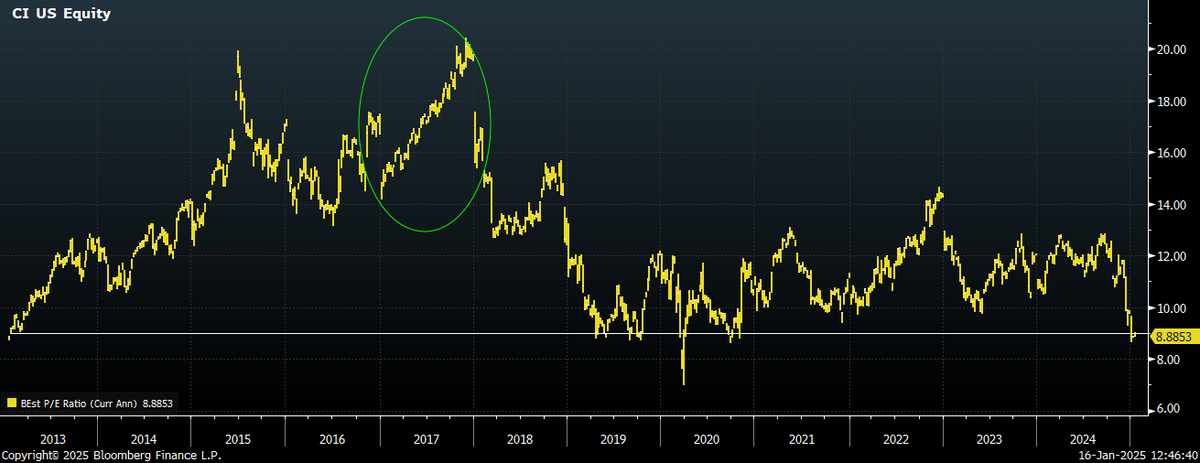
Cigna ( $CI ) is now trading near its lowest earnings multiple in recent memory at under 9x earnings. In 2017, the first year of Trump 1.0, the multiple expanded from 14x to 20x. Purchasing $CI at less than 9x earnings makes no sense given over the last 10 years Cigna has compounded earnings at 14.5% per year (significantly faster than the overall market). We would expect double digit earnings growth to continue, and it is important to note that Cigna is also not exposed to Medicare or Medicaid, the two current challenging areas for their competitors.
#Stocks #Today #stocklive #stockmarket #money #trading