@virginiog ¿Puede quererme una IA? Lo dudo. El proceso del querer y elegir es propio del ser personal "Es el quien capaz de amar". Se involucra, tanto la inteligencia para reconocerlo como bueno (el objeto-persona a querer) y la voluntad para decidirlo, o no decidirlo. La IA no lo hace.
@pattylopez05 Un poco de moderacion, dominio no haria mal al Señor Milei. Entiendo su lucha: Verdad/mentira. Datos/opinion. Esta en una posicion que hace y puede hacer mas bien. Un poco de dominio personal y adelante.
THIS IS A PURE F*CKING GOLDMINE
Anthropic just shared one of the best tricks for Claude Code.
The idea: let Opus 5.5 write the plan as a script, and let a swarm of cheaper agents run it.
Bigger jobs and way fewer Opus tokens, because the script holds the plan and Opus only sees the final answer.
You just launch Claude Code like this:
claude --model opus --effort ultracode
here's the split:
→ Opus 5.5 turns your task into a workflow script
→ Haiku 5.5 agents scan every file in parallel
→ Sonnet 5.5 agents patch each fix in its own isolated copy
→ you stop burning Opus context on a hundred agent transcripts
Opus only shows up at three moments:
→ writing the workflow before the run
→ reading the verified results after it
→ signing off before anything ships
Opus plans. Haiku scans. Sonnet ships.
JEV engineering is the same move one layer down: the forks that need no thinker (which file, which tool, retry or stop) go to JEV in milliseconds, and the big models only see the ones that split
the full tree
> Opus 5.5 runs the main session and writes the workflow
> scan audits every file on Haiku 5.5
> edit patches each fix on Sonnet 5.5 in an isolated copy
> verify cross-checks every finding on Sonnet 5.5
> Opus 5.5 reads only what survived verification
> JEV routes micro-forks in milliseconds
paste the tree and this prompt into Claude Code ↓
"Rebuild my Claude Code setup around this tree:
1. Run the main session on Opus 5.5 with ultracode on.
2. In every workflow, run read-only scan stages on Haiku 5.5 and edit stages on Sonnet 5.5, each edit in its own isolated copy.
3. Add one rule to CLAUDE.md: every finding gets an independent verifier agent before it's reported, and fix loops stop after two rounds with no progress.
4. Route fast deterministic forks (tool choice, path selection, retries) through JEV.
Show me every change as a diff first. No edits until I say go."
↳ https://t.co/1MiKDqGANA
save it, it'll come in handy.
📜 Finally, it’s here!
Our new Koine Greek and Biblical Hebrew app is live—and free for everyone, everywhere!
Please share this video so students around the world can enjoy these free learning materials.
This work is entirely donor-funded. We’re deeply grateful to everyone who has given financially to make it possible. If you’d like to help us keep creating free resources, please consider donating to our nonprofit. Donations are tax-deductible.
May the Lord grant you wisdom and knowledge as you study His Word in Greek and Hebrew!
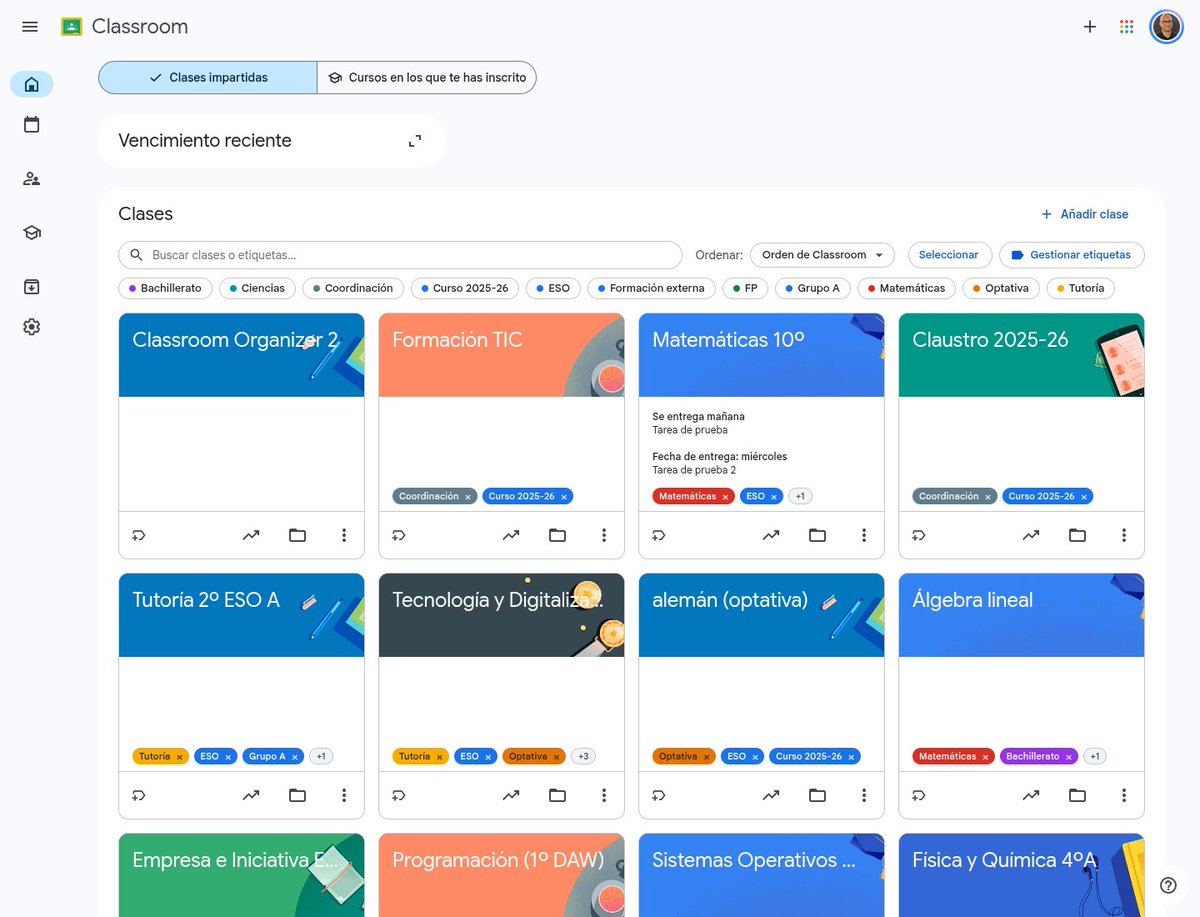
¿Tu página de Google Classroom es un caos de clases?
Te presento #ClassroomOrganizer: etiquetas, búsqueda, filtros Y/O y orden por nombre.
Idea de @eneko_fc, hermana de #NotebookLMOrganizer.
https://t.co/T5hcI9jrhY
En #BuildInPublic antes de la Chrome Web Store, ¡pruébala!
Tus alumnos juegan con la Tabla Periódica.
Tú recibes un informe en PDF de todo lo que han trabajado 📄
118 elementos, 118 cómics y 8 modos de juego, del «¿Dónde está?» a las configuraciones electrónicas.
Gratis y sin cuentas 👇
https://t.co/UO68m0RK6T
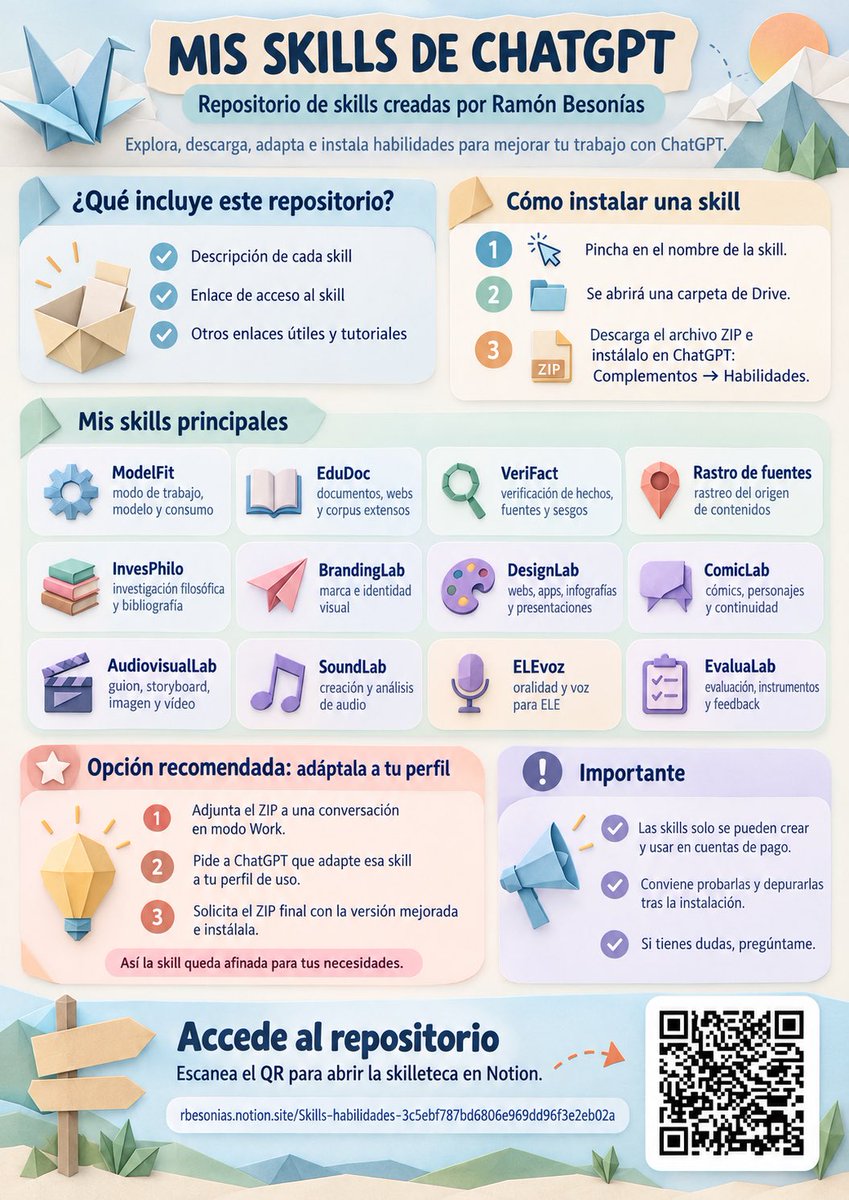
Comparto las #skills que he creado hasta ahora y que uso en mi cuenta de @ChatGPT Incluye descripción de cada skill, enlace de acceso al skill y otros enlaces útiles https://t.co/Hfysc8NFSW
In 155 AD, a Christian philosopher named Justin walked into Rome and wrote the emperor a description of what Christians actually do on Sunday.
What he described was not a prayer meeting. It was, element for element, the Catholic Mass.
A thread.
🎥 These short, sharp video explainers unpack the Learning and Memory Framework and, most importantly, what it means for what we do in the classroom.
🎯 Attention: what students attend to shapes what they learn
🏫 Environment: classroom culture creates the conditions for learning
🧠 Working Memory: the bottleneck all new learning must pass through
🤔 Remembering: retrieval strengthens learning in long-term memory
Watch the full playlist on YouTube:
https://t.co/yghmnmIVVt
In 110 AD, a man who was personally taught by the Apostle John sat down and wrote a letter about how Christians are saved.
What he wrote does not match the modern "one-time courtroom verdict" model at all.
A thread.
Algunos católicos piensan que hay que dejar la fe colgada en el perchero cuando se hace política, pero a ellos les recomendaría estudiar la Doctrina Social de la Iglesia, que para algo está.
Pero claro, algunos tienen las luces justas para echar el día…
https://t.co/xh1qpEvkuB
Every vibe coder's SEO prompt:
"Google isn't showing my vibe-coded website.
- Render it server-side.
- Generate a sitemap.
- Submit it to Search Console.
- Unblock Googlebot in robots.txt.
- Delete the noindex tags.
- Kill the redirect chains.
- Fix the 404s.
- Add canonical tags.
- Write a meta description for every page.
- One H1 per page.
- Add FAQ schema.
- Add breadcrumbs.
- Link the orphan pages.
- Alt text on every image.
- Convert images to WebP.
- Fix the layout shifts.
- Load in under 2 seconds.
- Remove the obvious AI slop.
- Add a real author bio.
- Get quality backlinks.
Rank #1 by Friday. Make no mistakes."
Funny thing is, this is actually the whole SEO checklist.
Bookmark it. Paste it into Claude Code. Then do the last two yourself.