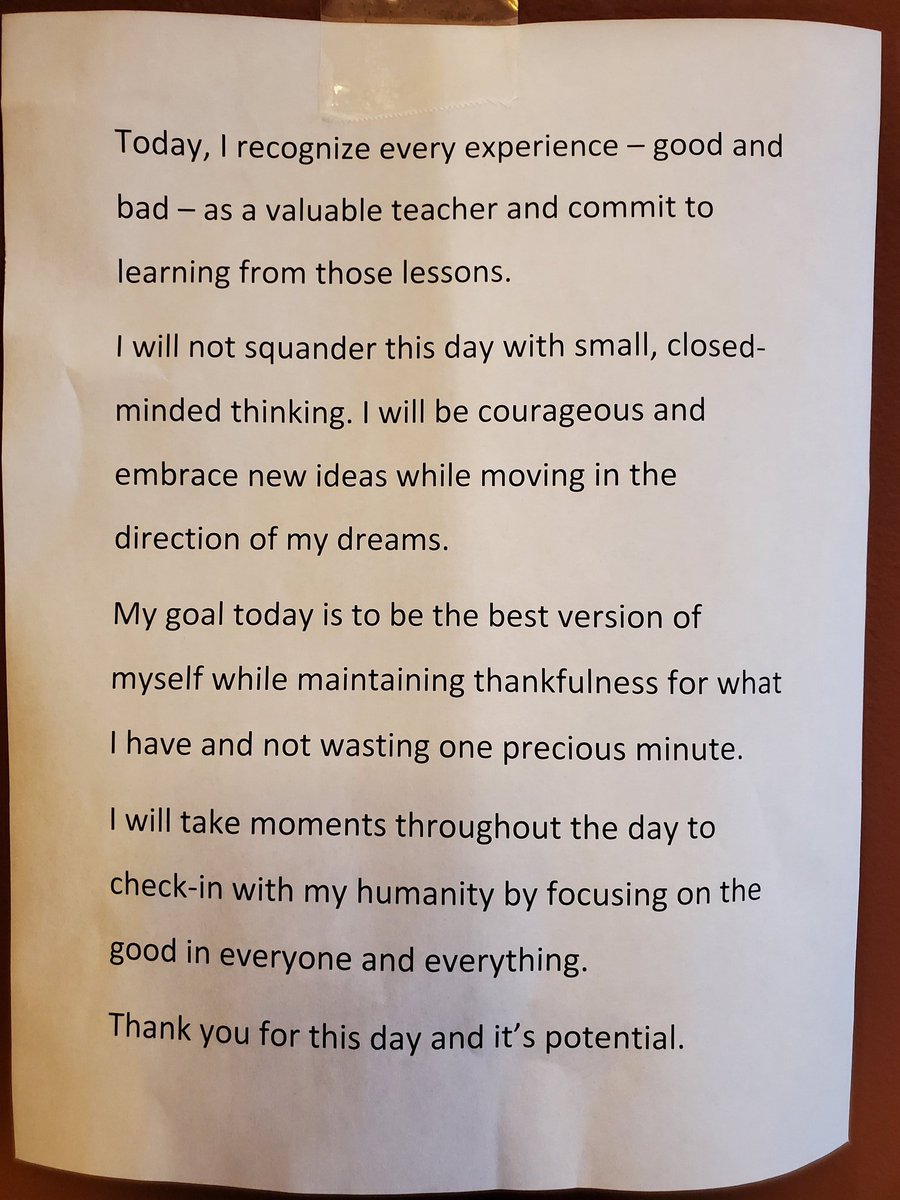
@alphatrends For me .like. is "I appreciate your work and expertise and Im grateful!'
I have sub and Im sutisfied and learning, nothing to ask in this video. All is clear as blue sky from this video
Thank you Brian🙏
A person comes to me with a spark.
I fan that spark until it becomes a flame.
I feed the flame until it becomes a fire.
I fuel the fire until it becomes a roaring blaze.
And once that fire is burning from within, they no longer need me to keep it alive.
That is the essence of great coaching. It's not about creating the spark. It's about recognizing what's already inside someone and helping them turn it into something unstoppable.
But there's a requirement.
The student must come with two things: a spark and an empty cup.
The spark is the desire, the hunger, the willingness to do whatever it takes.
The empty cup is the humility to put aside what you think you know, open your mind, and make room for new wisdom.
I can fan a spark. I can fuel a fire. I can fill an empty cup with knowledge earned through decades of experience. But I cannot ignite a fire in someone who has no desire to burn. And I cannot pour wisdom into a cup that is already full.
If you have no spark, or you are uncoached, there is nothing I can do for you except wish you luck.
https://t.co/FfBnR93ojq
With millions of people on Twitter, every day someone makes a prediction or a “market call.” And out of all those people, every day SOMEONE is going to be right.
It’s like the lottery. Every week there’s a winner—but every week the name is different.
I’ve been succeeding in the stock market for 43 years. Not because I was a natural-born trader, and certainly not because I can predict the future. It’s the result of practice, study, discipline, patience, strategy, rules, experience—and being smart enough to never allow a prediction to get in the way of my respect for risk.
My entire fortune has been built on three key rules:
1. I never buy at the bottom.
2. I always sell too soon.
3. I never hold or add to losses.
That’s how you survive long enough to build a generational fortune. And for those smart enough to heed its wisdom, this tweet is worth a fortune.
The best analogy for building wealth is rock climbing. Once you reach a new ledge, you secure it. That becomes your new foundation, and protecting it becomes part of an evolving strategy.
Each new level of wealth should trigger a reset in your mindset and a broadening of strategy. You now have more to protect and also more to work with, and the risks you take should reflect that.
That doesn’t mean you can’t be ambitious. Take big bets when the opportunity deserves it. But big bets can’t be born from what everyone else is doing and every theme has a due date. So structure those bets so that if the next climb fails, you fall back to the ledge you’ve already secured.
The entire climb can never be on the line.
I’m sure today many many people fell back many ledges, and many died falling to the ground.
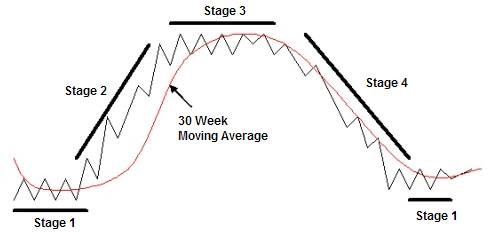
The 2008 financial crisis was the event for me that I knew Stage Analysis was what I should listen to instead of "fundamental analysis".
The problem with "fundamental analysis" is there is no plan for Stage 4. And not only is there no plan, they will likely buy more in Stage 4 because prices are going down, so the fundamentals are now better in their eyes.
With no plan for the most destructive phase in the life cycle of a stock, it sets you up for disaster.
I saw that firsthand in 2008 because back then I listed to fundamentalists who said gold would go up when everything crashed. This turned out to be completely false, but the arguments were convincing.
Unfortunately I hadn't read Stan Weinstein's book until 2008 as well, but once I saw how it was effective and the fundamentalist theories were not, then I knew I had to make the switch and not listen to them anymore.
On September 25, the S&P 500 Index closed just 0.7% below its August 13 record high. Yet only 24.5% of the stocks in the Multi-Cap universe we follow—U.S. common stocks—were above their 50-day moving averages, and only 43.1% were above their 200-day moving averages. That marked the first time since the Multi-Cap dataset began in 1981 that the S&P 500 was within 1% of an all-time high while less than 25% of stocks were above their 50-day and less than 45% were above their 200-day.
The question is: Does this mark the end of a stealth correction, or is it an erosion that is more serious longer term? It could be both. If we get more of the same in the form of a year-end rally before a bear market ultimately unfolds, we could look back at this as the writing that was on the wall.
Either way, the fact remains: breadth is very poor. That is why we have such a selective market, with the major indexes being driven by a relatively small list of capitalization-weighted names.
https://t.co/FfBnR93ojq