Filter Fund is an early-stage venture capital firm
focusing on Artificial Intelligence by targeting the issues that are transforming society and the world.
The "AI Job Apocalypse" narrative isn't new — it's the lump-of-labor fallacy with a fresh coat of paint.
@DavidGeorge83 at a16z breaks down why the doom-and-gloom predictions around AI and unemployment defy history, economics, and basic human behavior.
The tractor didn't permanently unemploy farmworkers. Electricity didn't kill factories. Excel didn't wipe out bookkeepers — it created an entire FP&A industry. Every wave of transformational technology has reorganized work, enlarged the economy, and ultimately created more jobs than it displaced.
AI will be no different.
The real story isn't substitution — it's augmentation. For every role AI threatens, there are others it supercharges. Software engineers, PMs, and knowledge workers are already seeing above-trend wage growth in AI-exposed roles. Management teams mention AI augmentation over substitution 8:1 on earnings calls.
The majority of jobs created since 1940 didn't even exist in 1940. The jobs AI creates likely don't exist yet either.
Worth the full read. 👇
https://t.co/zUXwWJSq6C
#ArtificialIntelligence #FutureOfWork #AI #Leadership #Innovation #Economics #Technology #GrowthMindset #AIAugmentation #WorkforceTransformation
@Guardrail_Tech , Inc. launched Traffic Light for Code & AI™ today. This is worth your attention. Most enterprises have no idea how much of their code is written by AI. The honest answer is most of it. And the security tools sitting between that code and your production environment were built for a world that no longer exists.
A world where humans wrote the vulnerabilities, and scanners could find them because they had seen them before. That world is gone. What replaced it is a world where AI generates code at machine speed, borrows from dozens of sources nobody has vetted, and ships into production without meaningful verification. The threats have no prior fingerprint.
The scanners have no answer. Boards and regulators are asking whether organizations can prove they were in control before something went wrong. Traffic Light for Code & AI™ is the only platform that verifies both what AI builds and who is building it. Green to proceed. Amber to review. Red for critical risk. It runs inside the tools your developers already use and returns a verdict in seconds. I have been the executive chair of Guardrail since the beginning.
What T.J. Marlin and this team built is not an incremental improvement on what came before. It is a new category at the exact moment the market realized it needed one.
That is rare. That is valuable. That is Guardrail.
It’s worth a look at their press release here, and stay connected with their journey on LinkedIn. https://t.co/i9OxmE7dZl
@FilterFundVC portfolio company @GuardrailTech , Inc.'s CEO T.J. Marlin spoke on the banking sector's exposure to #Mythos as a structural risk. Every institution running shared vendor infrastructure needs an independent review of its AI-generated code exposure. The window for "we're looking into it" is closing fast. A good read for those interested.
https://t.co/OYBJTpNkK6
The next chapter of security has begun. In an AI-driven world, cybersecurity must evolve at machine speed. @GuardrailTech
Every bank in that room is running AI-generated code that passed their existing scanners. Mythos found thousands of critical vulnerabilities in those same systems because those scanners were built for a world that predates AI-generated code.
The threat surface changed. The tools did not.
When the Treasury Secretary and the Fed Chair pull the CEOs of the five largest banks out of other meetings for an unscheduled briefing, they are legally documenting one thing: you were told.
Full piece linked below:
https://t.co/pSm25LylbB
**Meta may have just revealed the future of the workforce.**
Not in a keynote.
In their internal operating model.
Meta reportedly laid off hundreds of employees this week and is planning thousands more.
At the same time, internal targets show how aggressively the company is embedding AI into everyday work.
By **mid-2026:**
• **65% of engineers must write 75%+ of their code using AI**
• Some teams target **50–80% AI-generated code**
• Across products like Messenger, WhatsApp, and Facebook, **55% of code changes must be AI-assisted**
• **80% of mid-to-senior engineers are expected to use AI tools daily**
But the biggest shift isn’t the tools.
It’s **how employees are evaluated.**
Meta employees are now being reviewed on **“AI-driven impact.”**
No AI adoption.
No advancement.
Internally they’re even gamifying it:
• AI milestone badges through a system called **“Level Up”**
• An **AI performance assistant** that helps write reviews
• Teams reorganized into smaller **AI-native pods**
Mark Zuckerberg has said something that should make every executive pay attention:
Projects that once required **large teams** can now be handled by **one very talented person with AI.**
Read that again.
**One person replacing what used to be a team.**
---
### Why this matters
Every tech CEO watches what Meta does.
When Meta cut **11,000 jobs in 2022**, the rest of tech followed within months.
Now the new playbook appears to be:
1️⃣ Mandate AI adoption
2️⃣ Measure AI productivity
3️⃣ Reorganize teams around AI
4️⃣ Reduce headcount
Companies aren’t just adopting AI.
They’re **restructuring the workforce around it.**
Meta is investing **$100B+ into AI infrastructure this year** while simultaneously reducing staff.
Those two moves aren’t contradictory.
They’re the same strategy.
The companies that figure out how to **pair human talent with AI leverage** will move faster than those that don’t.
The question is no longer:
**“Will AI change work?”**
The question is:
**How quickly will organizations adapt?**
---
#AI #ArtificialIntelligence #FutureOfWork #Leadership #DigitalTransformation #TechLeadership #Automation #AIAdoption #Innovation #WorkplaceTransformation #FutureOfJobs #Productivity
🚨 New research just exposed the biggest weakness in AI coding.
And it’s not what you think.
Everyone keeps asking: “Will AI replace software engineers?”
But the real question might be: Can AI maintain the code it writes?
Spoiler: not really.
A new study from @Alibaba researchers tested 18 AI coding agents across 100 real-world codebases over 233-day development cycles.
Not quick fixes. Not toy problems. Real software maintenance.
The results were… brutal.
💥 75% of models broke previously working code during maintenance 💥 Only Claude Opus 4.5/4.6 maintained a >50% zero-regression rate 💥 Most models accumulated technical debt until the codebase collapsed
The problem?
We’ve been measuring the wrong thing.
Benchmarks like HumanEval ask: “Does the code work right now?”
The new SWE-CI benchmark asks a much harder question: “Does the system still work after 8 months of evolution?”
Turns out most AI agents today are Quick-Fix Artists.
They generate code that passes tests today… but becomes a maintenance nightmare tomorrow.
They’re not building software.
They’re building a house of cards.
So maybe the honest narrative is this:
AI won’t replace engineers.
It will just write the legacy code you'll spend the next decade fixing. 🤣
📄 Paper: https://t.co/bc5LjMaFKl
#AI #ArtificialIntelligence #SoftwareEngineering #Coding #Developers #Tech #MachineLearning #LLMs #AIResearch
Thrilled for our founding partner @richard_sussman
will be speaking at @361Firm Tech Summit in NYC on March 18! Join me for insights and innovation. #TechSummit#NYC
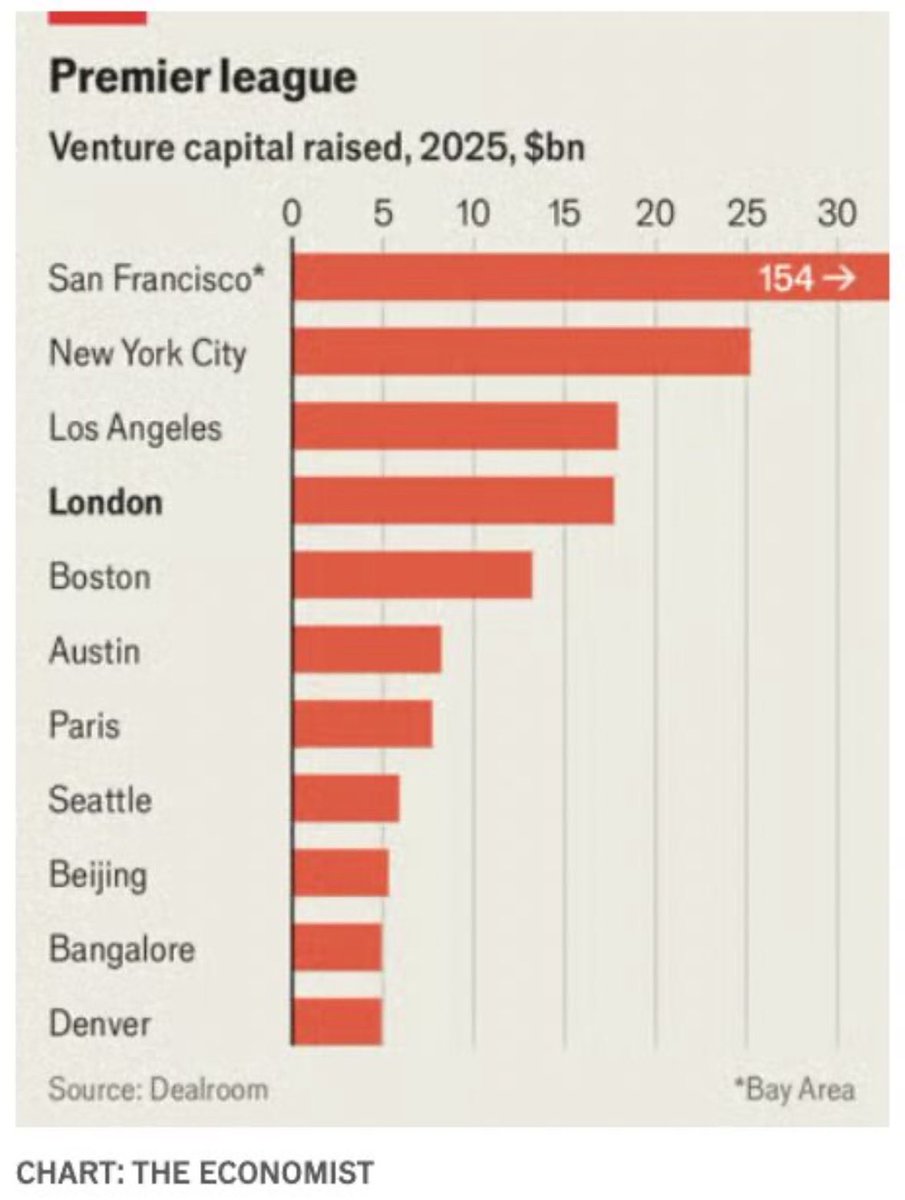
According to The Economist and https://t.co/d3VMgvjgVK, more VC money was raised in the Bay Area in 2025 than in the next ten biggest ecosystems combined (though some decent sized ecosystems, like Israel, seem to be missing from the list).
https://t.co/MQEi6BOB78
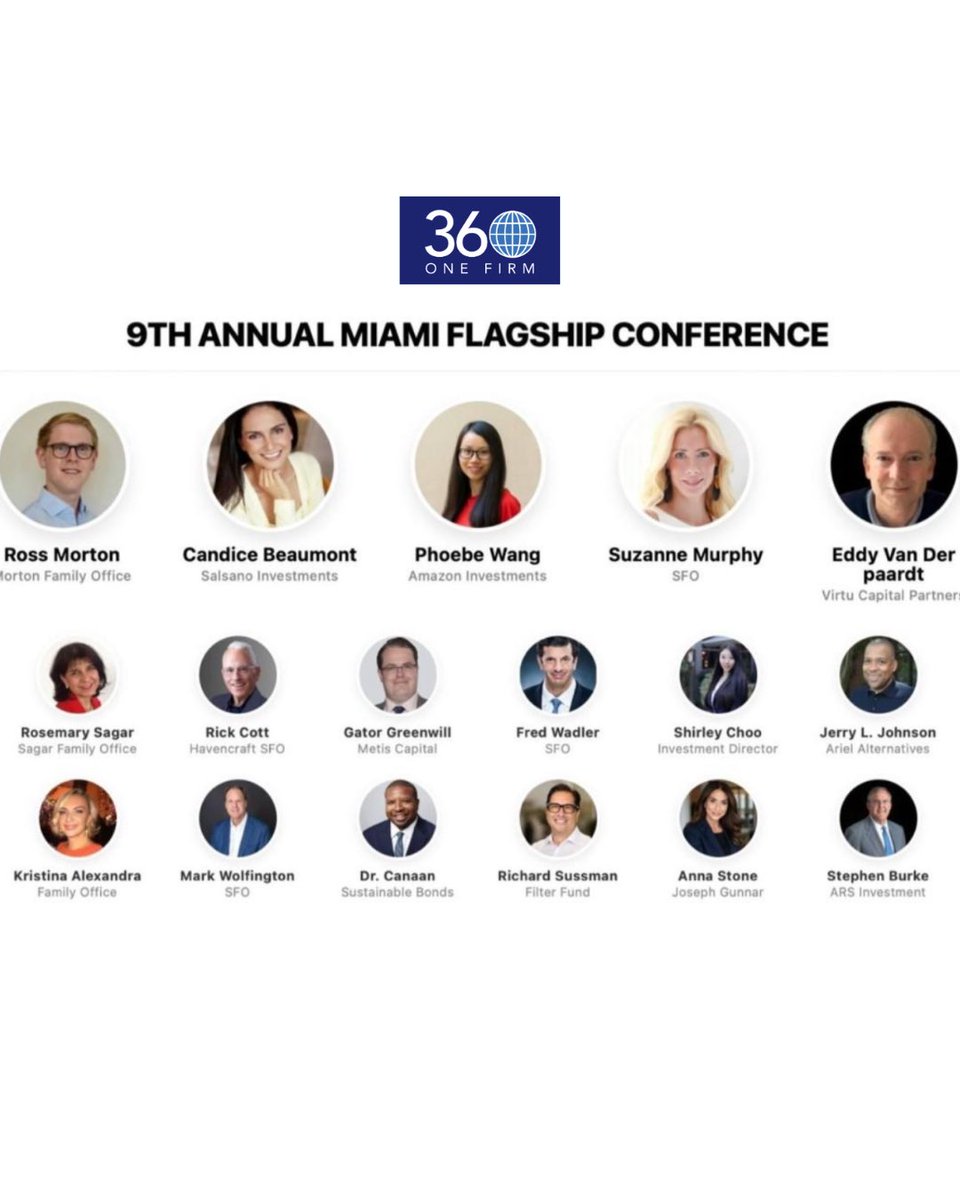
Excited to be speaking at the 360 One Firm (361Firm) Miami Flagship Family Office Conference this week along with many others to discuss many topics like Responsible AI and Innovative Health Solutions.
Quis Custodiet Ipsos Custodes?
"Who will guard the guards themselves?"
In 72 hours last week, the AI safety infrastructure collapsed.
MONDAY: Anthropic's head of Safeguards Research resigned.
"The world is in peril. I've repeatedly seen how hard it is to truly let our values govern our actions."
TUESDAY: OpenAI's VP of Product Policy was fired.
Her crime? Opposing "adult mode" and warning about child exploitation risks.
WEDNESDAY: OpenAI researcher resigned via NYT op-ed.
Her warning: ChatGPT's archive of "medical fears, relationship problems, beliefs about God" = unprecedented manipulation risk.
Also:
→OpenAI disbanded its entire "Mission Alignment" team
→ Half of xAI's founding team quit in the past year
→ Two xAI co-founders left within 24 hours
One can say that this isn't turnover, it's mutiny.
THE C-SUITE PROBLEM:
Your AI liability is becoming uninsurable.
Insurers now require:
✗ AI governance policies (most companies don't have them)
✗ Human-in-the-loop controls
✗ Restrictions on public LLMs with sensitive data
Average data breach: $4.88M. That's before AI-specific risks like model hallucinations, deepfake fraud, algorithmic bias lawsuits, and IP theft.
Personal exposure for boards and executives: → Fiduciary duty violations
→ Securities fraud
→ Negligent oversight
This is why Sarbanes-Oxley mandated independent auditors. Why the FDA exists outside pharma companies. Why financial audits aren't done by your accounting department. You can't ask the fox to guard the henhouse.
THIS IS WHY FILTER FUND INVESTED IN Guardrail Technologies
Not another AI model. An independent AI security company.
What makes them different:
✓ TRUE INDEPENDENCE — They don't build AI. They have ONE incentive: Keep yours secure.
✓ The Trust Layer™ — Context-preserving data masking, real-time monitoring, centralized governance
✓ Built for regulatory reality — Advisory board includes AI safety researchers, military leadership, and former White House and federal officials.
✓ Designed for insurance underwriting — Audit logs, policy enforcement, demonstrable governance.
Just like CrowdStrike became the independent cybersecurity layer ($80B+ market cap), Guardrail Technologies is becoming the independent AI security layer.
THE BOTTOM LINE:
The AI safety experts are fleeing. The insurers are watching.
When the people who built the safety systems are this scared, we should be too. Are we witnessing a regulatory reckoning? Or just growing pains?
👇 Drop your thoughts below.
P.S. If you're a CEO, board member, or CIO: This isn't "nice-to-have" anymore. Are you ready?
Learn more: https://t.co/QrUqFiinlI
hashtag#AI hashtag#AIGovernance hashtag#EnterpriseAI hashtag#CyberSecurity hashtag#RiskManagement hashtag#BoardGovernance
EXTREME PIZZA SPIKE - The Pentagon pizza monitor (which says big things are happening when everyone at the Pentagon is stuck in the office and start ordering pizza) has spiked 238-2,000% in the last hour.
Artificial intelligence does not change anything about the fundamental nature of sustained competitive advantage when its use is pervasive. Once #AI’s use is ubiquitous, it will transform economies and lift markets as a whole, but it will not uniquely benefit any single company. Businesses seeking to gain an innovation edge over rivals will need to focus their efforts on cultivating creativity among their employees.
Read the full article from >> https://t.co/FakHjD7voZ
This is Tehran. Let that sink in. You are watching a revolution unfold live while the world’s media stays dead silent. Legacy media has become nothing more than a propaganda machine, because what news could possibly be bigger than this?
@FoxNews@CNN https://t.co/1X5PlzQAhw
AI is no longer just a technology story.
It’s becoming market infrastructure — and policy is starting to matter in different ways across regions.
In Europe, this shift is already clear.
Frameworks like the EU AI Act directly shape which AI systems can be deployed, scaled, or monetized. Risk classification, transparency, and accountability are no longer optional — they are market gates.
In the U.S., the dynamic is different, but no less important.
Here, policy doesn’t dictate innovation.
It reassigns responsibility, defines risk boundaries, and influences the flow of capital, procurement, and enterprise adoption.
Recent @WhiteHouse AI frameworks emphasize safety, security, protection of children, respect for intellectual property, and safeguards for communities. These principles increasingly translate into enterprise requirements, public-sector standards, and board-level risk decisions.
As we move into 2026, this changes the equation.
For founders, the bar is rising beyond technical performance.
AI systems must be deployable, defensible, and trusted in real-world environments.
For investors, the mandate is clearer.
The question isn’t who builds fastest — it’s who can scale without creating regulatory, reputational, or systemic risk.
At @FilterFundVC , this is central to our thesis.
We invest in technologies that treat safety, governance, and trust as core infrastructure, not afterthoughts — because these capabilities increasingly determine durability, adoption, and long-term value.
This isn’t about slowing innovation.
It’s about innovation that survives contact with the real world — and earns the right to scale.
That’s where we choose to invest.
#ResponsibleAI #AIPolicy #LongTermValue
Disclaimer: This is not an offer to sell or a solicitation of an offer to buy any security. Investments are only available to verified accredited investors under Rule 506(c) of Regulation D.
Another interesting week in the AI race. “framework should also ensure that children are protected, censorship is prevented, copyrights are respected, and communities are safeguarded.” @GuardrailTech#responsibleAI@WhiteHouse https://t.co/y0dmN3897C
VC to F1 Driver: Why Hundredths of a Second Decide Everything
In @F1 1, the gap between #1 and #10 is often just 0.200 seconds.
That difference isn’t luck — it’s the sum of a thousand micro-optimizations: tire pressure, telemetry, pit-crew choreography, driver focus, weather prediction.
It’s the same in venture capital — and in startups.
Every founder is a driver. Every investor is part of the pit crew.
Both rely on precision, timing, and discipline to turn potential into performance.
When you watch a Formula 1 car scream down the straight, what you don’t see are the thousands of data points per second informing when to brake, when to push, when to pit.
That’s venture execution.
The best CEOs do the same — they build teams capable of making real-time, data-driven decisions under pressure.
The best startup teams operate like an F1 pit crew:
• 0.2-second coordination: aligned mission, zero ego
• Data feedback loops: testing, learning, iterating
• Situational awareness: knowing when to accelerate vs. conserve
• Precision hiring: every role matters, every hand counts
At @FilterFundVC , we invest in founders who treat speed as a system, not a slogan.
Our portfolio companies — including @GuardrailTech and several in AI infrastructure — are proof that micro-improvements in latency, compliance precision, and data quality compound into market-leading momentum.
Because at the highest levels — in racing or in venture, you don’t win by miles. You win by milliseconds.
#FilterFund #VentureCapital #F1 #Execution #Startups #AI #Leadership #PerformanceCulture #Founders
Disclaimer: This is not an offer to sell or a solicitation of an offer to buy any security. Investments are only available to verified accredited investors under Rule 506(c) of Regulation D.
Beyond the Chatbot: Mapping the Trillion-Dollar AI Ecosystem
OpenAI isn’t just a chatbot company anymore — it’s the nucleus of a $500 billion AI network linking @Microsoft, NVIDIA, @Google , Oracle, AMD, @CoreWeave , and next-gen players like Mistral AI and @grok .
A recent Bloomberg visualization maps this trillion-dollar loop of capital + compute + capability driving the AI boom:
Oracle spends billions on @nvidia chips
Nvidia commits $100 B to OpenAI
OpenAI inks $300 B in cloud deals with @Oracle@AMD powers the GPUs behind it all
AI is no longer just software — it’s infrastructure. We’ve entered the picks-and-shovels phase of the AI revolution, where chips, power grids, and cloud contracts decide who wins.
At @FilterFundVC , we view this as the Infrastructure Era of AI Investing — the stage where enduring returns come not from the next chatbot, but from the systems that make intelligence possible.
Infrastructure: GPUs, data centers, and energy grids
Platforms: Cloud orchestration & compute access
Intelligence: Foundation-model ecosystems (@OpenAI , @MistralAI , @AnthropicAI )
Trust Layers: Responsible AI, compliance, and safety infrastructure — areas where Filter Fund actively partners with emerging leaders like @Guardrail_Tech , defining the new enterprise trust layer
This map isn’t just a snapshot — it’s a blueprint for how AI is becoming the next macro asset class.
At Filter Fund, our thesis is simple: Capital is the new Compute.
#FilterFund #AI #VentureCapital #OpenAI #Nvidia #Microsoft #AIInvesting #Infrastructure #FutureOfWork #GenerativeAI #ResponsibleAI
Disclaimer: This is not an offer to sell or a solicitation of an offer to buy any security. Investments are only available to verified accredited investors under Rule 506(c) of Regulation D.
Remove media