Finance Minister Chairs CCoSOEs Meeting, Approves Key Board Appointments and Reviews Institutional Proposals
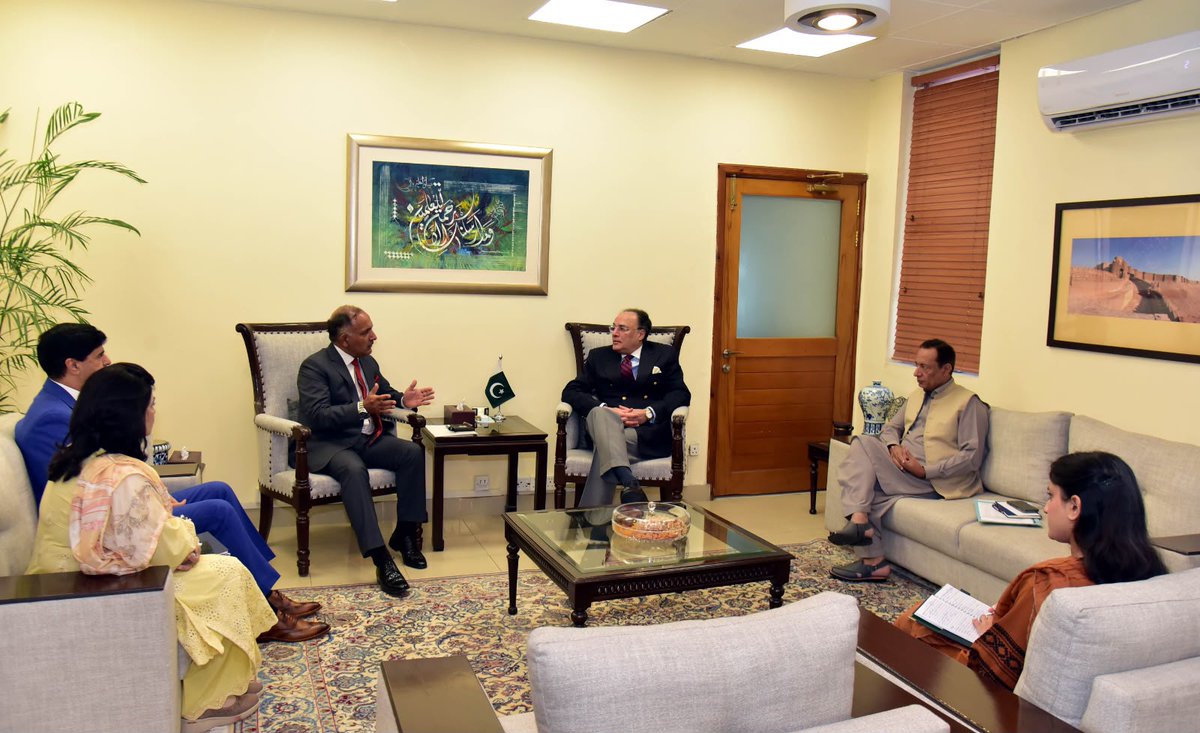
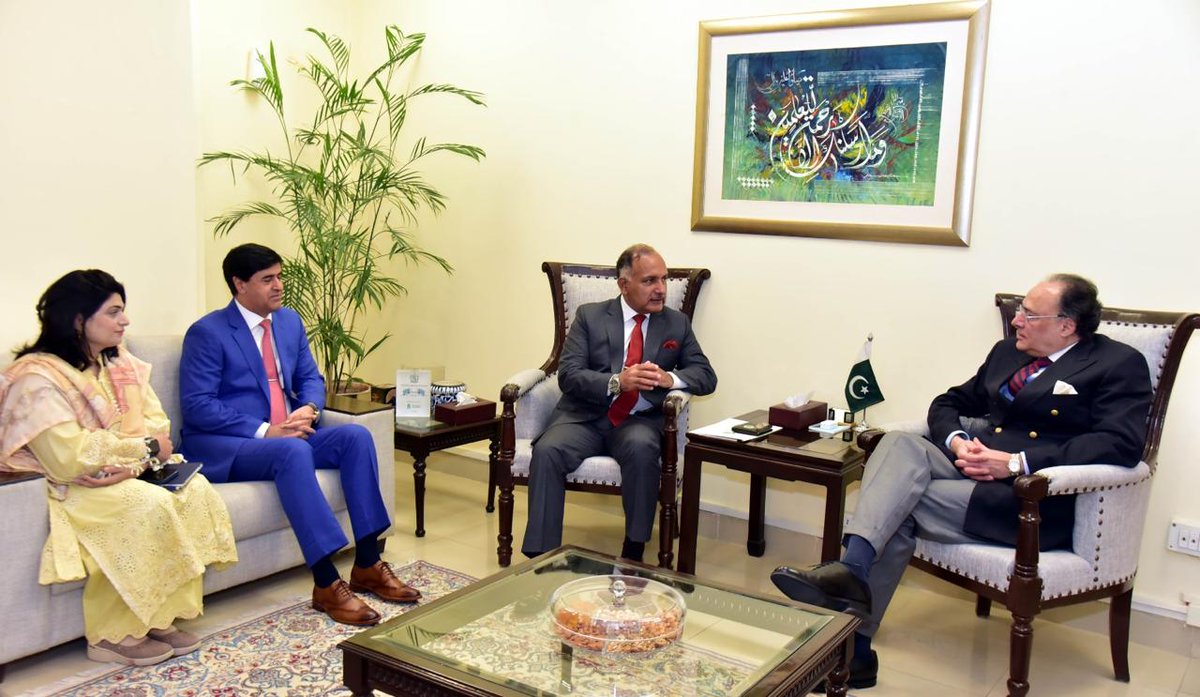
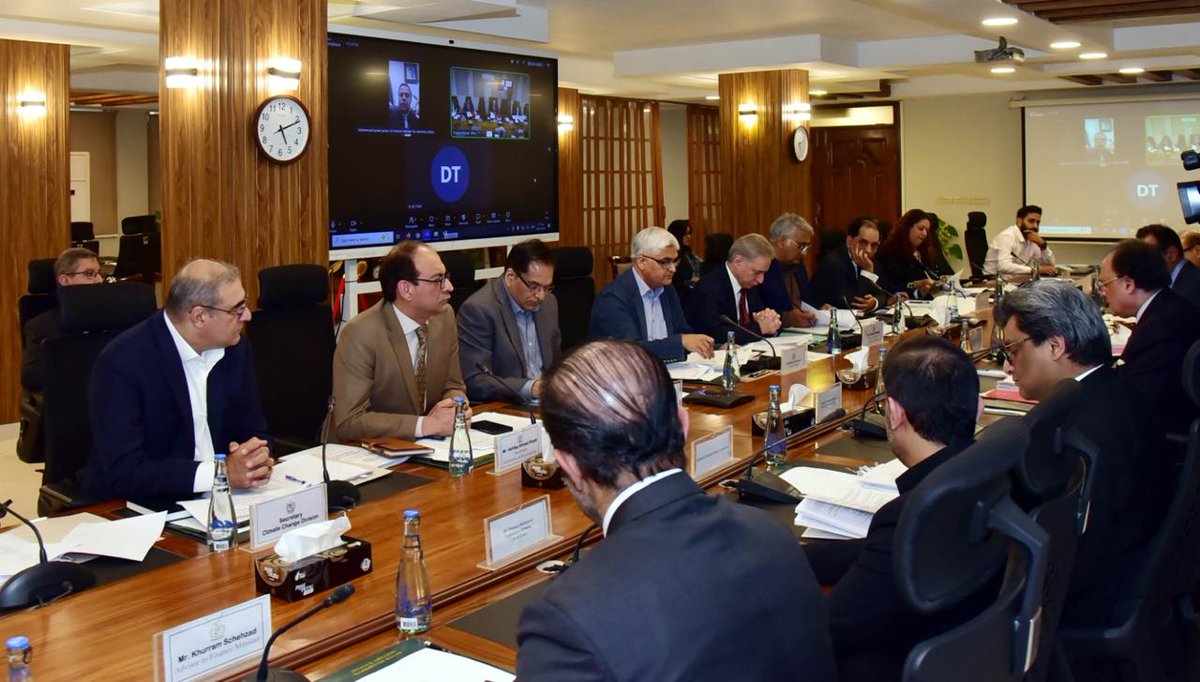
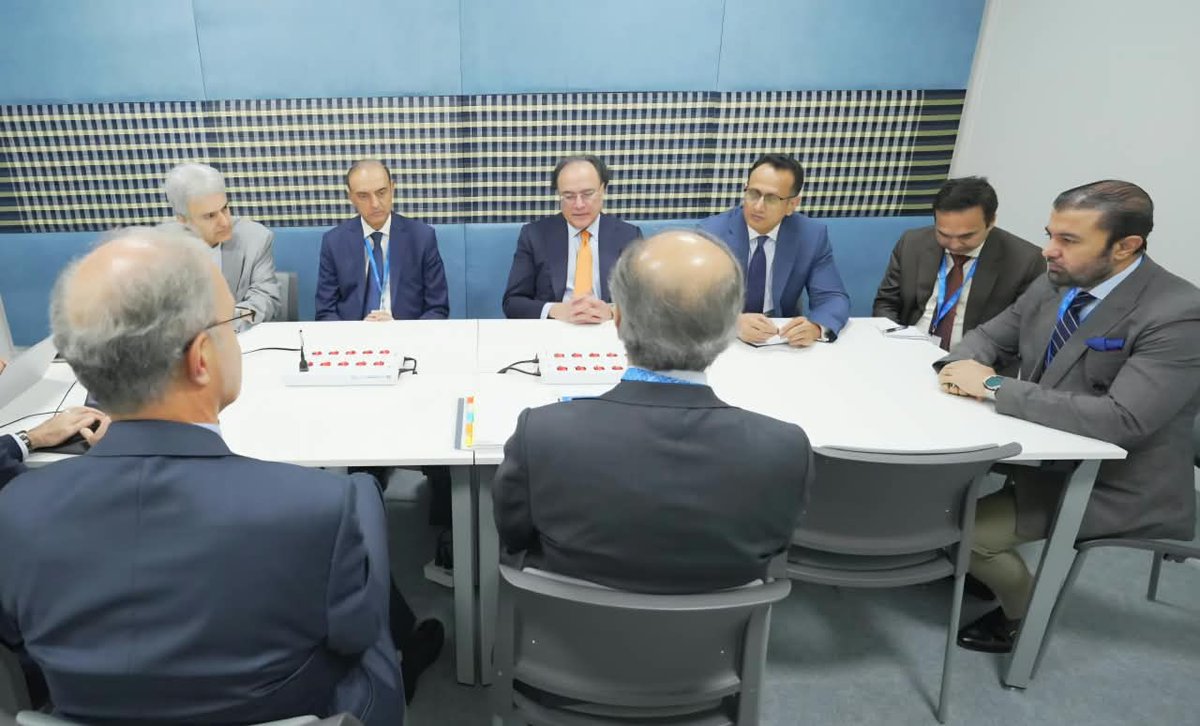
The Cabinet Committee on State-Owned Enterprises (CCoSOEs) met today at the Finance Division under the chairmanship of Federal Minister for Finance and Revenue, Senator Muhammad Aurangzeb. The meeting was also attended by Federal Minister for Maritime Affairs, Muhammad Junaid Anwar Chaudhry.
The Committee approved a summary submitted by the Petroleum Division regarding the nomination of a female Independent Director to the Board of Management of Pakistan State Oil Company Limited (PSO). It also approved the nomination of another Independent Member to the PSO Board of Management, as part of the process of reconstituting the Board following the expiry of its previous statutory term.
The Committee considered a summary submitted by the Ministry of Commerce regarding the establishment of the Pakistan Pharma Export Promotion Council as a Section 42 company under the Companies Act, 2017, under the administrative control of the Trade Development Authority of Pakistan. The Committee deferred the proposal and directed the Ministry to undertake further consultations with relevant stakeholders before resubmitting it for consideration.
On a summary submitted by the Finance Division, the Committee approved the appointment of four Independent Directors to the Board of the Strategic Digital Wallet Company, established to manage, safeguard and administer Pakistan’s sovereign virtual assets.
The Committee also approved a summary submitted by the Ministry of Climate Change and Environmental Coordination regarding the activation of the Clean Environment Fund Company under the Pakistan Environmental Protection Agency, through the appointment of two ex-officio and three Independent Directors. The Company is intended to support environmental protection, conservation, rehabilitation and improvement by facilitating the mobilisation and utilisation of resources for environmental initiatives.
Finance Minister Chairs Third Meeting on National Private Equity Framework, Directs Acceleration of Regulatory and Taxation Reforms
Committee reviews SBP regulatory measures, proposed taxation framework and investment opportunities to develop Pakistan’s private equity market
Federal Minister for Finance and Revenue, Senator Muhammad Aurangzeb, chaired the third meeting of the Committee tasked with developing the National Private Equity Framework, reviewing progress on regulatory and taxation reforms, domestic capital mobilisation and the development of investment opportunities to support a robust private equity ecosystem in Pakistan.
The Finance Minister appreciated the substantive progress achieved across key workstreams and underscored the importance of translating regulatory and policy reforms into practical investment opportunities. He emphasised the need for a transparent, commercially viable and investor-friendly framework that would help mobilise domestic savings, attract institutional investment and support private-sector-led economic growth.
The Committee reviewed the potential of Pakistan’s private equity market, including opportunities arising from acquisitions, business consolidation, new projects and exits by existing investors. Discussions highlighted the prospects of developing a substantial pipeline of investable opportunities over the next five to ten years, supported by significant domestic liquidity that could be channelled towards productive economic activity through an effective private equity ecosystem.
A key focus of the meeting was the mobilisation of domestic institutional capital, including resources available with banks, insurance companies, mutual funds, pension schemes and development finance institutions, alongside potential participation from local corporations and family offices. The Committee discussed suitable investment structures and mechanisms to facilitate the deployment of these resources into private equity funds and commercially viable businesses and projects.
The Finance Minister emphasised that mobilising domestic capital should be the immediate priority, providing the foundation for a credible and functioning private equity market capable of subsequently attracting foreign institutional investors and facilitating international co-investment.
Reviewing progress on regulatory reforms, the Committee discussed measures concerning fund structures, transparency, investment arrangements and the participation of financial institutions in private equity funds. The State Bank of Pakistan (SBP) briefed participants on recent regulatory changes, including the enhancement of the permissible investment limit for banks in a single private equity fund from 10 percent to 20 percent.
On taxation, the Committee reviewed recommendations for establishing a clear, competitive and predictable tax framework for private equity funds. Discussions included the proposed treatment of private equity funds as pass-through vehicles, with taxation applied at the investor level, as part of efforts to develop a globally competitive private equity ecosystem.
The Finance Minister stressed the importance of comprehensively evaluating relevant international taxation models and adapting them to Pakistan’s economic and regulatory environment. He emphasised that any proposed tax arrangements must support legitimate investment activity while preventing opportunities for tax arbitrage, unintended distortions or regulatory inconsistencies.
The Committee also underscored the need for a coordinated approach across regulatory and taxation authorities to ensure consistency in the treatment of different investment vehicles and facilitate the development of a well-functioning private equity market.
The Finance Minister directed relevant stakeholders to build on the progress achieved, address outstanding regulatory and taxation issues, and advance work on domestic capital mobilisation and the identification of viable investment opportunities to move the National Private Equity Framework towards implementation.
Reiterating the Government’s broader reform priorities, Senator Muhammad Aurangzeb emphasised that the development of a robust private equity ecosystem should contribute to deeper domestic capital markets, improved access to long-term risk capital, greater private-sector investment and sustainable economic growth.
The meeting was attended by the Adviser to the Prime Minister on Privatisation, the Secretary Finance, the Chairman Federal Board of Revenue (FBR), and other members of the Committee representing relevant public and private-sector institutions.
Finance Minister, Ethiopian Ambassador Discuss Trade, Bilateral Cooperation and Investment Opportunities
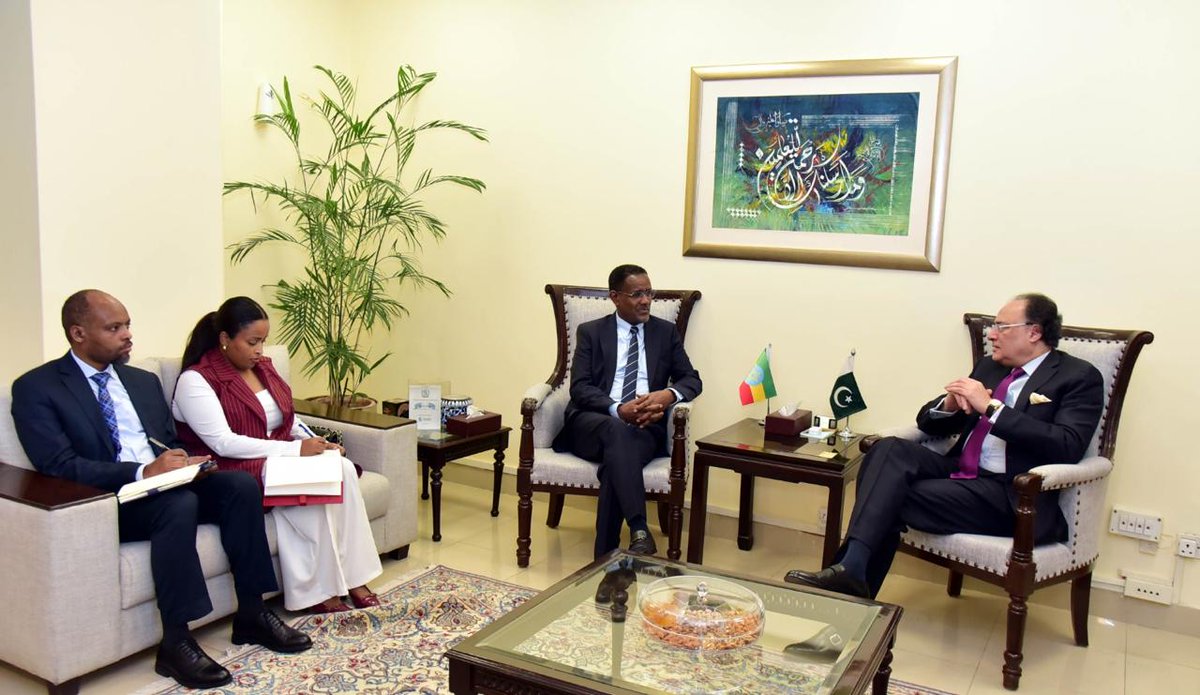
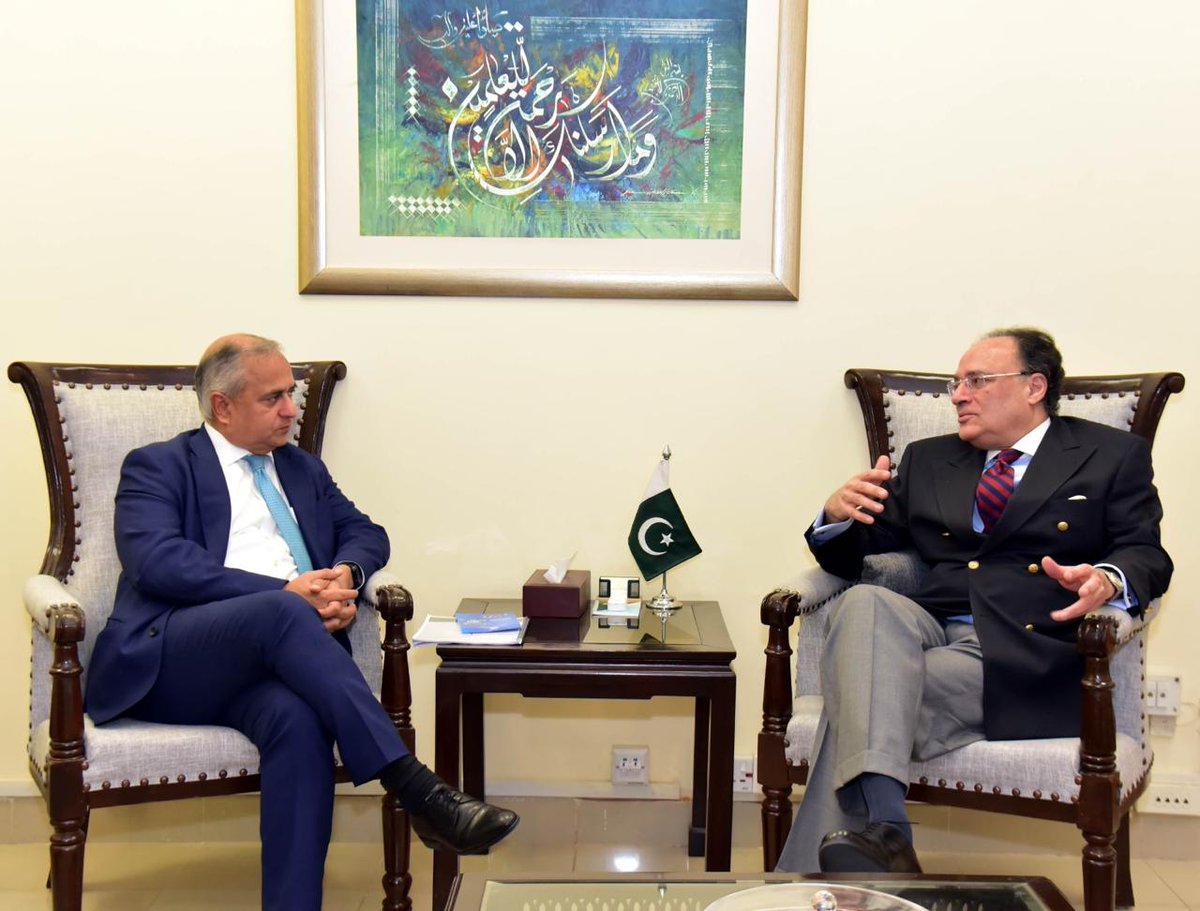
H.E. Dr. Oumer Hussein Oba, Ambassador Extraordinary and Plenipotentiary of the Federal Democratic Republic of Ethiopia to Pakistan, called on Federal Minister for Finance and Revenue, Senator Muhammad Aurangzeb. He was accompanied by Mr. Melaw Getachew, Minister Counsellor, and Ms. Kalkidan Tadesse, Political Diplomacy In-charge. The meeting discussed matters of mutual interest, including connectivity, economic and financial cooperation, trade and investment.
The Finance Minister and the Ambassador exchanged views on the economic development experiences of Pakistan and Ethiopia, highlighting similarities in their economic structures and the importance of pursuing development approaches suited to domestic conditions. They underscored the potential for sharing experiences and strengthening cooperation to support economic growth. The Finance Minister also briefed the Ambassador on the economic reforms currently underway in Pakistan, aimed at achieving lasting economic stability and laying the foundation for sustainable investment-led growth.
The discussion covered opportunities to strengthen bilateral trade and investment, with emphasis on improving financial and banking connectivity between the two countries. The Ambassador highlighted the importance of closer cooperation between the banking sectors to support greater trade and investment flows.
The Finance Minister and the Ambassador also exchanged views on regional and global economic developments, including the implications of ongoing conflicts for energy supplies, fertiliser availability and food security. They discussed the challenges that disruptions to energy and fertiliser supply chains can pose for economies, particularly in relation to agricultural production and the continuity of economic activity. The discussion underscored the importance of preparedness and cooperation in managing external shocks and safeguarding economic stability.
The two sides also discussed air connectivity between Pakistan and Ethiopia and its role in strengthening bilateral commercial and people-to-people links.
Senator Muhammad Aurangzeb reaffirmed Pakistan’s interest in strengthening economic relations with Ethiopia and expanding cooperation in areas of mutual interest. Both sides expressed their commitment to continued engagement to promote trade, investment, financial cooperation and stronger economic connectivity between the two countries.
Federal Minister for Finance and Revenue, Senator Muhammad Aurangzeb, addresses a leadership panel discussion as Chief Guest on “From Stabilization to Growth: Pakistan’s Long-Term Reform Agenda,” organized by the American Business Forum in partnership with LUMS at its campus in Lahore.
Finance Minister Chairs 11th BOA Meeting, Approves Karachi Industrial Park as Federal SEZ and Key Measures to Facilitate Industrial Investment
Federal Minister for Finance and Revenue, Senator Muhammad Aurangzeb, chaired the 11th meeting of the Board of Approvals (BOA) for Special Economic Zones (SEZs) to discuss the key measures to facilitate industrial investment, improve infrastructure provision and promote the effective utilisation of industrial land.
The Board confirmed the minutes of its 10th meeting and considered three substantive agenda items. The Board approved the application for Karachi Industrial Park (KIP) as a Federal Special Economic Zone. The proposed zone aims to attract export-oriented industrial investment, promote technology transfer and value addition, and generate employment.
The Board also approved the General Eligibility Criteria for the provision of utilities and allied services up to the designated zero point of privately established SEZs through government funding, under the SEZ Act, 2012. The criteria establish a framework for considering the provision of road access, utilities and other essential facilities at government expense on a case-by-case basis.
The Board further approved the Land Lease Policy for Public Sector SEZs and Industrial Estates in Punjab. The policy promotes industrial investment through long-term leasing, reducing upfront land costs and ensuring optimal use of public-sector industrial land, while encouraging investment in key industrial sectors and emerging industries with high export potential.
The decisions reflect the Government’s continued focus on facilitating industrialisation, improving the investment environment and strengthening the framework for Special Economic Zones. The measures are intended to support greater private-sector participation, encourage export-oriented production and ensure that public resources and industrial land are utilised effectively.
The meeting was attended by Federal Minister for Board of Investment Mr. Qaiser Ahmed Sheikh; Federal Minister for Planning, Development and Special Initiatives Mr. Ahsan Iqbal; Federal Minister for Commerce Mr. Jam Kamal Khan; Adviser to the Prime Minister on Industries and Production Mr. Haroon Akhtar Khan; and Punjab Minister for Industries, Commerce and Investment Mr. Shafay Hussain. Senior officials from the Finance Division, Board of Investment, Special Investment Facilitation Council (SIFC), Federal and Provincial Special Economic Zones Authorities, relevant federal ministries and provincial departments, as well as representatives of the relevant sectors, also attended.
Finance Minister, World Bank Discuss Pakistan’s Macroeconomic Stabilisation, Reform Agenda and Priorities for Investment-Led Growth
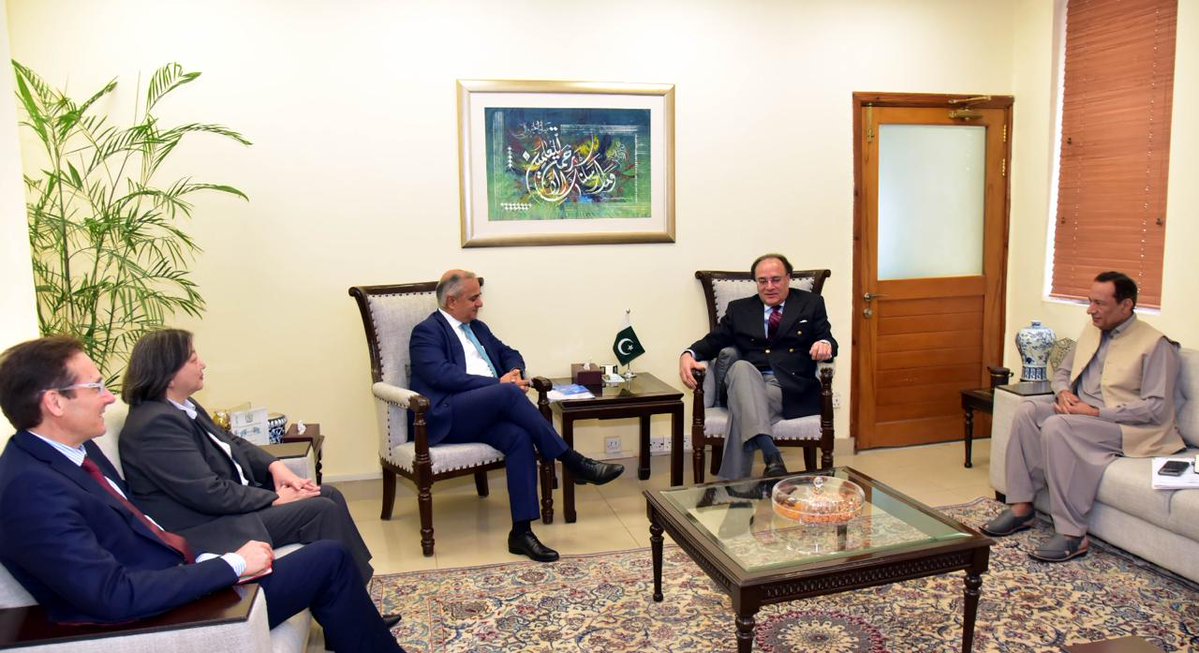
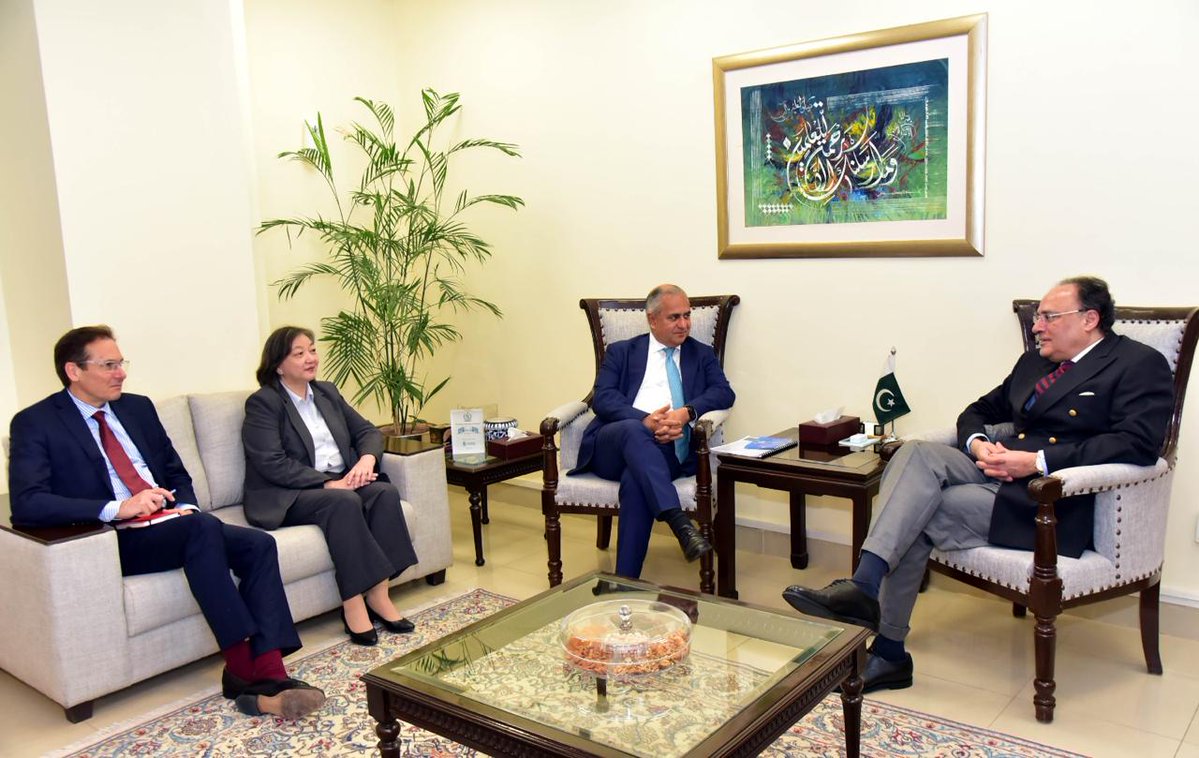
Federal Minister for Finance and Revenue, Senator Muhammad Aurangzeb, held a meeting with Mr. Sandeep Mahajan, Regional Practice Director for the Prosperity Vertical for the Middle East, North Africa, Afghanistan and Pakistan (MENAAP), World Bank, accompanied by Ms. Bolormaa Amgaabazar, Country Director, and Mr. Simon Andrews, Division Director, International Finance Corporation (IFC), to discuss Pakistan’s economic reform agenda, the transition from stabilisation to sustainable growth, and priorities for strengthening investment and private-sector activity.
Mr. Sandeep Mahajan congratulated Pakistan on restoring macroeconomic stability and commended the Government’s effective management of the recent crisis arising from regional conflict. He noted that the buffers built through stabilisation efforts and a timely policy response had helped Pakistan manage external pressures. The World Bank representatives emphasised the importance of sustaining these gains through continued reforms and effective implementation.
Senator Muhammad Aurangzeb emphasised that the Government’s priority was to make macroeconomic stability durable and translate it into sustainable growth and investment led, export led. He noted that Pakistan had regained access to international capital markets, including through its recent US$3 billion Eurobond issuance with 5 year and 10 year maturities. He also mention about ensuring a pathway for further credit rating upgrades. He highlighted the importance of building on this progress, strengthening investor confidence and improving Pakistan’s sovereign credit profile.
The Finance Minister discussed the importance of a credible transition framework that sustains fiscal discipline, addresses external-sector vulnerabilities and strengthens the foundations for private sector investment-led responsible and sustainable growth. The discussion also covered drawing on international experience in strengthening fiscal frameworks and policy credibility to manage external risks and support investor confidence.
The meeting also covered policy continuity as a key requirement for sustained economic progress. Senator Muhammad Aurangzeb noted that investment and productivity depend on a predictable policy environment and consistent implementation.
The Finance Minister and the World Bank representatives exchanged views on the Government’s growth and jobs agenda, including opportunities to strengthen private-sector investment, improve the regulatory environment and mobilise financing for infrastructure. The discussion covered privatisation, the importance of clear regulatory frameworks and credible post-privatisation arrangements, and the potential to develop infrastructure projects through appropriate financing structures and collaboration with development partners.
Both sides reaffirmed the importance of continued cooperation between Pakistan and the World Bank, with a shared focus on sustaining macroeconomic stability, advancing structural reforms, strengthening policy continuity and translating reform gains into investment, employment and improved economic opportunities for the people of Pakistan.
Finance Minister Meets Outgoing and Incoming NDMA Chairmen, Discusses Disaster Preparedness and Climate Resilience
Federal Minister for Finance and Revenue, Senator Muhammad Aurangzeb, held a meeting with Lieutenant General Inam Haider Malik, outgoing Chairman of the National Disaster Management Authority (NDMA), alongside Lieutenant General Hasan Khattak, incoming Chairman of NDMA, to discuss disaster preparedness, climate resilience and strengthening Pakistan’s capacity to manage climate-related risks.
The Finance Minister highlighted climate change and population growth as Pakistan’s two existential challenges, with far-reaching implications for economic stability, food security, communities and public finances. He noted that during the recent IMF-World Bank Annual Meetings, climate change and its implications for Pakistan featured in discussions with international partners, underscoring the importance of strengthening national preparedness and effective risk management.
Lieutenant General Inam Haider Malik briefed the Finance Minister on Pakistan’s long-range climate forecasting system, which can provide outlooks up to 12 months ahead, and ongoing efforts to further enhance its capabilities. Senator Muhammad Aurangzeb emphasized the importance of translating forecasting into timely decisions and effective early-warning measures. The discussion also highlighted the importance of integrating long-range forecasts with shorter-term monitoring by the Pakistan Meteorological Department (PMD) and other relevant agencies to ensure timely communication and action for vulnerable communities.
The NDMA leadership also outlined initiatives relating to the Global Resilience Hub and the Next Generation Technologies initiative, aimed at helping shift Pakistan from a reactive disaster-response model towards proactive, technology-driven risk reduction. These initiatives could facilitate knowledge-sharing, demonstrate Pakistan’s forecasting capabilities and support greater engagement with international partners.
The meeting highlighted the importance of building sustainable national expertise in climate science and forecasting, supported by clear institutional ownership, structured training and specialised technical personnel. The Finance Minister underscored the need to ensure continuity of expertise and strengthen institutional capacity to support long-term climate adaptation, mitigation and disaster-risk management.
Senator Muhammad Aurangzeb highlighted the importance of mobilising resources for disaster preparedness and climate resilience through effective use of domestic resources and engagement with international development partners. The discussion emphasised prioritising investments and developing practical, implementable projects to strengthen resilience, improve preparedness and deliver measurable outcomes.
The Finance Minister appreciated Lieutenant General Inam Haider Malik’s contributions during his tenure as NDMA Chairman and acknowledged the importance of institutional continuity in strengthening Pakistan’s disaster-management framework. He also conveyed his best wishes to Lieutenant General Hasan Khattak as he assumes responsibility for leading the Authority.
The meeting reaffirmed the importance of strengthening Pakistan’s capacity to anticipate climate-related risks and advance preparedness, adaptation and mitigation through effective coordination, technology and sustainable financing, protecting lives, livelihoods and the economy.
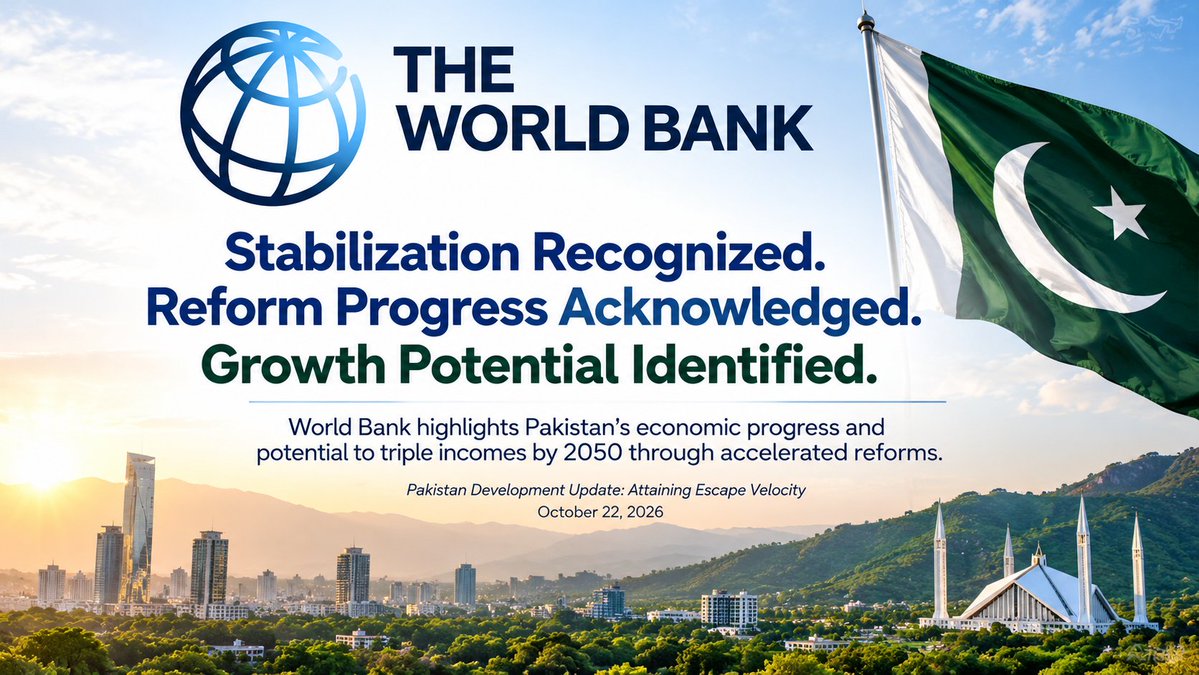
𝗪𝗢𝗥𝗟𝗗 𝗕𝗔𝗡𝗞 𝗥𝗘𝗖𝗢𝗚𝗡𝗜𝗭𝗘𝗦 𝗣𝗔𝗞𝗜𝗦𝗧𝗔𝗡'𝗦 𝗘𝗖𝗢𝗡𝗢𝗠𝗜𝗖 𝗦𝗧𝗔𝗕𝗜𝗟𝗜𝗭𝗔𝗧𝗜𝗢𝗡, 𝗥𝗘𝗙𝗢𝗥𝗠 𝗣𝗥𝗢𝗚𝗥𝗘𝗦𝗦 & 𝗣𝗢𝗧𝗘𝗡𝗧𝗜𝗔𝗟 𝗧𝗢 𝗧𝗥𝗜𝗣𝗟𝗘 𝗜𝗡𝗖𝗢𝗠𝗘𝗦 𝗕𝗬 𝟮𝟬𝟱𝟬
𝘒𝘦𝘺 𝘛𝘢𝘬𝘦𝘢𝘸𝘢𝘺𝘴 | 𝘞𝘰𝘳𝘭𝘥 𝘉𝘢𝘯𝘬'𝘴 𝘓𝘢𝘵𝘦𝘴𝘵 𝘗𝘢𝘬𝘪𝘴𝘵𝘢𝘯 𝘋𝘦𝘷𝘦𝘭𝘰𝘱𝘮𝘦𝘯𝘵 𝘜𝘱𝘥𝘢𝘵𝘦 𝘐 𝘖𝘤𝘵𝘰𝘣𝘦𝘳 𝟤𝟢𝟤𝟨
In its latest Pakistan Development Update: Attaining Escape Velocity, released today, the World Bank recognizes Pakistan's progress in restoring macroeconomic stability, strengthening fiscal discipline and advancing structural reforms, while outlining a pathway towards significantly higher growth, incomes and prosperity.
𝗪𝗛𝗔𝗧 𝗧𝗛𝗘 𝗪𝗢𝗥𝗟𝗗 𝗕𝗔𝗡𝗞 𝗦𝗔𝗬𝗦
World Bank Country Director Bolormaa Amgaabazar:
“𝙋𝙖𝙠𝙞𝙨𝙩𝙖𝙣 𝙝𝙖𝙨 𝙢𝙖𝙙𝙚 𝙧𝙚𝙖𝙡 𝙥𝙧𝙤𝙜𝙧𝙚𝙨𝙨 𝙞𝙣 𝙧𝙚𝙨𝙩𝙤𝙧𝙞𝙣𝙜 𝙨𝙩𝙖𝙗𝙞𝙡𝙞𝙩𝙮, 𝙖𝙣𝙙 𝙢𝙖𝙧𝙠𝙚𝙩𝙨 𝙝𝙖𝙫𝙚 𝙩𝙖𝙠𝙚𝙣 𝙣𝙤𝙩𝙞𝙘𝙚.”
𝗞𝗘𝗬 𝗘𝗖𝗢𝗡𝗢𝗠𝗜𝗖 𝗔𝗖𝗛𝗜𝗘𝗩𝗘𝗠𝗘𝗡𝗧𝗦 𝗥𝗘𝗖𝗢𝗚𝗡𝗜𝗭𝗘𝗗
- 𝗘𝗰𝗼𝗻𝗼𝗺𝗶𝗰 𝗚𝗿𝗼𝘄𝘁𝗵 𝗔𝗰𝗰𝗲𝗹𝗲𝗿𝗮𝘁𝗲𝘀: GDP growth rises to 3.7% in FY26, from 3.2% in FY25, despite global and regional shocks.
- 𝗥𝗲𝗰𝗼𝗿𝗱 𝗙𝗶𝘀𝗰𝗮𝗹 𝗣𝗲𝗿𝗳𝗼𝗿𝗺𝗮𝗻𝗰𝗲: Primary fiscal surplus reaches 2.9% of GDP, supported by stronger revenues and expenditure discipline.
- 𝗘𝘅𝘁𝗲𝗿𝗻𝗮𝗹 𝗕𝘂𝗳𝗳𝗲𝗿𝘀 𝗥𝗲𝗯𝘂𝗶𝗹𝘁: Strong remittances support the rebuilding of foreign exchange reserves.
- 𝗦𝗼𝘃𝗲𝗿𝗲𝗶𝗴𝗻 𝗥𝗮𝘁𝗶𝗻𝗴𝘀 𝗨𝗽𝗴𝗿𝗮𝗱𝗲𝗱: S&P and Moody's upgrades reflect improving international market confidence.
- 𝗚𝗹𝗼𝗯𝗮𝗹 𝗠𝗮𝗿𝗸𝗲𝘁 𝗔𝗰𝗰𝗲𝘀𝘀 𝗥𝗲𝘀𝘁𝗼𝗿𝗲𝗱: Pakistan returns to international debt markets through a US$3 billion Eurobond issuance.
𝗦𝗧𝗥𝗨𝗖𝗧𝗨𝗥𝗔𝗟 𝗥𝗘𝗙𝗢𝗥𝗠𝗦 𝗔𝗖𝗞𝗡𝗢𝗪𝗟𝗘𝗗𝗚𝗘𝗗
The World Bank specifically highlights:
- 𝗘𝗻𝗲𝗿𝗴𝘆 𝗦𝗲𝗰𝘁𝗼𝗿 𝗥𝗲𝗳𝗼𝗿𝗺𝘀: Energy subsidies decline from 1.1% of GDP in FY25 to 0.8% in FY26.
- 𝗧𝗿𝗮𝗱𝗲 𝗟𝗶𝗯𝗲𝗿𝗮𝗹𝗶𝘇𝗮𝘁𝗶𝗼𝗻: Continued implementation of the National Tariff Policy.
- 𝗣𝗿𝗶𝘃𝗮𝘁𝗶𝘇𝗮𝘁𝗶𝗼𝗻 𝗥𝗲𝗳𝗼𝗿𝗺𝘀: Recent privatization of Pakistan International Airlines (PIA), alongside efforts to reduce the state's footprint in the economy.
These reforms provide important foundations for stronger investment and sustained private-sector-led growth.
𝗧𝗛𝗘 𝗚𝗥𝗢𝗪𝗧𝗛 𝗢𝗣𝗣𝗢𝗥𝗧𝗨𝗡𝗜𝗧𝗬
- 𝗛𝗶𝗴𝗵𝗲𝗿 𝗚𝗿𝗼𝘄𝘁𝗵 𝗣𝗼𝘁𝗲𝗻𝘁𝗶𝗮𝗹: Accelerated structural reforms could unlock sustained annual economic growth of 6.2–6.9%.
- 𝗜𝗻𝗰𝗼𝗺𝗲𝘀 𝗖𝗼𝘂𝗹𝗱 𝗧𝗿𝗶𝗽𝗹𝗲 𝗯𝘆 𝟮𝟬𝟱𝟬: With ambitious and sustained reforms, Pakistan could substantially increase per capita incomes, potentially reaching Viet Nam's current income level by 2050.
The opportunity is substantial, with the World Bank underscoring the importance of sustained reform momentum, stronger institutions and greater private-sector investment to unlock higher economic growth, accelerate per capita income gains, create productive jobs and translate macroeconomic stability into lasting prosperity.
@WBG_Pakistan@WorldBank@Financegovpk@PakPMO@GovtofPakistan@MoIB_Official@WorldBankGroup@WBGPubs
#PakistanEconomy #WorldBank #EconomicReforms #MacroeconomicStability #SustainableGrowth #Investment #Pakistan
Ministry of Finance and IMF to Convene High-Level Workshop on “Reforms for a Modern and Growth-Friendly Tax System in Pakistan”
The Ministry of Finance and the International Monetary Fund (IMF), are convening a two-day high-level workshop on “Reforms for a Modern and Growth-Friendly Tax System in Pakistan” on October 20–21, 2026, in Islamabad. The workshop will bring together senior government officials, representatives of the IMF and World Bank, international tax experts, academics and private-sector leaders to discuss priorities for modernising Pakistan’s tax system and strengthening its contribution to sustainable economic growth.
The workshop will feature six substantive sessions covering taxation and economic growth, modernisation of Pakistan’s tax system, a unified sales tax regime across the federation and provinces, a simpler and more neutral income tax system, tax administration, digitalisation and taxpayer trust, and fiscal federalism and provincial tax revenues. Discussions will focus on developing a broader, fairer, simpler and more predictable tax system that supports revenue mobilisation, investment, business expansion and productivity.
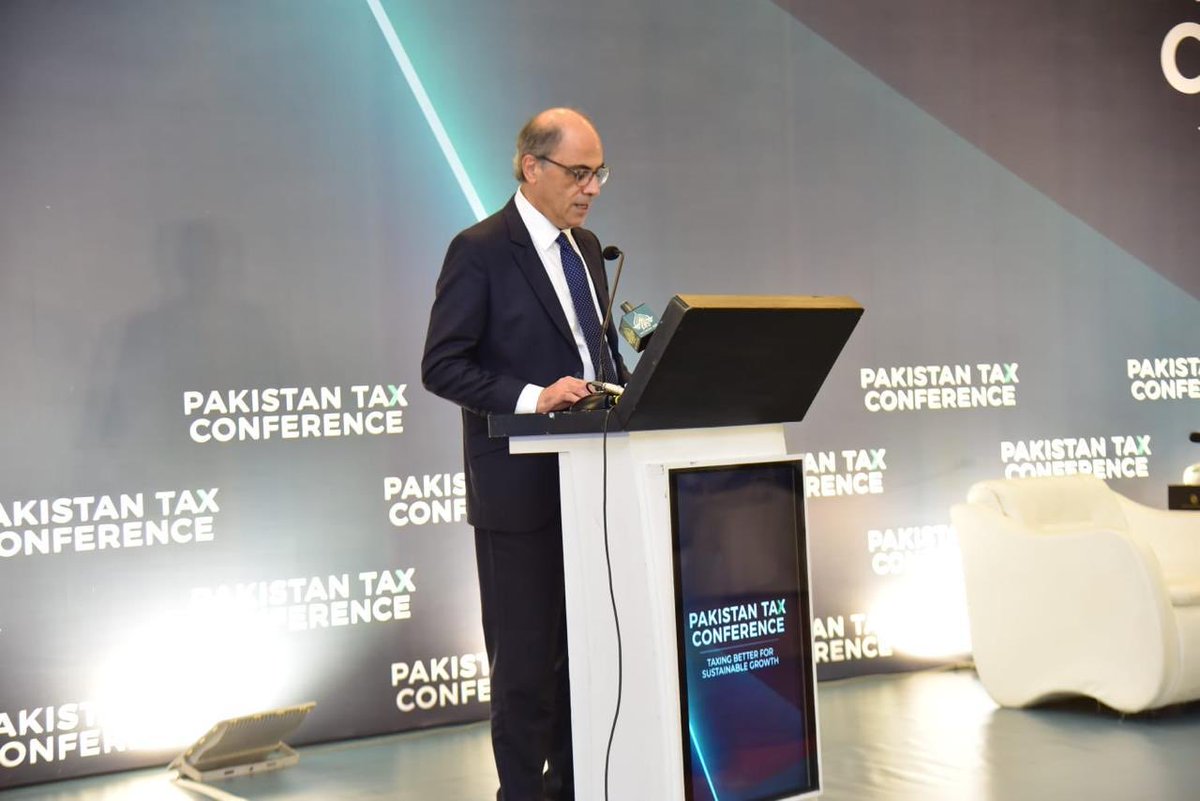
Federal Minister for Finance and Revenue, Senator Muhammad Aurangzeb, delivered the opening remarks alongside Mr. Jihad Azour, Director of the IMF’s Middle East and Central Asia Department and Rodrigo Valdés, Director of the IMF’s Fiscal Affairs Department. During the two-day workshop, discussions will focus on following key areas, including “Taxing Better to Boost Growth,” “The Case for Modernizing Pakistan’s Tax System,” “Designing and Implementing a Unified Sales Tax Regime across the Federation and Provinces,” “Toward a Simpler and More Neutral Income Tax System,” and “Aligning Tax Administration with Best Practices: Digitalization, Compliance and Taxpayer Trust,” and will conclude with “Fiscal Federalism and Provincial Tax Revenues.”
The workshop will conclude with a high-level panel to consolidate recommendations, identify priority next steps and establish modalities for continued engagement among stakeholders. The initiative underscores the Government’s commitment to tax reforms for a more efficient and growth-friendly tax system.
Federal Minister for Finance and Revenue, Senator Muhammad Aurangzeb, speaking at the workshop on “Reforms for a Modern and Growth-Friendly Tax System in Pakistan,” organised by the Ministry of Finance and Revenue in collaboration with the IMF.
Please see the attached clarification by the Ministry of Finance on misleading claims regarding central government debt, setting out the factual position.
Finance Minister Chairs Meeting on Gas Sector Reforms, Reviews Restructuring and Deregulation Roadmap
Federal Minister for Finance and Revenue, Senator Muhammad Aurangzeb, chaired a high-level meeting to review the proposed restructuring and deregulation roadmap for Pakistan’s gas sector, focusing on financial sustainability, operational efficiency, consumer welfare and greater private-sector participation.
The proposed reforms aim to establish a financially sustainable, efficient and competitive gas market that supports businesses, encourages private investment and protects consumer welfare. The meeting discussed a phased transition towards greater competition, supported by effective regulation, improved operational performance and a more sustainable approach to gas pricing and supply.
Participants reviewed key sectoral challenges, including circular debt, cross-subsidies, unaccounted-for-gas (UFG) losses and supply-demand imbalances. Discussions focused on addressing legacy liabilities, improving the financial viability of gas utilities and ensuring that existing financial pressures do not undermine the proposed market structure or place an undue burden on consumers. A sustainable resolution of legacy circular debt and a clear approach to address cross-subsidies were identified as important to the viability of restructured entities and the transition to a competitive market.
The meeting also discussed the expected outcomes of the reform framework, including enhanced energy security, increased private-sector investment, reduced fiscal and sovereign risks, greater business-to-business transactions, more stable and sustainable gas pricing, improved access to competitively priced gas for exporters, and lower system losses through stronger efficiency benchmarks and performance-based incentives.
The Finance Minister emphasised the importance of aligning all stakeholders around a practical and implementable reform architecture. The proposed framework draws on international experience, including gas-sector reforms in Türkiye and the United Kingdom, while taking into account Pakistan’s institutional structure, market conditions and consumer interests. Participants also stressed the need for careful sequencing to safeguard security of supply, protect regulated consumers and create a predictable environment for private-sector participation.
The proposed framework will be presented to the Prime Minister, following which further technical work and stakeholder consultations will help refine the reform approach and support an orderly transition.
The meeting reaffirmed the Government’s commitment to advancing gas-sector reforms in a phased and consultative manner to strengthen financial sustainability, improve operational efficiency, attract investment and develop a more competitive gas market while safeguarding consumer interests.
The meeting was attended by the Federal Minister for Petroleum, the Adviser to the Prime Minister on Privatisation, the Special Assistant to the Prime Minister on Energy, senior officials from the Petroleum and Finance Divisions, representatives of gas utilities and the World Bank team.
Good to meet Pakistan’s Finance Minister Muhammad Aurangzeb.
Jobs are the foundation of prosperity.
We discussed how @UNDP’s new Investment Accelerator and Jobs for Prosperity flagship initiatives can help turn financing into investment, support small businesses and farmers, and create more and better jobs.
#IMFMeetings #WBGMeetings
Finance Minister Holds High-Level Engagements on Development Financing, Capital Markets and Economic Resilience
Federal Minister for Finance and Revenue, Senator Muhammad Aurangzeb, held a series of engagements with international development partners, financial institutions and the International Monetary Fund (IMF) to discuss development financing, sovereign debt management, capital market access, investment opportunities and Pakistan’s economic resilience amid regional and global uncertainty.
In a meeting with Mr. Alexander De Croo, Administrator of the United Nations Development Programme (UNDP) and UN Under-Secretary-General, the Finance Minister discussed development financing, climate resilience and employment generation. He emphasized the need to strengthen implementation capacity to translate available financing and policy frameworks into bankable projects. Both sides discussed UNDP’s Implementation Bridge, developing an investable pipeline through the SDG Investment Fair and V20 platform, and exploring integrated financing, blended finance, public–private partnerships and closer UNDP–World Bank cooperation. Discussions also covered biodiversity financing and potential debt-for-nature and debt-for-climate swaps, taking into account Pakistan’s external debt composition. The Finance Minister highlighted private-sector-led job creation, expanding cash flow-based lending, digital finance and guarantees for small businesses and farmers. Opportunities for cooperation on climate risk insurance, including the Global Shield and parametric insurance, were also explored.
The Finance Minister met delegations from Sharjah Islamic Bank, Abu Dhabi Commercial Bank (ADCB), Ajman Bank and J.P. Morgan to discuss Pakistan’s economic outlook, financing requirements and investment opportunities. He highlighted progress under the IMF programme, fiscal consolidation, stronger foreign exchange reserves, improved sovereign credit ratings and restored access to international capital markets. He reaffirmed the Government’s commitment to macroeconomic stability, structural reforms and sustainable, export-led growth.
Discussions with the financial institutions covered prospective Sukuk issuances, rupee-denominated dollar-settled instruments, further Panda Bond issuance and possible Eurobond tokenization. The Finance Minister emphasized the importance of replacing costly short-term debt, extending maturities and reducing repayment concentrations without increasing overall external debt. The engagements also covered MIGA-backed financing, the impact of rising global funding costs, and opportunities for restored Pakistan credit limits, participation in ITFC financing, IFC-supported transactions, rupee financing and potential loan conversions. Sharjah Islamic Bank reaffirmed its support and readiness to participate in a Sukuk issuance, while the Finance Minister welcomed the institutions’ interest in advising on future financing transactions.
The meetings also explored investment opportunities in refinery upgrades, power distribution privatization, airport outsourcing, electricity transmission and the Main Line-I (ML-1) railway project. Potential financing for data centres and digital finance was discussed, including the importance of competitive electricity pricing and an effective regulatory framework. The Finance Minister also highlighted opportunities to expand lending to businesses, small and medium-sized enterprises and agriculture, and to develop capital market benchmarks through financial institution issuances. In discussions with J.P. Morgan, both sides reviewed Pakistan’s ambition to enter the BB sovereign rating category, with the bank offering analytical support on relevant indicators and institutional improvements. The discussion also covered investor engagement, private-placement underwriting support, an opportunistic approach to international issuance amid global interest-rate risks, and potential debt swaps, credit-enhancement mechanisms and secured financing.
In his meeting with Mr. Jihad Azour, Director of the IMF’s Middle East and Central Asia Department, the Finance Minister reviewed Pakistan’s economic performance and reform progress, including revenue mobilization, inflation, growth and the current account. Both sides discussed Pakistan’s resilience despite regional conflict and its implications for the economy. The Finance Minister outlined measures relating to energy procurement and winter preparedness and highlighted adequate fertilizer supplies to safeguard food security.
The discussion also covered stronger foreign exchange reserves, reduced forward foreign exchange liabilities, longer debt maturities and lower external repayment requirements. Finance Minister Senator Muhammad Aurangzeb reaffirmed the Government’s commitment to sustaining primary surpluses, reducing public debt and advancing growth-friendly tax reforms while protecting social spending. Both sides discussed privatization, greater private-sector participation and export-oriented growth as important elements of economic resilience and improved creditworthiness. They emphasized the importance of maintaining reform momentum, political commitment and effective communication, underscoring the link between economic stability and national security.
On the sidelines of the Annual IMF-WORLDBANK meetings, the Finance Minister also interacted with international media, highlighting Pakistan’s economic stabilization, resilient remittance inflows, investment opportunities and progress under the IMF programme.
Finance Minister Discusses Economic Performance and Reforms with IMF Middle East and Central Asia Department Director
Federal Minister for Finance and Revenue, Senator Muhammad Aurangzeb, met with Mr. Jihad Azour, Director of the IMF’s Middle East and Central Asia Department, to discuss economic performance and reforms.
Both sides reviewed progress on revenues, inflation, growth and the current account, noting Pakistan’s resilience despite regional conflict. They outlined energy procurement and winter preparedness measures, alongside adequate fertilizer supplies to safeguard food security.
Discussions covered stronger reserves, reduced forward foreign exchange liabilities, longer debt maturities and lower external repayment requirements. The Finance Minister reaffirmed the commitment to sustaining primary surpluses, reducing public debt and advancing growth-friendly tax reforms while protecting social spending.
Both sides discussed privatization, greater private-sector participation and export-oriented growth to strengthen resilience and creditworthiness. They stressed maintaining reform momentum, political commitment and effective communication, underscoring the link between economic stability and national security.