Delay small pleasures.
You don’t have to eliminate your sources of pleasure. What I’m recommending here is postponing it for a little longer.
Finish your important work before opening social media. Take your walk before watching television.
Write that post before checking your messages.
Doing these things trains your brain to value long-term rewards over instant comfort.
Psychologist Walter Mischel became famous for the marshmallow test, which explored delayed gratification. Later research proved that the ability to delay gratification continues to play an important role in self-control and the pursuit of goals.
The habit is a simple step to do what you must daily.
Do the important thing first.
Enjoy the reward later.
The What Vs. The Why
Kathryn Khulman told the story of how she would watch her mother do the laundry painstakingly every Saturday morning when she was twelve years old. She said her mother was a hardworking housewife who had to cook, do the dishes, do the laundry, and every other household chore, while her father was a very hardworking man who worked from sunup till sundown to ensure that the family had enough to eat and pay the bills.
One Saturday morning, her mother had stacked up laundry as usual, preparing to wash it when they heard a knock at the door. Upon opening the door, there was a messenger with information about a sick relative who had been admitted to a hospital in the city and needed some level of care.
This means her mother had to abandon the task at hand and switch to preparing apple pie and other meals to take to the hospital for the sick relative.
She said she assisted her mother in the kitchen as much as she could until she left for the hospital
The moment her mother left the house for the hospital, a thought struck her mind.
“Will my mummy have to come back to do all the laundry after working so hard, cooking, and going all the way to the hospital to visit a relative? Wouldn’t that be too much stress for one woman? My mummy would need to rest when she comes back; she does not need more work. Maybe I should help her do the laundry so that when she comes, she can just rest her legs and sleep.”
Convinced that she could be of help in her own little way, Kathryn said, she took it upon herself to do the laundry.
It was not as easy as she had imagined.
She was at it all day until her mother returned from the hospital that evening.
She said that when her mother saw what she had done, her mother hugged her and thanked her profusely.
She said she was so tired from doing the laundry that she was barely able to eat dinner before sleeping off.
Later that night, she woke up to hear her mother crying on the sofa while her father gently held her on the sofa and consoled her
She said she thought something terrible had happened, something like the death of the relative her mother went to visit at the hospital.
So she listened intently to her parents’ conversation and realised her mother was weeping because the entire laundry had been ruined.
She didn’t sort the clothes and wash them according to their materials and colours as her mother would have done. She lumped everything together, soaked and washed them as best as she could, and some of the clothes with poor dye had bled into other clothes and ruined every item of clothing.
She said her mother never said a word to her about it, and neither did her father.
She saw how ruined the clothes on the lines were and went to her mother to apologise
She said her mother’s words to her were “Bless your heart, my baby, you cared and were only trying to do the right thing.”
The story taught me a lot about how to judge human actions fairly.
The Bible said, “Cain offered his grains unto the Lord, but his offering was not accepted. Abel offered his offering unto the Lord, and it was accepted. Cain got angry at his brother for being accepted while he was not. He began to fume and rage in his house. God came to him and said, “Cain, what are you doing? The raging and fuming you are engaging in can only lead you down the wrong path. You will end up making the wrong decision borne of erratic emotion; sin is crouching at your door. Let this matter rest.”
Cain didn’t.
Cain then planned how to kill his brother
He knew his brother always took a route to the fields with his animals daily
He went to lie in wait for his brother and then struck him on the head until he died on the same route.”
This was murder (Genesis 4:1-16)
The Bible said the Soldiers of Israel under the leadership of their General, Abner, and the Soldiers of Judah under the leadership of their General Joab engaged in a fierce battle. The battle started out as a competition of sorts, but things got out of hand at some point. Joab’s young cousin, Asahel, decided to take on the General of Israel’s Army head-on.
Asahel was young and inexperienced in the art of warfare
Abner was a very experienced warrior who had seen many battles
It was an uneven match
Asahel had speed and youth on his side, but Abner had experience and skill on his side
On several occasions, Abner told Asahel to turn back and find another soldier to engage or return home
Asahel, however, felt the warning was because Abner was afraid of him, so he kept on pursuing Abner
When Abner realised he would have to engage Asahel in order to survive, he did so and killed Asahel
There were many witnesses who saw what happened.
This was self-defense. (Full Story in 2 Samuel 2)
David slept with Uriah’s wife, got her pregnant, and then wrote a letter instructing Joab to put Uriah in the battle front (Murder)
Abner met with David to negotiate a surrender of the Israeli Army
Joab arrived at David’s camp and was told Abner had negotiated a surrender and had just left the camp
Joab rode after Abner and lied to him that David sent him to deliver a message to Abner in Secret
Abner followed him to a secret place, and Joab struck him with a knife (Murder)
In all the instances cited above, someone killed someone, but it was the motive that determined whether it was murder or self-defence.
It is always the motive that must be judged, regardless of the action or inaction
We judge actions, too, because they have consequences.
A mindless behaviour like driving while drunk is judged because of the harm such an action could do to others, regardless of whether the drunk person wanted to kill or was just driving home
Not locking the gates of the city out of nonchalance will be judged if thieves or enemies invade the city because someone didn’t do his or her duty
A spouse not sleeping with the better half because he or she wanted to punish him or her, and a spouse not sleeping with the better half because he or she didn’t want to contract an STD, cannot be judged the same way
Motive is always key.
“Why” is always more important than “What”.
It is the “What” that always leads to the investigation of the “Why”.
PS: Today, we celebrate Pastor Sunday Alabi and his Precious Wife, Prophetess Kofoworola Alabi, on the occasion of their tenth wedding anniversary.
I have tasted some fine wines, said Aramis
I have eaten some of the best Olives, said D’artagnan
I have loved the most beautiful of maidens, said Porthos
None of you has truly lived until you meet the one who completes your soul, said Athos
Sunday and Kofoworola Alabi are a kingdom couple doing great things for the furtherance of the Kingdom of God in simple ways
They demonstrate to the church the gift of love and marriage
Not only as models but also as guiding lights
I remember a debate I once had with my brother
It was centered around intent and optics
He chose optics, and I chose intent
He argued that how things look is very important
I argued that how things are is of more importance
So today, as he celebrates with his beautiful wife, I decided to push my argument further with this piece
I never miss out on any opportunity to start a fire
I love you, brother, I love your home, and I love your heart
I miss our debates, but I understand that the season for that is long gone
Please enjoy the wife of your youth and delight in each other
I pray for you daily.
With Love,
-GSW-
Wednesday Prophecies
Eye issues are taken care of this morning in the name of Jesus.
- the one with cataracts is healed now in the name of Jesus
- the one with conjunctivitis (pink eye) is also healed this instant in the name of Jesus
The Hidden Cost of Spiritual Dependency
Many believers yearn for a deeper connection with God, a faith vibrant with His presence, yet find themselves stalled, seeking spiritual vitality through others. This tendency to rely on pastors, prophets, or mentors to mediate one’s relationship with God has become a subtle but pervasive challenge. It creates a dependency that hinders believers from experiencing the fullness of God’s power and presence, leaving them spiritually unfulfilled and disconnected from their divine calling.
This reliance often stems from a desire for ease, where believers look to others to hear God’s voice, solve spiritual struggles, or manifest His power on their behalf. Instead of cultivating a personal relationship with God, many lean on external voices - sermons, prophetic words, apostolic revelation or pastoral guidance - to define their faith. This approach, while comforting, limits spiritual growth, as it bypasses the direct communion God intends for each believer (John 16:13). The result is a faith that feels secondhand, lacking the depth and authority that come from knowing God personally.
The impact of this dependency is profound. Believers may feel a persistent hunger for more, a longing for the tangible presence of the Holy Spirit, yet remain unaware that their reliance on others is the barrier. This creates a cycle of frustration, where spiritual experiences feel elusive, and faith becomes a spectator sport rather than a lived reality. The soul, designed to commune directly with God, grows restless, yearning for the intimacy and power that Scripture promises to those who seek Him diligently (Hebrews 11:6). Over time, this dependency can lead to spiritual passivity, where believers settle for a surface-level faith, content with scraps of revelation rather than the fullness God offers.
This challenge is not new, but its prevalence is striking. Many Christians, unaware of their own authority in Christ, look to others to carry their spiritual weight, missing the joy of direct encounter. The Holy Spirit invites every believer to step beyond this dependency, to pursue a faith that is personal and vibrant.
Recognizing this tendency is the first step toward freedom, opening the door to a life where God’s presence is not mediated by others but experienced firsthand, transforming the heart and empowering the believer to walk in divine purpose (Ephesians 3:16-17).
Fear’s Masterplan - Stealing Joy (and the Way Out)
So far, we’ve seen fear isn’t innate—it’s learned—and it clashes with righteousness and peace. Today, let’s finish with joy and the bigger picture.
God’s kingdom is righteousness, peace, and joy in the Holy Spirit, but fear’s the world’s weapon to strip that joy away. Look at the news: disaster after disaster—murders, crises, division. Nobody scrolling X or watching TV walks away smiling. It erodes joy, leaving us angry or numb. I heard about a friend who got hooked on feminist influencers—she didn’t start out bitter, but soon she hated men who’d never wronged her. She unfollowed them, and her joy crept back. Same with guys I know who dove into red-pill stuff—rage at women took over until they stepped away. The world’s system thrives on this.
Scripture warns us: “Don’t be ignorant of the devil’s devices” (2 Corinthians 2:11). He’s got no real power—just schemes. His biggest? Fear. Isaiah 14:16 says one day we’ll see him and gasp, “This little guy made nations tremble?” He puffs himself up, driving a continuum of fear through culture, media, even history. Covid was a masterclass: fear made people controllable—vaccine cards, lockdowns, paranoia. Sound familiar? Revelation’s mark of the beast will play the same game—temporary chaos making folks gullible. Fear’s the tool to steal joy, peace, everything God offers.
But here’s the kicker: it’s a choice. Fear’s learned, so we can unlearn it. You can cut the noise—mute the news, ditch the doom-scrolling—and recondition your mind. Nature abhors a vacuum, though. If you ditch fear, what fills the gap? For me, it’s God’s kingdom: righteousness, peace, joy. Jesus said, “Perfect love casts out fear” (1 John 4:18). We’re born of His love, so fear’s not our default—it’s a lie we’ve bought. Believers clinging to fear miss the kingdom’s fullness. They forfeit righteousness’ confidence, peace’s calm, joy’s lightness—all because they trust fear’s “false evidence” over God’s truth.
Take Covid again: fear became a weapon, wielded to force the world into a single, obedient mold. Those at peace didn’t bend to the hysteria. They knew this world’s temporary—eternal things matter more. Interestingly, it was a grim rehearsal for the end of days, a shadow of the mark of the beast, where refusal to conform could mean exile from all you’ve known. Compliance was demanded, and those who resisted were marked—targeted by suspicion, shamed by their own families, communities, and nations. The pressure was suffocating, the isolation bitter, a taste of how dark conformity can turn.
Same with all fears, whatever its form or expression, Jesus overcame it all. A believer who gets that isn’t swayed by fleeting storms. The light that shines within us. We’re not bound to fears. Our choice remains, and freedom sings in Christ—He who conquered fear, death, and every storm. Trusting in Him, we stand unshaken, tethered not to this fleeting world but to the eternal. Joy stays intact. The world wants you angry, scared, joyless—Satan’s plan since Eden. But you can choose differently. I pray this shifts something in you. Fear’s unreal—a conditioned shadow. Step into love, into Christ’s victory, and watch it fade.
Glory to God.
~ N.Y
Fear vs Faith - Opposing Lens
Building off the submission that fear is learned, not innate, how do we view this from the believers perspective?
Scripture offers a clue, effectively flipping accepted norms upside down: “The fearful won’t inherit the kingdom of God” (Revelation 21:8, paraphrased). Quite a heavy note when you think about it. Fear is anti God’s kingdom. Fear goes against everything God’s kingdom represents. God’s kingdom, as Romans 14:17 says, is righteousness, peace, and joy in the Holy Spirit. Fear clashes with all three. Let’s unpack that, starting with righteousness.
Righteousness is God declaring us holy through Christ—our state as believers. If you grasp that, eternal fears—like death, damnation, or hell—lose their grip. Why? Because Jesus justified us; we’re not dangling over some cosmic cliff waiting for punishment. Humanity’s biggest learned fear is what happens after death. I get it—most folks do not know for sure what’s on the other side. That uncertainty has driven people to chase answers, from psychics to near-death studies, just to calm the dread. But a believer who knows they’re righteous in Christ doesn’t need to wonder. They’re not afraid of hell because they’re headed to the Father’s kingdom. They don’t fear God in terror—His Spirit lives in them, a sign they’re worthy. Fear, then, is anti-righteousness. It’s doubting the very status God gave us.
Next comes peace. Jesus said, “Don’t be troubled or afraid—I’ve overcome the world” (John 16:33). He promised a peace beyond human understanding (Philippians 4:7). If you’ve got that, fear can’t take root. Think about it: the world’s a mess—wars, decay, death—but Jesus conquered it. Believers are lifted above that chaos. Yet how often do we still panic? Look at Covid. Fear spread faster than the virus—misinformation flooded the airwaves, and people who bought into it lost their peace. They became pliable, gullible, and controlled. But those grounded in Christ’s peace? Unshaken. They saw the storm as temporary, focusing on the eternal instead. Fear is anti-peace—it’s rejecting Jesus’ assurance for the world’s noise.
This ties to helplessness again. Fear thrives when we feel powerless, but faith flips the script. Even in danger, a believer can act—or at least trust. Take David facing Goliath: vulnerable, yes, but fearless because he knew God was bigger. Fear’s a conditioned lie we’ve turned into reality, but righteousness and peace dismantle it. If we’re not helpless—if our future’s secure in God—then what’s left to fear? The world teaches us to dread everything from spiders to the afterlife, but faith says we can unlearn that. It’s not foolishness; it’s freedom. Next, I’ll dive into joy and how the enemy uses fear to steal it—because that’s where this all lands. Until then….
~ N.Y
Fear (1): Is it innate or learned?
Fear is a fascinating puzzle: is it something we’re born with, or something we pick up along the way? I’ve been mulling this over for a while, wondering how much of what we fear is innate and how much is learned from the world. When I think about babies, it’s striking—newborns don’t seem to know fear. Science backs this up: studies show they lack any deep understanding of it. What they do have are reflexes, like the Moro reflex, where they fling out their arms if they feel like they’re falling, or a startled jump at loud noises. But that’s about it—instinctive reactions, not fear as we know it.
Around six months, something shifts. Babies start recognizing familiar faces—mom, dad, caregivers—and grow wary of strangers. It’s not fear in the way we might imagine, though; it’s more like an evolutionary caution, a survival tool to stick close to those who protect them. By 8 to 12 months, attachment to a primary caregiver kicks in, laying the groundwork for emotional bonds. This is where things get interesting: research suggests that beyond these early instincts, fear isn’t innate—it’s learned. Take snakes or spiders. No baby is born terrified of them. You’ll see toddlers reaching for a snake or giggling at a spider crawling by, completely unbothered. It’s the adults who freak out—“No, don’t touch that!”—and that reaction conditions the child. Through classical conditioning, an unpleasant event (say, a parent’s panic) gets tied to the object, and suddenly, a fear is born.
This paints a wild picture: most of what we fear—darkness, shadows, the unknown—might not be natural at all. It’s imposed by society, culture, and the people around us. I remember an acronym from childhood: FEAR, False Evidence Appearing Real. It sounds cheesy now, but there’s truth in it. Fear often hinges on perception, not reality. Sure, some things are dangerous—venomous snakes, steep cliffs—and our survival instincts rightly push us to avoid them. But fear? That’s different. It’s the overwhelming sense that the thing we’re avoiding is bigger than us, beyond our control. In communities where snakes are hunted, kids don’t grow up scared—they grow up ready to kill them. The fear isn’t there because the narrative isn’t helplessness; it’s action.
I’ve always considered fear as tied to a sense of powerlessness. Look at superheroes for example: the invulnerable ones, like Superman, don’t tremble—nothing can touch them. But even vulnerable heroes, like Spider-Man, face danger without crumbling. Why? They know they can act, even if it’s just to manage the situation. Fear, then, seems like a conditioned state, not a fixed reality. We’re taught to see threats as insurmountable, and that lesson sticks. But if it’s learned, can it be unlearned?
That’s gotta have you thinking. If fear isn’t in us from the start—if it’s a product of our environment—then surely we’ve got more power over it than we imagine.
The shadows only loom large because we’ve been told they should.
Wednesday Prophecies
Deaf ears are open today in the name of Jesus
Begin to hear clearly now
Begin to hear progressively
Begin to hear instantly
I also address all ear related issues including a case of ear infection and heal you now in the name of Jesus
Thoughts on Ephesians 6:12
Someone recently asked me to clarify Ephesians 6:12, which states that our struggle is not against flesh and blood, but against spiritual forces of evil in heavenly places. Some versions of this scripture translate this as ‘in high places’ or ‘under the heavens’.
The person referenced a particular teaching on YouTube by a pastor who claims that powerful demonic forces exist in heaven, influencing the affairs of mankind and preventing prayers from being answered and prophecies from manifesting
I would like to submit that this pastor does not understand the gospel. The basics of the gospel, as John reminds us, is that God became flesh and dwelt among us, bringing life that shines as light in the darkness. God then elevated us to His level such that we have become the light and life giving spirits in His stead
Isaiah confirms that when this light came, darkness was dispelled. When Jesus came, it marks the end of the devil’s tenure over humanity. When Jesus died, He descended into the grave and was proclaimed victor, taking the keys of death and hell from the devil
It is critical for believers to grasp the full meaning of salvation. Many mix up issues and misunderstand the concept of our victory in Christ. Jesus conquered the devil thousands of years ago, and we need to comprehend what that victory signifies. Scripture tells us that the devil has been publicly defeated
Think of it like a scene from "Game of Thrones," where a defeated foe is paraded in shame along the streets with the masses throwing rotten fruits and dung at the person. Jesus stripped the devil of his power and authority, and all power in heaven and earth has been given to Him
As believers, we need to realize that if we are in Christ, we share in His exaltation. This not only means that we have the power of Jesus at work in us, it also means the devil has no power over us unless we erroneously suggest that he holds dominion over Christ. Since we are seated with Christ in heavenly places, we are spiritually secure and elevated above all principalities and powers.
There is no wickedness in the heavenly places; any mention of wicked forces typically refers to the realm of the earth, not a heavenly setting where God reigns. Jesus Himself saw the devil cast down. The devil's power is a mere illusion; he has been stripped of real authority since the advent of Christ
Furthermore, the only real barrier to our prayers is ourselves. Folks often misalign their prayers with God’s will or pray for selfish motives, leading to unanswered requests
Instead of blaming demons for thwarting the prayers, we should examine our hearts and the sincerity of our intentions. God has a purpose, and when our prayers plus actions align with His will, absolutely nothing can hinder them
When it comes to the devil and his influence, we must understand that he has knowledge of human nature / systems, and he uses deception as his primary weapon
He is a liar who distorts the truth, and as believers, we counter this deception with the truth of God's Word. Romans 12:2 reminds us that we are transformed through the renewal of our minds based on Scripture
As believers, we should fully understand our identity in Christ. We possess the Holy Spirit and the full power of God within us
Let's stop seeing ourselves as beneath the devil; that belief limits our perception of how God sees us. The power of life and death is in our words—let’s focus on speaking truth rather than fear
Isaiah depicts the enemy as a powerless creature, and it’s time believers realize the importance of their identity and authority in Christ
We must not allow ourselves to be intimidated by the concept of spiritual forces, as they have no authority over us when we know our reality as children of God
I strongly encourage you to read the gospel of John repeatedly (I recommend at doing this 7 times and out loud), immersing yourself in the understanding of your identity as a believer
God bless you
🦅 N.Y
These days, people are often condemned for their decisions and stance. Once it doesn't tally with popular/leading opinion, they are 'cancelled'. I also find a lot of believers shying away from the Gospel in open gatherings and online. Why?
https://t.co/6l6rXhlCJo
PSSBC School 20 is now open for admission
If you join now, you can be a part of the classes for school 19 which closes in two weeks
Lectures for school 20 will commence on January 8, 2024
Thank you
Prepared for a particular direction last night but, after the initial readings, fresh instructions came and we went in a whole other direction
End product?
It was an amazing time. No one was left out and I’m not sure I have the words to fully capture this
Yahweh, my Shepherd!
.. payment for a third. They are super grateful
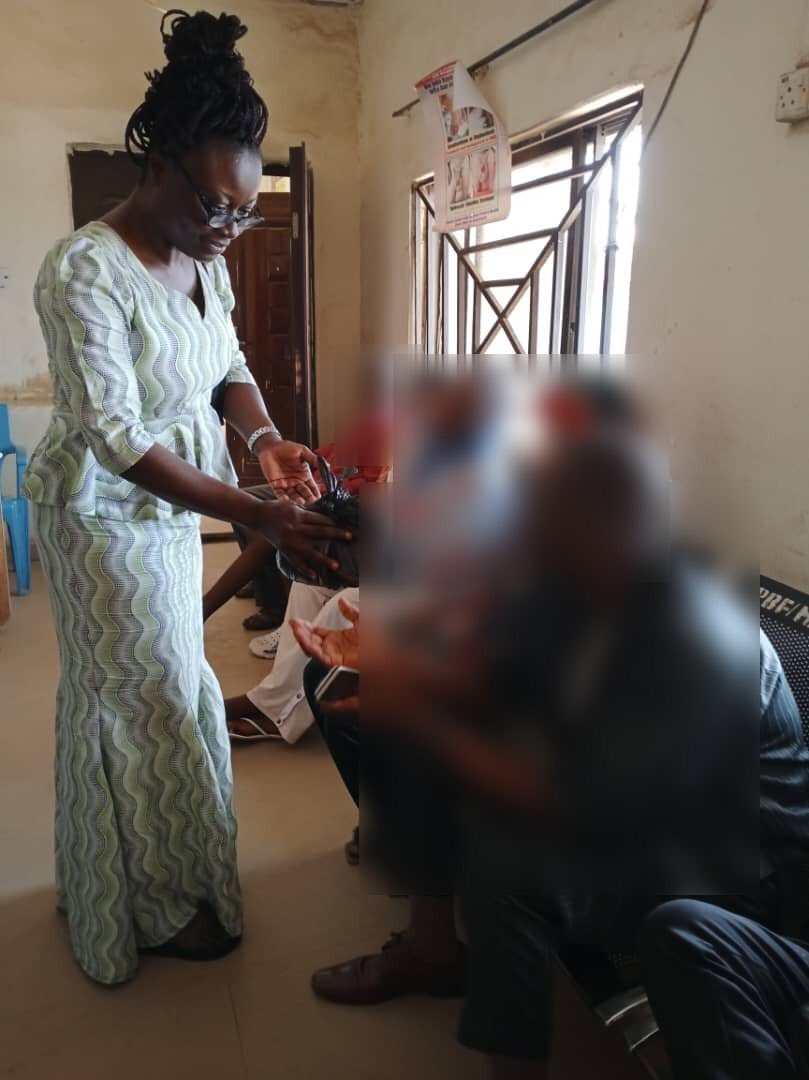
We also distributed care packs to 20 patients - constituting of mostly sanitation items /products
Most of the folks were Christians who we encouraged and the non-Christians (5-6) were led to Christ
Altogether a glorious outing.
November 25, 2023
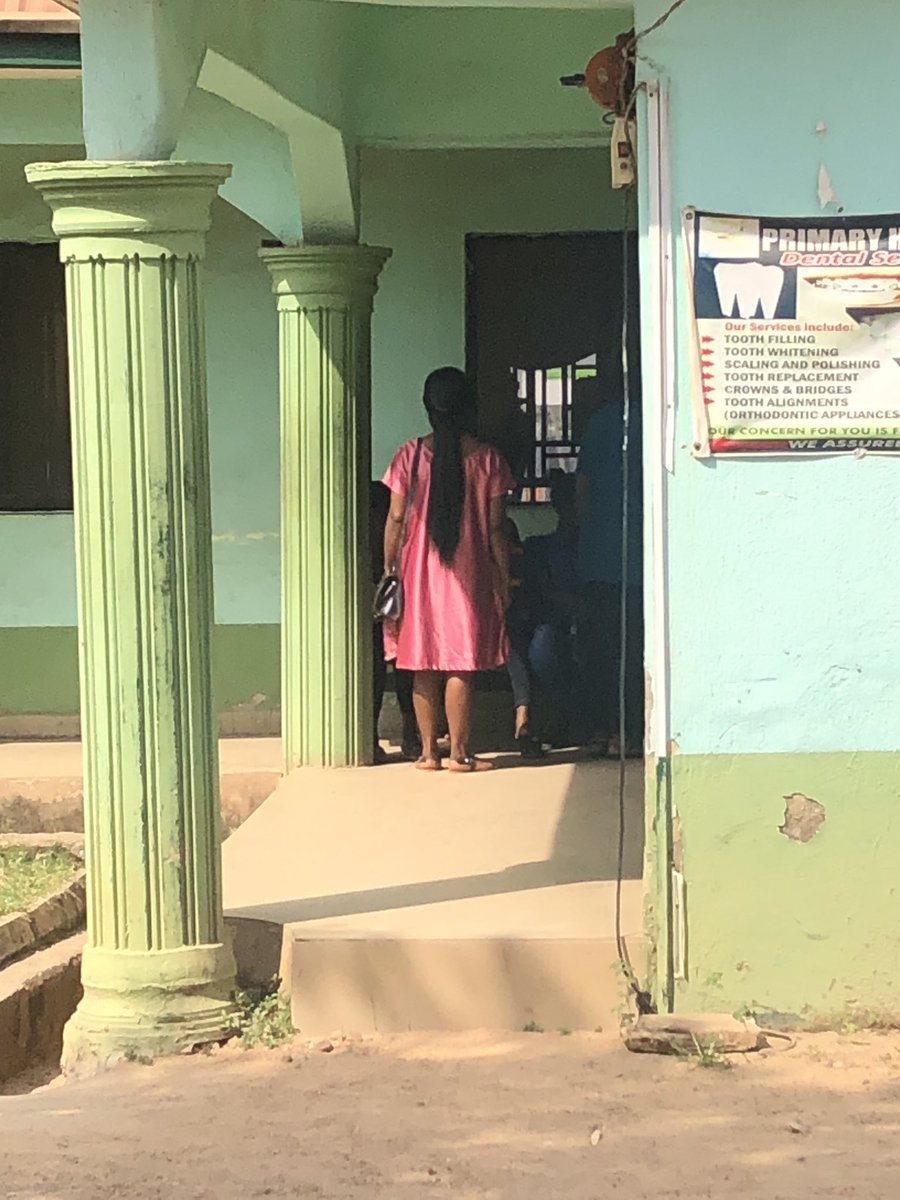
We dispensed healing verities to ~20 people across 2 rural health facilities in Masaka and recorded about 15 instant healings
Here are a few:
⁃ A boy that couldn’t speak began to talk. WIP
⁃ Fever broke for 3 people. They were sweating buckets post prayers
⁃ Weakness in the limbs and pain was instantly wiped off
Not forgetting the lady who had just gone through an evacuation procedure. Her spark was restored; and another whose had years of distress was filled with joy.
We cleared the hospital bills for 2 families and made part..
I decree that there’s peace and prosperity in Nigeria, that hearts are stirred towards Her well-being in every way, that every decision made is geared towards a better Nigeria.
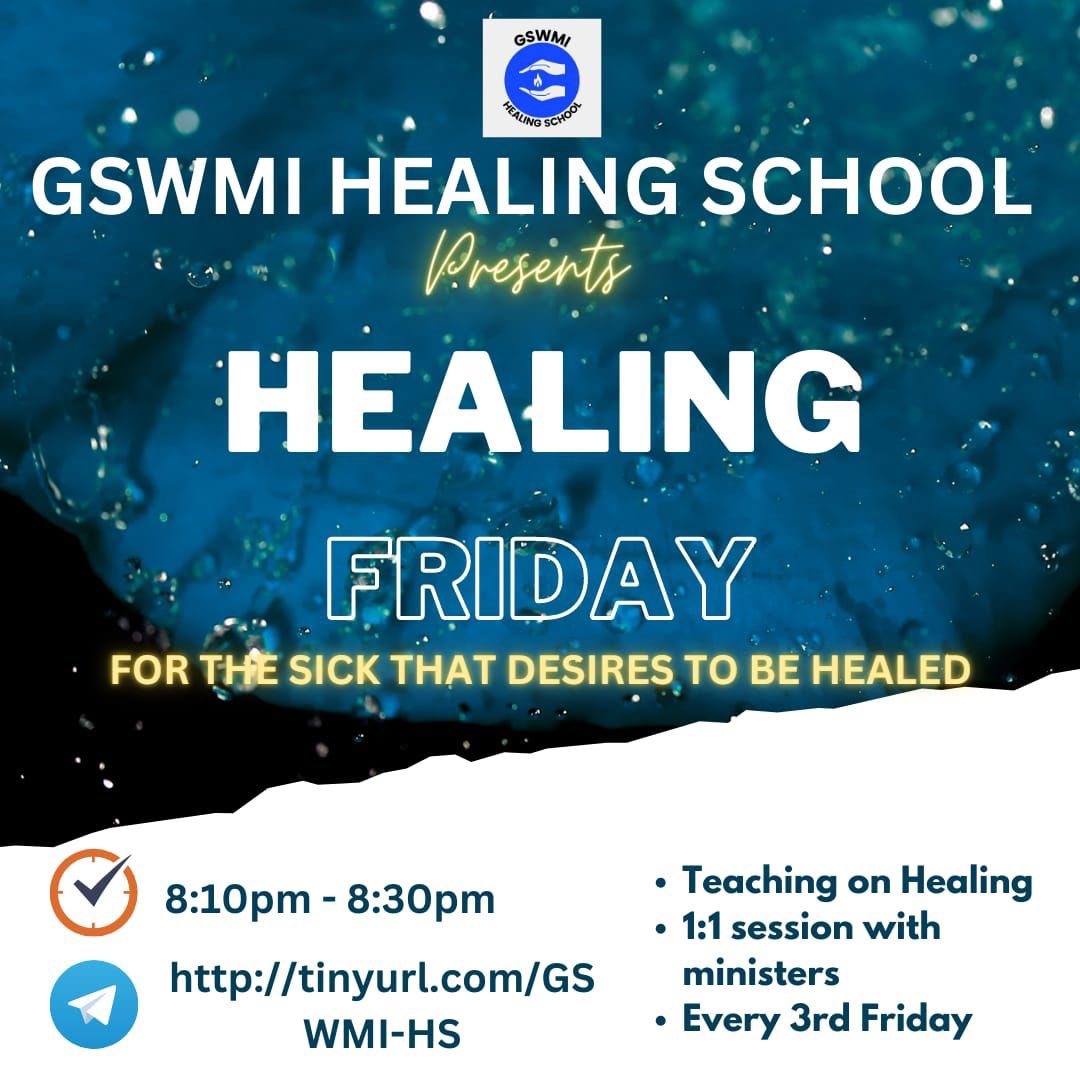
Are you or someone you know terminally ill?
Have you sought medical help but it seems all hope is lost?
Have you been looking up to God for healing?
Have you prayed and done all within your human capacity and you're yet to see changes?
With joy in their hearts they found their way out of that place, they had no name they called themselves. All they knew was that they came bearing the name of Christ and left fire in their footprints. Maybe that’s where they got their names. FIREWALKERS
THE FIREWALKERS
This was the first time they were to get together to do something like this, Excitement rent the air as they found their way to a remote settlement in an area in Abuja, The assignment was simple, speak to people about Jesus and let the Spirit of God do His thing.
Seeing this, the mother of one of them invited the group to pray for her husband. This led to another set to the father of one of the children who had a bad leg He was healed immediately, filled with the Holy Spirit together with His household.