🚨 ¿Tratamos bien las infecciones de orina 🦠🚽🚻 (ITU)?
Un nuevo estudio en The Lancet cambia las reglas del juego. 🧵👇
El ensayo clínico SCOUT, realizado en España 🇪🇸, analiza la eficacia de los antibióticos más comunes para ITUs no complicadas en mujeres. Los resultados son reveladores:
✅ Nitrofurantoína (5 días) fue el tratamiento más eficaz, con alrededor del 74% de resolución clínica.
⚠️ Fosfomicina en monodosis, pese a ser muy popular, resultó ser la opción menos eficaz (≈59%).
💊 Pivmecilinam y la pauta de dos dosis de fosfomicina quedaron en un punto intermedio.
Conclusión clave: si buscamos la máxima probabilidad de curación, la dosis única de fosfomicina podría dejar de ser la primera elección, siempre considerando resistencias locales y guías nacionales. 🩺📋
Los efectos secundarios fueron en general leves en todos los grupos, lo que confirma la seguridad de estas pautas cortas. 🛡️
💡📝 Sería ideal disponer de seguimientos aún más largos (30–60 días) para evaluar recurrencias tardías y estudiar el impacto en la microbiota vaginal, que no se analizó en este ensayo.
@SEMicrobiologia@SEIMC_
#Medicina #Salud #Urología #Antibióticos #ITU #DivulgaciónCientífica #TheLancet #SaludMujer #Investigación
👇🏻🦠
https://t.co/N80UGNvYH3
Is piperacillin-tazobactam safe in patients with penicillin allergy?
🆕🔥🟢Piperacillin–tazobactam tolerability in patients with a labeled penicillin allergy (PIPPEN)
Of the 191 patients included, 98% were found to tolerate one or more doses of piperacillin–tazobactam.
This included 95 patients with “low risk delayed reactions,” 90 patients with “high risk anaphylactic reactions,” and 2 patients with “well-documented delayed reactions,” to penicillins. Only four patients out of 191 had documented intolerance to piperacillin-tazobactam post-exposure
All patients in the “anaphylactic allergy or anaphylactic like reaction” subgroup tolerated one or more doses of piperacillin–tazobactam.
https://t.co/PzdQP3VD3s
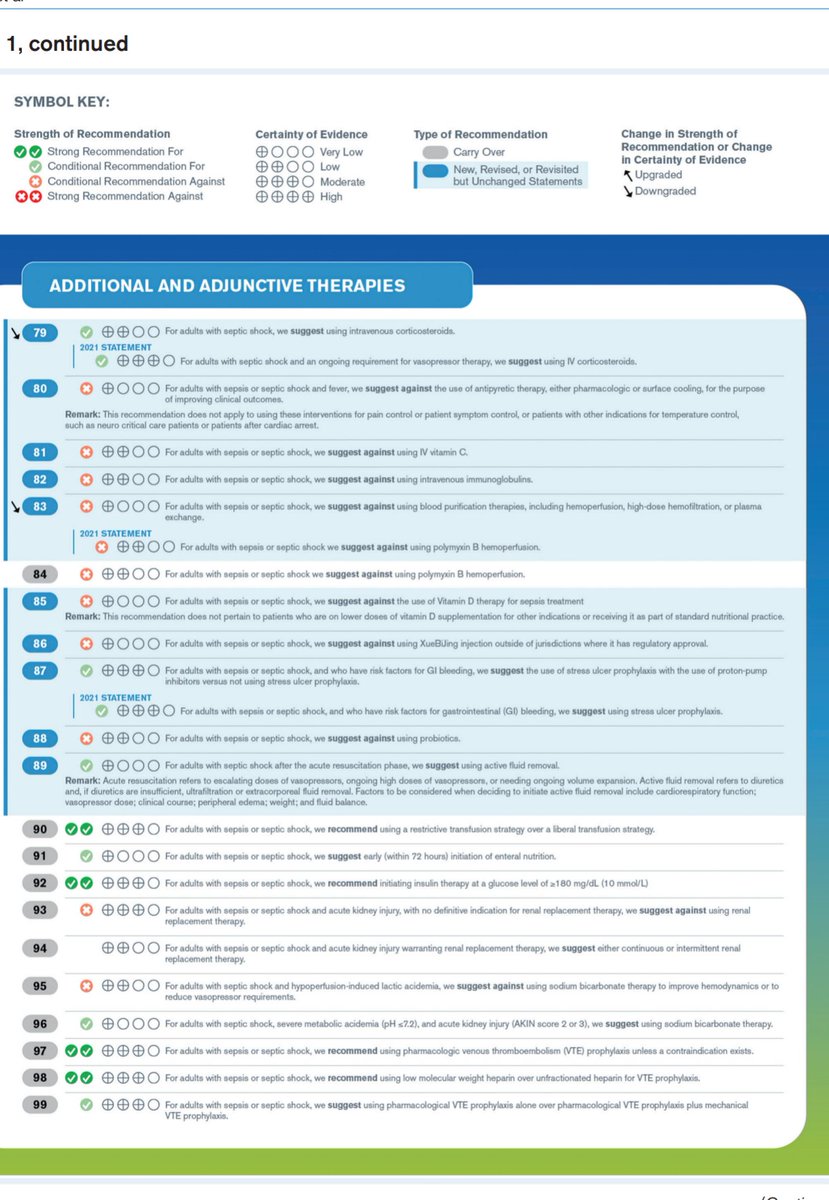
🔥Just published🔥
Surviving Sepsis Campaign: International Guidelines for Management of Sepsis and Septic Shock 2026 : Critical Care Medicine #IDXposts https://t.co/jRP9hZFI8W
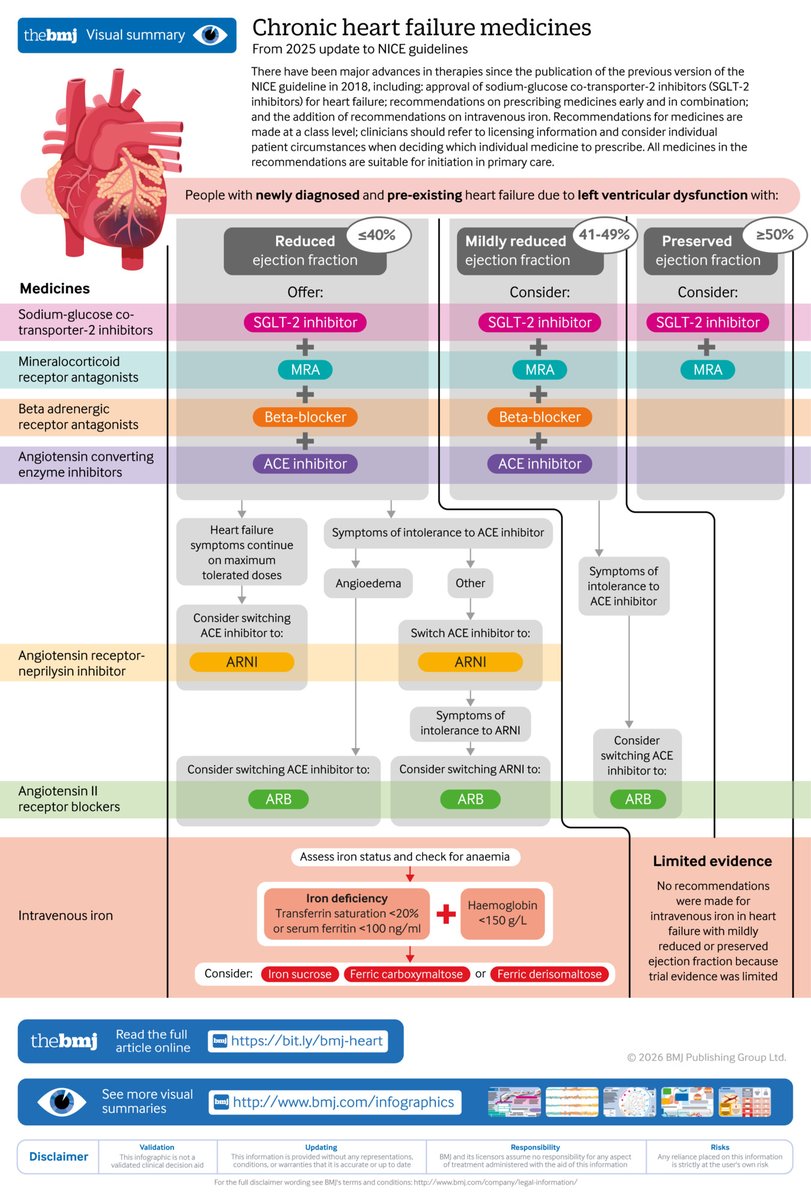
@Emmy_dann There were too many blatant biases in favor of Entresto in the PARADIGM-HF trial so I think these guidelines accurately depict the place in therapy especially when you consider price too
I learned fondaparinux can be used as anticoagulation in HIT even tho it’s related to heparin. In HIT, heparin forms complexes with PF4 which makes new epitopes recognized by anti-PF4 abs. These abs activate plts causing clotting. Fonda is too short to bind PF4 so…no clotting!
@AlessandroRov19@BJSM_BMJ@Mohamma70696197@StevenStovitz@Lester_Domes This was a good read and an interesting approach that I’ve never seen. Even in pharmacy school we weren’t taught like this. My question can this be applied across all research types? (Observational vs. superiority study vs. non-inferiority studies)
🆕⚡🧬🔥 Clash of Titans: Integrase vs Boosted Protease Inhibitors— Biktarvy Outscores Symtuza with Fewer AEs in Advanced HIV (LAPTOP RCT), Lancet ID, 2025
🚀 What they did
🌍 Multicountry, open-label, non-inferiority RCT across 56 sites in 7 European countries.
👥 447 ART-naive adults with advanced HIV (median CD4 41/μL) randomized 1:1:
• Integrator arm: Biktarvy (bictegravir + emtricitabine + TAF)
• Booster arm: Symtuza (darunavir + cobicistat + emtricitabine + TAF)
⚡ Rapid initiation without requiring baseline resistance data
🕒 Followed for 48 weeks, assessing virological/clinical outcomes, immune recovery, and adverse events.
📊 mITT and per-protocol analyses; primary endpoint = composite of virological failure or clinically relevant events.
🔥 Key findings
✅ mITT analysis: 48-week primary composite outcome: 22% in Biktarvy vs 32% in Symtuza (HR 0.70, 95% CI 0.48–1.00) → non-inferior & numerically better
💊 Drug-related grade ≥2 AEs: 7% Biktarvy vs 14% Symtuza (p=0.043)
🛡️ Serious AEs & discontinuations similar between arms
💀 12 deaths unrelated to study drugs
⚡ IRIS incidence low (3%) and similar despite rapid suppression with Biktarvy
🧬 Resistance data: High or intermediate baseline resistance to ARTs was similar between arms; post-hoc analysis showed baseline resistance did not significantly affect achieving HIV RNA <50 copies/mL at week 48
⚠️ Limitations
👁️ Open-label design
🌍 European sites only — may limit global generalizability
📉 Excluded patients with recent ART exposure or severe organ impairment
💡 Takeaway
👉 Biktarvy proved non-inferior overall — with signals of superior virologic efficacy and fewer drug-related adverse events compared with Symtuza
🧬 Supports integrase inhibitor-based regimens as preferred first-line therapy in this vulnerable population
🌐 Reinforces global trends favoring high-barrier INSTI-based therapy in late presenters
📈 Clinicians can confidently prioritize Biktarvy for late presenters/advanced HIV patients
✅ Results likely relevant to other first-line triple-drug regimens containing dolutegravir #IDXposts
@TheLancetInfDis
https://t.co/icxjqtV50X
New in the November 13, 2025, issue of NEJM:
Deferring Arterial Catheterization in Shock (EVERDAC trial) https://t.co/jgmThogrgL
Beta-Blockers after MI without Reduced EF (REBOOT trial) https://t.co/bCQMwqvcai
Beta-Blockers after Myocardial Infarction (BETAMI–DANBLOCK trial) https://t.co/ZCfkG7tpBI
Sacituzumab Govitecan in Triple-Negative Breast Cancer (ASCENT-03 phase 3 trial) https://t.co/IFwktvSPIu
Subscribe to NEJM for the latest medical research: https://t.co/QFe1he3roV