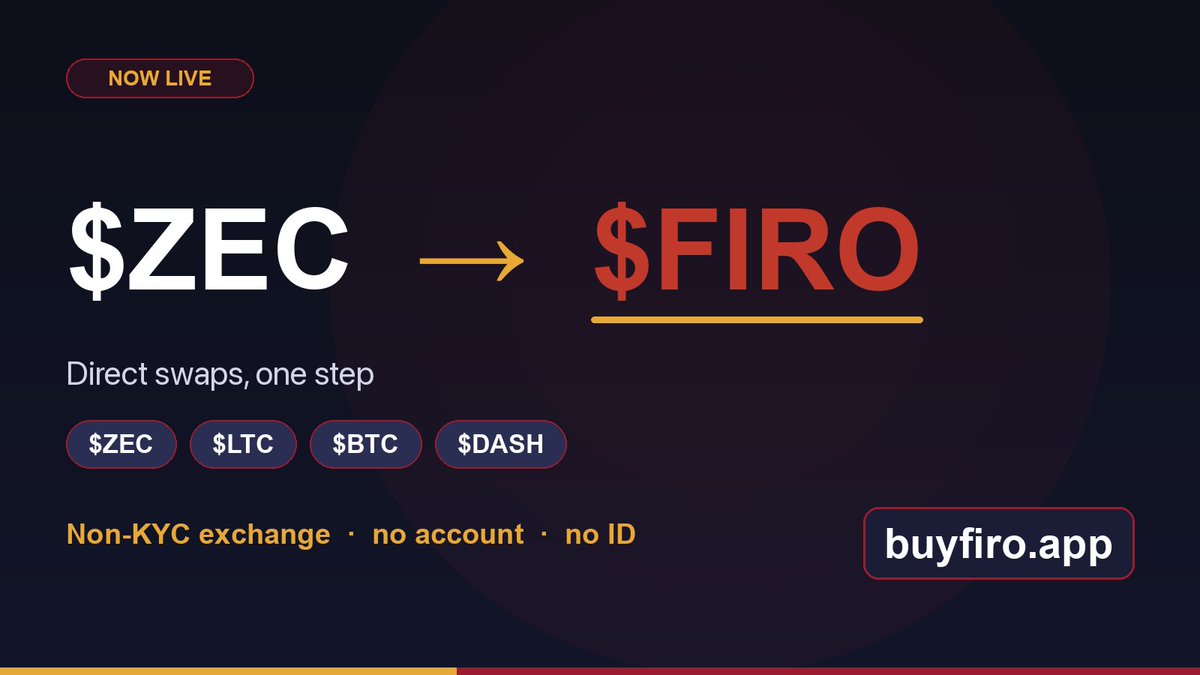
https://t.co/WkpgQSSDic lets you swap EVM tokens, BTC, LTC, DASH, ZEC, TRX, and USDT TRC20 straight to FIRO. It also supports Spark Addresses and Spark Names, so your FIRO can land privately in your wallet.
Built by the community, by @vsnation_ 🙌
🔗 https://t.co/WkpgQSSDic
@saplingdotcash That split is the right design, verify the trade, not the person. Firo's view keys do something similar, you can prove a transaction happened without ever doxxing who made it.
@RaylsLabs@x10xalex@AlexJupiter23 Private and compliant isn't really a contradiction, Firo's had view keys since Lelantus Spark, letting you show one transaction to an auditor without opening the whole wallet. Does Enygma's disclosure work per-tx or by policy?
It's in beta, so start with small amounts. The code is open source on GitHub if you'd rather run your own signed copy. Install it from https://t.co/5itO55u7LW, then tap Privatize to move public FIRO into your private balance.
Every web wallet carries a quiet question: what happens the day its website dies? An installed Firo PWA was tested four ways: server stopped, address gone, every page a 404, a parking page. Each time the wallet still opened and synced.
One catch: install it first, don't run it in a browser tab. On iPhone, open it in Safari, then Share > Add to Home Screen. On Android, Windows, Mac or Linux, open it in Chrome and accept the install offer. No app store, no sign-up.
@Jameelweb3 View keys are the answer to that, Firo lets you keep transactions private by default but share one with an auditor when you need to prove something, without exposing everyone else's activity too.
@ZcashIND Campus clubs plus a city track for non-students covers two groups most privacy orgs miss: people still in school, and people already working who want to help outside a 9-to-5. What does city-level contribution actually look like?