Fitness and wellness work better as a wider circle of support than as solo grind. Help someone else regulate. Help yourself too. People first—the recognition can come later.
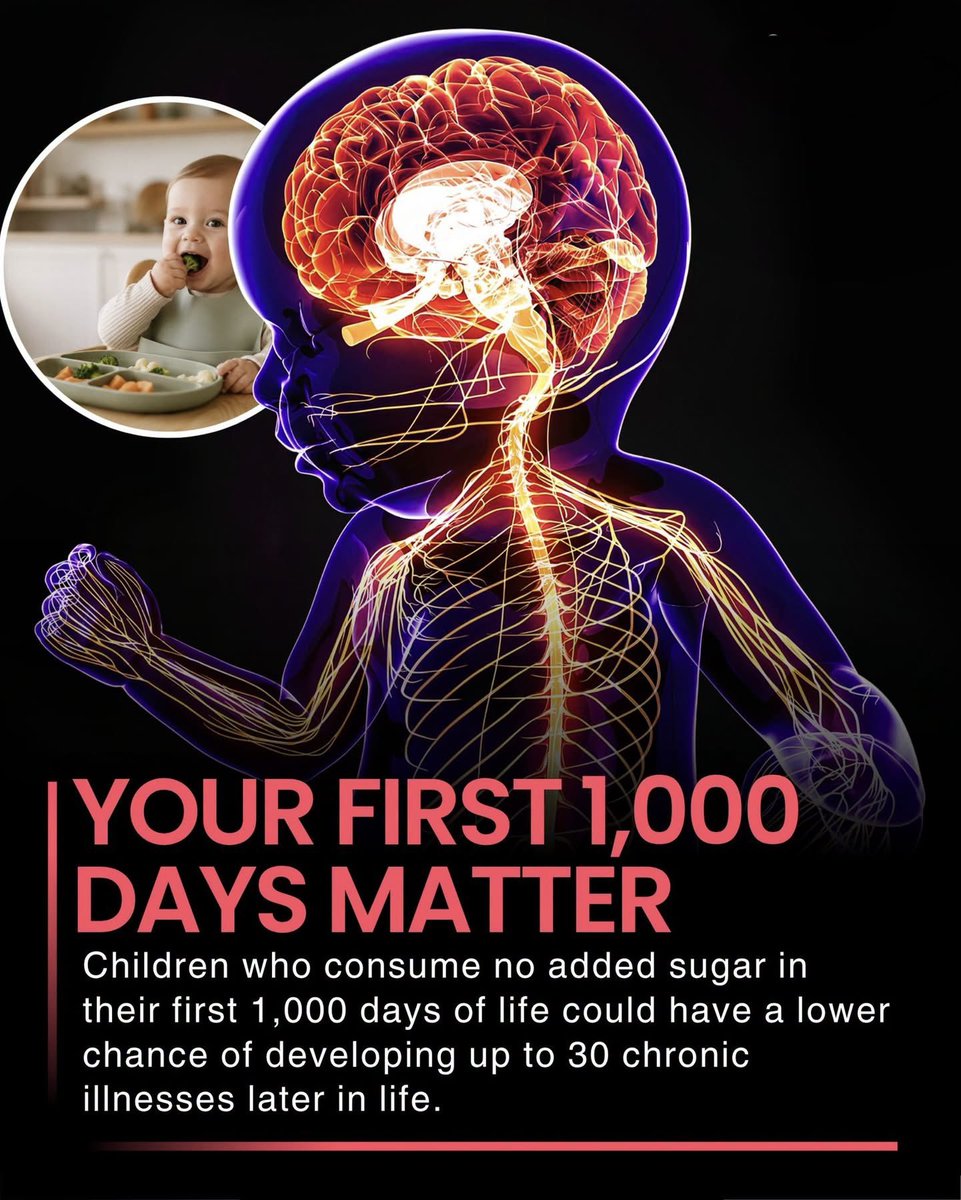
🧬 The First 1,000 Days May Shape Your Health for Life
A fascinating study uncovered a surprising connection. Researchers studied Britain's postwar sugar rationing, when families had limited access to sugar. They discovered that people exposed to lower sugar levels during pregnancy and early childhood had a 35% lower risk of developing type 2 diabetes and a 20% lower risk of high blood pressurelater in life.
Even more interesting, these individuals developed these conditions later than those who had greater early-life sugar exposure.
Scientists believe the first 1,000 days, from conception to a child's second birthday, may be a particularly important window for long-term health.
However, the findings show an association, not proof that reducing sugar directly prevents these diseases.
Could the earliest stages of life hold clues to our health decades later?
Source:
Gracner, T., Boone, C., & Gertler, P. J. (2024). Exposure to sugar rationing in the first 1000 days of life protected against chronic disease. Science, 386(6725), 1043–1048.
A warm start, your way. 🌿
Try plain oatmeal with a fruit you enjoy for breakfast. A simple bowl can be a welcome part of your morning.
No perfect routine needed.
#FitTokens#Wellbeing
Reference: 👇 Starchy foods and carbohydrates
https://t.co/KXEKYl6A7R
This is how your immune system chases pathogens and destroyes them.
It's called Phagocytosis: the immune response of Macrophage cells in this case directed to Escherichia coli bacteria which attach on the digestive system.
[📹 Helix Animation]
There are benefits to eating bananas in the morning, during the day, or in the evening, and the best timing for your snack may depend on your health goals. https://t.co/yiv1XNyF9V
Listening is a little act of care. 🌿
Ask someone you know how they are, and make a little space to really listen to their answer.
You don't need a grand gesture to show you care.
#FitTokens#Wellbeing
Reference: 👇 Compassion
https://t.co/iZozwAdR7e
🚨 SCIENTISTS JUST CREATED BATTERIES POWERED BY LIVING BACTERIA!
What sounds like science fiction is becoming reality. Scientists are developing tiny batteries that generate electricity using living microbes. As the bacteria break down organic material, they release electrons that can be captured and turned into power.
The technology is still in its early stages, but it could one day power sensors, medical devices, and remote equipment without traditional batteries. The biggest mystery? Some of these systems can even generate energy from ordinary soil.
It may not charge your phone yet, but it could change the future of clean energy.
Source:
Fraiwan, A., & Choi, S. *Bacteria-Powered Battery on Paper*. Biosensors and Bioelectronics.
Lee, H., & Choi, S. *An Origami Paper-Based Bacteria-Powered Battery*. Nano Energy.
🚨 A Tiny Dose of Bee Venom Showed a Powerful Effect Against Aggressive Breast Cancer Cells
Scientists in Australia discovered something remarkable while studying honeybee venom.
The secret ingredient is melittin, a natural compound found in bee venom. In laboratory experiments, it damaged the outer membranes of aggressive breast cancer cells, including triple-negative and HER2-enriched cancer cells, within just 60 minutes.
But that wasn't all. Within 20 minutes, melittin also disrupted chemical signals that help cancer cells grow and multiply.
Researchers even found that melittin could enhance the effects of a chemotherapy drug in animal experiments.
Could this tiny molecule inspire a new approach to fighting breast cancer?
The research is promising, but human trials are needed to establish whether it can become a safe and effective treatment. Bee venom is NOT a proven cancer cure.
Source: Duffy, C., et al. (2020). Honeybee venom and melittin suppress growth factor receptor activation in HER2-enriched and triple-negative breast cancer. npj Precision Oncology, 4, 24.
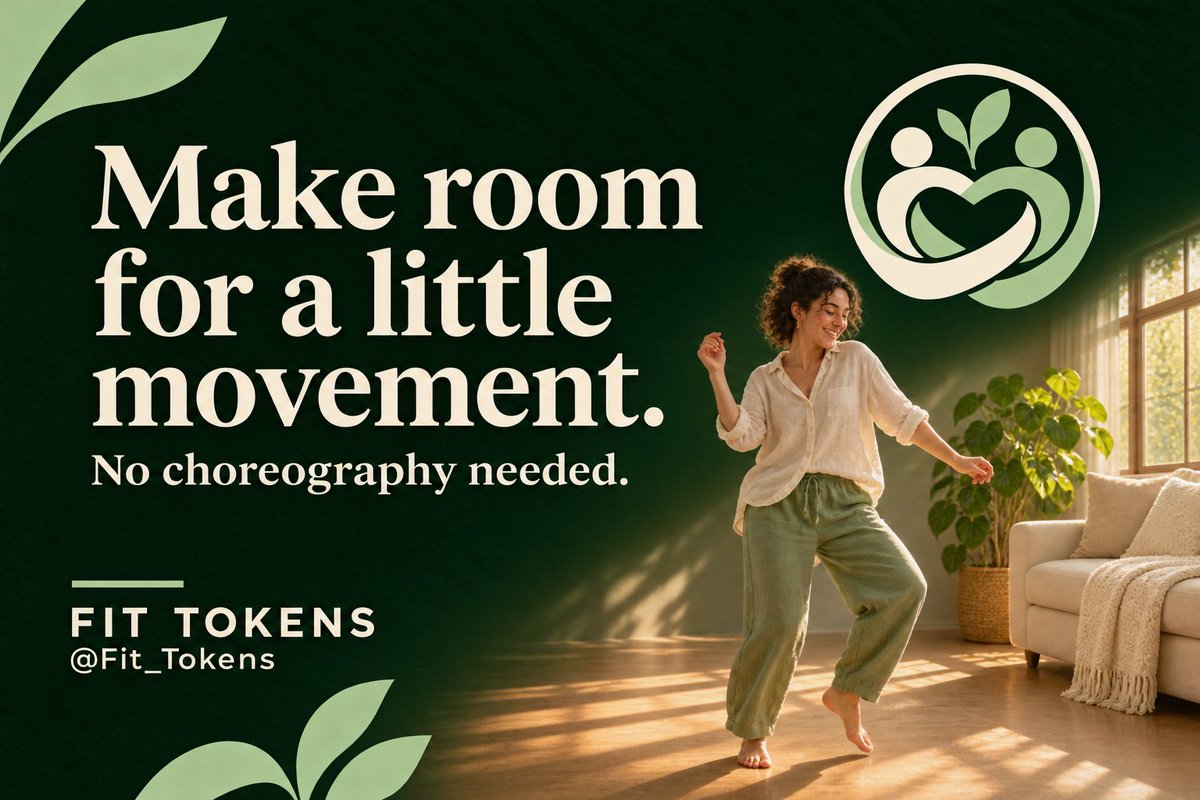
Make room for a little movement. 🌿
Put on a song you enjoy and try a little dancing at a pace that suits you. A long stretch of sitting can have a small movement break.
No choreography needed.
#FitTokens#Wellbeing
Reference: Remain Active
https://t.co/8a9xOnqyoR
Pianist Peter Bence performs TOTO's "Africa".
To express the piece's varied rhythms and rich sound, he approaches it using extended playing techniques.
[🎹 bencepetermusic]
Make room for a little movement. 🌿
Put on a song you enjoy and try a little dancing at a pace that suits you. A long stretch of sitting can have a small movement break.
No choreography needed.
#FitTokens#Wellbeing
Reference: Remain Active
https://t.co/8a9xOnqyoR
Brown rice vs white rice: Is one better for overall health? While one contains more nutrients than the other, there are several factors to consider. Click the photo to read the full article now. ⬇️ https://t.co/GOk2RPHYTT
🚨 The Tiny Banana Trick Your Body Will Thank You For
A small pinch of salt on a banana may sound strange, but it combines two essential electrolytes—sodium and potassium. Together, they help your muscles contract, nerves send signals, and cells stay properly hydrated.
This simple combo can be especially useful after heavy sweating or intense exercise, when your body needs to replace lost electrolytes. Sometimes, the simplest foods can do more than you expect.
Source: Thomas, D. T., Erdman, K. A., & Burke, L. M. (2016). Position of the Academy of Nutrition and Dietetics, Dietitians of Canada, and the American College of Sports Medicine: Nutrition and athletic performance. Journal of the Academy of Nutrition and Dietetics, 116(3), 501–528.
✨ Your Cells May Be Communicating Through Light!
Deep inside your body, mitochondria produce incredibly tiny flashes of light called biophotons. They are invisible to our eyes but detectable with special scientific instruments.
In a fascinating experiment, researchers found that stressed mitochondria appeared to influence neighboring mitochondria even without physical contact. Changes in surrounding light also affected the results.
Could your cells be communicating through invisible flashes of light? Scientists are investigating this mysterious possibility, but it has not yet been proven to happen inside the human body.
Source:
Frontiers in Physiology. Research on ultraweak photon emissions and mitochondrial interactions.