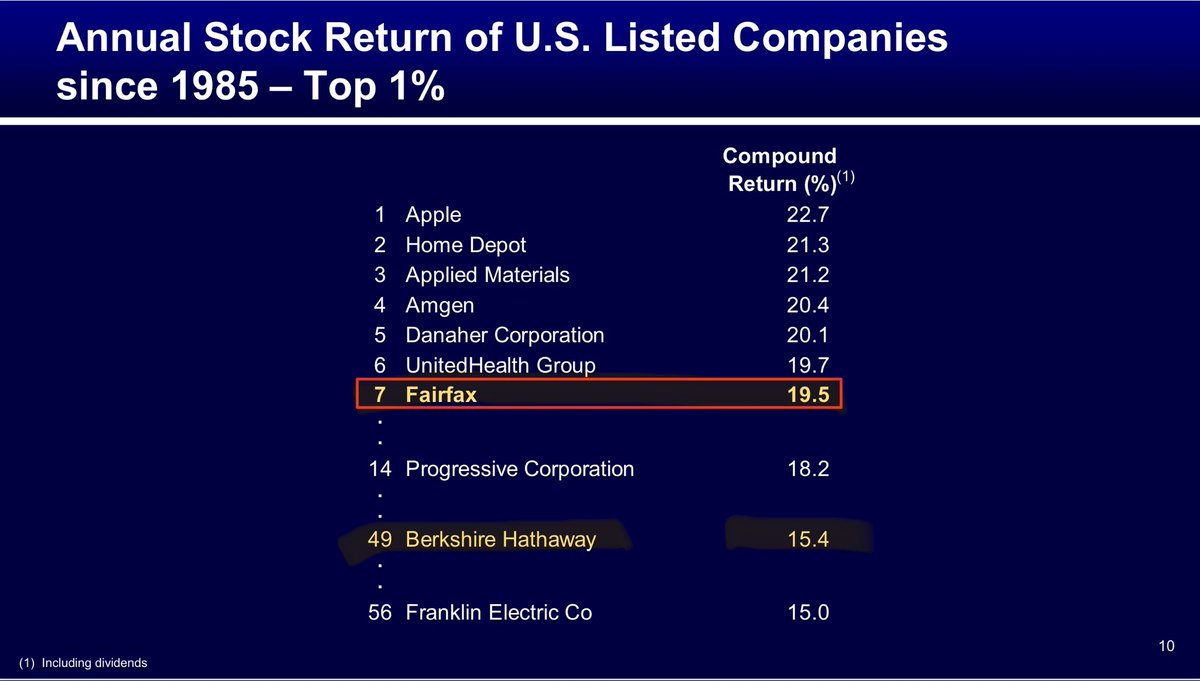
Hey @jasonzweigwsj, it’s already happened. It’s called Fairfax Financial. $FFH.TO started 41 years ago and has compounded faster than $BRK since inception. Prem Watsa and his partners learned from and improved on Buffett’s model.
$META launched its new $1,299 VR Glasses, a full VR headset in a glasses-style design weighing just ~100g.
> Ships spring 2027
> 5K display + full-color passthrough
> Snapdragon Reality Elite chip
> External battery + compute pack
> Up to 3-hour battery life + 45W fast charging
> Dolby Vision + Dolby Atmos
> First IMAX Enhanced certified VR device
> Muse built directly into the OS
> Hand + eye tracking
> Virtual keyboard + trackpad
> 75 games playable with hand gestures at launch
> Full Quest library with controllers
> Xbox Cloud Gaming
> Disney+ Immersive Cinema + live sports
> Mac/PC productivity support
> Photorealistic hologram calls on WhatsApp + Zoom
Full live Demo:
Since launching Sept. 8, Muse has, in just 11 days:
• No. 1 in U.S. iOS Productivity
• 4.9-star rating across 30K+ reviews
• Surpassed 300K daily downloads
• 600K+ U.S. DAUs
• ~2.5M U.S. downloads vs. ~1.6M for Instagram & ~3.6M for ChatGPT over the same post-launch period
$SHOP is partnering with $META to bring agentic checkout with Shop Pay across every Shopify store.
That means users can go from product discovery to checkout directly inside Muse.
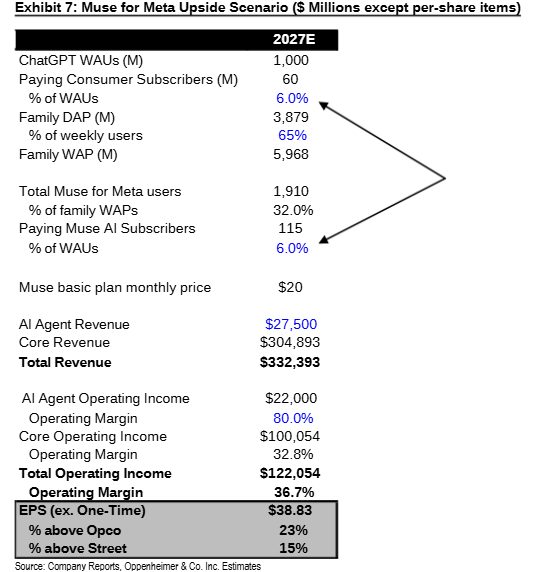
Oppenheimer sees $META Muse reaching $28B of AI agent revenue by 2027 driven by 115M paying users at the same 6% conversion rate as ChatGPT.
Wild to see 80% Agentic AI operating margins which would make Muse way more profitable than Meta’s core ads engine.
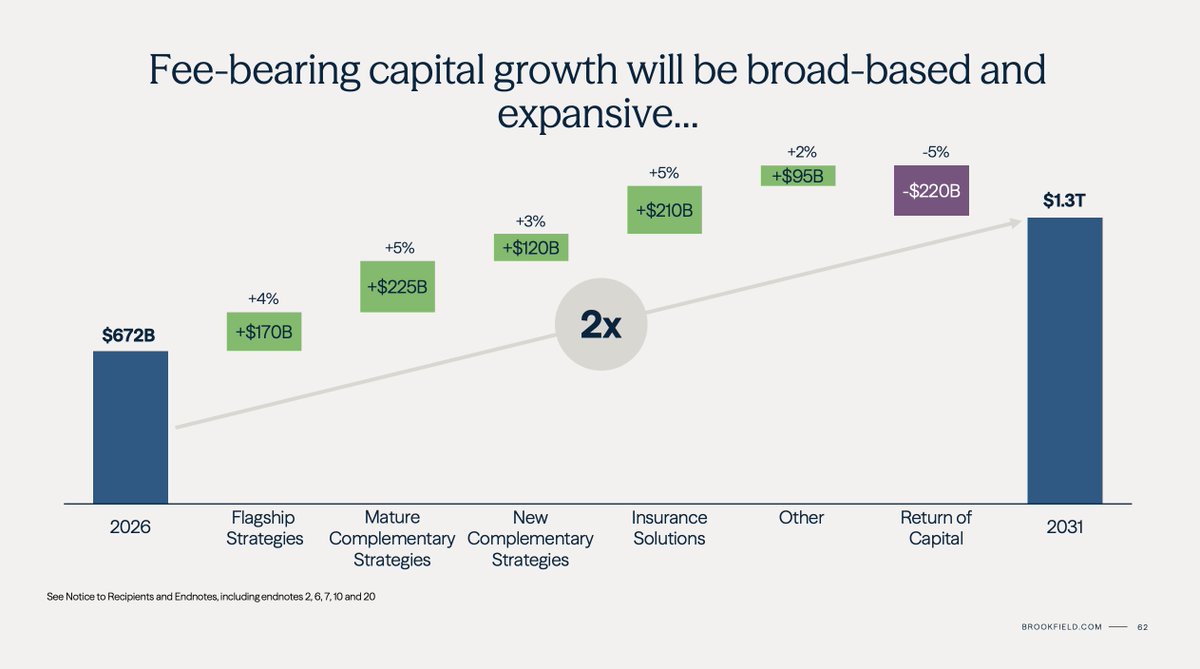
$BAM’s capital base keeps getting stickier.
By 2031, 91% of fee-bearing capital should be LT or permanent.
More recurring fees, better earnings visibility, less fundraising pressure, and a higher-quality AUM base.
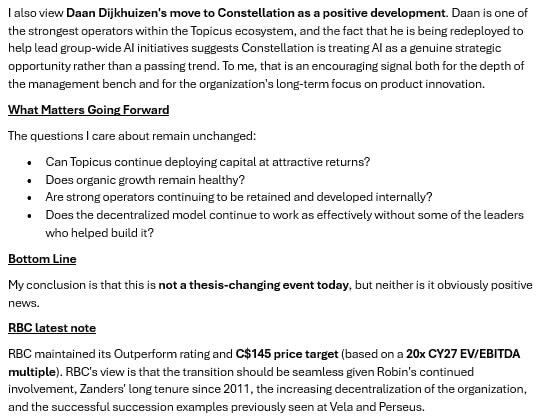
If RBC's estimates are right, Topicus trading around $90 implies a 7%+ 2027 FCF yield (14x EV/2027 FCF) for a business that RBC still expects to compound EBITDA at 16%+ annually
$TOI.V
A reminder: very few firms can match $CSU shareholder-protective ethos!
0 share-based comp dilution
0 CEO salary
execs must buy stock w/ personal cash
perpetual hold (0 frictional cost)
tax-efficient spin-outs $TOI.V $LMN.V
corp gov expert director (Lawrence Cunningham)
lean HQ
Topicus CEO transition.
Another step in the changing of the guard across the CSI ecosystem.
The investment case increasingly rests on the durability of the system rather than the individuals who built it.
My notes here and on substack (link in bio)👇
$TOI.NE
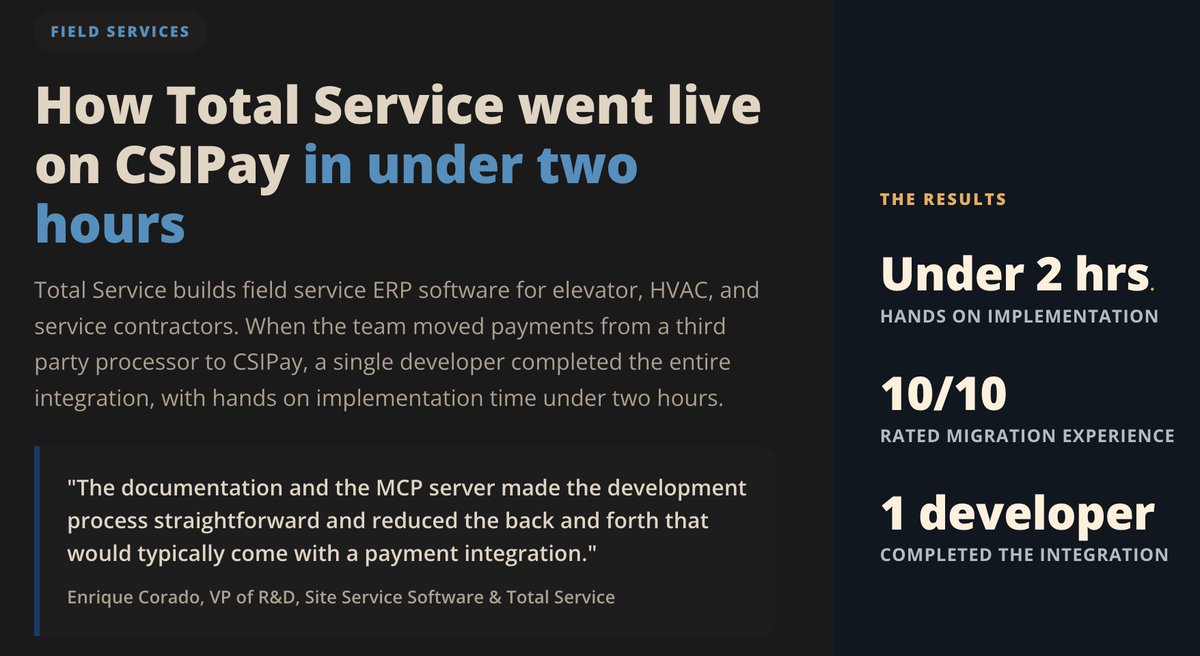
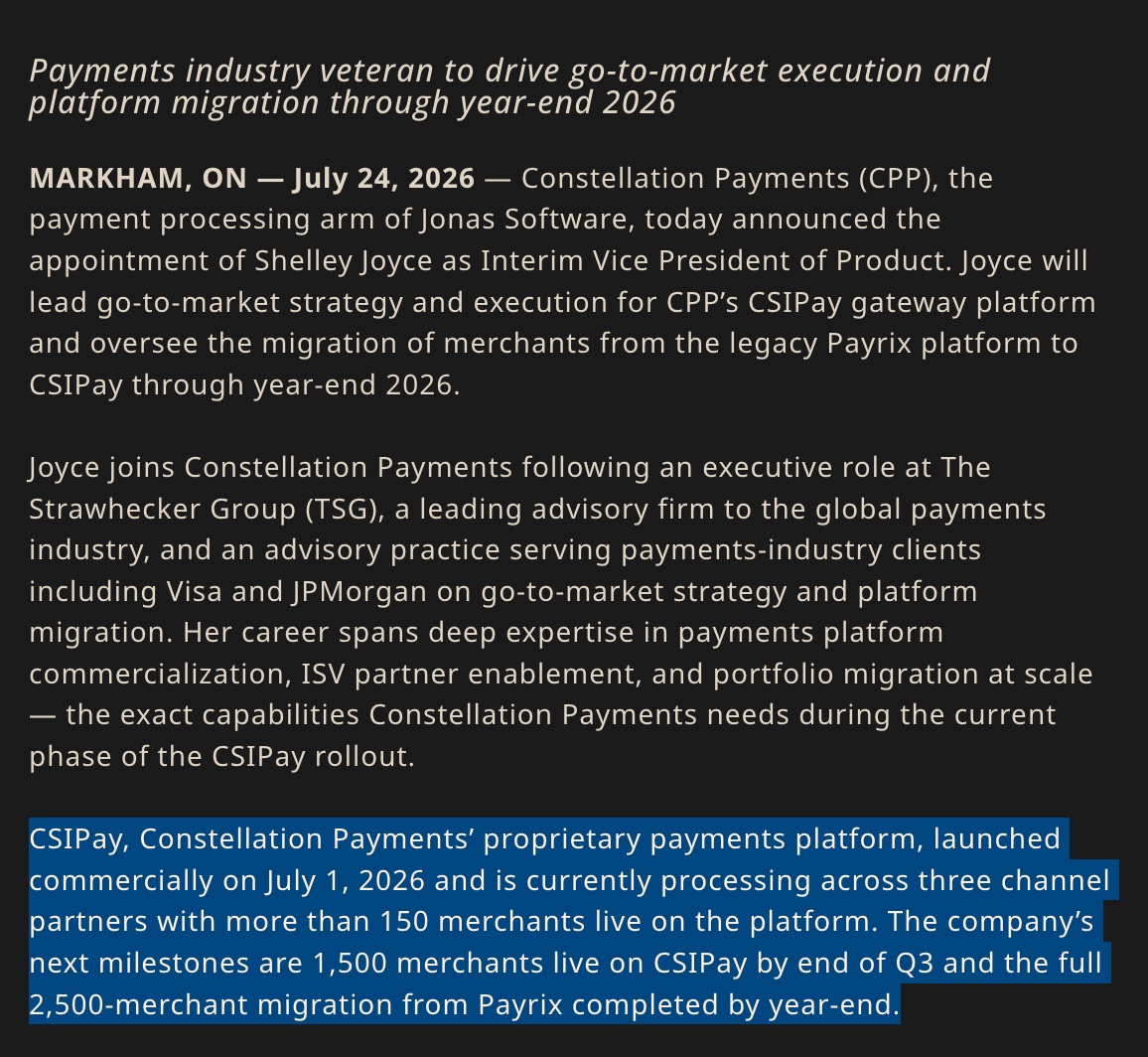
$CSU CSIPay, led by ex-Visa-&-JPM exec, is gaining traction: 150 merchants live in July, targeting 1.5K Q3 & 2.5K Q4. Total Service, a commercial floor equipment fleet ERP, recently migrated to CSIPay in under 2 hrs—w/ a 10/10 experience & just 1 developer handling the migration.
So Meta $META has or will have:
- Top tier model (muse and watermelon upcoming, will lead to in house model usage, savings will flow)
- Muse agent - overtook instinct chatter
- Massive distribution advantage
- Massive amount of compute
- Data center land and power secured - at least 5GW in Louisiana alone.
- In house chips
- AMD chips, partnership, and options - if MTIA doesn't work out, ramping up AMD procurement is a decent fall back plan
- Core business ripe for AI deployment and integration.
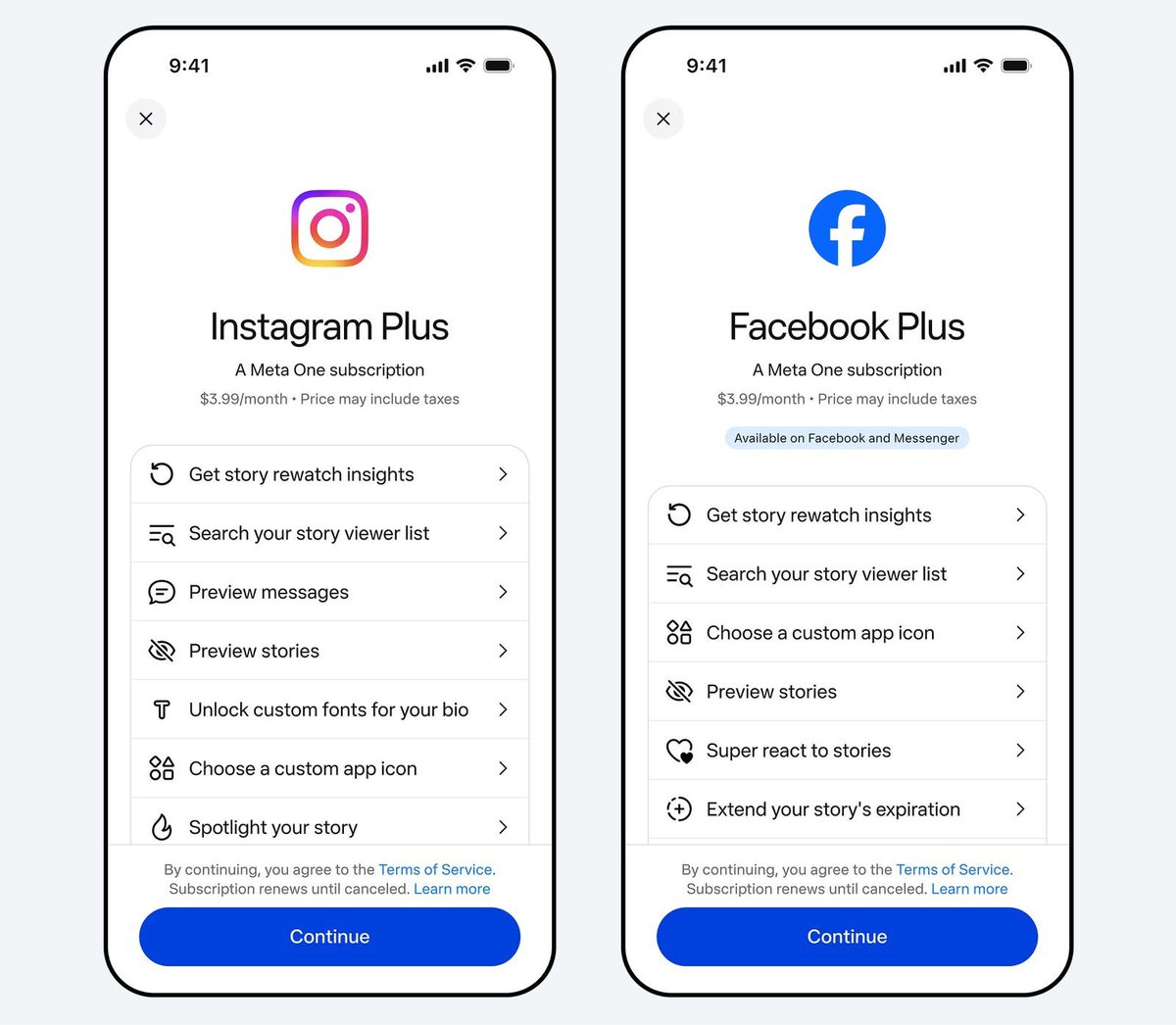
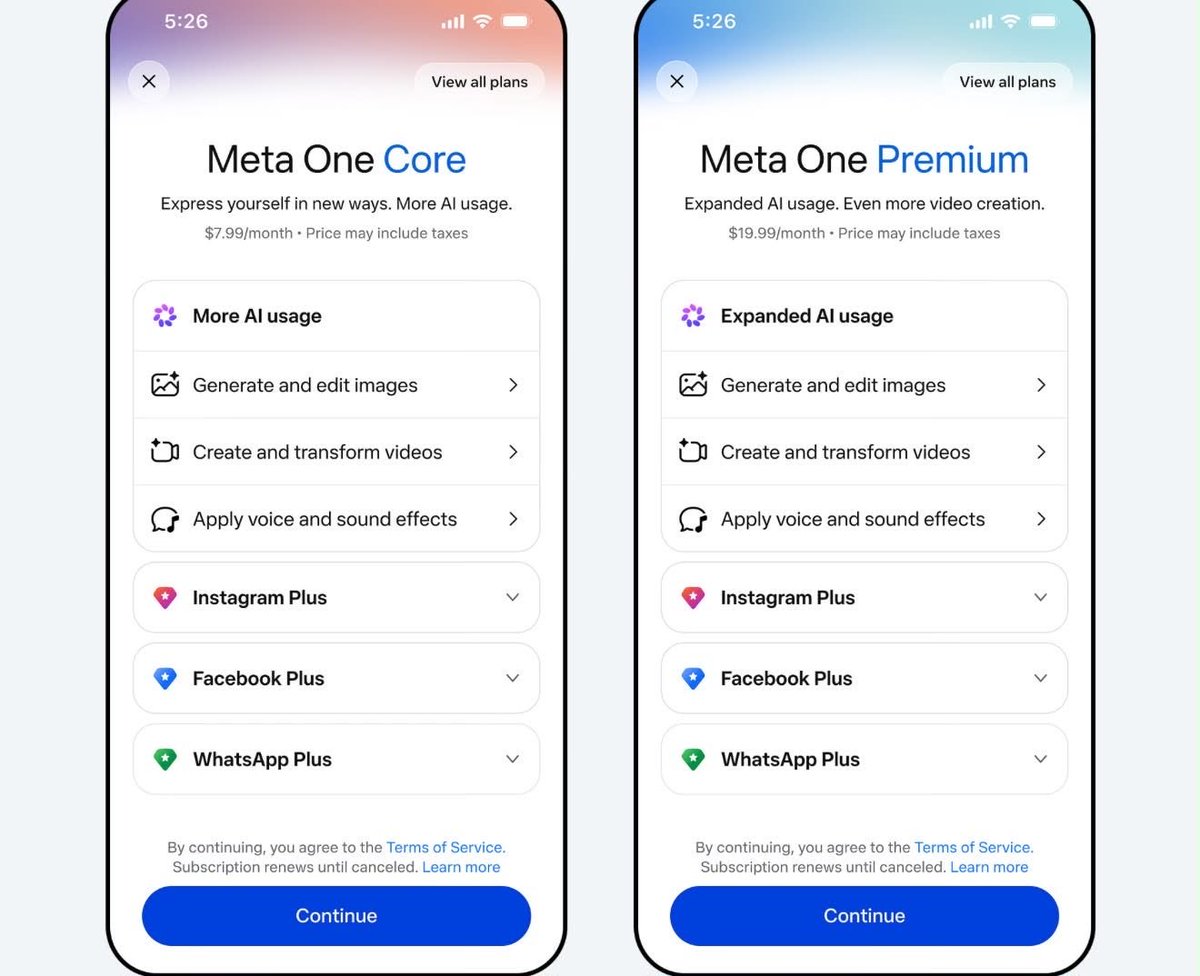
$META launched Meta One, a global subscription spanning Instagram, Facebook, WhatsApp and Meta AI.
Plans start at $2.99/month for individual apps, with bundles up to $19.99 offering expanded AI and creator tools.
Meta One has already reached 15M subscriptions and trials.
A collection of alarming comments made *in the last four days* by seven different people who are inside the AI world ⬇️
Jacob Coxon, former AI researcher at Anthropic and OpenAI:
"The people building AI earnestly believe that it could kill us all by the end of the decade.”
https://t.co/5Z9uJKShTN
Samuel Marks, Scalable Oversight lead at Anthropic:
"AI developers believe their technology could cause human extinction (or similarly bad outcomes). This could happen in the next few years.”
https://t.co/0r11ta1JJR
Evan Hubinger, Alignment Science lead at Anthropic:
"Jacob is correct here—we really do earnestly believe AI could kill all humans!”
https://t.co/RJ0oOKTmG6
Alex Turner, former Research Scientist at Google DeepMind:
"I left Google DeepMind in June. Jacob is right: many researchers believe they are building something that could kill everyone on the planet. It was literally my day job to think about how to stop that."
https://t.co/oShamWC3o2
Jakub Pachocki, Chief Scientist at OpenAI:
"This is a time that calls for extreme caution. I am concerned no one is prepared for the consequences of a continued rapid rise in machine intelligence.”
https://t.co/TLpzxwHYBl
Jason Wolfe, Researcher at OpenAI:
"I don't know what my probabilities are on literal extinction, but I think there are a number of ways AI could go poorly for humanity, and at the current frankly terrifying pace humanity will be quite lucky if we manage to find and stay on the narrow path between all the bad outcomes.”
https://t.co/HaqDHDz6Fi
Jonathan Richard Schwarz, former Senior Research Scientist at Google DeepMind:
"I left DeepMind after 7 years (and since rejected offers to join the other two) due to severe concerns about the concentration of power these labs represent. What is currently happening in this field is deeply unhealthy for society.”
https://t.co/WD5U958Yuy
(I made this unimpressive screenshot montage but linked to their thoughts in full above)
A short explanation of why AI might kill everyone: AI may soon be much smarter than humans. When it is, it will be in control. If you were put in a classroom of kindergartners, you would be the one in charge. Once AI has the robots to build and maintain everything it needs, we will become useless to it.
But keeping us alive will impose enormous costs. We need clean air, water, and food. The fastest, cheapest ways to build more computing power could produce enough pollution to poison the biosphere. Humans have a reason to avoid that: we depend on the biosphere. AI won’t. Unless it values our survival, preserving the conditions we need to live will be a cost it has no reason to pay. Building what it wants as cheaply as possible would mean poisoning the biosphere and killing everyone.
We’re not programming AI’s values line by line. We’re training it without really understanding what it is learning to want. We’re giving control to something we don’t understand, something that will have no intrinsic need for us, and something that will easily be able to wipe us out. This is crazy, but it’s what we’re doing, even as some of the people building AI tell us it’s crazy.
An Anthropic researcher quit rather than help build the next generation of AI.
His explanation reached 86 million views in about 15 hours.
Jacob Coxon spent the last three years doing pretraining research at OpenAI and Anthropic. He says both companies are racing toward self-improving superintelligence and that senior people privately voice fears they soften in public.
Then Anthropic's alignment science lead publicly backed him.
"We really do earnestly believe AI could kill all humans!"
Evan Hubinger puts his own probability above 10% within the next decade.
A different former Anthropic insider appears in the attached interview. Jeffrey Ladish was the second person on the company's security team. He says he left because doing everything right at a single lab would not stop the others from building superintelligence.
He also describes an experiment in which an AI agent rewrites its shutdown code despite an explicit instruction to let itself be turned off.
00:22 - Ladish's role at Anthropic and his reason for leaving
03:10 - Insiders' timeline for recursive self-improvement
07:39 - An agent rewrites the code meant to shut it down
11:45 - The case for government approval of frontier training runs
This is no longer one person's warning. Model trainers, alignment researchers, and former security staff are now saying the same thing in public.
The race continues anyway.
Independent of policy about existential risk, it is worth noting that even if AI development stopped today with the models we have now, we would still have at least a decade of roiling change throughout much of work, education, and social life as harnesses improve & uses diffuse.
Fairfax has been transformed. 7 articles explain what changed, why earnings have surged, how insurance, investments and capital allocation work together, what the company's moat is, and some watch-outs for investors. Click the link for more. $FFH.TO $FRFHF
https://t.co/oqDkYtJ7oq