A collective of over 90 organizations & experts around the world calling for urgent changes to the Marine Stewardship Council seafood certification standards
Was the process open, inclusive and clear to everyone? Did the FSR make the critical changes needed to ensure all certified fisheries are applying global best practices?
Follow the link to find out!
https://t.co/v9CWx3Svry
When it comes to grocers’ public policies to source sustainable and socially responsible seafood, the devil is in the details. Grocers are passing the buck on the seafood they sell, and our oceans and the people behind the seafood are left to pay for it.
https://t.co/lFjA2Cdvta
We are incredibly disappointed to hear that @mscecolabel has chosen to take a massive step back and delay the full implementation of their new Fisheries Standard by another 2 years!
Click to read our statement and find out more about this announcement - https://t.co/1zQqv2GznT
.@FixMSCNow, a coalition of 90+ global marine conservation organizations, experts, and academics—including AWI—is incredibly disappointed in @MSCecolabel’s decision to delay full implementation of a new fishery standard for another two years. Learn more: https://t.co/pWfTc5SzKF
Last week @OnTheHookMSC published its external review of the @MSCecolabel after a year-long process with input from a range of stakeholders including our steering committee & members. We support their recommendations for the MSC.
Read the full report here: https://t.co/K0yD7EtiSE
Last week, @OnTheHookMSC released a report detailing its external review of @MSCecolabel, the leading organization responsible for setting sustainable fishing standards. We support @OnTheHookMSC’s recommendations for the MSC—read the full report here: https://t.co/JcHPk2w1Nv
Last week we published our external review of the @MSCecolabel📋
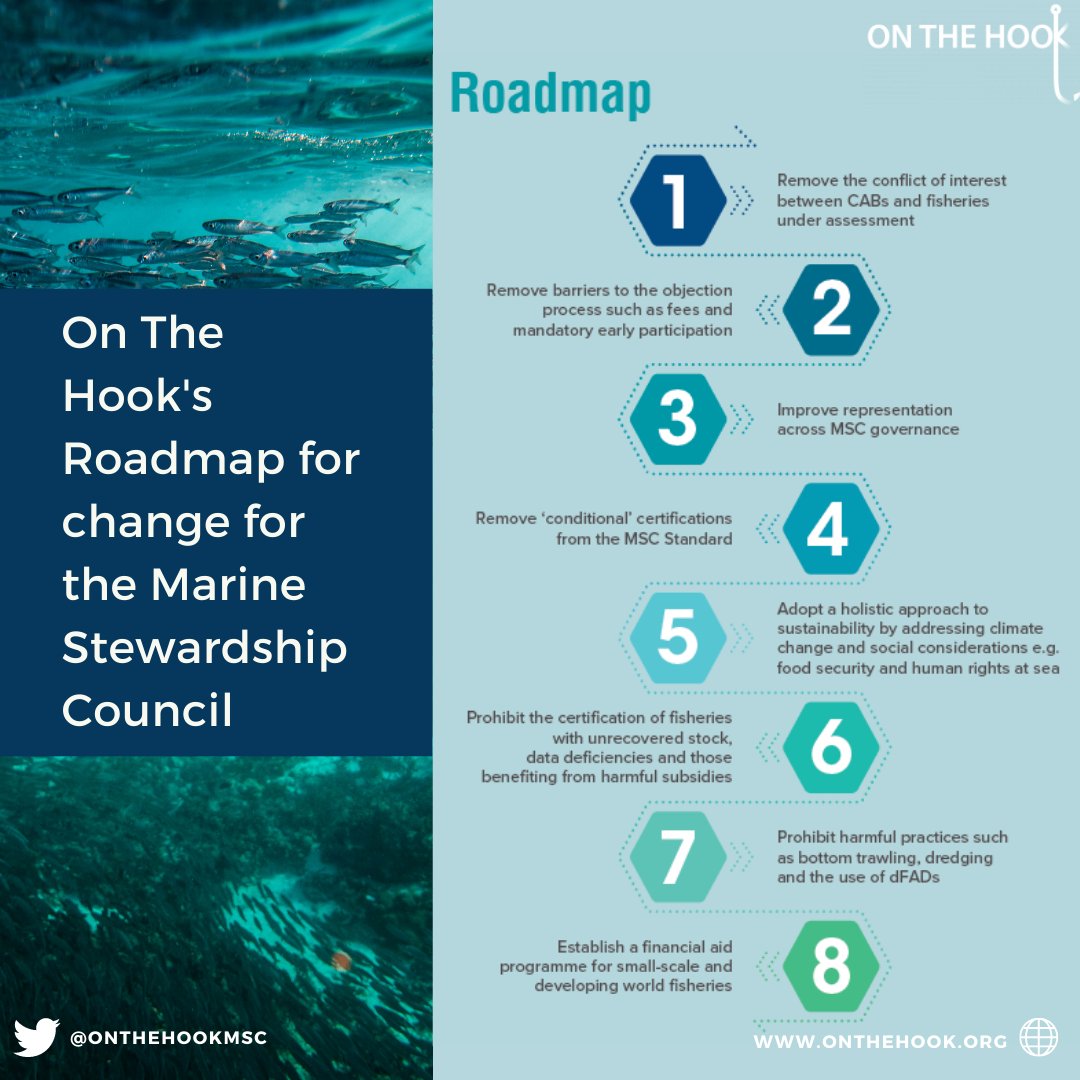
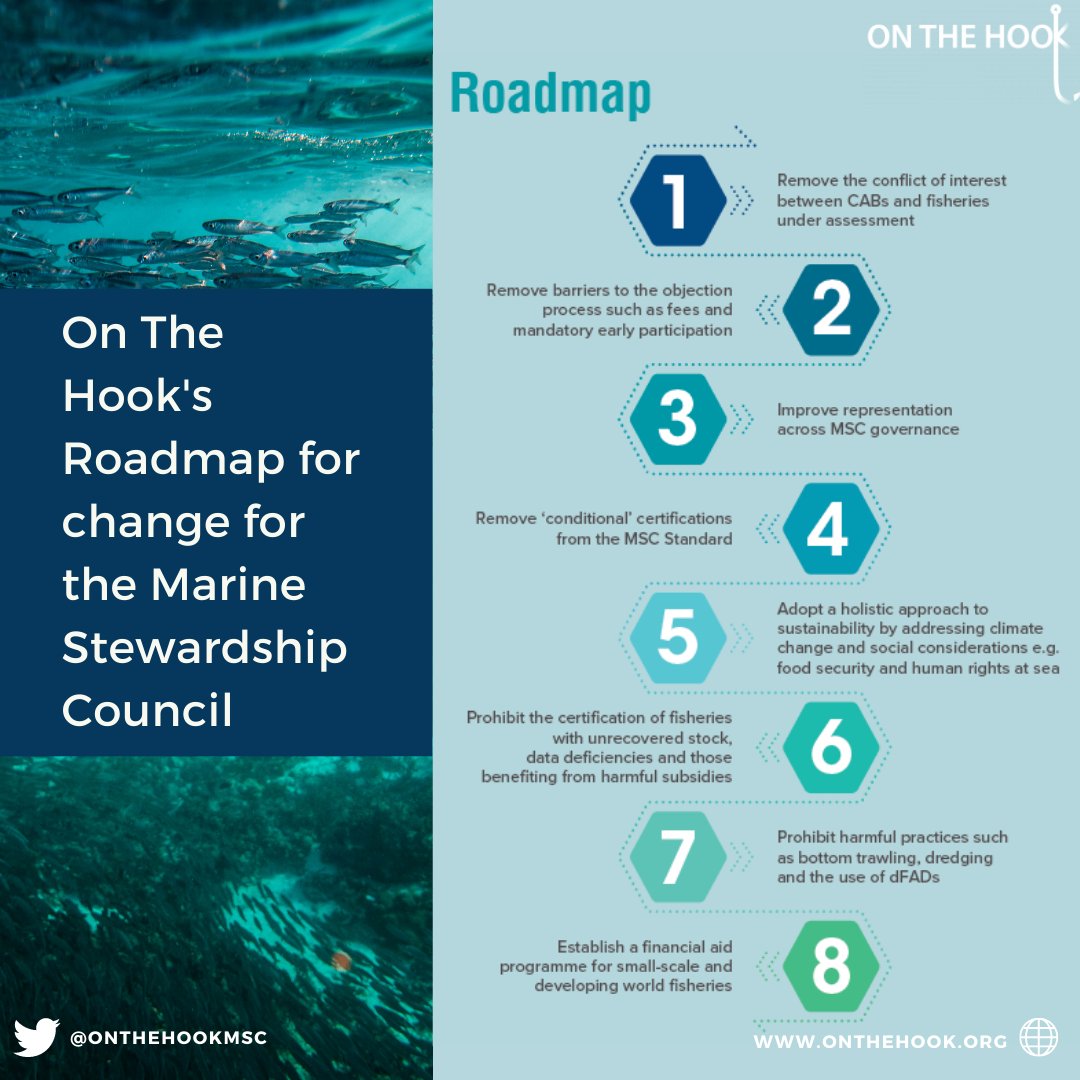
After a year of consulting and writing we are pleased to share the final report and roadmap for change🛣️
A short🧵on why this is so important...
Today we have published our external review of the
@MSCecolabel🎣
Following a year-long process with input from a range of stakeholders, our recommendations are clear: it’s time for fundamental reform of the MSC.
Read the full report here: https://t.co/eSLDPtOfbX
Make Stewardship Count, a coalition co-founded by SeaChoice, fears Marine Stewardship Council’s revised Fishery Standard doesn’t go far enough to protect marine life and ocean habitat. @FixMSCNow
Read more in our latest blog post 👇https://t.co/MN5rAc1xEK
We recommended that no fisheries be recertified until all conditions of their previous certification are fulfilled. MSC did tighten the requirements condition extensions. However, in certain cases, fisheries are able to be recertified without fulfilling their conditions.
No such changes were made, and the Standard may still permit MSC certified fisheries to use bottom contact fishing methods in sensitive areas.
Follow the link to see read our scorecards (https://t.co/LJN5GICJjH) and press release (https://t.co/a59FRFUNa5)
We urged MSC to implement changes for the protection of seafloor biodiversity including a prohibition on bottom contact fishing in Vulnerable Marine Ecosystems (VME), and requirements to limit impacts on all benthic habitats.
#makestewardshipcount#fixmscnow#sustainableseafood
We had hoped to see overfishing prohibited for all ‘main’ species of the catch, however, no changes were made during this review.
https://t.co/a59FRFUNa5
#makestewardshipcount
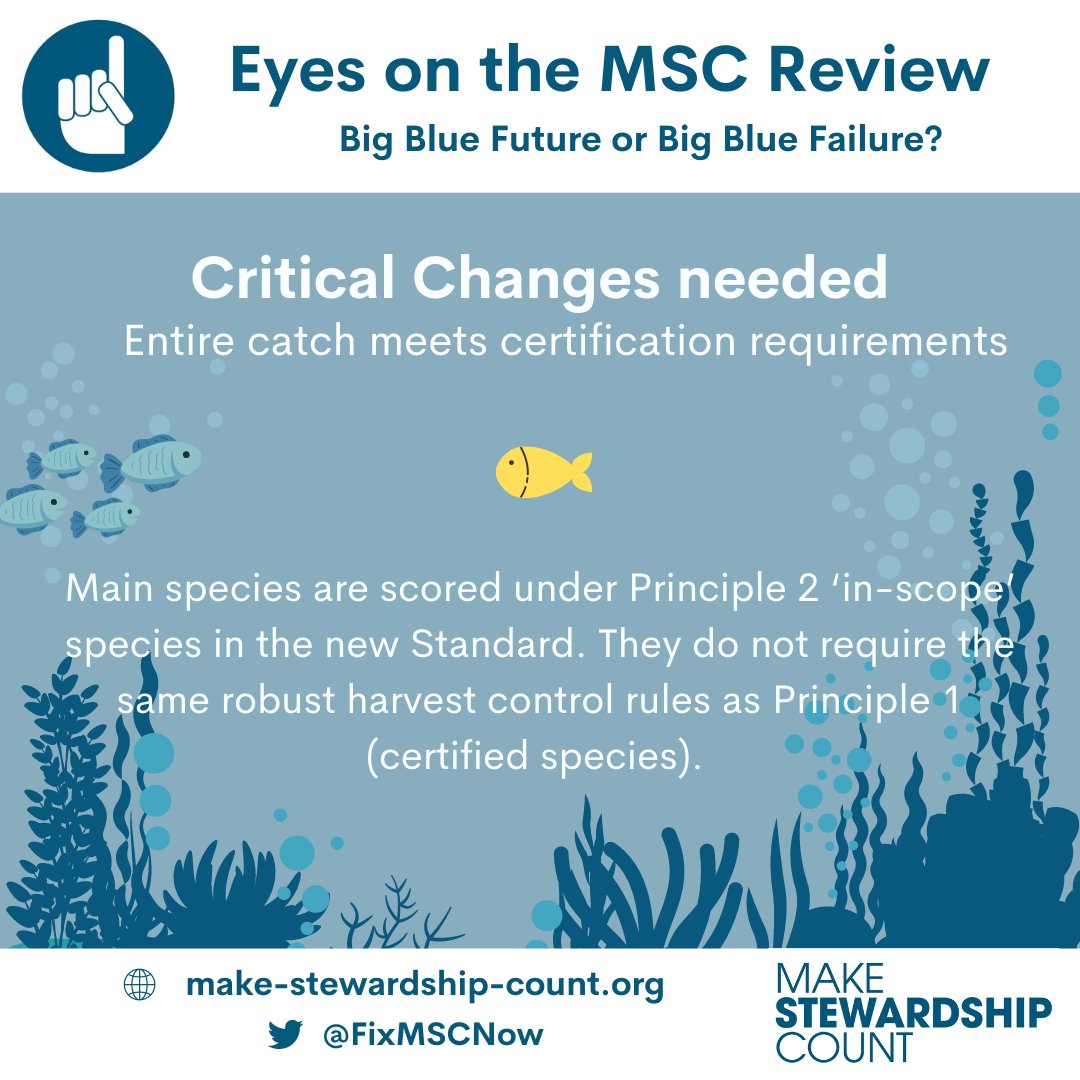
Our request to ensure the entire catch meets certification requirements, with all ‘main species’ of catch managed in the same way as the target species (P1), was not met. The main in-scope species are scored under P2, which do not have the same robust harvest control rules.
For fisheries not managed by RFMOs, this will likely result in lower levels of monitoring for very similar fisheries and the certifier may also consider lower levels as adequate.
See our scorecards for more! https://t.co/LJN5GICJjH
#makestewardshipcount#fixmscnow
We called for risk based qualitative and quantitative data requirements for bycatch reporting as a prerequisite for certification. Although this was discussed throughout the review, such an approach has not been adopted.
The new Standard includes only one quantitative threshold for ‘independent monitoring’: 30% coverage for fisheries operating in the High Seas and managed by RFMOs and interacting with ETP species.
These factors are not precautious enough and will likely allow economically valuable ETP species to become MSC certified, despite not being well managed or recovering.
Follow the link to read our recent press release - https://t.co/a59FRFUNa5
#makestewardshipcount
MSC designed an improved decision tree for designating species as endangered, threatened and protected species thereby improving the process significantly.
Despite improvements to the ETP decision tree, the new Standard allows species designated as ETP to be considered as an in-scope species and eligible for certification as an MSC product by introducing ‘modification factors’.