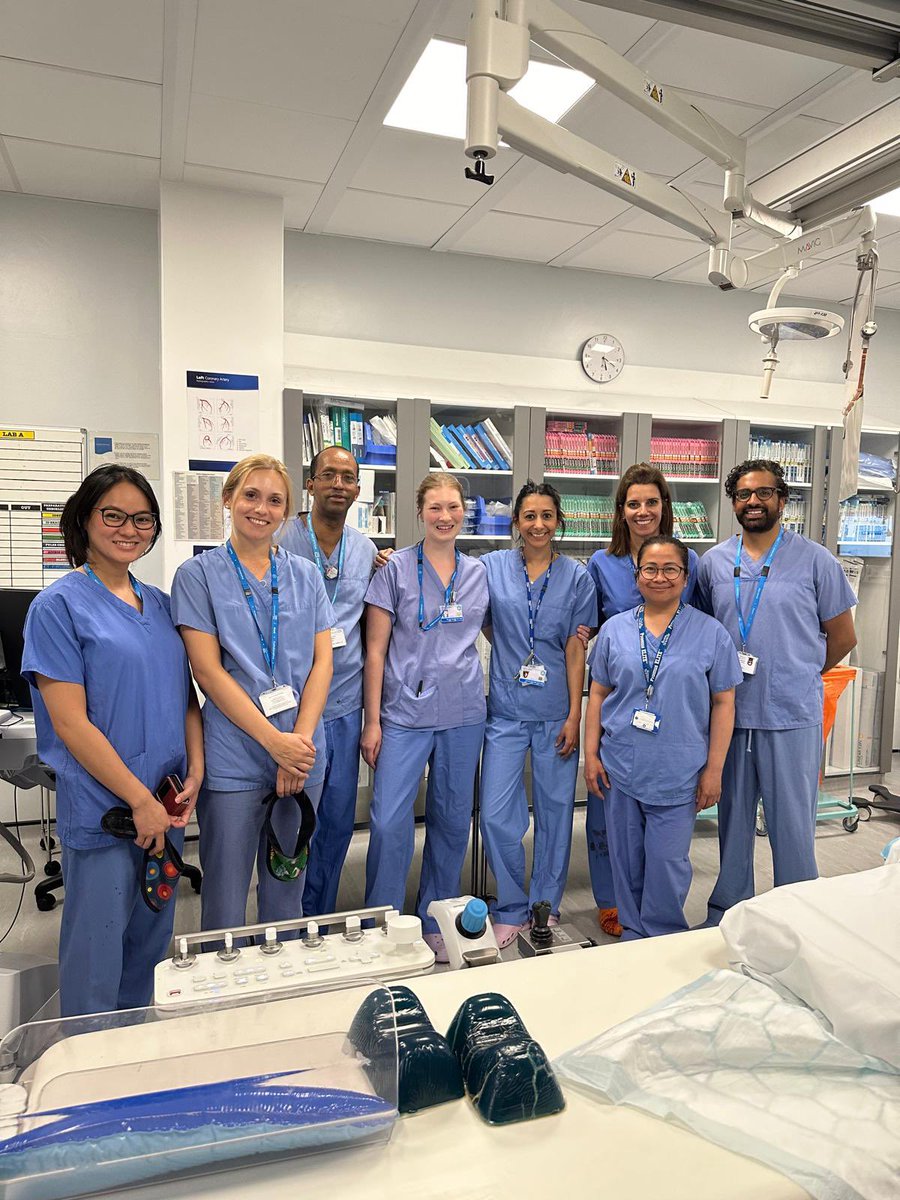
Just in case you thought the ORBITA team had gone on summer vacation… The first ORBITA-MOON case was completed yesterday. Another n-of-1 trial that might have some interesting results. Well done @ShaynaChotai on achieving the first of many big milestones during your PhD!
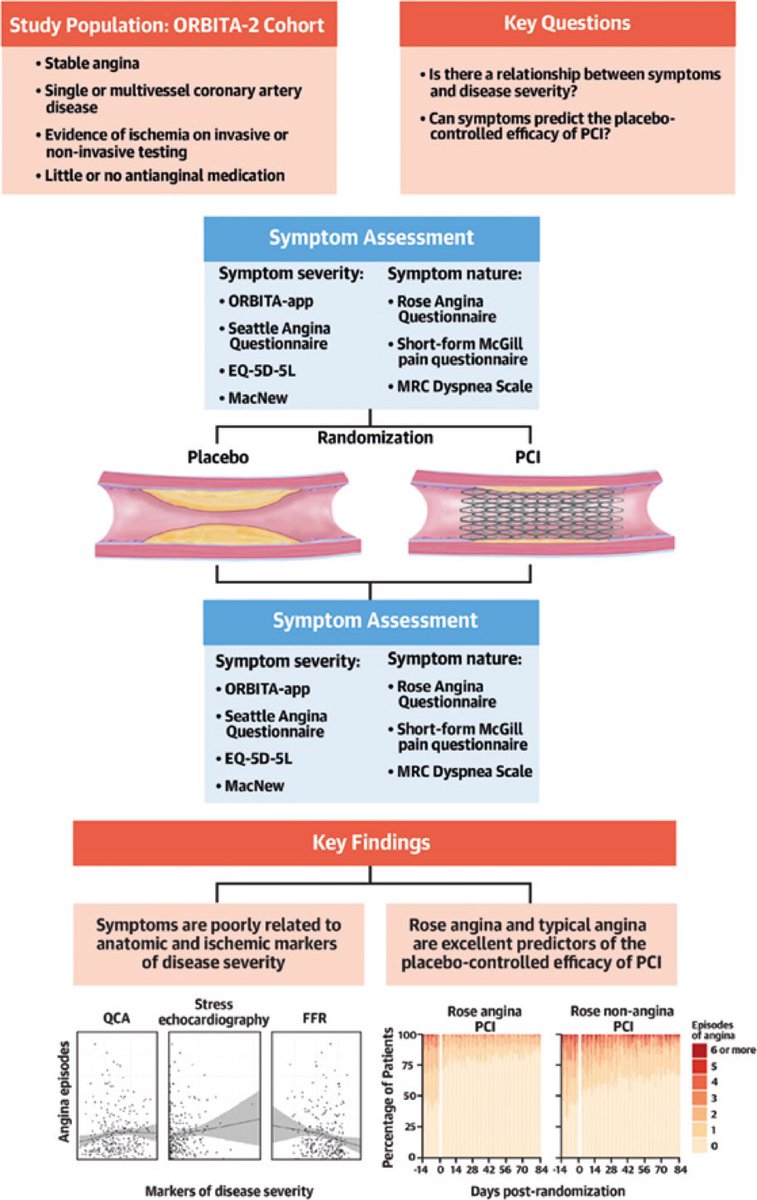
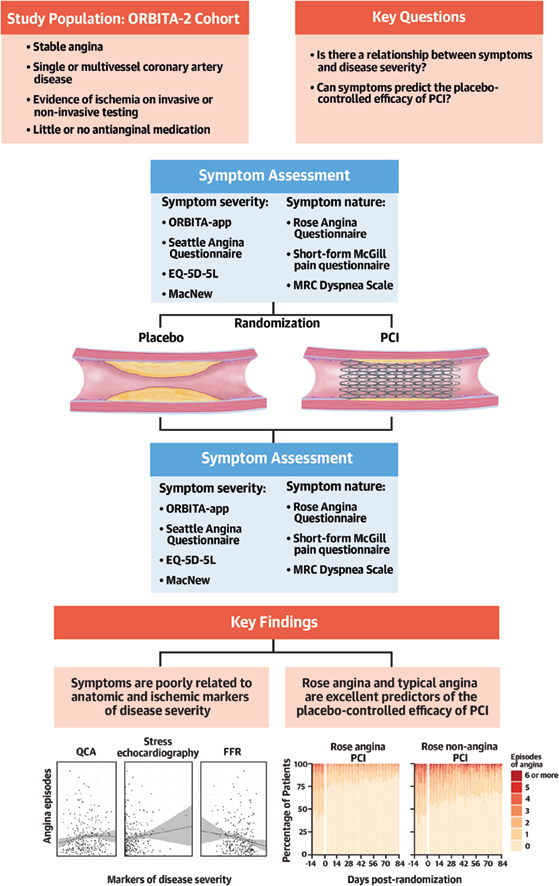
#cvCAD patients who have angina are more likely to achieve symptom relief from #PCI, according to an analysis of the ORBITA-2 trial in #JACC. https://t.co/9oip2X4K2J @TCTMD@TCTMD_Caitlin
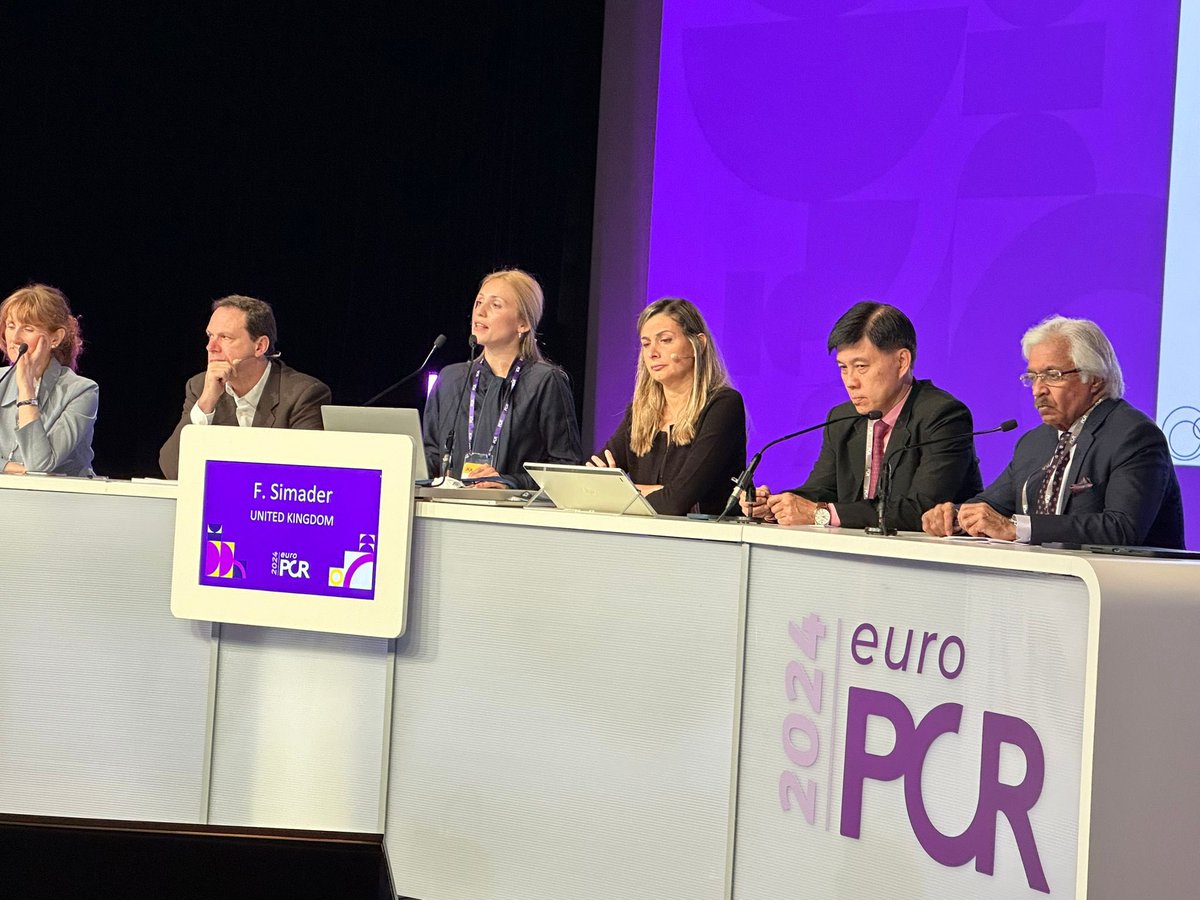
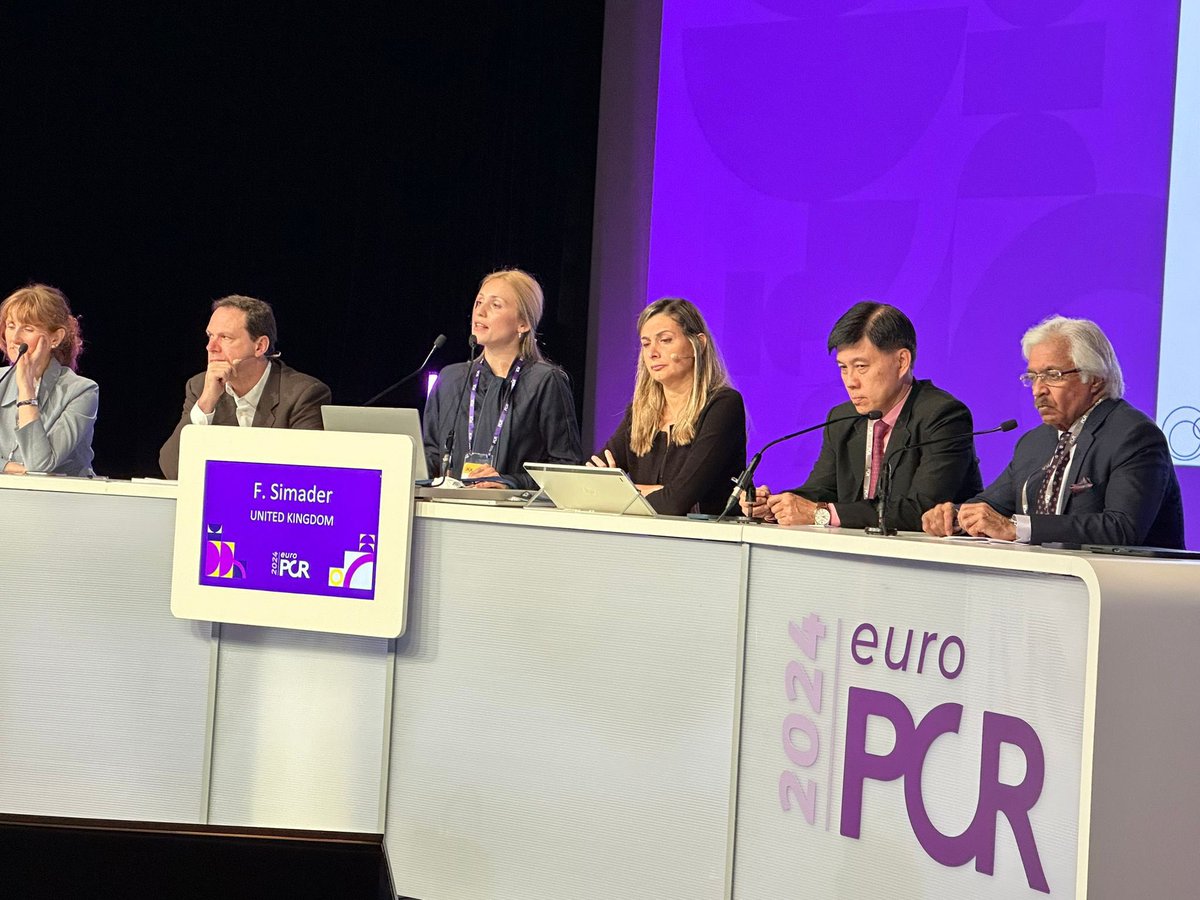
As always my team make me very proud. Today we launched our newest ORBITA fellow @FloSimader who did the most fabulous job of explaining how symptoms predict outcomes from ORBITA-2 @JACCJournals@mshunshin
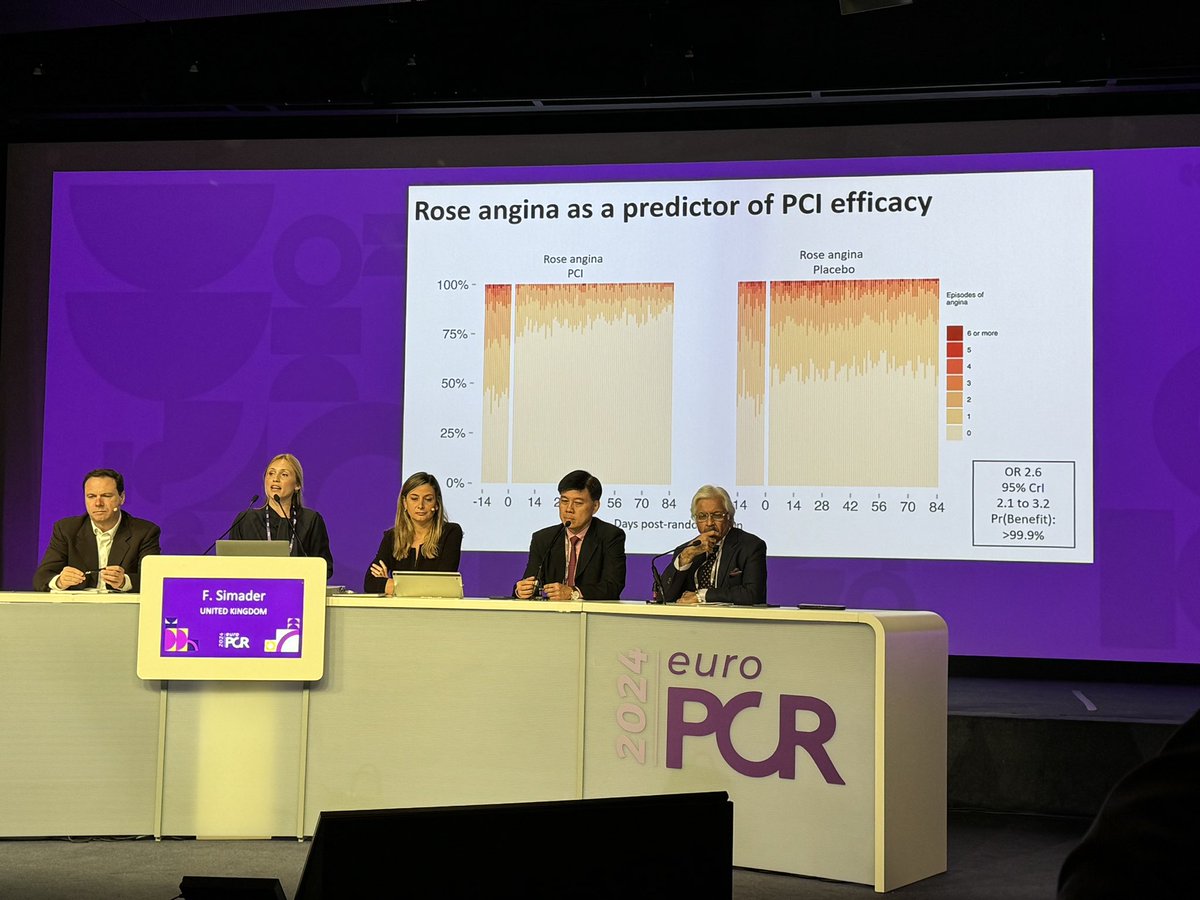
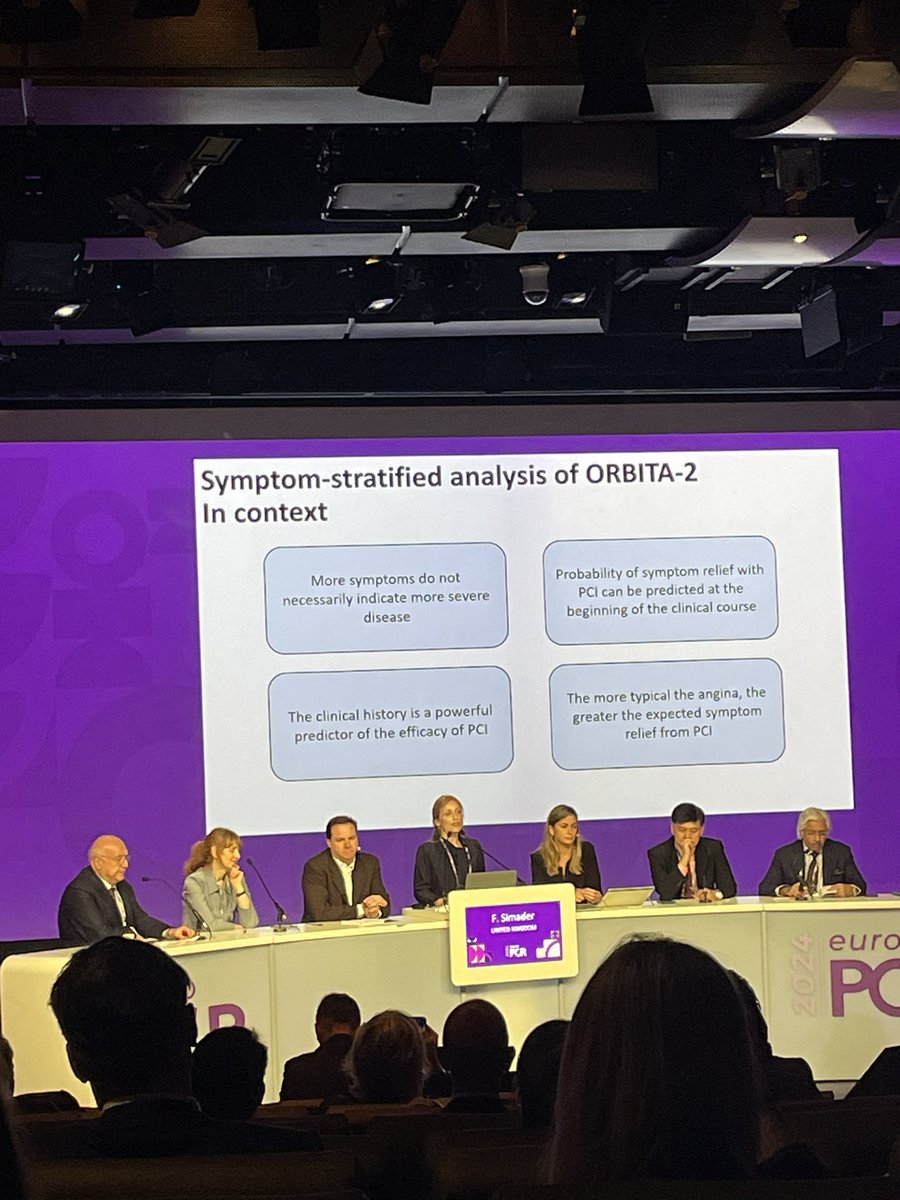
.@FloSimader on #ORBITA-2 at #EuroPCR:
📌Poor correlation between symptoms & disease severity
📌Symptom nature is a powerful predictor of the placebo-controlled efficacy of #PCI
📌Rose angina & typical angina are excellent predictors of the placebo-controlled efficacy of PCI
📌Other symptoms such as SOB are poor predictors of the placebo-controlled efficacy of PCI
🔥 Important new insights from ORBITA-2 study presented today at #EuroPCR
👉🏼 More angina symptoms do not necessarily reflect more extended coronary disease
👉🏼 The clinical history is a strong predictor of the efficacy of PCI
🚨Interroge your patients!
@PCRonline@rallamee
#EuroPCR#JACC LBCT SimPub: #ORBITA-2 symptom-stratified analysis - Although symptom severity & nature were poorly associated with disease severity, the nature of symptoms powerfully predicted the placebo-controlled efficacy of #PCI. https://t.co/gTBH37zmyo
@FloSimader@rallamee
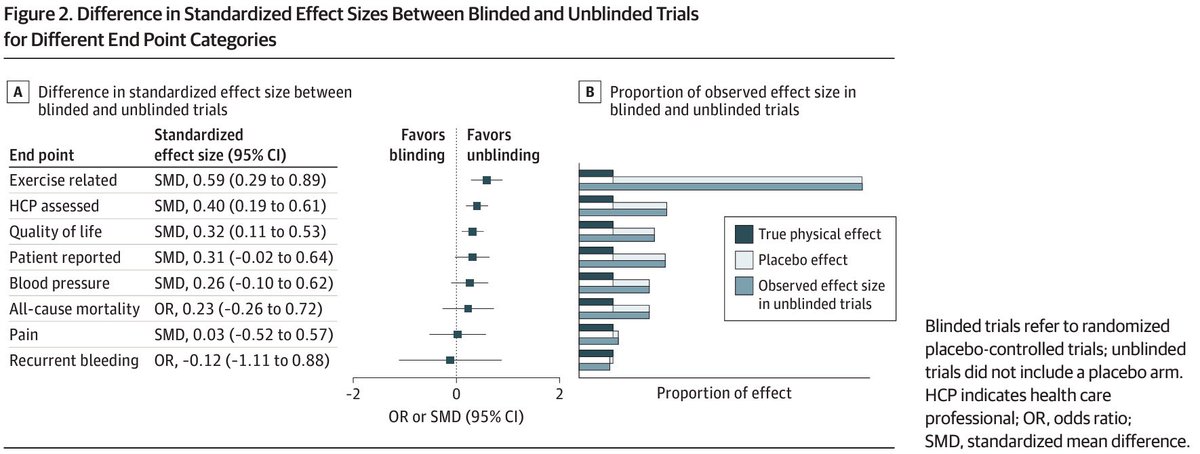
Q: Does blinding matter in RCTs of surgical procedures? A: Depends on the endpoint @JAMASurgery
We compared placebo-controlled and open-label surgical trials to identify when the placebo effect is most powerful @rallamee@KatieEljadi@ImperialNHLI
https://t.co/CWdvfyQaJ0