@Stellantis@JeepIndia#Jeep Owning a Jeep , is a pride. But Jeep in India makes sure that you should not feel proud in owning a jeep.The Dongle and Jeep life for my Jeep Compass was set to renew in June this year , there was no communication regarding this neither from the Jeep
#Jeep#JeepIndia#Stellantis Owning a Jeep , is a pride. But Jeep in India makes sure that you should not feel proud in owning a jeep
The Dongle and Jeep life for my Jeep Compass was set to renew in June this year , there was no communication regarding this neither from the
Neither from the service provider / service centre . Now when I reached the Jeep helpline , they say it’s elapsed and they have no idea how to get the things sorted .
Pathetic
@JeepIndia Owning a Jeep , is a pride. But Jeep in India makes sure that you should not feel proud in owning a jeep
The Dongle and Jeep life for my Jeep Compass was set to renew in June this year , there was no communication regarding this neither from the Jeep India Desk
Are you interested in how the Stewart approach improves the understanding and management of complex acid-base disorders compared to traditional methods? If so, the next paper is for you—read all about it here ⬇️
Acid Base Homeostasis: Stewart Approach at the Bedside
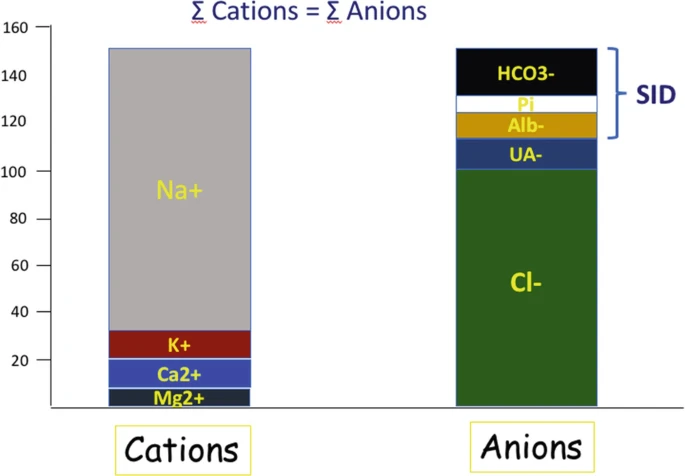
Despite its simplicity and wide availability, traditional approach fails to provide us with an insight into mechanisms of acid base abnormalities or accurately quantify individual components of it or provide clinician with an approach to decide probable ways to rectify the problem (if necessary). Sometimes, traditional approach fails to identify complex acid base disorders seen in critically ill patients. The approach to acid base disorders provided by Peter Stewart is based on robust physicochemical evidence. Stewart approach identified three independent variables that determine acid base homeostasis—total carbon di-oxide, strong ion difference (SID), and total nonvolatile acid anion (Atot). Fencl provided some simple calculations to measure these independent variables at the bedside. Stewart approach provides us with an insight into the acid base abnormalities and helps us in quantifying individual components producing any disturbance and measures to be taken to rectify them (if needed). Stewart’s approach is also useful in understanding effects of different intravenous fluids on acid base physiology of plasma.
➡️FULL TEXT: https://t.co/uvW0Yh5ICs
➡️PDF: https://t.co/giMipDnfnN
Fig: Principle of electroneutrality: concentrations of all cations same as concentrations of all anions. Alb- albuminate, UA- unmeasured anion, Pi- phosphate
#FOAMed #FOAMcc #fluids #CriticalCare #ICU
@dr_supradip
Pralidoxime should not be administered without concurrent atropine as it may cause worsening of symptoms due to transient oxime-induced acetylcholinesterase inhibition
A 🧵 on treatment of ORGANOPHOSPHATE POISONING : Pharmacological aspects
Acute muscarunic effects of organophosphate poisoning is managed with atropine.
For moderate to severe cholinergic toxicity, atropine should be administered beginning at a dose of 2 to 5 mg IV for adults and 0.05 mg/kg IV for children.
If no effect is noted, the dose should be doubled every three to five minutes until pulmonary muscarinic signs and symptoms are alleviated.
In patients with moderate or severe toxicity, after desired response is achieved with atropine by bolus, administer 10 to 20 percent of the total cumulative bolus dose as an IV continuous infusion per hour
Adjust the infusion rate as needed to maintain adequate response (eg, clear lung auscultation, heart rate >80 beats/minute, systolic blood pressure >80 mmHg, dry axilla, pupils no longer pinpoint) without causing atropine toxicity (eg, confusion, pyrexia, absent bowel sounds, urinary retention).
Adjust the infusion according to clinical response and taper until recovery.
When atropine toxicity occurs, withhold the infusion until toxicity resolves and restart at 70 to 80 percent of the previous infusion rate.
Patients do not respond adequately to high-dose atropine therapy and may require treatment with epinephrine but low evidence to guide such decision
Atropine dosing should be titrated to the therapeutic end point of the clearing of respiratory secretions and the cessation of bronchoconstriction.
Tachycardia and mydriasis are not appropriate markers for therapeutic improvement, as they may indicate continued hypoxia, hypovolemia, or sympathetic stimulation.
In patients with severe poisoning, hundreds of milligrams of atropine by bolus and continuous infusion may be required over the course of several days.
Since atropine does not bind to nicotinic receptors, it is ineffective in treating neuromuscular dysfunction.
Pralidoxime (2-PAM) and other oximes, such as obidoxime, are cholinesterase reactivating agents that are effective in treating both muscarinic and nicotinic symptoms
Pralidoxime should not be administered without concurrent atropine in order to prevent worsening symptoms due to transient oxime-induced acetylcholinesterase inhibition
The current World Health Organization recommendation for IV bolus therapy with pralidoxime is at least 30 mg/kg in adults, and 25 to 50 mg/kg for children, based upon the severity of symptoms.
Pralidoxime should be administered slowly over 30 minutes, since rapid administration has occasionally been associated with cardiac arrest, and slow administration prevents the muscle weakness that results from the transient inhibition of acetylcholinesterase as pralidoxime binds to the enzyme.
After the bolus dose, it appears that superior antidotal effects occur with pralidoxime given as a continuous infusion of at least 8 mg/kg per hour in adults and 10 to 20 mg/kg per hour for children.
Reference:
1. World Health Organization. Environmental Health Criteria No 63. Organophosphorus Pesticides: A General Introduction. World Health Organization, Geneva 1986.
2.Pawar KS, Bhoite RR, Pillay CP, Chavan SC, Malshikare DS, Garad. Continuous pralidoxime infusion versus repeated bolus injection to treat organophosphorus pesticide poisoning: a randomised controlled trial.Lancet. 2006;368(9553):2136
3. Image credit : Michael Eddleston, Nick A Buckley, Peter Eyer, Andrew H Dawson,
Management of acute organophosphorus pesticide poisoning, The Lancet, Volume 371, Issue 9612, 2008, Pages 597-607,
ISSN 0140-6736, https://t.co/svrrooBppu
In the INTERACT4 trial, researchers assessed whether intravenous antihypertensive treatment started within 2 hours after the onset of acute stroke symptoms would improve outcomes. Read the full trial results and Plain Language Summary: https://t.co/uKFVZHWWKF
#CritCare#OpenAccess
Stress & strain in mechanically nonuniform alveoli using clinical input variables: a simple conceptual model
Read the full article: https://t.co/ZRq1HEdztC
@jlvincen@ISICEM#FOAMed#FOAMcc
Celebrating Dr OP Gupta's retirement after 53 incredible years at MGIMS! Thank you for teaching, patient care, and shaping future doctors. Your legacy will live on!
#MedicalEducation#Sevagram
For more on his remarkable journey, check out my blog: https://t.co/YYtO8xrj9V
To establish effectiveness of AI in healthcare, we need randomized controlled trials with head-to-head comparisons of the standard of care with AI methods.
Currently, such robust evidence is limited, as most AI applications in healthcare have not been tested.
#MedTwitter