I've been working in silence for quite a while now. Tbh, I don't really even know where to start, so cue the rambling and ranting.
Regardless of which side of the fence you sit on, no one can argue the past few years haven't been politically and economically wild. For crypto as a whole it feels like a never ending game of tug of war.
A lot of X content has become toxic, so I just largely am not interacting these days. But I read, I read a lot of it. I think we like to forget history a bit in this community. $PLS launched off the highs, and the SEC swooped in right after.
Very few people want to admit it, but it shook confidence immediately. I mean no other crypto project has survived such a thing at the time. But #PLS $PLSX and $HEX did. However, winning doesn't unshake that confidence. And RH during and after that event took social precautions to protect himself and his creations.
Thing is, the guy isn't stupid. Someone once asked me if I thought certain aspects of the launch we rushed because he knew it was coming? And honestly, maybe. I'd attribute at least a non-zero probability to it. And If that were the case, im glad it was rushed. That case may have gone differently otherwise.
Do I still think #PulseChain, #HEX, etc... all have futures? Yes. RH has had the opportunity to just straight up bounce from all of this. Why hasn't he? You could point to exhibit A, B, C, D, etc... of how he's likely got the funds to do that and we all could relatively do nothing about it.
So why is he still around? I think it's pretty simple. The usual answer, he wants to win. It's in his twitter handle for Christs sakes. I'll go a step further and say he likely also wants us to win by extension, arguably not as much as he wins, but I mean that's pretty locked in at the moment 🤣
That's not to say he hasn't long been encumbered. And in that state, at lot has gone on without him. Much of which is / was bad. $pDAI guys... I pointed out from day one how building all this around a protocol in a dangerous state was a risky move. And I was right about that.... on multiple occasions... But does that matter now? I suppose not as much. In its current state, it's seemingly no longer exploitable. No different than a meme token now. (presumably, not like I have deep dove on any further risks since ESM). So I guess just whale risk mainly now?
Now a lot of people here are in the anti-pdai camp. Me too for what it's worth. But I don't care as much about it's negative anymore in its current state. A lot of people are still in the #pDAI camp strongly. We view this as tribalism, but it's important to note that makes all of us in the #PulseChain camp universally. So these day I find myself relatively pDAI neutral. If you guys want to send it to $1 do it. Only whales can stop you, they run out eventually. (insert super strong this is NOT financial advice). Hell you can maybe even use Sigma to help? Or maybe it wont help, idk. Depends on how people use the software.
Conversely, when looking at chain state overall... Why is there nearly $50M in stables sitting on the sidelines. Why not just bridge it out if you want out of what you think is a dead chain. Surely leaving it there exposes you to bridge risk? Why all these yield movements, why the $HEX dusts.... Something is happening. People are seemingly waiting to see what that something is. Or I am reading into things, NFA as always. This whole post is just ramblings of someone trying to do the best they can and certainly not any kind of advice.
When I look at other ecosystems, I see a level of polish we don't have. I see tooling we don't have, I see a fostered developer environment we don't have. So I've just been building it, painstakingly.... Because someone has to if we want to be taken seriously.
And what I've been building has allowed me to get Sigma to where it is. Sigma is so close... Really just in UI mode, performance optimization, going through nice to haves. I don't believe in launching in a non-finished immutable state. So yeah, I take my time. As with everything.
But my point with all of this, and the "why" #Sigma question.... It's unifying, anyone can participate. Which tribe you're in doesn't matter. And if you don't like it, don't use it. It's just software you can use or not use. As it should be.
The years of tooling work to deliver this has been a lot of work for one guy in silence. In that time AI has appeared. My take, every dev should be using it. Given the right direction and context. It will make you better. If you blindly trust it, it will make you worse. GPT 5.4 audits smart contracts better than most auditing services. Especially if you give it the context of what you are trying to do.
Anyways I digress, testnet is soon. Soon more meaning a feeling of near completion not always reality. That how software is. I do think Sigma stands to unify the chain in a common goal, and shift liquidity into more meaningful places, but ultimately it up to the people the decide to use the software or not use it.
And after these frameworks I've built will be applied to what I am tentatively calling the universal hex UI. More or less something aggregative of every derivative I can reasonably support. With data and analytics we since lost. So not just $HEX, $HDRN, and $ICSA, but others as well. However, that depends on some aspect of $Sigma to exist first, so sigma first, chain unity first.
And last but not least, take care of yourselves and strive to do cool things. If we aren't doing cool things then what's the point?
Hope you think my UI looks good, I spent a while on it.
/rant
Rick Rubin: "Make what you love, not what you think people will like"
"If you want to live in a creative way, which will benefit everything in your life, be a better person in your family, do a better job starting a new business, it's all the same. I don't really know anything about music. It's more a way of looking at the world and wanting it to be the best it could possibly be. And doing whatever it takes to be the best it could possibly be."
Rubin shares how his career happened:
"From the beginning, I never thought any of the things I'm doing were possible or realistic. I just did things out of the love of them, thinking I would have real jobs. That my passion would be my hobby, and I'd have a job to support my hobby. And it just magically turned out different than that without me knowing it was possible."
On why some things connect and others don't:
"The stars line up at certain times for certain things to happen. Sometimes you can make something great, and it doesn't connect for whatever reason. Sometimes you make two things you think are the two best things you've ever made. One of them connects with the world. One of them doesn't.
And it might not have anything to do with what's in the art. It might be that it came out the same day as something else. Or there was a bigger story at the time. There's so much to it that we don't understand."
He continues:
"All we can do is make something good and put it out and hope for the best. That's all there is. We never know why things work. Even if you make a piece of art and it works, you may not know why."
On talent versus work ethic:
"There are a lot of talented people who never make it because they don't have the work ethic. It's not just talent, talent's a piece. And you could argue for some people, the work ethic trumps the talent."
Rubin explains what real collaboration is:
"Having worked with a lot of bands, I see there's often this friction where people are trying to get their idea in. That's not a collaboration. A real collaboration is when everyone who's there is working together towards whatever is the best thing for the whole.
Whether it's your idea or someone else's idea, it doesn't matter. If you're invested in the collaboration, you want the best idea to win. You don't want your idea to win."
On what makes art great:
"What makes it great is the personal. With all of its imperfections. With all of its quirkiness. That's what makes it great. How you see the world that's different from how everyone else sees the world. That's why you're an artist. That's your purpose in sharing your work with the world."
He warns against being derivative:
"There are these derivative voices where they're finding what they think other people want to hear, and they start saying it because they've heard other people say similar things that are now successful. Even if they have some short-term success doing that, it's not revolutionary. It doesn't change the world. It doesn't last.
The people who you first see and you might not like that you come to like because you don't understand them at first, those are the ones that change the world. Those are the ones you dedicate your fandom to for life."
Rubin shares his philosophy on taste:
"You can't second-guess your own taste for what someone else is going to like. We're not smart enough to know what someone else is going to like. To make something thinking, 'Well, I don't really like it, but I think this group of people will like it,' it's a bad way to play the game of music or art. You have to do what's personal to you. Take it as far as you can go. Really push the boundaries. And people will resonate with it if they're supposed to resonate with it."
He describes creativity as catching waves:
"We're really talking about magic. The universe conspiring on our behalf if we let it. Being in this flow of catching these waves that anyone can catch. If you're trying to catch it, you're open to it, you see it coming, you take off on every chance you get. And sometimes the ride happens. It's remarkable how it happens. It doesn't come from preconception. It's not an idea. It's through the doing."
Rubin explains how ideas exist in the universe:
"Have you ever had that experience where you have an idea for something, you don't do it, and then six months later you see someone else has done it? It's not because they took your idea. It's that it's time for that, and you can act on it or not. The best artists are the ones who have the best antenna for this material that's available. It's coming through. The best comedians see the best jokes. They see them coming. We all live in the same world; the way you see it, you have the best joke because you see it best."
He closes with how to stay open:
"If we listen to what's going on around us, you can overhear a conversation in a coffee shop, and it is the setup for an idea you're working on. You hear a phrase you don't commonly use. My experience is: when you are open and looking for these clues in the world, they're happening all the time. And they're happening often right when you need them."
David Lynch: "You're operating with a limited mind and don't realize it"
"If you have a golf ball-size consciousness, when you read a book, you'll have a golf ball-size understanding. When you look out, a golf ball-size awareness. When you wake up in the morning, a golf ball-size wakefulness. But if you could expand that consciousness, you read the book with more understanding. You look out with more awareness. You wake up with more wakefulness."
Lynch explains what lies beneath:
"There's an ocean of pure vibrant consciousness inside each one of us. It's right at the source and base of mind, right at the source of thought. It's also at the source of all matter. Modern physics calls it the unified field. All matter, everything that is a thing emerges from this field."
He describes what the field contains:
"This field has qualities like bliss, intelligence, creativity, universal love, energy, peace. It's not the intellectual understanding of this field, but the experiencing of it that does everything. You dive within, transcend, experience this field of pure consciousness, and you unfold it. It grows. The final outcome of this growth of consciousness is called enlightenment. And a side effect of enlivening this consciousness is that negativity starts to recede."
Lynch shares what happened when he started meditating:
"When I started, I was filled with anxieties. Filled with fears. Kind of a depression. And anger. I took this anger out on my first wife. After two weeks of meditation, she comes to me and says, 'What's going on?' I was quiet for a moment because it could have been any number of things she might have been referring to. I said, 'What do you mean?' She said, 'This anger, where did it go?' I didn't even realize it had lifted."
He explains why negativity kills creativity:
"Anger, depression, sorrow, these are beautiful things in a story. But they're like poison to the filmmaker. Poison to the painter. Poison to creativity. They're like a vice grip. If you're super depressed, you can hardly get out of bed, let alone think of ideas or have creativity flowing."
Lynch describes what grows when you expand consciousness:
"It's money in the bank to get that beautiful consciousness growing. Creativity flows. The ability to catch ideas at a deeper level. Intuition grows. This field is a field of pure knowing. You dive in there, and you just know how to go. You know how to solve problems. It's like an ocean of solutions."
He shares the ultimate benefit:
"The ultimate thing for me is the enjoyment of the doing. The enjoyment of life grows huge. I love making films now more than ever before. Ideas flow more. Everybody has more fun on the set. People look like friends, not like enemies. It's a beautiful, beautiful thing."
Lynch addresses the myth that you need anger to create:
"People say, 'You gotta have anger. You gotta have an edge to create.' No, you gotta have energy. You gotta have clarity to create. You gotta be able to catch ideas. You gotta be strong enough to fight unbelievable pressure and stress. And this gives you more and more ability. It just looks beautiful. It's way, way, way better."
On the nature of true happiness:
"They say true happiness isn't out there. True happiness lies within. I always wondered, where is this 'within'? And they don't say where it is. They don't even say how to get to it. But it's there. And when you're in it, you know you're in it. It's familiar. It's you. Right away, a happiness, but it's not a goofball happiness. It's a thick beauty. A thick beauty to appreciate life and living. And suffering starts to go."
You’re bored because you’re not doing side quests, man.
Life is more than just working and then throwing yourself into bed doing nothing.
Here are 50 side quests to complete:
@Ryan_Daigler It has to do with the story they tell themselves. Usually that they are a Superior being. They will hand you a role beneath them to confirm that their story is true. It is tied to validating their fractured ego
Japanese actor Hiroyuki Sanada spoke about the contradictions of human nature:
“Some people dream of having a swimming pool at home, while those who have one hardly ever use it. Those who have lost a loved one feel a profound sense of loss, while others often complain about their living relatives. Those without a partner long for one, while those who have one often don't appreciate it. The hungry would give anything for a meal, while the satiated complain about the taste of their food. Those without a car dream of owning one, while those who have a car are always looking for a better one.”
The key to happiness is gratitude: truly seeing and appreciating what we already have, and understanding that somewhere, someone would give anything for what we take for granted.
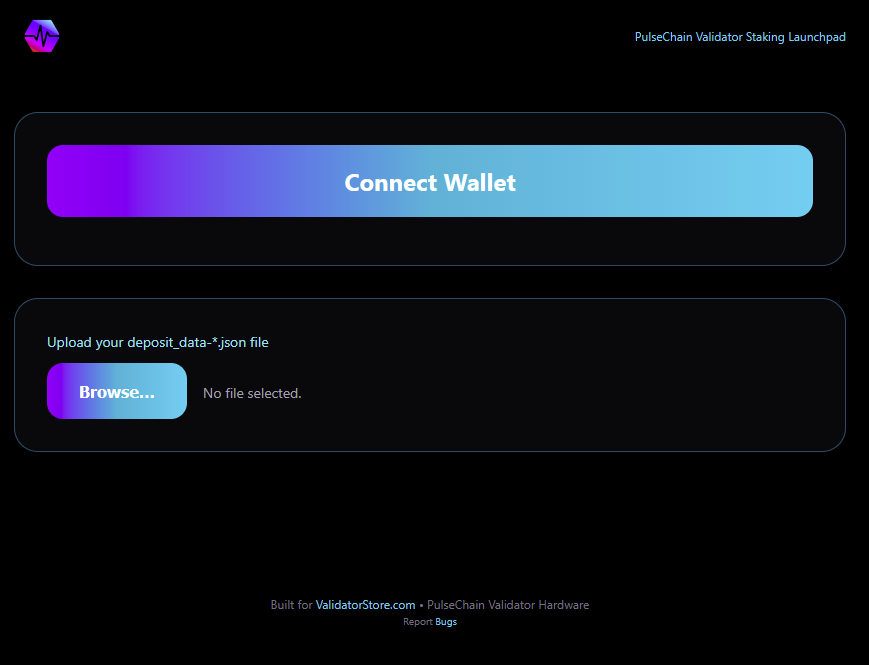
It's ready! The New PulseChain Validator Staking Launchpad!
Built it from scratch because the official one has weird issues.
Now anyone can stake in minutes — super clean, 100% local.
Thread 👇
https://t.co/y5qqimcsgL
@S1ckAlpha And you probably already have coins waiting for you. If you had crypto held in non-custodial wallet, the tokens you held at the time of fork (May 2023) were copied onto Pulsechain. Worth a look into