Today, I'm starting the Food Solutions New England 21-Day Racial Equity Habit-Building Challenge to refresh and renew my skills and awareness. @FoodSolutionsNE#equity
"We can’t afford to keep laws on the books that further disadvantage those who feed us."
Learn more about the insidious practice of "heirs' property," how it's impacting marginalized communities from accessing farmland, and the legislation in Mass.
https://t.co/hJSLSr1xjP
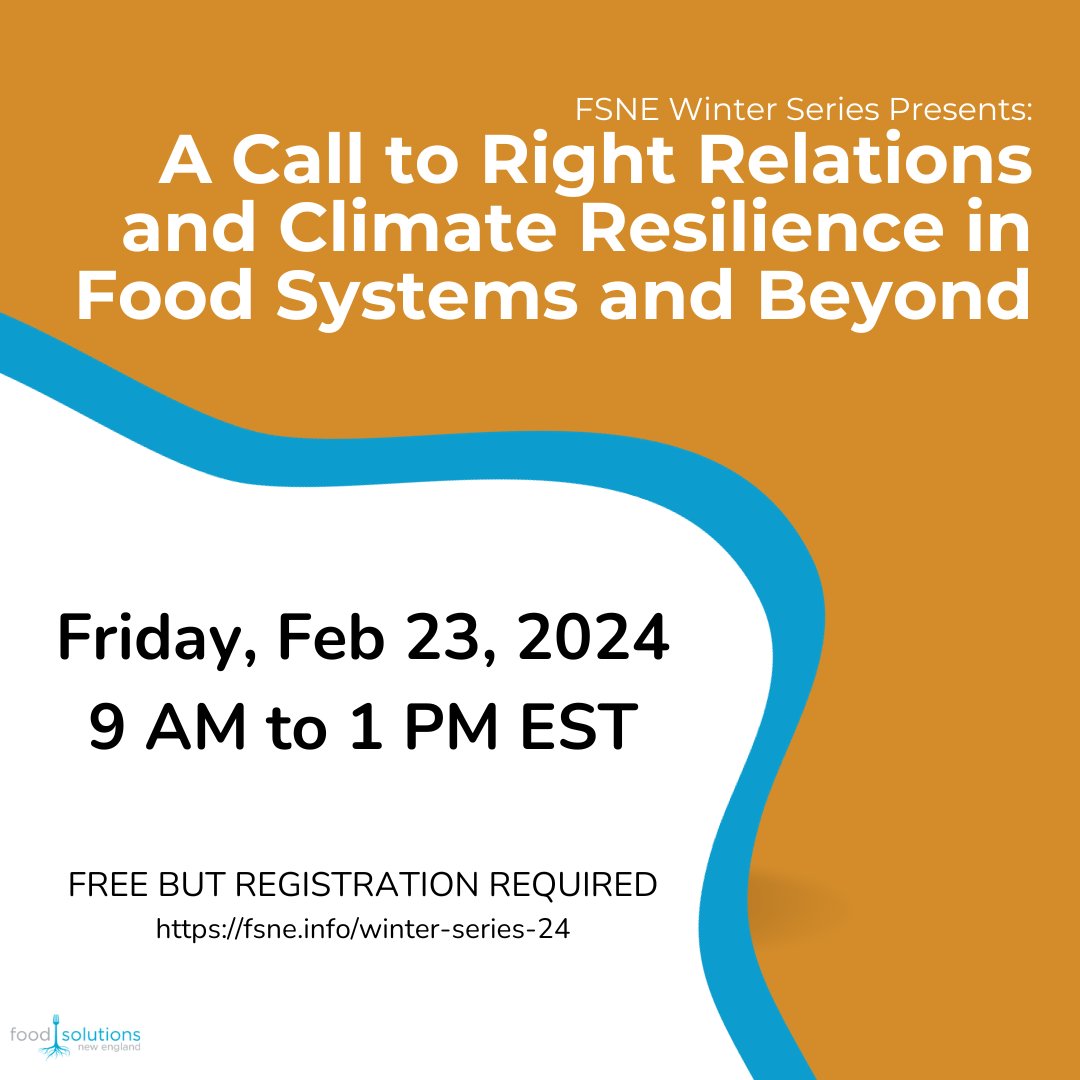
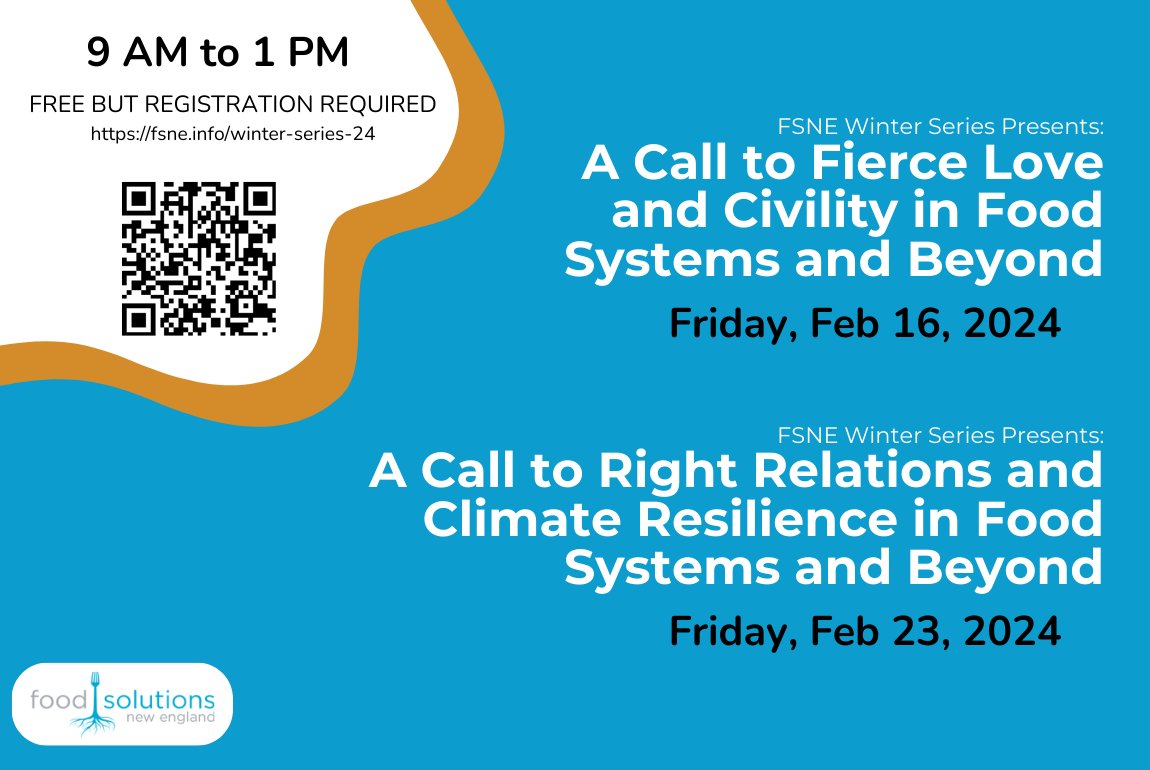
The FSNE 2024 Winter Series invites consideration of how to step into transformational leadership through the work and practice of “fierce love and civility” on the one hand, and “right relationship,’ on the other. Learn more and register at https://t.co/BJHO63KJ8Y
The FSNE 21-Day Racial Equity Habit-Building Challenge begins on 4/1! Register today and join thousands committing to deepening understanding of, and willingness to confront, racism for 21 consecutive days. For more info and to register: https://t.co/8KD0FhJG01
Food Solutions New England will host it’s 10th annual 21-Day Racial Equity Habit-Building Challenge from April 1, 2024 to April 21, 2024. Learn more and register today at https://t.co/8KD0FhJG01
The 2024 Food Solutions New England (FSNE) Winter Series invites consideration of how to step into transformational leadership through the work and practice of “fierce love and civility” on the one hand, and “right relationship,’ on the other.
These are transformational times that are asking that people get the balance right in terms of relationships with the planet and one another.
Join FSNE on 2/16 & 23 from 9AM-1PM for inspirational and insightful convos as part of 2024 Winter Series. https://t.co/BJHO63KJ8Y
The webinar will explore the impact of USDA investments on climate resilience and farm viability w/ the aim to discern whether these investments are propelling the region toward a transformative shift in the food system or merely fortifying existing models and systems.
Join FSNE and the NE Healthy Soils Network for a Policy Solutions Webinar - "USDA Investments in Conservation and Climate-Resilience in New England: Assessing the impact and advocating for the future" - on Friday, February 9 at 11 AM EST. https://t.co/uQ6V3oLHir
After substantial investments by USDA, coupled with the passage of the Growing Climate Solutions Act in Dec 22, the USDA is making strategic investments to de-risk the transition to climate-smart ag for corps and remove barriers to market-driven solutions such as carbon-markets.
For local farmers, what they lack is time. “I talk to a lot of farmers who want to do more with climate action,” she says, “but we’re all so busy. We need others to help amplify farmers’ voices.”
"Farmers are often the best advocates for climate action. They are a “frontline community,” bearing the brunt of climate change’s impacts. As stewards of so much land, they also have a big role to play in potential carbon sequestration. https://t.co/wLB0ik5DIK
But relying on frontline communities to do the heavy lifting of advocating for change is fraught. Many groups in this category face disproportionate climate impacts precisely because they lack resources or are marginalized in other ways.
"(...) the ancestors for guiding this process of nourishment. We welcome together the motions of the Earth and come together as a community to renew our spirits and honor all our relations, giving thanks to the creator for its gifts, and preparing for the new agricultural cycle."
"Winter solstice also marks a beginning, when the warmth and light gradually increase each day to welcome the cycle of the next season. It is a moment to reflect inward with intention and gratitude for the harvest produced during the warmer days and give thanks to (...)"
"(...) The Trust was unable to convince the community of Howland to remove its dam, and so a compromise was reached in which a fish bypass was added (...) to allow an open route for returning fish. As a result, nearly 2,000 mi of habitat was opened for salmon and other species."
"The project was unprecedented in its ambition and its success. The Trust ultimately raised $60 million to purchase the Veazie, Great Works and Howland dams in 2008. In 2012, the Great Works Dam was the first to go, followed by the Veazie in 2013. (...)"
When we shift power in decision-making and lean into intentional, community led solutions to build resilience, the results can be stunning. https://t.co/0F4Lh0UuM3
"The US must acknowledge the right to food in order to transform its broken food system in the post-pandemic era and make it more resilient in the face of the climate crisis and biodiversity loss, according to a United Nations hunger expert."
Hear! Hear! https://t.co/VyExBeGeKH