High Court has made consequential decision on Agency Notices issued by KRA like confetti to your banks. Now KRA have to make sure there is assesment, demand notices and objection decisions before issuing such notices... Katahira v. KRA >> https://t.co/zkDU0WsFpr. @NelsonHavi
Today’s impeachment proceedings against Rigathi Gachagua may go down as more than just political theatre. They could mark the first real judicial stress test of Article 145 of the Constitution.
My key takeaways:
1. Article 145 is finally being litigated in substance: For the first time, the High Court is being invited not just to review process, but to confront the architecture of presidential/DP impeachment itself . Importantly, it has to answer what “gross violation” actually means in practice.
2. Procedural compliance is no longer the only battleground. Today signals a shift: can a process be procedurally sound yet constitutionally insufficient?
3. The Senate’s role is under sharper scrutiny: The Senate does not just vote in impeachment proceedings. It exercises a quasi-judicial mandate. That raises the bar on evidence, reasoning, and record.
4. The “political question” doctrine is being tested: Will the courts continue their hands-off approach, or will they define minimum substantive thresholds under Article 145? That line is now thinner than ever.
5. Precedent in the making: Whatever the outcome, this moment will shape how future impeachments are conducted not just politically, but constitutionally.
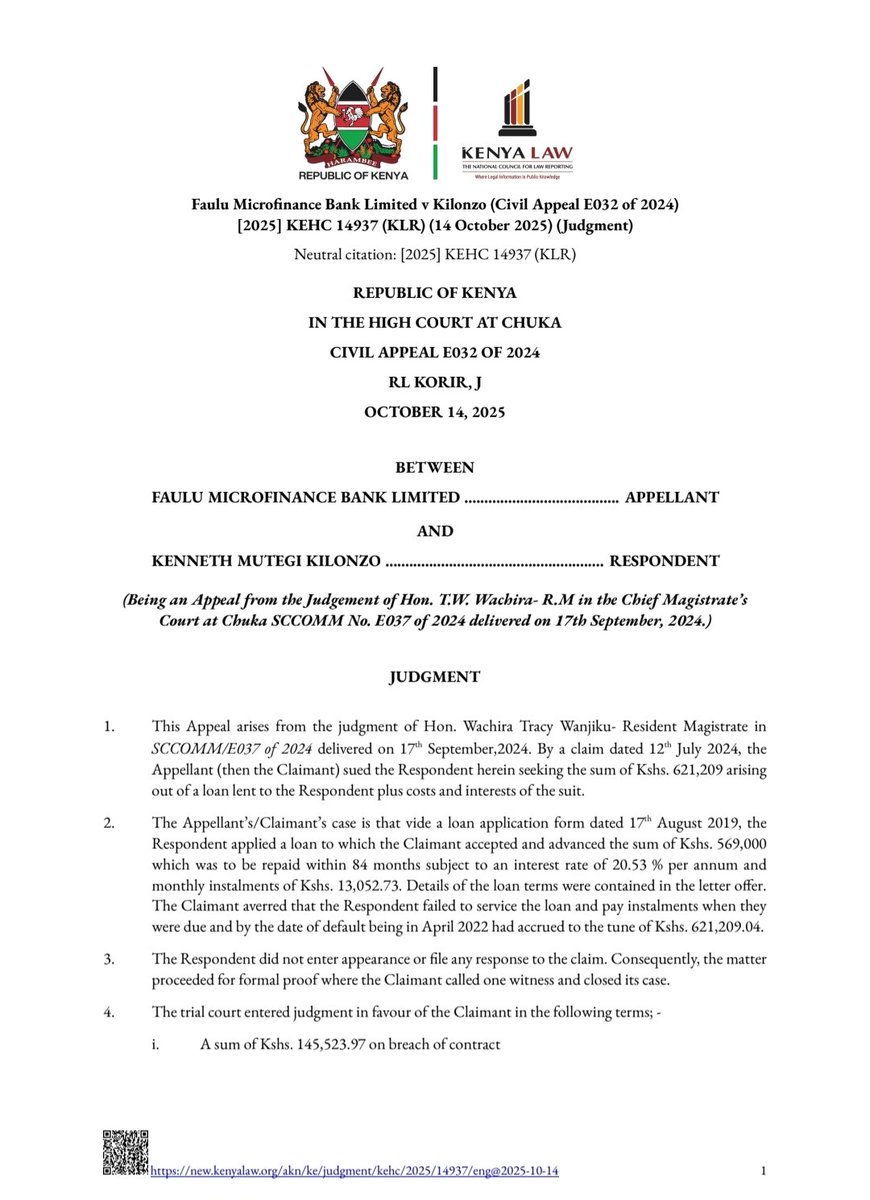
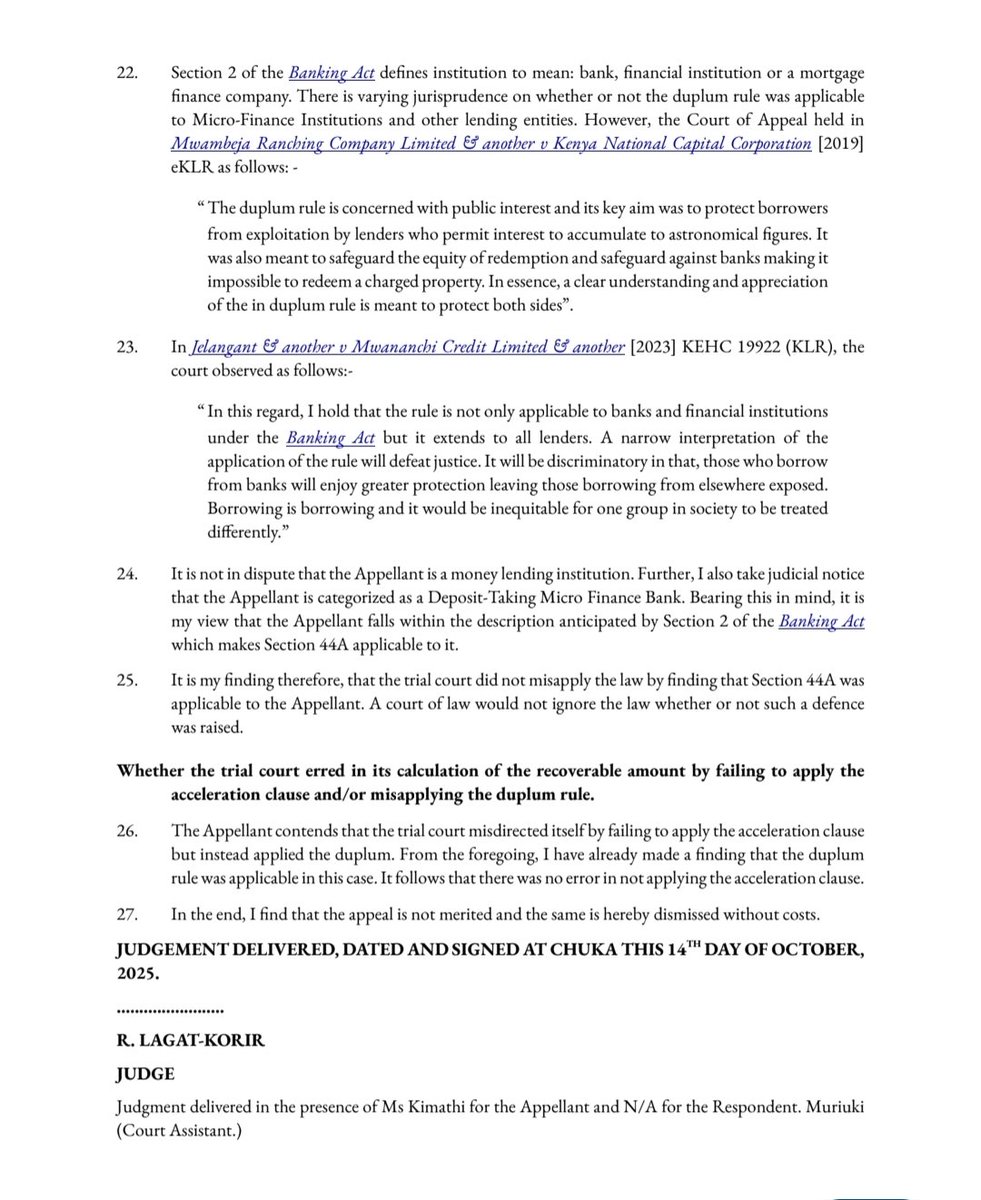
The High Court has held that the in duplum rule applies to all lenders including microfinances. In Faulu Microfinance Bank Limited v Kilonzo, a borrower had taken a Kshs. 569,000 loan but defaulted, prompting the lender to claim over Kshs. 621,000. Despite the matter being undefended, the trial court applied the in duplum rule and reduced the recoverable amount to about Kshs. 145,000.
On appeal, the lender argued that the rule only applies to banks, not microfinance institutions. The High Court rejected that argument, holding that the rule is a matter of public policy meant to protect borrowers from excessive interest, and therefore binds all lenders. Bottom line: no lender can hide behind technicalities to inflate debt endlessly.
Idk who needs to hear this but always look at the Rules😭.ELRC rules, Small Claims Court Rules, Matrimonial Property rules . It's all in the rules fr fr😭. Leo ndo nimejua Rule 10(3) ELRC Rules inasemaje😂I'll try make it a habit 😂
Unpopular opinion:
Not every client deserves to be taken on.
Some will cost you time, peace, and reputation.
Learning to say “no” is just as important as knowing the law if not more.
Kiambu County has shown KRA dust.
KRA audited the county.
And found the county was collecting serious money from:
- Parking fees
- Business licenses
- Market fees
- Renting stalls
- Renting stadia
- And other county fees
Then KRA asked:
- Where is our VAT?
- If you charge 10,000 for stalls
- You should have added 16% VAT
So Kiamburians should have paid: 11,600
And the extra 1,600 goes to KRA.
But Kiambu did not charge VAT. So KRA became dramatic and said:
- No problem. You'll give us that VAT from your own county coffers.
It is at that moment that, Gov Wamatangi knew hii si mchezo.
He ran to court.
He argued:
- The county is not a business entity.
- It is a government unit performing public functions
- It does not operate for profit
- The county fees charged are already a form of tax
- Charging VAT on them is double taxation
- It is illegal
The court agreed.
And KRA’s VAT demand was set aside.
This is a big precedent.
It means:
- County services should not be inflated by VAT.
- Public services are not businesses to charge 16% VAT.
I have done 40+ free audits for solo law firms in the last 3 months.
Every single one has the same 5 problems. Every one. Different practice areas. Different states. Different experience levels. Same broken operations underneath.
Problem 1. You are missing calls. And it is costing you differently depending on your practice area.
If you are a PI lawyer or a criminal defense attorney, a missed call is a lost client. Full stop. That person is calling 3 firms at once. First one who picks up wins. They are not leaving a voicemail. They are dialing the next number on Google before your phone stops ringing.
If you are a family lawyer or an estate planner, the caller will leave a message. But they are leaving the same message with two other firms. Industry data shows 78% of clients hire the first lawyer who calls them back. Not the best lawyer. Not the cheapest. The first one who responds.
If you are an immigration attorney, your clients are anxious, confused, and sometimes desperate. A missed call does not just lose you a client. It damages your reputation in a community where every referral is earned by word of mouth.
The numbers are ugly across the board. 35% of calls to solo firms go unanswered during business hours. 60% go to voicemail. After hours it is 90%. The State Bar of Georgia says failure to return client calls is their single most common complaint category against attorneys.
You do not have a marketing problem. You have an answering problem.
Problem 2. You bought the software. You just never deployed it properly.
This one shows up in every single audit. Without exception.
You are paying for Clio. You set it up in 2023. You use maybe 30% of it. The intake automation? Never configured. The task workflows? Still on the default templates. The client portal? Your clients email you anyway so you stopped mentioning it.
Or you bought Lawmatics for intake. Paid $99 a month for 6 months. Spent 2 hours trying to set up the forms. Got pulled away by actual client work. Told yourself you would finish it this weekend. That was 8 months ago. It is still billing you.
I have seen firms paying for 4 different tools and still running everything off email, a legal pad, and memory. Not because the tools are bad. Because there is nobody to set them up, configure them for your specific practice, and make sure they actually run.
The vendor sold you the software. They did not sell you the 20 hours it takes to make it work for your firm. And you do not have 20 hours. You barely have 20 minutes. So the software sits there. Billing you monthly. Doing nothing.
One Clio user put it perfectly in a review. Called it "a toxic relationship that needs to be ended but for which few viable alternatives exist." That is not a technology problem. That is a deployment problem. And it is costing you twice - once for the subscription, and again for the manual work you are still doing because the automation was never turned on.
Problem 3. You have tens of thousands of dollars in unpaid invoices sitting in your system that just need a follow-up.
This is not a billing problem. Most solo lawyers know exactly what to charge and they charge it. The invoice goes out. And then life happens.
The client does not pay on day 1. You mean to follow up on day 7. By day 14 you are buried in three other matters and forgot. By day 30 it feels awkward to bring it up. By day 60 you have mentally written it off.
Industry data says the average law firm only collects about 85% of what it invoices. And 14% of billable hours never get invoiced at all. Not because the work was not done. Because the bill never went out.
In almost every audit I find outstanding invoices that are not disputed. The client is not refusing to pay. Nobody asked them again. One firm I looked at had receivables stretching back months. More than half just needed a second email. That is it. A follow-up that nobody sent.
A firm that sends invoices within 48 hours of work completion and follows up automatically on day 7, day 14, and day 30 collects almost everything. A firm that does it manually collects when they remember. And they never remember often enough.
Problem 4. Your intake process takes a week when it should take an afternoon.
Client calls. You take notes on a legal pad. You say you will send over an engagement letter. Three days later you remember. You email it. They do not sign it for another two days. The data shows 42% of messages to lawyers take 3 or more days to get a return call.
Now it has been a week since first contact and you still do not have a signed client.
Meanwhile a firm with automated intake had the engagement letter in the client's inbox 90 seconds after the call ended. Signed electronically that afternoon. Conflict check already done. Case file already created. First appointment already booked.
Same client. Same legal issue. One firm onboarded them in an afternoon. You onboarded them in a week. Guess which one gets the Google review that says "responsive and professional."
Problem 5. Your happy clients disappear and you never hear from them again.
This might be the most expensive problem on this list. And nobody tracks it because it does not feel like a loss.
You close a case. Client is thrilled. They thank you. Maybe they send a nice email. And then nothing. They never leave a Google review. They never refer their friends. They just vanish.
Not because they are ungrateful. Because you never asked.
And here is the part nobody talks about. Most lawyers do not ask because they are not sure they are allowed to. Model Rule 7.1. Rule 1.6. Rule 7.3. The ethics around soliciting testimonials are genuinely confusing. Can you ask for a review? Can you suggest what to say?
What if the client mentions case details? What if the review creates unjustified expectations about results?
So you do nothing. Because doing nothing feels safer than accidentally crossing an ethics line.
Meanwhile 80 to 90% of potential clients are reading Google reviews before they call any lawyer. The solo with 150 reviews and a 4.8 rating is not a better attorney than you. They just have a system. An automated email after every closed case. A simple ask at the right moment. A follow-up that makes it easy for the client to say something nice without either of you feeling uncomfortable.
Same thing with referrals. Your happy clients would send you business if you gave them a reason and a reminder. Instead they forget your name 6 months later when their neighbor needs a lawyer. Referrals feel like a strategy but they have a ceiling. Most solos hit it within 12 to 24 months and then wonder why growth flatlined.
Here is the thing.
None of these are hard problems to fix. An AI phone agent fixes problem 1. Proper setup and deployment of your existing tools fixes problem 2 - and you probably do not even need half the subscriptions you are paying for. An automated invoicing and follow-up workflow fixes problem 3. A streamlined intake process fixes problem 4. And a simple post-case follow-up sequence that respects bar ethics rules fixes problem 5.
The technology exists right now. Most of it costs less than what you are already paying for software you are not using.
The hard part is seeing your own blind spots. When you have been doing something the same way for 5 years it stops looking broken. It just looks like how things are.
KRA is not playing with MPs.
In 2022, each MP was given 7.5M to buy a car.
- Use it for work and,
- After the term, keep it or sell it.
In 2023, KRA caught wind of it.
And quickly fired a tax demand to Parliament of Ksh 1B.
KRA argued:
- Car grants are gains from employment
- If MPs were not in office, they wouldn’t get them
- Ordinary citizens do not get car grants
- If MPs can keep or sell the cars at will, that is a direct gain
- It must be taxed under PAYE.
Parliament pushed back that:
- Car grants are reimbursements for work transport.
- MPs are not employees
- So this is not taxable income
When KRA persisted, the parliament ran to court.
- The tribunal agreed with KRA arguments and demand 100%.
Parliament saw danger.
In December 2024, MPs enacted the tax law amendment bill.
They quickly changed the income tax law to read.
- MPs car grants are not taxable
- Even if the MP owns the asset
And they backdated it to apply from 2022.
KRA still wanted their money.
Parliament ran to high court. Arguing,
- How can KRA tax something we have already declared non taxable retrospectively?
In 2026, High court sided with KRA demand of 1B.
Now the matter heads to the Court of Appeal.
What do you think:
- Are MPs employees?
- Should their car grants be taxed?
Solo practice looks like freedom from the outside. Be your own boss. Set your own hours. Build your own name.
What they don’t show you:
You are the lawyer, the secretary, the accountant, the marketer, and sometimes the debt collector.
You carry the pressure of every deadline alone. You celebrate wins quietly… and sit with losses even more quietly.
And some months, the work is there but the payments aren’t.
It’s rewarding. But it’s not soft.
If you choose solo practice, don’t just chase independence build systems, discipline and resilience.
Because the truth is: freedom in law comes with responsibility most people never see.
Dear Law Students,
During the ongoing High Court interviews before the Judicial Service Commission, the Attorney General posed a question on the ratio decidendi in: Francis Karioko Muruatetu & another v Republic (Muruatetu I), and Francis Karioko Muruatetu & another v Republic (Muruatetu II).
I have attached the 2017 Judgment and the 2021 Directions. Kindly read both alongside the write-up shared.
Also, make it a habit to follow the JSC interviews - they are a masterclass.
https://t.co/DFlmRgseLg
https://t.co/6fMANn34RF
Brief Facts
The petitioners – Francis Karioko Murutatetu and Wilson Thirimbu Mwangi – were arraigned before the High Court for the offence of murder contrary to section 203 read with section 204 of the Penal Code. They were convicted and sentenced to death in tandem with section 204 of the Penal Code. Section 204 of the Penal Code categorically decrees that “Any person convicted of murder shall be sentenced to death.”
At the Court of Appeal
The Petitioners appealed both the conviction and sentence to the Court of Appeal on the grounds that the mandatory death sentence imposed upon them and the commutation of that sentence by an administrative fiat to life imprisonment were both unconstitutional and therefore null and void. The Court of Appeal affirmed the decision of the High Court and the parties moved to the Supreme Court.
At the Supreme Court
The Petitioners case was that the mandatory nature of the death penalty under Section 204 of the Penal Code limits the discretion of the trial Court forcing it to hand down a sentence pre-determined by the Legislature against the doctrine of separation of powers. They further submitted that the sentencing process is part of the right to a fair trial enshrined in Article 50(2) of the Constitution. They contended that the mandatory death penalty under Section 204 of the Penal Code, violated that right in that it denied the trial Judge discretion in sentencing.
The petitioners prayed that the mandatory death sentence which had since been commuted to life imprisonment be set aside and they be set free; a definite term of imprisonment, subject to the applicable remission rules, be meted out to them or alternatively, an order be made remitting the matter to the High Court to undertake a sentence hearing for the purpose of determining an appropriate definite sentence.
Issues for Determination:
a) Whether the mandatory nature of the death penalty provided for in the Penal Code under section 204 is unconstitutional?
b) Whether the indeterminate life sentence should be declared unconstitutional?
c) Whether this Court can or should define the parameters of a life sentence; and
d) What remedies, if any, accrue to the petitioners?
Judgment of the Court
The Court declared the mandatory nature of the death sentence unconstitutional, holding that it deprived courts of judicial discretion and violated fundamental rights.
Further, that Section 204 of the Penal Code deprives the court of the use of judicial discretion in a matter of life and death as where a court listens to mitigating circumstances but has, nonetheless, to impose a set sentence, the sentence imposed fails to conform to the tenets of fair trial that accrue to accused persons under article 25 of the Constitution; an absolute right.
The Court did not abolish the death penalty itself, leaving it to judicial discretion on a case-by-case basis. Convicts sentenced under the mandatory provision were granted the right to re-sentencing hearings.
@omwanza@Ingutiah
Work is endless. Exercise is endless. Parenting is endless. Same with marriage, writing, investing, creating, and more. You get to choose the parts of your life, but many of the important things in life cannot be "finished."
Do not approach an endless game with a finite mindset. The objective is not to be done, but to settle into a daily lifestyle you can sustain and that allows you to make daily progress on the areas that matter.
Embrace the fact that life is continual and look for ways to enjoy the daily practice."
@JamesClear
Suspects arrested on Fridays may no longer spend the weekend in custody, following a Judiciary proposal to introduce Saturday court sittings starting a pilot programme at Kibera Law Courts, there is also a proposal to allow the online issuance of cash bail and bonds on Saturdays.
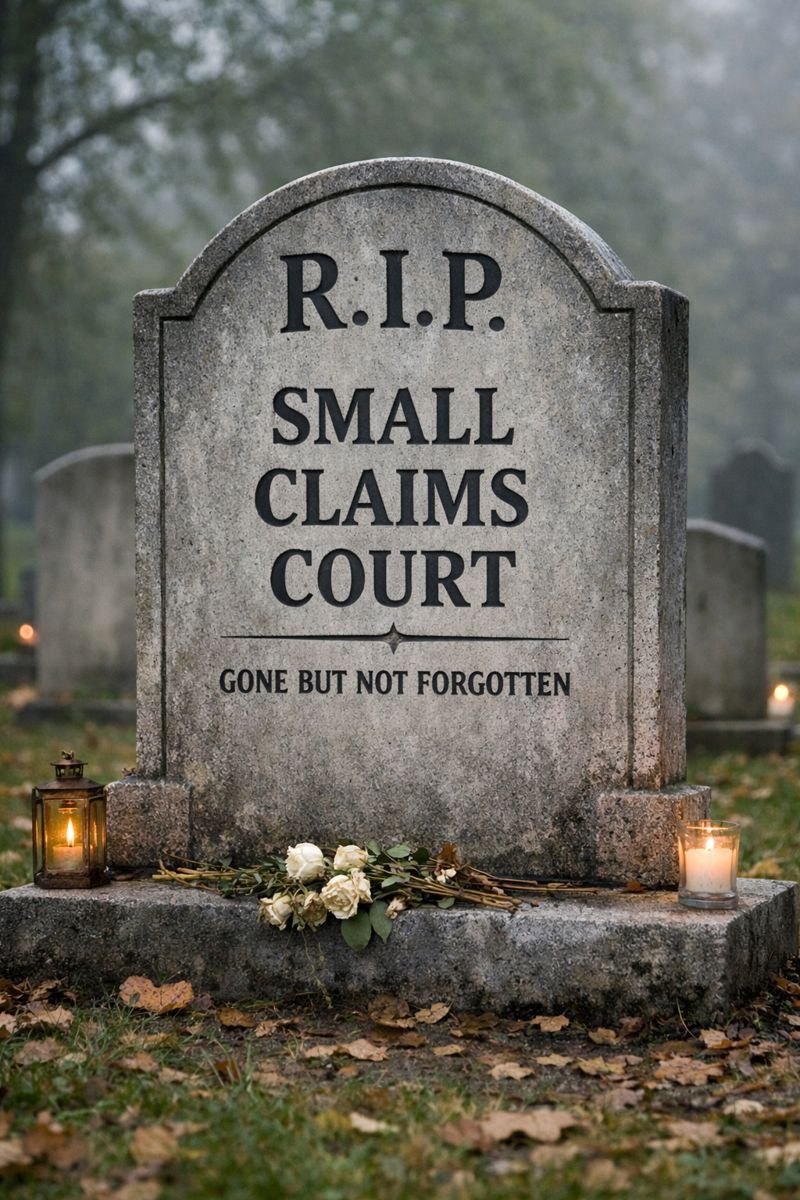
The #SmallClaimsCourt is dead. Small Claims Court was built on three promises: fast, simple, and affordable. The tragedy is that each promise has been dismantled, partly by court decisions and partly by internal practice that drifted back into the old Magistrate’s Court culture.
First, Fast
The Act was designed around speed. Timelines were meant to force discipline, but the High Court softened them. On 17 January 2023, Majanja J in Crown Beverages Limited v MFI Document Solutions Limited treated the timeline as directory, not mandatory. On 31 July 2023, Magare J in Biosystems Consultants v Nyali Links Arcade called the sixty-day timeline aspirational. That Biosystems decision also tried to rescue speed with firm case management guidance. Day to day hearing. Minimal adjournments. Quick judgment. The system did the opposite. People took the word aspirational and ignored the discipline. Cases started creeping into many months.
Second, simple.
On 18 October 2022, Majanja J in Christoffersen v Kavneet Kaur Sehmi effectively pushed rent arrears out of Small Claims Court, one of the most common small disputes in urban Kenya. That alone made the court less simple, because litigants were forced into heavier forums. But simplicity also died from inside. Many adjudicators imported Magistrate’s Court habits. Written submissions became routine, even when the model was meant to be conversational and evidence-led. The three-day post-hearing judgment timeline became optional. Extempore judgment templates that Justice Kimaru suggested during training colloquia were ignored. Standards of proof became inconsistent, swinging from strict formalism to casual assumption depending on the day and the adjudicator. The result was unpredictability, and unpredictability is the enemy of a simple court.
Third, affordable, meaning affordable to win and affordable to enforce.
A cheap judgment that cannot be enforced is not affordable; it is a paper trophy. Ogwari v Hersi on 3 July 2023 created serious uncertainty on road traffic injury jurisdiction. Then on 22 January 2026, a three-judge bench, Ogola, Nyakundi, and Mabeya, closed the door on road traffic injury claims and removed committal as an enforcement tool in the Small Claims framework. Enforcement was blunted at the exact moment demand was rising.
How this gets fixed is not mysterious.
Practice directions. Clear templates. A firm ban on unnecessary written submissions. Mandatory extempore judgment structures for routine matters. A standard evidentiary checklist. A public timeline dashboard. Supervisory audits.
The deeper scandal is that I sat in a committee of advocates and adjudicators and we prepared a zero draft for Small Claims Court practice directions in 2022, which was promptly shelved, and never implemented. Leadership matters. The Chief Justice bears substantial responsibility for failing to provide that leadership, and for failing to staff the court with seasoned, respected practitioners as adjudicators. Instead, the system too often relies on inexperienced Resident Magistrates, sometimes treated as though a posting is punishment rather than prestige.
The court is not dead because Kenyans do not need it. The court is dying because the system refused to protect its founding promises.
Yoh, I just reviewed a patient who got permanent hearing loss after they contracted Hepatitis A from eating a street sausage in Nairobi....
Going to comfortably say goodbye to street food from now on 😭😭😭😭😭
Wangwana, but why would you charge 5k/a month for remedial classes?
5k for 2 classes a week?
5k in one installment?
625 per class?
Stop conning KSL students buana!
@Kentieno_ Mimi my advise to all these students is to find Jacktone's class. His charges are reasonable and he is an excellent teacher. One of the best I have met. A tutor charging 5k is plain evil🥹
Fortunately, I've accepted that 2025 is going to be the beginning of my best years yet and I'm going to get it right. It's going to be the year when everything starts clicking-I'm going to have all I want and my life is only going to get brighter.❣️