The Shoji group (A03) reports a Trojan horse photosterilization strategy that exploits the HphA-mediated heme uptake pathway to selectively deliver gallium photosensitizers, enabling potent killing of multidrug-resistant Acinetobacter baumannii. https://t.co/iyHTMkbVWT
The Shoji group (A03) reports amic acid-based decoy molecules as easily prepared additives that unlock P450BM3 catalysis toward non-native substrates, enabling diverse oxidation reactions of aromatic and aliphatic compounds without prior purification. https://t.co/klc1lfVaDc
The Ushimaru (A01) and Abe groups uncovered a vitamin B12-dependent radical SAM enzyme that catalyzes C-adenosylation of arginine in sinefungin biosynthesis, revealing a novel route to amino acid–nucleoside conjugates in nature. https://t.co/XRY3xmJM2B
The Saito group (A02) reports the computational prediction of binding affinity and potency of metalloenzyme carbonic anhydrase II inhibitors, leveraging state-of-the-art classical and combined QM/MM free energy simulations. https://t.co/fUKxSljnL7
The Wakimoto (A03) and Yoshimura (A01) groups show that bacterial membrane vesicles (MVs) induce silent metabolite production, leading to the discovery of four unique N-alkylpyridinium alkaloids, stigmatellamines. https://t.co/HMqVgZNcpk
The Wakimoto group (A03), in collaboration with Prof. J. Piel (ETH), reveals the long-elusive mechanism of nitrile formation in calyculin A through comparative analysis of two biosynthetic gene clusters from distinct producers. https://t.co/qm21O6rpVM
The Kudo (A03) and Awakawa (A01) groups, in collaboration with Dr. Shin-ya, noted five-step editing of a type I polyketide synthase with minimal loss of production titre. The post-AT cut site would be the first choice for PKS designers. #PKS@NatureComms https://t.co/R8P5gRN0ea
tRNA-Dependent Chemoenzymatic Transformation of Aminoacyl Pendant Moieties of Streptothricin Antibiotics | Journal of the American Chemical Society https://t.co/JaVLeRwYPY
The Ozaki (A01), Uchiyama (A02), and Prof. Teigo Asai’s groups, in collaboration with Prof. Kuzuyama (A01) and Prof. Shinada (A03), characterized the unique terpene cyclase in vinigrol biosynthesis through mechanistic and theoretical analyses @J_A_C_S https://t.co/ed5nj0YB06
The Shoji group (A03) reports a non-genetic strategy to activate native soil bacteria for aromatic pollutant degradation using decoy molecules that redirect cytochrome P450 activity, enabling degradation of benzene derivatives and chlorinated dioxin. https://t.co/5HY6XjmnXL
Hijacking tRNA chemistry to redesign antibiotics. The Maruyama group (A1), with the Ogasawara (A3) and Goto (A3) groups, uncovered a versatile enzyme generating new streptothricin derivatives and expanding antibiotic chemical diversity. @J_A_C_S https://t.co/YvZJX1belB
The Umemura group (A02), in collaboration with the Kuzuyama group (A01), reports a transformer-based platform that predicts and generates functional domains within biosynthetic gene clusters via unsupervised learning of domain organization in genomes. https://t.co/r8OdEX848d
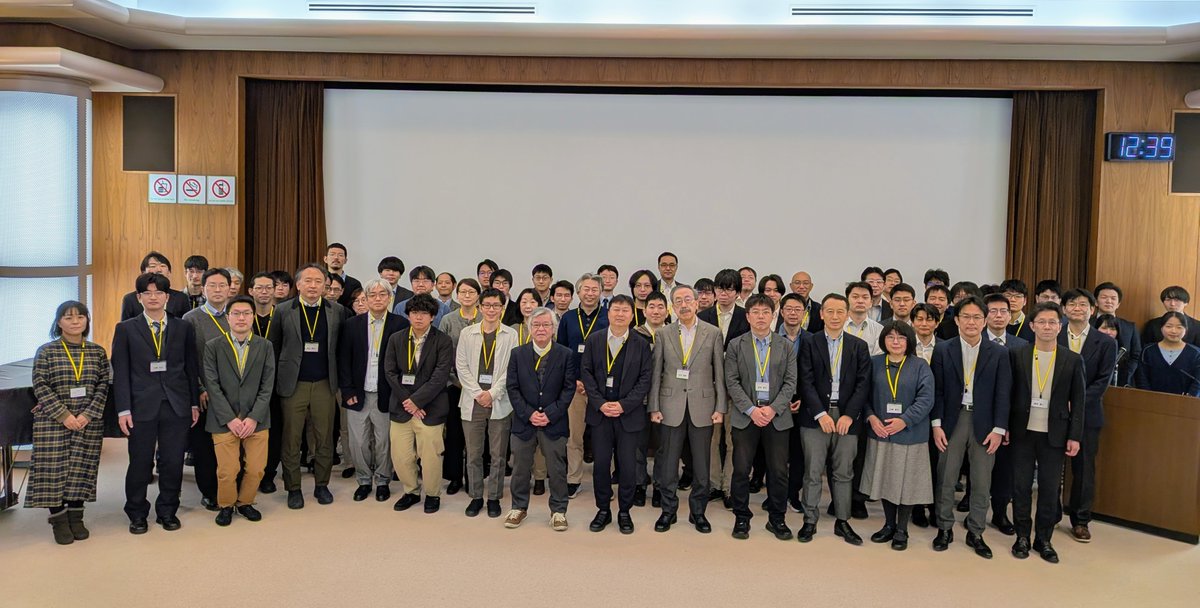
Huge thanks to all who joined our conference at RIKEN (Wako, Saitama)! Truly inspiring talks and discussions. Looking forward to the next conference in July at Kitami Institute of Technology!
The Kuzuyama group (A01) reports the biosynthesis of the neuroprotective natural product kaitocephalin through genomic, enzymatic, and isotope-labeling analyses, laying the groundwork for elucidating its complete biosynthetic mechanism. https://t.co/0unkHvhaEN
The Kato group (A03) reports a PCA-based database mining strategy to discover novel bacterial carbene transferases capable of stereodivergent cyclopropanation, highlighting a data-driven route to biocatalysts for abiotic transformations. https://t.co/ITdrPbgTLZ
The Nakano group (A02), in collaboration with the Chisuga group (A02), designed a high-fidelity sortase E with an activity trade-off. This enzyme can be applied to the synthesis of antibody conjugates. https://t.co/t0JIBgjtRe
The Katsuyama Group (A03) revelaed that ATP-dependent diazotase is involved in the biosynthesis of nitrous acid-dependent aromatic amination to produce 2,4-diamino-3-hydroxybenzoic acid. https://t.co/Edd0FAjv22