Senior Analyst (China, Taiwan) at Wikistrat. Former U.S. diplomat. Op-eds: Forbes, National Interest, Newsweek, SCMP. Lived in China 2006-12, Vietnam 2013-18.
💥 On Nov 5, President Trump authorized a crack down on companies suspected of diverting Nvidia's advanced AI chips to China for the third time this year — even consulting Elon Musk before giving the go-ahead.
One administration official has repeatedly stood in the way: Commerce Secretary Howard Lutnick.
That day, as the spy scandal rocked the administration, Lutnick met in the Situation Room with Treasury Secretary Scott Bessent, Defense Secretary Pete Hegseth, US Trade Representative Jamieson Greer and National Security Adviser and Secretary of State Marco Rubio.
During the meeting, Bessent confronted Lutnick about why his department has resisted implementing the export controls, particularly on Megaspeed, the company at the center of the spy scandal. The group sided with Bessent.
Lutnick appeared to agree, but then muttered under his breath, "I need to check with the president."
Lutnick's seemingly innocuous comment raised concerns, because officials have repeatedly believed the Commerce Department would impose the export controls, only to have nothing happen.
"He's stalling it out," said one official, describing how Lutnick had previously met privately with the president to change his mind about the export limit.
"This is an ongoing concern with Howard and this issue," said another.
This time, one person in the room called his bluff by saying: "Great. Why don't we do it today?"
Around 5pm, the group headed to the Oval Office.
Trump called tech advisor Elon Musk and agreed to move forward. Musk supported Rubio, Bessent, Greer and Hegseth's case to impose the controls while Lutnick warned it "will start a trade war with China."
“Everyone argued back that China is already doing to us what Lutnick warned would happen.”
With Lutnick the lone holdout, Trump made his decision: "Let's get it done." But once everyone was outside of the Oval Office, Lutnick proposed a new delay tactic.
"I'll develop some options and come back," he said.
"Everyone was like: 'No, no, the decision's been made. Go fucking execute. Well, it still hasn't happened."
On at least three separate occasions — in May, in Aug, and on Nov 5 — Trump approved taking action against suspected diversions of Nvidia chips to China.
But Lutnick and Commerce Undersecretary Jeffrey Kessler resisted pressure from Bessent and others to move forward.
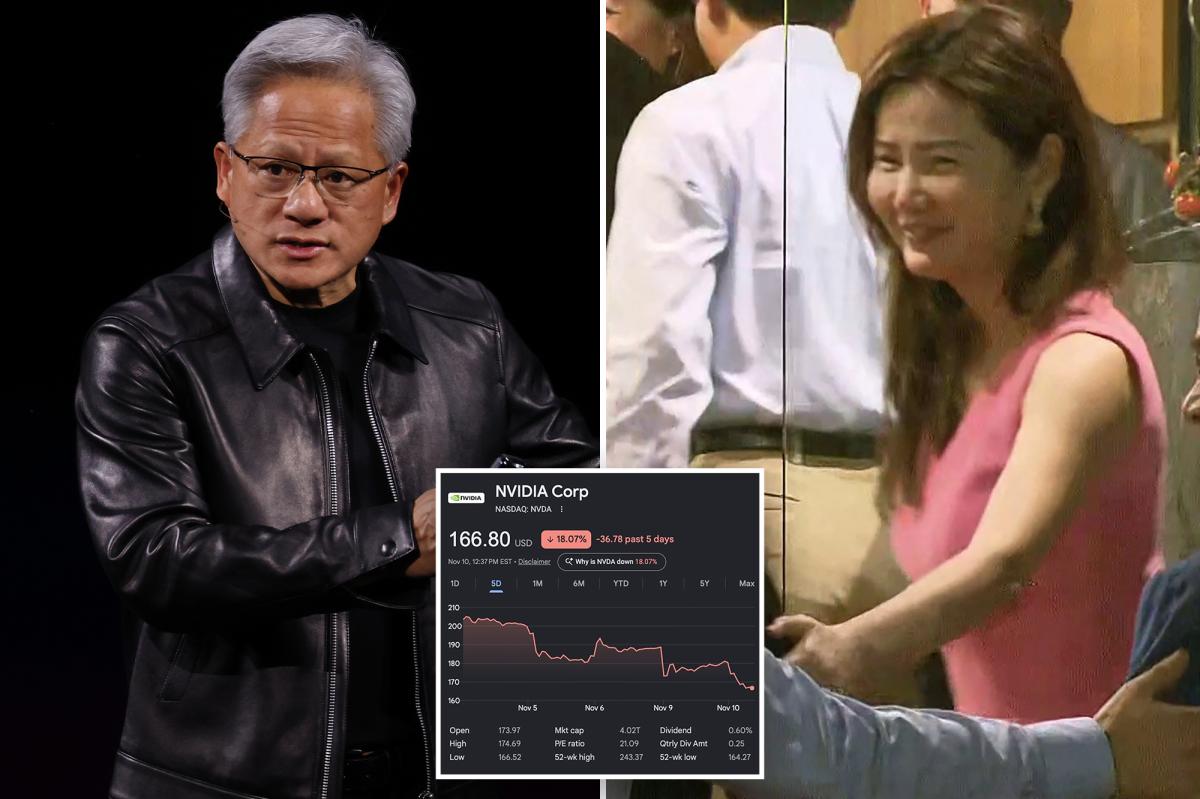
In May, a highly classified memo warning about Jensen Huang's relationship with Alice Huang, a Megaspeed employee suspected by US intelligence of being a Chinese agent, was shared with the president and other officials.
In a subsequent meeting, Bessent, Director of National Intelligence Jay Clayton, Hegseth and White House officials pressed Lutnick and Kessler to act, "and they were refusing."
The Trump administration last year announced it would loosen export controls on Nvidia H200 chip sales to China — something Nvidia has lobbied hard for.
Trump has taken a more lax approach to export controls on China, agreeing to allow sales of Nvidia's H200 chips, which are older but still powerful, in exchange for a 25% tariff.
Long before the affair with Alice Huang, Jensen Huang has pushed for tapping into the Chinese market.
The CEO at the center of an AI boom Trump is dead set on winning has largely been successful at convincing Trump and Lutnick that selling less powerful chips to China is good for national security because it prevents China from developing its own alternatives and keeps the adversary dependent on the US.
While Lutnick oversees the department squarely at the center of export control policy, Trump is the ultimate decider.
https://t.co/BJmiWMCaET
Jensen Huang must go because he has lost the trust of too many people. Never trust a man who wears motorcycle-style black leather jackets and does not actually ride.
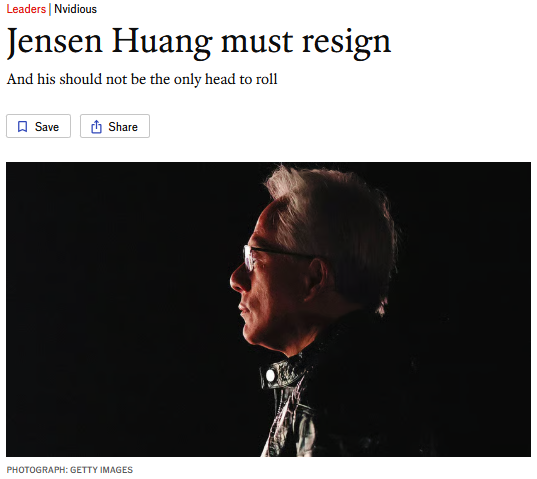
Jensen Huang must go
We argue in @TheEconomist that his position is untenable
"Like many powerful leaders, he came to believe that he was too important for the normal rules to apply to him."
But he is not the only one. Howard Lutnick has failed to stem the flow of chips to China. More heads should roll
"Congress should also press the administration to prepare punitive diplomatic and financial measures for use in the event of an escalating Chinese quarantine of Taiwan." https://t.co/gP8Eaydkg8
While Beijing purges corrupt officials, Washington purges experienced leaders: "Whether or not Hegseth is convicted, his actions have already cost the Defense Department years of combat-tested experience in the senior leaders who were forced out and have instilled a chilling effect on those who remain." https://t.co/mAdQCOrB7w
"Nvidia has really damaged their credibility on Capitol Hill by saying things that were incredibly difficult to believe,” he says. “I hope that would give members of Congress and staffers and the White House pause about taking numbers, and the interpretation of those numbers, at face value.”
https://t.co/pwLEmxX6zc
"Huawei simply does not pose a competitive threat to Nvidia globally right now,” says McGuire, formerly a national security official who helped design U.S. chip controls. “Huawei’s chips are nowhere near as good, and it can’t make nearly enough of them.”
https://t.co/f1Stk3Y3pw
Japan will provide the Philippines with coastal radar and surveillance drones under a $27.2 million security grant signed on November 9, with the package marking the first transfer of material classified as defense equipment under Japan's OSA program. https://t.co/2QvBfa4cyO
"Beijing’s likely strategy in the coming years will be less about a military showdown than persistent pressure." - writes @ryanl_hass https://t.co/49bLGtkEy9
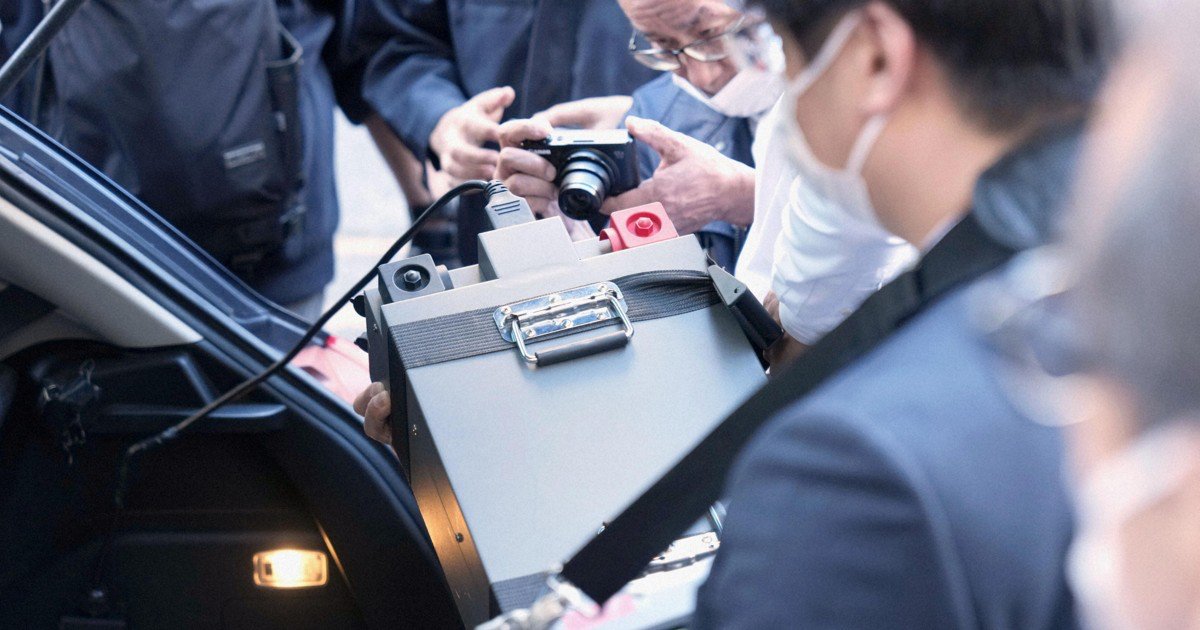
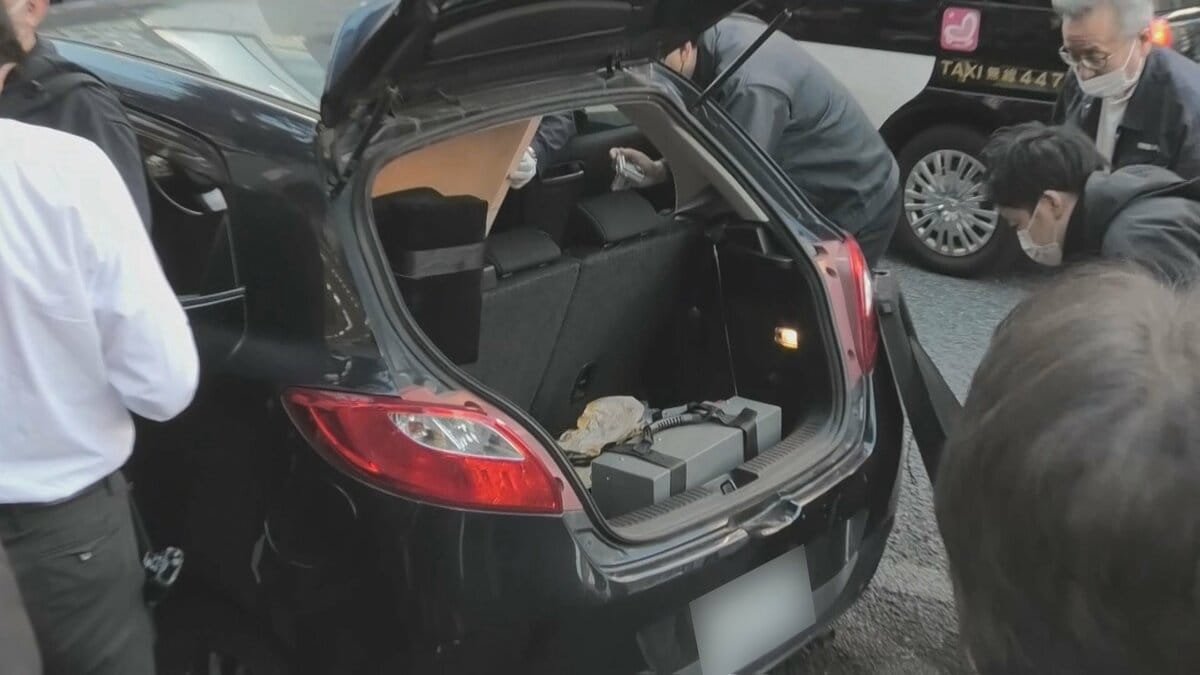
A Chinese man drove around Tokyo with a car that turned thousands of phones into scam targets. Similar setups have appeared in Toronto, London, Athens, and Bangkok.
Tokyo police arrested Yu Hai, 31, on November 7 in Ginza. It is Japan’s first arrest of this kind. His car held a fake cell tower that blasted strong 2G signals, knocking phones within hundreds of meters offline for one to two hours. Sessions hit more than 10,000 phones.
Phones that connected received Chinese-language phishing texts claiming credit-card payments were suspended and directing users to fake sites. He is believed to have operated since December 2024 in Ginza, Shibuya, and Shinjuku, targeting Chinese tourists. Police logged at least 18 complaints and about ¥4 million in losses.
He is charged under the Radio Act with running an unlicensed station and interfering with important radio communications. He denies everything.
The same method has shown up elsewhere. Toronto police arrested three men in North America’s first SMS-blaster case, citing more than 13 million network disruptions and 911 concerns. Athens police found a device in a car trunk. A Chinese student was sentenced in London. In Thailand, Chinese nationals were caught running car-based systems. One of them sent over a million messages in days.
The hardware is cheap, portable, and fits in a trunk. The tech is old. The fraud is new. Chinese-linked operators keep appearing with it. Victims don’t have to click anything. Their phones just connect.
Not only did Jensen Huang have an affair with an alleged Chinese MSS agent (putting himself in a classic position of being setup for all types of blackmail that could have been hugely detrimental to both Nvidia and, more importantly, the United States) but he had an affair with the managing director of what is an effectively and very clearly a Chinese shell company (Megaspeed). A company that had been illicitly funneling billions of dollars of compute to Chinese AI labs that should have gone to American companies with what is almost certainly his full awareness and support (unless he is a complete idiot, which he is plainly not).
This can be called many things but one thing it is not is not doing “anything to disadvantage America”
Jensen Huang apologized to his staff Sunday for being unfaithful to his wife. “I owe my family and all of you an apology,” Huang wrote. “There is no excuse for what I did.”
https://t.co/qWlbnDrrFD
Even in spite of the company’s personal smears against me, I am not an Nvidia hater.
Nvidia is essential to U.S. prosperity and security. It makes products I love and use every day. I truly believe Nvidia’s success is a boon to American competitiveness, and I want the company to succeed.
That’s why it has been such a shame—genuinely, a source of national shame for the American technology industry—to see mounting public evidence of the company’s disregard for basic due diligence, willingness to do business with known malign actors, bad-faith engagement with the DC policy community, and now poor personal judgment from senior executives.
Nvidia deserves better. The semiconductor industry deserves better.
Let’s end the charade of trying to win customers we know will undermine American interests and fuel China’s AI industry—and instead focus on beating Chinese chipmakers in the quest to be the world’s supplier of advanced compute.