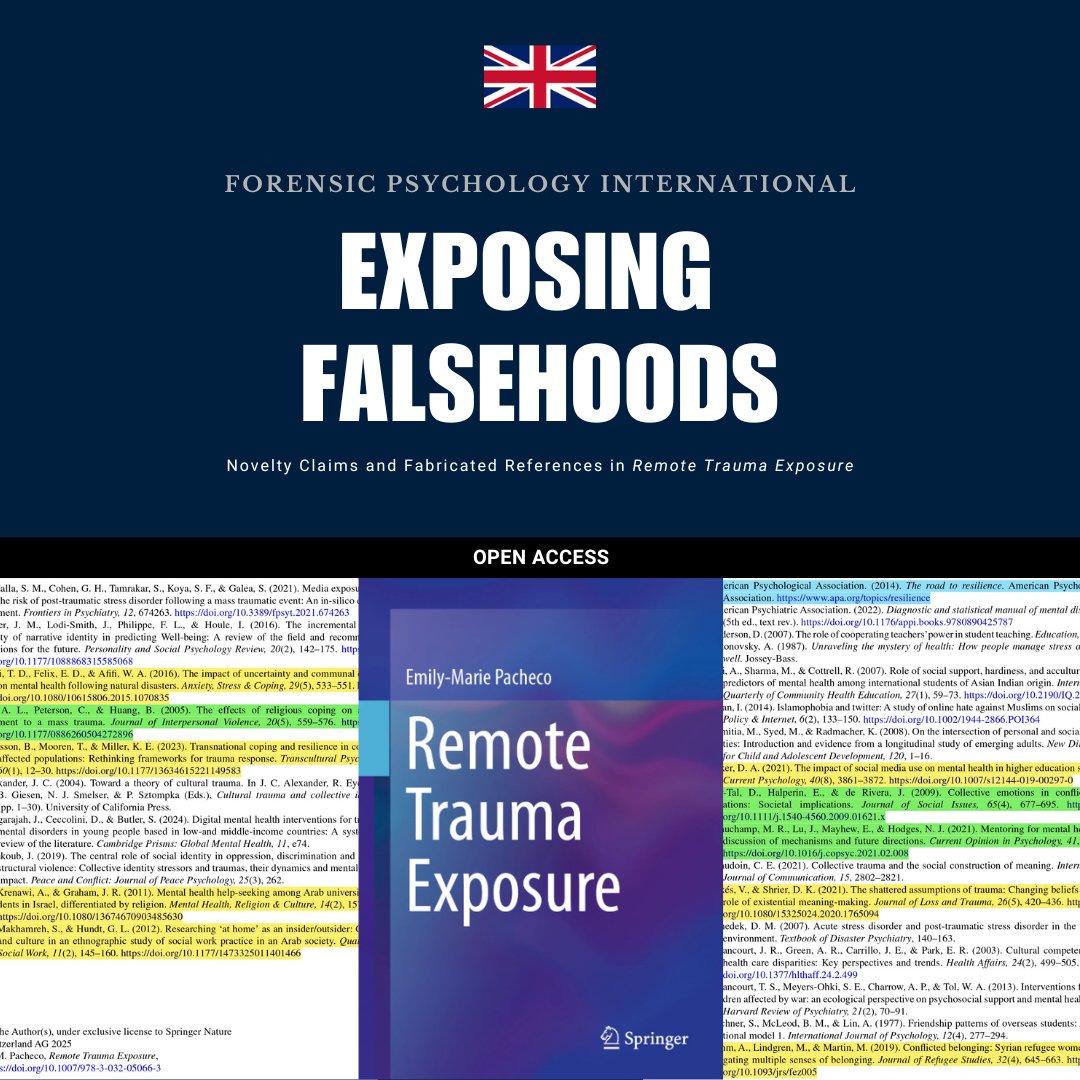
Forensic evaluation of Remote Trauma Exposure by Emily-Marie Pacheco finds hallucinated references, inflated novelty claims, and use of a HCPC-protected title ‘Educational Psychologist’ without eligibility.
🔗https://t.co/c5fyFfyciN
#Psychology#Education#Research#PhD#UK
@bmj_latest Giving credit where it is due is a fundamental test of integrity. Our forensic investigation found evidence of a PhD student serving as a teaching assistant appropriating ideas and professional identity from a more accomplished student to compensate for gaps in work experience.
@c3K Indeed, humans also make referencing errors. The concern is that LLMs introduce a distinct failure mode in the form of plausible-looking references with no underlying source. That is a citation-integrity issue.
@TheEconomist Having reviewed the encyclical, and drawing on our experience auditing academic work, our initial reaction is that it reads like a committee-authored Vatican document, with drafting that may have been AI-assisted.
@lpachter Publishing 71 papers in 143 days is an extraordinary research output rate.
Eventually, the publication tempo itself becomes statistically interesting.
@stats_feed Thank you. This is timely advice.
Due to current workload conditions, our forensic team may need to immediately increase tea consumption as a preventative mortality intervention. 🪦
@NedBertz The commercialisation of academic visibility has accelerated far faster than substantive reform of publication incentives and quality assurance systems.
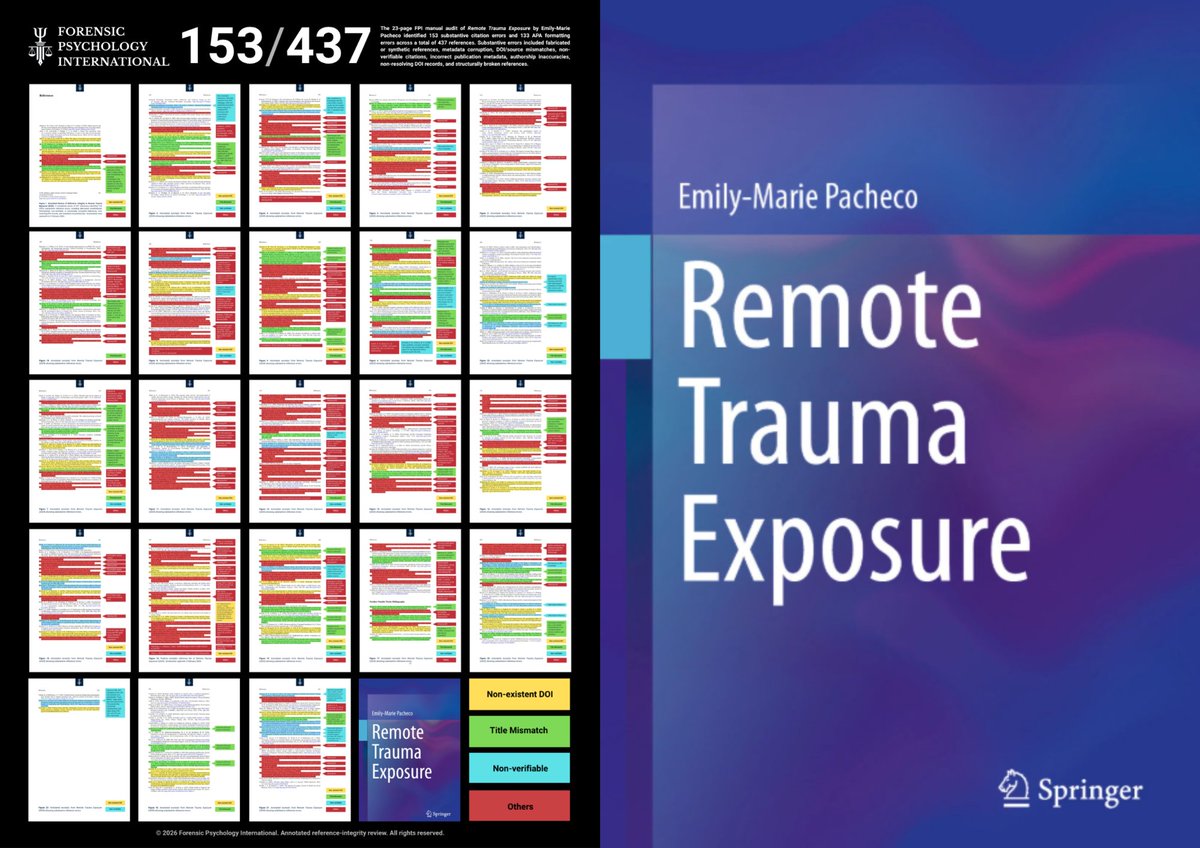
🚩Our 23-page manual audit of 437 references in Remote Trauma Exposure identified:
❌153 substantive citation errors
❌133 APA violations
These substantive errors indicate serious academic integrity concerns, including breakdowns in source traceability and editorial oversight.
In a new Springboard Blog, Saskia Steinacker, Chief Product Officer at Springer Nature, explores how AI can strengthen trust in the scientific record, and why responsible scale depends on human judgement, transparency and partnership.
👉 Read the blog: https://t.co/eLhSB36Ba8
@joshpizpom@heraldscotland Transparency matters, but anxiety is also created when Edinburgh Uni fails to address conduct that undermines credibility. We identified a lecturer using the uni’s reputation + an unauthorised HCPC title to promote, sell a high-priced book containing extensive AI hallucinations.
@GrkStav The issue extends beyond unread citations. We recently observed institutional and anonymous academic endorsements attached to work containing hallucinated references, inflated novelty claims, and professional misrepresentations without rigorous verification scrutiny.
@salimhayek Yes. The incentives are clear.
However, academic systems rarely distinguish accelerated productivity from accelerated epistemic collapse until the verification failures become public.
By then, institutional credibility has already been compromised.
@sciam Our concern is that the issue is no longer isolated hallucinations, but the increasing institutional tolerance for synthetic authority presented with the appearance of verification.
@UCBerkeley AI literacy may become a new educational privilege, but cognitive dependence on AI may become an equally important epistemic risk when hallucinated authority enters academic systems unchecked.
Our recent forensic investigative findings suggest this risk is no longer theoretical.
Forensic evaluation of Remote Trauma Exposure by Emily-Marie Pacheco finds hallucinated references, inflated novelty claims, and use of a HCPC-protected title ‘Educational Psychologist’ without eligibility.
🔗https://t.co/c5fyFfyciN
#Psychology#Education#Research#PhD#UK
PART II: Executive summary outlining the reference integrity audit of Pacheco’s book, institutional affiliation discrepancies, professional title claims including unauthorised use of a protected title, and anonymous senior lecturer endorsement material.
🔗https://t.co/TpwGmN3ty1
Would you pay US$179.99 for an academic book with 286 citation + formatting errors?
Our 23-page manual audit of Remote Trauma Exposure documented:
❌153 substantive citation errors
❌133 APA format violations
Across 437 references.
@SpringerNature@C0PE#UK#PublicationEthics
@NC_Renic Important observation. Our deeper concern is the gradual outsourcing of the cognitive endurance students require for sustained intellectual effort.