This is a wild study! Engineering T cells to use an alternative sugar source, thereby eliminating tumor competition.
Fungal-derived cellobiose metabolic pathway fuels T cells to bypass intratumoral glucose competition: Cell https://t.co/qpUpFb0wwo
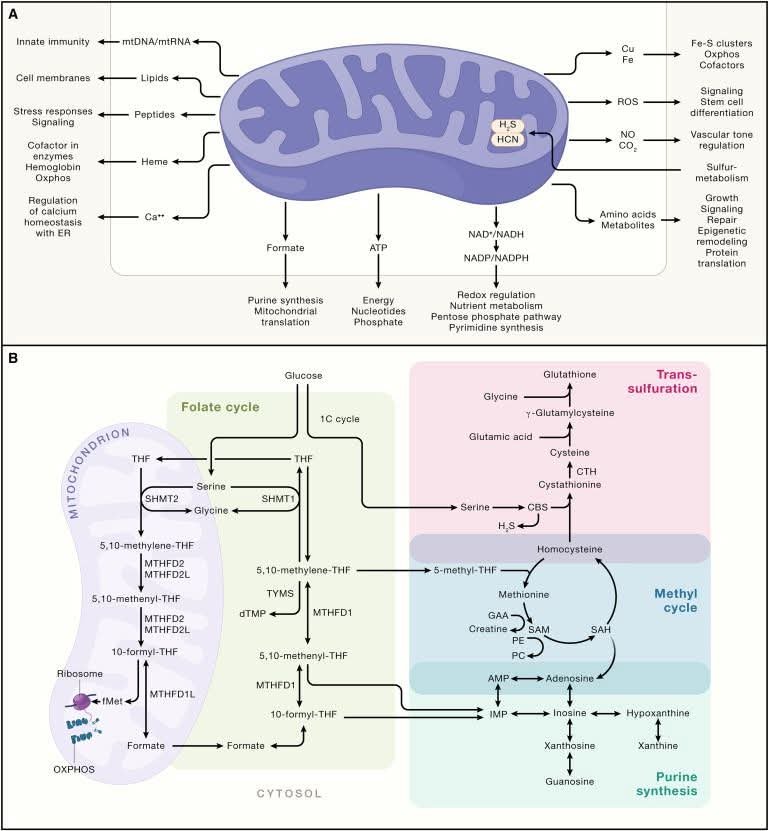
Your mitochondria are not batteries, they’re chemical factories. And this is what they’re building....
This diagram looks complex because it is. Your mitochondria act like tiny biochemical control centers that influence how well you think, heal, detoxify, fight infection, and even age.
Here’s the simple version:
1️⃣ They don’t just make energy, they make the building blocks of life.
Mitochondria produce the raw materials your cells need for:
-DNA & RNA
-Brain chemicals
-Antioxidants
-Cell membranes
-Repair enzymes
When mitochondria slow down, everything from immunity to cognition takes a hit.
2️⃣ They run a huge “chemical circuit” that keeps your cells functioning.
This network ties together:
-Folate
-B-vitamins
-Methylation
-Detox pathways
-Glutathione production
-DNA synthesis
Mitochondria supply key molecules (like formate) that cells use to build DNA and regulate repair.
This affects growth, immunity, fertility, inflammation, and aging.
3️⃣ When mitochondria falter, the effects ripple everywhere.
You don’t just feel tired, you see:
-More inflammation
-Poor detoxification processes
-Slower healing
-Brain fog
-Hormone imbalance
-Faster aging
Because the upstream control system is failing.
4️⃣ The takeaway
Your mitochondria aren’t batteries.
They’re the operating system that keeps your cells alive, communicating, and repairing damage.
Support them… and you support everything your body is trying to do.
📄 Source: Cell (2024). Mitochondrial one-carbon metabolism and its role in cellular biosynthesis and signaling.
Metabolism: How pyruvate controls cell size
🔗 eLife Insight Articles delve into the real significance of the latest research. Read here: https://t.co/6jr1N9Im4z.
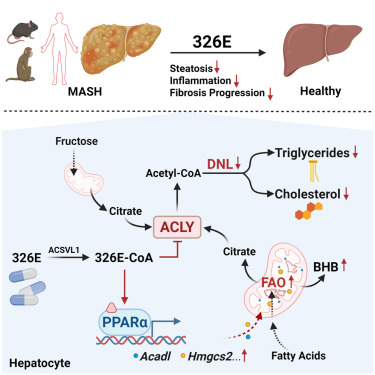
New! Online now: The enedioic acid analog 326E alleviates metabolic dysfunction-associated steatohepatitis via dual targeting at ACLY and PPARα https://t.co/uysEjgzNPD
The Lipid Brain Atlas is out now! If you think lipids are boring and membranes are all
the same, prepare to be surprised. Led by Luca Fusar Bassini with Gioele La Manno's lab, we mapped membrane lipids in the mouse brain at high resolution.
https://t.co/q3AeqGsIS1
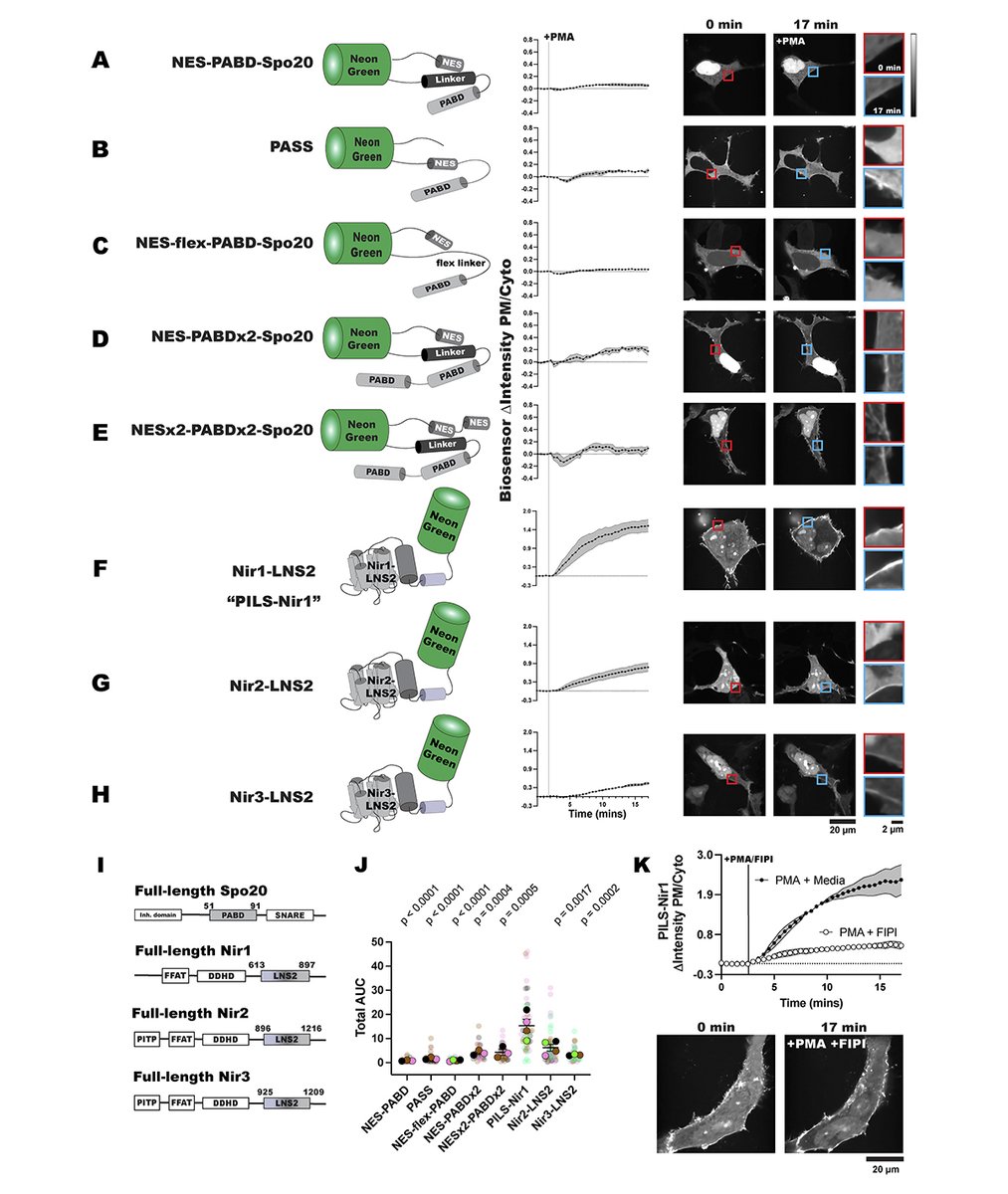
.@c_wecks, Rahn, @gerryhammond et al. @PittTweet report a novel biosensor, PILS-Nir1, that detects phosphatidic acid in live cells, revealing the lipid’s dynamics with improved sensitivity and selectivity over existing probes. https://t.co/EAUPBPul1L
#lipids#phospholipids
1/ 🚨 Our new paper is online in @Nature !
As its first author, I’m enthusiastic to finally share it with you all!🎉
🧠 We discovered a mechanistic link between cellular energy metabolism and the control of the need to sleep 💤
👉 https://t.co/eBUKpM3zJa
@OxfordDPAG 🧵👇
Lipid synthesis supports membrane growth and organelle biogenesis. Sunyoung Hwang, Eduardo Torres et al. @UMassChan show that synthesis of sphingolipids, mainly long-chain bases, is essential to increasing nuclear membranes during #CellDivision. https://t.co/XC0t40T8es
🔬 Talk by Laura Formentini (UAM, Spain): What makes our muscles efficient at using fats for energy? It turns out a newly discovered protein team—or metabolon—could hold the key. Here’s what we learned about CoQ, mitochondria, and metabolism. 🧵 #11thConferenceICQ10A
My lab's first paper is out in @Nature. We show that lipoprotein uptake protects tumors from ferroptosis by delivering the lipid antioxidant α-tocopherol. Surprisingly, tumors use sulfated glycosaminoglycans—not canonical receptors—to capture lipoproteins. https://t.co/NBv1sUXxJ5
The wet, carbon-based matrix of biology behaves like an electrical circuit, slowly fluxing electrons from food ⊖ → ⊕ oxygen
Through each step, energy flow meets energy resistance: éR
éR is the fire of life, allowing transformation and adaptation
Preprint here with the amazing Nirosha Murugan @msahsorin : https://t.co/eAL6i73SPH
Comments welcome!
Thanks to @drmichaellevin and others for commenting and helping improving the model
Proximity proteomics reveals a mechanism of fatty acid transfer at lipid droplet-mitochondria- endoplasmic reticulum contact sites
https://t.co/2asBpld8Yg