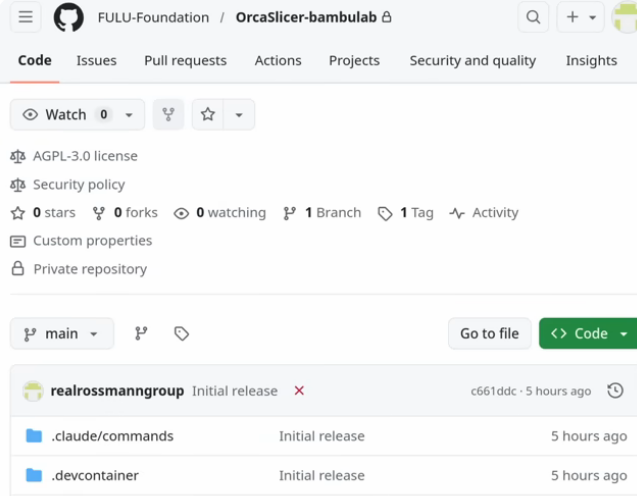
> be github
> invent copilot
> you are literally the first one
> you are literally the only one
> you literally have access to all the code in the world
> get mogged by literally every single agentic bs that came out in the past few years
this level of fumble should be studied
@repkord@Mojee3d@BambulabGlobal@Prusa3D With all due respect: oh well, get outcompeted every time.
Stop defending prices that make things unreachable for the masses, because that's why these companies win. Every. Single. Time.
upon Doing The Thing, you will invariably find two things to be true:
1. Doing The Thing was pretty easy, actually
2. not having Done The Thing was bothering you more than you thought it was
i love how people are saying "if we write a sufficiently detailed specification, the agent can write all our code"
do you know what writing a sufficiently detailed specification that deterministically maps to what a computer's actions is? it's coding
"I don't need a biz plan for my machine shop, I'm just going to get loans for new cnc machines and sign a 5 year triple net building lease and the numbers will just work out" (has zero sales training, worked as W2 employee whole life) 😑
There are roughly 18,600 machine shops (NAICS 332710 and related) in the US.
Industry revenue totals around $37–48 billion recently (IBISWorld), for an average revenue of about $2.5–2.9 million per shop.
Many (especially traditional job shops) are small or one-person operations with revenues of $100k–$600k (or up to ~$1M).
Median revenue for sold shops is often around $1.1 million.
Average employment is low: ~13–14 employees per business.
The majority of US manufacturing firms (including machine shops) are small:
~93% have fewer than 100 employees, and ~75% have fewer than 20.
No single large player dominates
It’s fragmented with many owner-operated shops.
That being said... machine shops have better survival rates than the US small business average.
• ~82.6% survive the first year (failure rate ~17.4%).
• ~57–58% survive 5 years.
Machine shops rarely fail purely from “bad machining.”
Failures almost always stem from business and management issues rather than technical skill.
Cash flow and undercapitalization (the #1 killer).
Customers often pay in 30–90 days (sometimes longer) --- but shops must pay for materials, labor, rent, and utilities immediately.
Low operating margins (typically 3–4%) leave little buffer.
Many small shops run chronically tight on working capital.